


Why Is Your Asphalt Plant Underperforming?
Introduction: Is Your Asphalt Plant Delivering Its Expected Performance?
Recognize the Signs of Underperformance
Many road engineering contractors and asphalt mixing plant operators will encounter a very confusing common problem: the equipment is clearly running normally, without obvious mechanical failure, but it always fails to achieve the expected production effect. This kind of hidden performance short board will not directly trigger the asphalt plant equipment alarm, but it will continue to devour the project profit and slow down the construction progress.
Typical inefficient performance is generally concentrated in the following scenarios: asphalt mix plant rated at 120TPH, actual hourly output is lower than design standard for a long time; fuel consumption per unit output is continuously higher than expected level; batch difference exists in mixture quality; operators need to adjust parameters manually frequently, which makes it difficult to maintain stable automatic production; non-fault downtime such as material shortage, equipment waiting, process interruption occurs frequently; material waste, mixture unqualified rework rate is high, effective production capacity has shrunk significantly.
The term “poor performance” in this article does not only mean that the hourly output is lower than the rated capacity, but refers to the asphalt mixer plant not reaching the expected level in terms of production efficiency, mixture quality stability and operating costs.
Underperformance Does Not Always Mean Equipment Failure
The first reaction of many operators is: Is the asphalt batch mix plant broken, and are the parts aging and failing? In actual engineering projects, even if there is no obvious mechanical failure of the asphalt batch plant, there may be performance degradation in terms of productivity, quality and cost.
The comprehensive performance of asphalt hot mix plant is not solely determined by the operating conditions of main equipment, but by the whole production system. Most of the core reasons that really lead to substandard equipment performance are systematic problems: aggregate moisture content and drying efficiency, weighing accuracy of ingredients, temperature control stability, capacity bottleneck of auxiliary system, start-up and standby loss, coordination of whole process procedures, and matching degree of equipment configuration and project working conditions.
Shift the Diagnosis From “What Is Broken?” to “What Is Limiting Performance?”
Traditional equipment maintenance thinking focuses on troubleshooting, parts replacement and daily maintenance; while systematic performance diagnosis thinking focuses on finding the core bottleneck restricting the overall production capacity of asphalt mixing plant.
This article will jump out of the common content of single equipment fault list and conventional maintenance science popularization, dismantle 7 hidden constraints from the perspective of production whole link, help enterprises to locate performance bottlenecks pertinently, and realize quality improvement, efficiency increase and cost reduction. The full text follows the core logic: poor performance of hot mix plant ≠ equipment failure, accurate diagnosis bottleneck is the pre-core of optimization, upgrading and renewal.
What Does “Asphalt Plant Underperformance” Actually Mean?
Rated Capacity vs. Real-World Production
The rated TPH on the hot mix asphalt plant nameplate is the reference capacity of the equipment under specific design and standard operating conditions, and does not mean that it can be continuously achieved at all construction sites. Different equipment manufacturers have slightly different test benchmarks for rated capacity, which can only be used as reference basis for type selection and capacity evaluation, and cannot be directly equivalent to actual field output capacity.
In real construction scenarios, actual production capacity will be affected by multiple variables such as aggregate moisture content, raw material characteristics, drying and heating efficiency, accuracy of batching control system, matching of auxiliary equipment, production scheduling organization and site climate conditions. This is also the core reason why many hot mix asphalt mixing plants have sufficient theoretical capacity, and the actual hourly output, daily output, and production stability are all not up to standard.T o judge the performance of equipment, we should not only look at the nameplate parameters, but also pay attention to the actual hourly output, effective production time, batch stability and continuous operation ability.
Three Core Performance KPIs
A set of high-performance asphalt mixing plant must meet the three dimensional standards of efficiency, quality and cost at the same time, which is also the core assessment index of engineering party A, construction enterprise and equipment operator.
Production efficiency: core includes actual hours/day output, effective production time, material throughput stability, equipment standby and idle time, non-failure downtime. The efficiency is not up to standard, which directly leads to the delay of construction period, low utilization rate of equipment and waste of labor cost.
Mixture quality: the core includes aggregate grading consistency, asphalt binder ratio accuracy, mixture temperature stability, batch quality uniformity. Quality fluctuation will directly cause hidden dangers of pavement paving, increase hidden costs such as rework, waste, unqualified quality inspection, etc.
Operating cost: core includes fuel consumption per unit output, raw material waste rate, equipment operation and maintenance loss, labor idle cost, start-stop no-load loss, rework and rectification cost. Long-term poor performance will keep the overall profit margin of the project low.
A Practical Definition of Asphalt Plant Performance
Therefore, the evaluation of hot asphalt plant performance can not only look at the rated capacity, but should comprehensively examine the production efficiency, mixture quality stability and full-cycle operating costs, the three together determine the actual engineering value of the equipment and project profitability. All subsequent performance diagnosis, factor analysis and optimization schemes revolve around this core framework.
7 Systematic Factors Causing Asphalt Plant Underperformance
In this paper seven core factors follow the Material → Metering → Thermal → Auxiliary Systems → Production Time → Process Coordination → Project Fit of the production of the whole link logic, each factor adopts a unified diagnosis structure: phenomenon performance → root cause → performance impact link → site investigation points → professional optimization scheme, forming a complete closed-loop diagnosis system.
High Aggregate Moisture and Poor Drying Efficiency
What to Inspect: aggregates are stacked in the open air on the construction site, drainage is not smooth, and the moisture content of aggregates exceeds the appropriate range of current production conditions due to rain and moisture, which greatly increases the load of drying and heating system, and the drying time becomes longer, which makes it impossible to realize continuous and efficient production.
Impact link: high aggregate moisture content → heating energy consumption demand greatly increased → drying heating cycle extended → unit time production capacity decreased → fuel consumption soared → effective throughput continued to decrease, at the same time may cause insufficient aggregate drying, uneven heating or mixture temperature instability, further affecting the overall quality of the mixture.
Key points of on-site inspection: regularly detect the actual moisture content of aggregates; check the drainage, rainproof and moisture-proof measures of the aggregate storage site; check the operating conditions of the drying drum and the thermal insulation effect of the drum; check whether the configuration power and parameter settings of the burner match the material working conditions; check the heat loss points of the equipment.
Engineering Solutions: Optimize aggregate storage layout, improve site drainage and rain shelter facilities, and reduce material moisture content from the source; match the appropriate drying and heating system according to site materials and climatic conditions to avoid mismatch between thermal system configuration and actual material working conditions; finely calibrate burner operating parameters to achieve accurate temperature control and energy-saving heating; upgrade cylinder insulation structure to reduce ineffective heat loss; customize and match thermal system configuration in combination with local climate and material characteristics in the early stage of the project.
Inaccurate Aggregate Feeding and Weighing
Core Focus: The gradation stability and quality consistency of asphalt mixture are highly dependent on accurate and stable material ratio, and the batching weighing deviation is one of the core causes of unqualified mixture quality.
Root cause: cold material feeder has not been calibrated for a long time, parameter deviation; unstable material fluidity, different dry and wet aggregates, mixed particle size; unreasonable opening and closing parameter setting of material door; precision attenuation of belt scale and weighing sensor; lack of standardized periodic calibration process; unbalanced material supply of cold storage bin.
Impact link: batching weighing deviation → aggregate grading fluctuation → batch mixture quality inconsistency → grading deviation, bitumen dosage fluctuation, uneven package or mixture uniformity decline and other problems → rework waste increase → effective capacity reduction, material cost waste.
What to Inspect: check the calibration cycle and calibration accuracy of the cooler; detect the operation status of the belt weigher and weighing sensor; observe the material blanking smoothness and the stock stability of the material in the bin; and sample the metering accuracy of asphalt, mineral powder and aggregate.
Engineering Solutions: equipped with high-precision batching weighing system to ensure measurement accuracy from hardware; establish standardized regular calibration system to eliminate parameter deviation; upgrade automatic flow control module to stabilize material unloading speed; standardize raw material stacking and loading process to ensure uniform material supply; and finely control all categories of material proportioning parameters.
Unstable Thermal and Temperature Control
Core positioning: temperature is the core key to connecting production efficiency and mixture quality, temperature fluctuations will cause quality hazards and energy waste at the same time.
Aggregate Heating Temperature Deviation
Aggregate heating temperature and uniformity deviation from process requirements may affect subsequent bitumen coating, mixing uniformity and mixture quality stability.
Poor Bitumen Heating Stability
Bitumen temperature fluctuation will change its viscosity, bitumen temperature deviation from the appropriate process range will change its viscosity and mixing conditions, may affect the aggregate package and mixture uniformity; too high heating temperature may also increase asphalt aging risk and energy consumption.
Mixing and Discharge Temperature
The discharging temperature of finished mixture fluctuates, and the unstable temperature environment will change the mixing, packaging and subsequent compaction conditions, which is easy to cause batch quality fluctuation and increase the risk of waste and rework.
Impact link: global temperature fluctuation → change in material properties and mixing conditions → impact on aggregate packaging and mixing uniformity → quality deviation of batch mixture → rework rectification, fuel waste, and capacity limitation.
Engineering Solutions: intelligent burner matched with working conditions to achieve precise constant temperature control; equipped with high-precision temperature sensor to monitor temperature in real time; upgrade the overall insulation structure of the equipment to reduce heat loss; configure automatic temperature control system to dynamically adapt to production conditions; match reasonable heating power according to production capacity demand and material characteristics.
Supporting Systems Become Hidden Production Bottlenecks
Core differentiation point of view: many people mistakenly think that mixing host is the core bottleneck of capacity, in fact, the actual production performance of asphalt mixer machine is often limited by the synergy between auxiliary system capability and overall system, not only by the rated capacity of host. No matter how high the theoretical capacity of the host machine is, if the auxiliary system capacity is insufficient or the system coordination is not smooth, the actual production performance of the whole equipment may still be significantly limited.
Potential Bottlenecks: insufficient capacity of cold material supply system, mismatch between material conveyor belt and elevator throughput, unreasonable layout of hot bin storage and screening, unstable supply of mineral powder, intermittent asphalt transportation, poor adaptability of RAP regeneration feeding system, insufficient storage capacity of finished materials.
Typical scenario: an asphalt batch mixing plant rated at 120TPH, the mixing capacity of the main machine is sufficient, but the throughput of the material elevator and conveyor belt is insufficient, or the hot silo storage is unbalanced, which will directly lead to frequent standby of the equipment, and the actual production capacity is far lower than the rated standard.
What to Inspect: check the material transportation, transfer and storage capacity of the whole link; detect the operation stability and throughput of auxiliary equipment; check the continuity of supply of mineral powder, bitumen and recycled materials; evaluate the matching degree of finished material storage and discharge.
Engineering Solutions: abandon the single host optimization thinking, carry out the whole system capacity matching evaluation; carry out targeted upgrading and expansion for short board auxiliary equipment; realize the coordinated matching of feeding, conveying, drying, mixing and storage, and eliminate the capacity bottleneck from the system level.
Excessive Start-Stop and Idle Time
Core Problem: Many asphalt mixing machine have an hourly production capacity up to standard, but the daily production capacity is seriously insufficient. The core reason is invalid start and stop, no-load standby time is too long, and the effective production time is seriously compressed.
Common Causes: delay of truck dispatching, frequent adjustment of paving construction plan, interruption of raw material supply, short-term production of multiple batches, poor coordination between mixing team and paving team, too long time for equipment preheating and cleaning.
Recessive loss: every time the asphalt plant equipment starts, it needs to be preheated and heated, resulting in ineffective fuel consumption; the material state is unstable at the initial stage of start-up, which is easy to produce waste; frequent start-up and shutdown require repeated cleaning and emptying of the equipment, which takes up a lot of production time; repeated temperature control increases energy consumption and equipment loss.
Optimization strategy: Establish linkage scheduling mechanism between asphalt mixing plant and paving site, unify truck transportation scheduling; complete raw material reserve and equipment pre-inspection before production to avoid production interruption; reasonably plan production batches to reduce scattered short-time start-up; optimize daily production plan to maximize continuous production time.
Poor Coordination Across the Production Process
Core Focus: different from the single ingredient accuracy problem, this link focuses on the dynamic coordination ability of the whole production link. Each process runs normally independently, but the connection is not smooth, which will still cause the overall performance of asphalt hot plant decline.
Typical Coordination Problems: raw material supply speed does not match production capacity, bitumen conveying pressure and flow fluctuation, RAP recycled material supply is unstable, hot storage of materials in each bin is unbalanced, the arrival time of transportation vehicles is disordered, and the discharge speed of equipment does not match the paving speed.
Impact link: single process fluctuation → standby stagnation of the whole system → shortening of effective production time and reduction of production capacity → repeated start-up and shutdown resulting in energy consumption and material waste → deterioration of batch stability of mixture.
Core principle: asphalt production is a continuous system engineering, optimization of a single link can not make up for the performance loss caused by poor coordination of the whole process.
Optimization Approaches: Establish standardized production scheduling system, coordinate material supply, equipment operation and vehicle scheduling; standardize supply management of RAP recycled materials, mineral powder and asphalt; balance the storage structure of hot silos, stabilize material proportion; realize accurate synchronization of mixing production and on-site paving progress.
Asphalt Plant Configuration Does Not Match Project Requirements
Core Idea: many asphalt mixing plants are not “poor equipment performance”, but equipment configuration and the actual needs of the project do not match, which is one of the important reasons for the long-term poor capacity and high cost of some asphalt mixing plants, and is also a key factor that is easily overlooked in the equipment selection stage.
Capacity Mismatch
The equipment selection is too small to meet the peak capacity demand of large-area paving, and the equipment is overloaded for a long time; the tar mixing plant selection is too large, the project quantity is small, the production cycle is short, and the equipment utilization rate is extremely low, resulting in idle equipment and waste of investment and operation and maintenance costs. The pure pursuit of high TPH parameter selection thinking is easy to cause resource mismatch.
Mobility Mismatch
Equipment mobility needs to be accurately matched with project duration, transition frequency and construction site conditions. Once mismatched, the overall operation efficiency and productivity performance will continue to be lowered.
For the specific adaptation scenarios and parameter differences of Mobile vs. Stationary vs. Super Mobile Asphalt Plants, please refer to our exclusive selection guide article for detailed comparison.
RAP Capability Mismatch
A standard asphalt plant configuration may not be optimized for high-RAP production without appropriate recycling and feeding systems. In the production scenario with high RAP content, problems such as limited production capacity, unstable temperature control and insufficient mixture uniformity are easy to occur, which cannot meet the process requirements of regeneration construction.
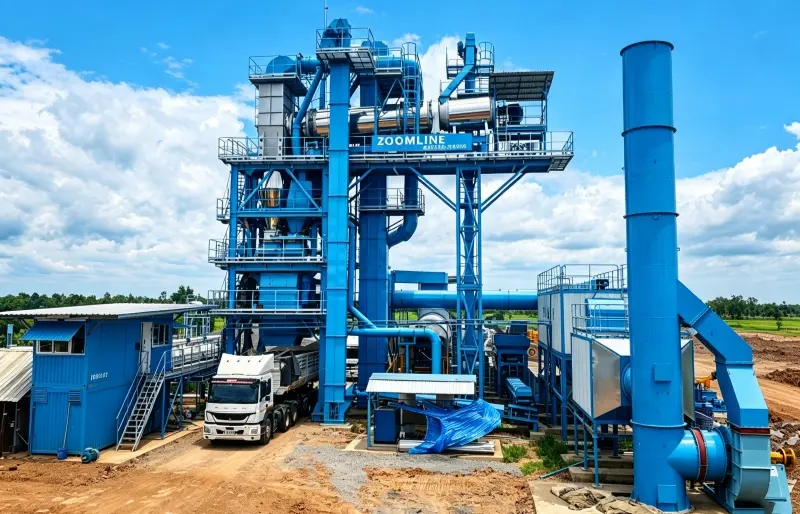
Climate and Material Mismatch
High humidity, rainy, cold areas, conventional equipment drying capacity, thermal insulation performance, anti-condensation design is insufficient; in the face of high water content, special aggregates, equipment heating, ingredients system can not adapt, continuous performance shortcomings.
How to Diagnose Where Your Asphalt Plant Is Underperforming
From symptoms to accurately locate bottlenecks without professional testing equipment, through the “symptoms-bottlenecks-troubleshooting points-optimization scheme” self-inspection logic, can quickly locate asphalt mixing plant performance short board, avoid blind maintenance, upgrade, adapt to engineering personnel rapid investigation, procurement personnel decision-making reference.
| Performance Symptom | Core Potential Bottleneck | Key Check Items | Possible Optimization Actions |
| Output below expected capacity | High moisture content of materials, low efficiency of thermal system, bottleneck of auxiliary system | Aggregate moisture content, burner operating conditions, drying drum efficiency, conveying and bucket elevator equipment capacity | Optimize material drying system, check and break through auxiliary system capacity bottleneck |
| High fuel consumption | Material moisture exceeds standard, heat loss is large, heating efficiency is low, frequent start and stop | Raw material humidity, equipment insulation, burner parameters, production start and stop frequency | Improve thermal efficiency, optimize material storage, standardize production start-up and shutdown scheduling |
| Unstable mix quality | Ingredients deviation, temperature fluctuation | Weighing calibration accuracy, aggregate grading, global temperature stability | Recalibration of batching system, stabilization of global temperature control parameters |
| Frequent idle periods | Irrational scheduling, poor coordination of working procedures | Vehicle scheduling, material supply rhythm, production scheduling | Optimize production scheduling, unify material and transportation scheduling |
| Frequent waiting between processes | Auxiliary system capacity bottleneck | Conveyor equipment, hot silo, mineral powders and bitumen supply system | Targeted upgrade lag auxiliary equipment, matching host capacity |
| High material waste | Whole process production instability | Compounding accuracy, temperature control system, mixing stability, start-stop control | Standardized full-process parameter control to reduce production fluctuations |
| Cannot meet project demand | Equipment does not match project working condition configuration | Capacity specifications, regeneration capacity, mobility, climate adaptability | Evaluate suitability for operating conditions, upgrade or replace equipment as needed |
Core principle of diagnosis: Not all performance problems require large-scale equipment modification. Bottlenecks should be determined through data and on-site inspection, and then operation optimization, partial upgrading or complete machine replacement should be judged to be more economical, so as to maximize the input-output ratio with precise policies.
Should You Optimize, Upgrade, or Replace Your Asphalt Plant?
When the asphalt mixing plant has problems such as insufficient capacity, fluctuation of mixture quality or high operating costs, it does not mean that the equipment must be upgraded or replaced immediately. The right decision should first determine the root cause of the problem, and then choose the most economical solution in combination with the cost of modification, expected improvement effect, remaining service life of equipment and long-term project needs.
Specifically, an integrated assessment can be made around the following five dimensions:
- Root cause: Is poor performance due to operational and production management, single equipment or system shortcomings, or does the overall equipment configuration not match the project requirements?
- Cost of retrofitting: How much money, downtime, and implementation costs will it take to solve the current problem?
- Expected improvements:How much productivity, energy consumption, quality stability, or productivity can be expected to improve as a result of operational optimization or equipment upgrades?
- Remaining life of equipment:How long can the existing equipment main structure, core system and control system operate stably?
- Long-term project requirements: Will future project capacity requirements, RAP usage ratios, equipment mobility, and production conditions change?
Therefore, there is no fixed order of “maintenance first, then upgrade, and finally renew” for equipment performance optimization. If the problem mainly comes from operation and production management, priority should be given to operation optimization; if the main body of the equipment still meets the project requirements, but a certain subsystem forms a bottleneck, targeted upgrading can be considered; if the overall configuration of the equipment cannot meet the current or future project requirements, it is necessary to further evaluate the long-term economy of the replacement of the whole machine.
The core principle is: not upgrade for upgrade’s sake, not renew for renewal’s sake, but match the solution to the root cause of the problem, investment costs, and long-term project needs.
When Operational Optimization Is Enough
When the overall asphalt plant equipment configuration still meets the project requirements, and poor performance is mainly due to operational, production process or site management issues, there is usually no need for immediate equipment modification.
Suitable when: deviation of batching weighing parameters, unreasonable production scheduling, frequent start-up and shutdown, insufficient skills of operators, slight heat loss, irregular material stacking management, etc.
Potential actions: Such problems can be improved through standardization calibration, production scheduling optimization, personnel training and material control. Since operational optimization is usually less expensive and shorter in implementation than equipment upgrades, it is important to first evaluate the expected improvements and implementation costs to determine whether it can help the equipment to operate closer to its design level.
When a Targeted Upgrade Makes More Sense
When the main structure and overall configuration of the asphalt mixing plant still meet the project requirements, but one or more subsystems have become obvious performance bottlenecks, you can further evaluate the targeted equipment upgrade without directly replacing the whole machine.
Consider upgrading when: old automation control system, insufficient heating efficiency of burner, low weighing accuracy of ingredients, lack of RAP regeneration function of original equipment, backward temperature control monitoring system, insufficient capacity of auxiliary conveying system, etc.
At this point, the focus should be on comparing the upgrade input with the expected improvement effect.If a partial upgrade can effectively solve the main bottleneck and the main body of the equipment still has a long remaining service life, then a targeted upgrade is usually more economical than a complete replacement.
Potential upgrades: Core subsystems such as combustion, batching, automation control, temperature control, RAP regeneration or auxiliary conveying can be upgraded according to actual problems to make up for shortcomings in productivity, quality or efficiency.
When Asphalt Mix Plant Replacement Is the Better Option
When there is a significant gap between the overall configuration of existing equipment and the current or future project requirements, and it is difficult to obtain sufficient performance improvement through operation optimization or partial upgrade, the replacement plan can be further evaluated.
Consider a new asphalt mixing plant when: rated capacity cannot meet the peak demand of the project, the control system is seriously old, it cannot adapt to the high proportion of RAP production, the long-term energy consumption is high, the critical system is frequently shut down, or the project operating conditions are fundamentally changed.
However, whether to replace new equipment should not be judged only on the basis of a single problem, but should be comprehensively compared:
- Remaining useful life of existing asphalt plant equipment;
- Equipment and implementation costs required for local upgrades;
- Expected production performance after upgrading;
- procurement and installation costs of new equipment;
- The potential long-term benefits of new equipment in terms of fuel consumption, labor, maintenance and productivity;
- Capacity, RAP, mobility and equipment configuration requirements for current and future projects.
When the comprehensive cost and expected benefit of continuing to use or upgrade the old equipment is obviously lower than the long-term value of replacing the new equipment, the replacement of the whole equipment is more reasonable.
Therefore, renewal is not the default answer to performance optimization, but the decision result after comprehensive technical and economic evaluation.
How to Select an Asphalt Plant That Matches Actual Production Needs
When selecting a new asphalt mixing plant, the same performance constraints as existing asphalt mixing plants should be considered. At the same time, the core of equipment selection is not to select the model with the highest parameters, but to select the model that best matches the project working conditions, production requirements and long-term planning, so as to avoid the problem of substandard performance from the source.
Select Capacity Based on Practical Production Demand
According to the actual production demand, the production capacity shall be selected, and the “only large production capacity theory” shall be abandoned. In combination with the daily average paving volume of the project, the peak construction demand, the daily effective operation time, the equipment utilization rate, the project cycle and the comprehensive selection of future business planning, the production capacity shall be sufficient and there shall be no idle waste.
Match the Plant to Material and RAP Requirements
According to local aggregate moisture content, grading characteristics and raw material categories, matching drying, heating and batching systems; combining with the proportion of recycled materials used in the project, customizing and adapting RAP recycling systems to meet the production requirements of waste pavement reconstruction and recycled materials utilization.
Match Mobility to the Project
It is necessary to focus on evaluating the project duration, equipment transition frequency, transportation installation conditions and multi-project scheduling requirements in the equipment mobility selection stage, so as to determine the mobility level required by the equipment, accurately match the stationary, mobile or super-mobile models asphalt mixing plant, and avoid the operation inefficiency and performance loss caused by mobility mismatch from the source.
Evaluate Lifecycle Operating Costs
It is necessary to comprehensively consider the full cycle cost such as long-term fuel consumption, operation and maintenance cost, labor cost, transition cost, shutdown loss and recycling value, and select the equipment scheme with higher cost performance and more stable operation.
How ZOOMLINE Can Help Diagnose and Improve Asphalt Plant Performance
The previous analysis shows that poor performance of bitumen mixing plants is often not a single equipment failure, but may be related to material conditions, thermal systems, batching accuracy, auxiliary equipment, effective production time, process coordination, and equipment configuration.
Therefore, ZOOMLINE does not simply provide solutions according to standardized equipment parameters, but systematically evaluates project capacity requirements, material characteristics, RAP usage ratio, climatic conditions, construction cycle and equipment mobility, and matches corresponding equipment configurations and production solutions according to specific project conditions.
Project-Based Asphalt Mix Plant Configuration
Different road construction projects have different requirements on asphalt mixing plant capacity, mobility, regeneration capacity and environmental adaptability.
ZOOMLINE will evaluate comprehensively during the project design phase:
- Project actual and peak capacity requirements;
- Aggregate moisture content and raw material characteristics;
- Local climate and construction environment;
- Percentage of RAP use;
- Project construction cycle;
- Equipment transition frequency;
- Site transportation, installation and layout conditions.
Determine equipment specifications and system configurations based on these project parameters, rather than simply pursuing higher TPH parameters, to reduce long-term performance losses caused by mismatches between equipment configurations and actual construction needs from the source.
Full-Link Production System Evaluation
For projects where actual production is lower than expected, inspection of the asphalt mixer alone does not fully explain the cause of the capacity constraint.
ZOOMLINE’s equipment solutions can be configured and matched from cold material supply, material conveying, drying and heating, screening, metering, bitumen and RAP supply, mixing to finished product storage, focusing on the processing capacity, material flow and operation rhythm between different systems.
For example, for an asphalt mixing plant with a high rated capacity, if upstream conveying, lifting, RAP supply or other auxiliary systems cannot continuously match the host processing capacity, simply increasing the host specification will not solve the practical constraints of the entire production chain.
Therefore, in the equipment scheme design stage, the ability matching of the whole production chain helps to identify potential limiting links before judging whether local system upgrades or configuration adjustments are needed.
Automated Control and Precise Process Management
ZOOMLINE asphalt mixing plants can be equipped with automated control systems for centralized monitoring and control of material metering, temperature and critical production parameters, in response to problems involving batching accuracy, temperature fluctuations and frequent manual adjustments.
Automated monitoring and process control reduces manual fluctuations and helps operators maintain a more stable production process, thereby reducing the risk of quality and material loss due to ingredient deviations, temperature fluctuations and frequent manual adjustments.
Field Experience and After-Sales Support
ZOOMLINE asphalt mixing plant equipment has been used in several overseas markets, including Peru, Thailand and the Philippines. There are differences in climatic conditions, aggregate characteristics, RAP use requirements, project scale and equipment transfer conditions in different markets. These practical projects provide application experience for equipment selection and system configuration of similar projects.
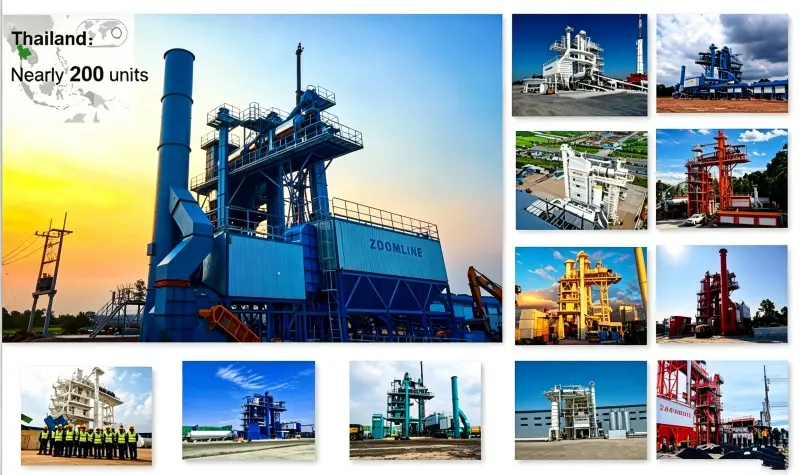
Thailand: Nearly hundreds of sets of recycled asphalt mix plant
ZOOMLINE has supplied nearly hundreds of sets of recycled asphalt plant to the Thai market and accumulated experience in RAP recycling production projects. These projects involve different system configurations such as recycled material storage, transportation, metering and recycling production, which provide practical application references for equipment scheme design for different RAP production requirements.
Peru: 120 TPH ZAP-CR Series Super mobile Continuous High Ratio RAP Recycling Project
In the Peruvian market, ZOOMLINE’s 120 TPH ZAP-CR Series Super mobile Continuous High Ratio RAP Recycling Asphalt Mixture Mixing Plant combines 120 TPH capacity, high ratio RAP recycling production requirements and supermobile equipment design into one project configuration.
This practical project reflects the logic of equipment selection discussed above, i.e. comprehensive consideration of:
Capacity demand + RAP regeneration capacity + equipment mobility
rather than selection based solely on equipment rating TPH.
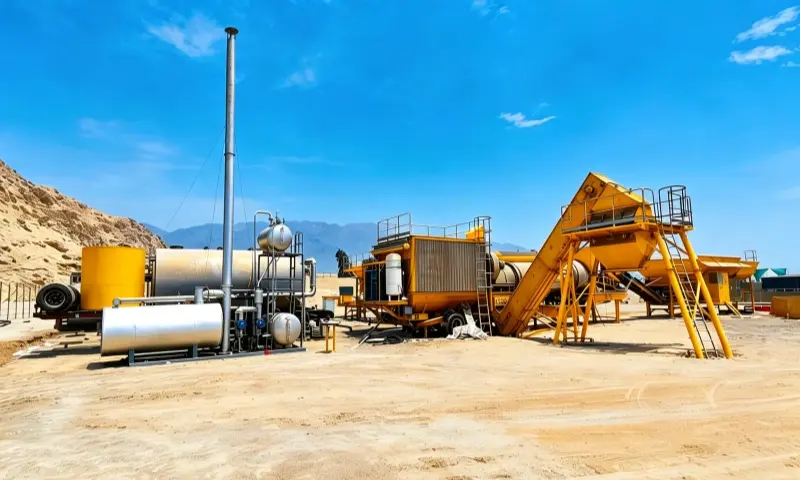
Philippines: Application of Mobile Asphalt Mixing Plants
ZOOMLINE mobile asphalt mixing plants have also been deployed in the Philippines market. Facing the construction site, project cycle and transition requirements of different projects, equipment configuration needs to comprehensively consider equipment mobility, site conditions and road engineering production requirements.
These practical project experiences in different markets provide a practical basis for ZOOMLINE to configure equipment, RAP system design and mobility options for similar road construction projects.
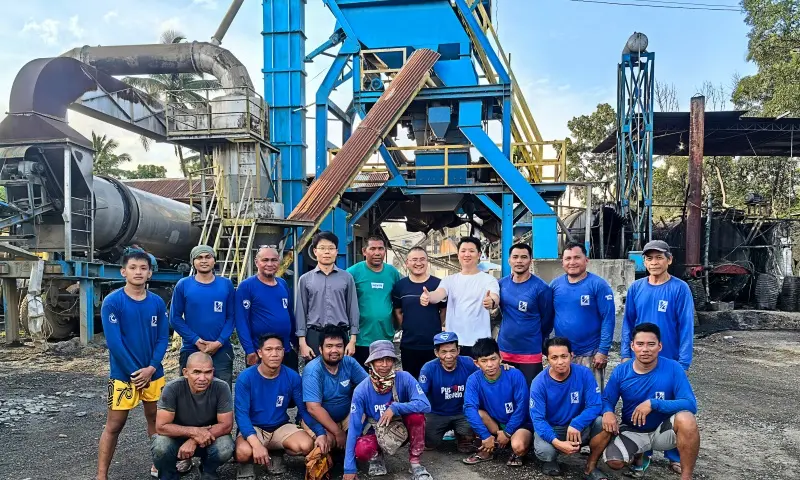
Full-cycle Service from Equipment Delivery to Actual Production
Equipment performance ultimately needs to be verified through on-site stable production. ZOOMLINE’s services are therefore not limited to equipment manufacturing and delivery, but also include:
- Equipment installation and commissioning;
- Operator training;
- Production parameter guidance;
- Technical support during operation;
- After-sales maintenance and accessories support.
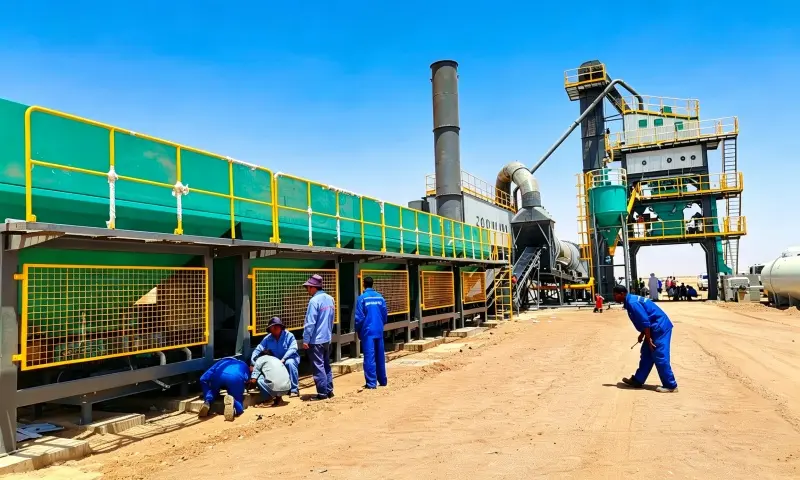
For overseas road construction projects, the whole process support from equipment installation, commissioning to formal production operation helps customers to complete equipment landing more smoothly and reduce technical and operational risks in actual operation.
Conclusion: Diagnose the Bottleneck Before Optimize Asphalt Mixing Plant Performance
Asphalt plant performance is not good, never equivalent to equipment damage. Many productivity, quality and cost problems are not simply caused by mechanical failures, but may be related to material conditions, temperature control systems, system bottlenecks, operation scheduling, process coordination and equipment configuration. If the problem stems from system configuration, material conditions, or production processes, simply repairing the equipment or replacing parts may not solve the root cause of performance loss.
For most performance diagnosis scenarios, the following ideas can be followed: systematic diagnosis → accurate bottleneck positioning → lightweight operation optimization → targeted equipment upgrade → replacement of adaptive equipment when necessary → accurate matching of equipment and project conditions.
Call to Action
If your asphalt mixing plant has problems such as substandard production capacity, fluctuation of mixture quality, high fuel and material loss or low production efficiency, ZOOMLINE can carry out project-based evaluation according to your project capacity demand, material characteristics, RAP ratio, climatic conditions, equipment mobility and construction period, help identify key bottlenecks affecting actual production performance, and provide corresponding equipment Configuration, system optimization or upgrade suggestions.
Whether it’s a new asphalt mix plant, optimization of existing equipment performance, or a high-proportion RAP recycling production project, ZOOMLINE can develop a targeted solution based on specific conditions, rather than simply recommending standard equipment with higher capacity.
If you are evaluating the actual capacity of an asphalt plant or are planning to upgrade your equipment, please provide ZOOMLINE with project capacity, aggregate moisture content, RAP usage percentage, construction location and equipment mobility requirements so that we can assist in evaluating a more suitable equipment configuration.
Frequently Asked Questions (FAQ)
1. Why does an asphalt plant fail to reach its rated capacity?
The rated capacity is the design reference value of the asphalt batch plant under specific working conditions, and the actual production is restricted by multiple factors such as aggregate moisture content, drying and heating efficiency, batching accuracy, bottleneck of auxiliary system, start-stop loss, process coordination, climate conditions, etc. This often does not mean a mechanical failure of the plant’s main engine, but rather a combination of materials, thermal systems, auxiliary equipment, scheduling, or project configuration that limits actual production performance.
2.What causes high fuel consumption in an asphalt plant?
The main causes include: high moisture content of aggregate increases drying load, insufficient heat preservation of equipment, large heat loss, unreasonable burner parameters, poor temperature control accuracy, frequent start-stop preheating, and chaotic production scheduling, resulting in increased ineffective energy consumption.
3.How can I improve asphalt plant production efficiency?
Priority shall be given to checking the bottleneck of core capacity, optimizing material storage and moisture content control from the source, improving the accuracy of batching and temperature control, eliminating the short board of auxiliary system, standardizing production scheduling, reducing invalid start-up and stop, optimizing the coordination of the whole process, and finally carrying out equipment upgrading and configuration optimization as required.
4.Why is asphalt mix quality unstable even when the plant has no obvious mechanical faults?
Mix quality is determined by the entire production chain, not by a single host device.Ingredient weighing deviation, temperature fluctuation, uneven material supply, process coordination disorder, aggregate dry wet gradation change, will be in the case of equipment trouble-free, batch quality fluctuation.
5.How can I tell whether my asphalt plant has a capacity problem or an efficiency problem?
Can be judged from three levels:
Insufficient equipment configuration: rated capacity, regeneration capacity or core configuration cannot meet the project demand, even if the operation is optimized, it is still difficult to meet the standard.
Bottleneck of the system: the capacity of the main engine is sufficient, but the auxiliary systems such as cold material supply, drying and heating, conveying, RAP, mineral powder or asphalt supply limit the overall output.
Insufficient operational efficiency: equipment and system capacity is sufficient, but the effective production time is insufficient due to factors such as material supply, production scheduling, vehicle waiting, frequent start and stop or operation.
Therefore, the equipment configuration, system bottleneck and operation efficiency can be checked in the order of equipment configuration, system bottleneck and operation efficiency, and then the decision can be made to optimize operation, upgrade local systems or re-evaluate equipment configuration.
6.What is the biggest bottleneck in an asphalt plant production system?
There is no single largest bottleneck for all asphalt mixing plants. Bottlenecks may occur in any link such as aggregate moisture content, drying and heating, batching, material conveying, material storage, production scheduling or project configuration, which shall be accurately judged according to equipment configuration, site working conditions, actual production capacity and energy consumption data.
7.When should I upgrade an asphalt plant instead of replacing it?
The main configuration of asphalt station shall meet the project requirements. Only a single subsystem (burner, temperature control, batching and regeneration system) has short board, and local upgrading cost is low and quick, so upgrading and reconstruction can be preferred.
8. How do I choose the right asphalt plant capacity for my project?
It is necessary to combine the daily average output, peak construction demand, effective operation duration, equipment utilization rate and comprehensive calculation of future project planning, refuse to blindly pursue large parameters, and realize accurate matching between production capacity and construction demand.
9.How to determine the actual production capacity of an asphalt mixing plant?
Do not judge the actual production capacity based solely on the rated TPH on the equipment nameplate. The actual capacity evaluation shall be based on the actual hourly output during continuous production, effective production time, aggregate moisture content, drying and heating efficiency, batching and weighing stability, auxiliary system processing capacity, start-stop and standby time and the production organization on site.
For projects that require the evaluation of equipment performance as expected, attention should also be paid to fuel consumption per unit of production, mixture quality stability, and non-failure downtime. These data can be used to more accurately determine whether the problem is due to insufficient actual processing capacity of the equipment, or to factors such as materials, system configuration, production scheduling or project conditions.