

Mobile vs. Stationary vs. Super Mobile Asphalt Plants: Which Is Best for Road Project 2026?
Introduction: Choosing the Right Level of Mobility for Modern Road Projects
The current road infrastructure project presents an obvious decentralized, multi-point, short-cycle development trend, and the traditional single asphalt mixing plant deployment mode has been unable to adapt to complex and changeable construction scenarios. For engineering contractors and equipment purchasers, the core considerations for selecting asphalt plants are no longer limited to the two basic indicators of equipment production capacity and purchase unit price.
Under the refined construction and cost control system in 2026, enterprises must comprehensively consider the core operation factors such as relocation frequency of asphalt plant, site preparation difficulty, installation and commissioning cycle, logistics transportation cost and shutdown delay loss, which directly determine the overall profit and construction efficiency of the project.
At present, asphalt mixing plants on the market can be clearly divided into three categories according to mobile attributes: stationary asphalt mixing plants, conventional mobile asphalt mixing plants, and super mobile asphalt mixing plants. The core crux of most procurement mistakes is not that the equipment can be moved, but that it is impossible to accurately judge how much mobility is needed for its own project lineup.
This paper will comprehensively compare the structural characteristics, deployment advantages, application scenarios, comprehensive cost and adaptation trend in 2026 of the three types of asphalt mixing plants, and provide an exclusive procurement decision list and a two-dimensional selection framework to help construction enterprises accurately match equipment and project requirements and avoid selection errors, cost waste and time delay.
Before determining the asphalt plant equipment mobility level, it is necessary to match the asphalt production process suitable for the project. See the previous detailed explanation: Batch Mix vs. Drum Mix: Which Asphalt Plant Is Better in 2026?
Quick Answer: Which Asphalt Plant Is Best?
In order to meet the needs of rapid decision-making, the accurate selection conclusion is given first to help the engineering party quickly lock the asphalt batching plant equipment according to its own project mode, and the preliminary judgment can be completed without reading the full text.
Choose a Stationary Asphalt Plant If:
Equipment shall operate stably for a long time in a single site, with a service period of 2-3 years or more.
Project layout shall be concentrated, asphalt mixture demand shall be stable, and continuous mass production demand shall be large.
Fixed inputs such as site infrastructure and foundation pouring shall have economic value, and long-term benefits shall cover construction costs.
Undertake large-scale long-term infrastructure projects such as expressways and trunk highways.
Choose a Mobile Asphalt Plant If:
Enterprises undertake multiple road projects at the same time. Construction sites are scattered. Equipment needs to be transferred regularly.
The balance between capacity stability and site flexibility is pursued. Standard production capacity is required, but also multi-site construction is required.
Engineering enterprises with regional operation have multi-point distribution and staggered cycles. There is no long-term fixed construction base.
Choose a Super Mobile Asphalt Plant If:
The project equipment is relocated frequently, and the construction conditions require rapid deployment and rapid resumption.
It is hoped to simplify the site preparation work to the maximum extent and reduce the infrastructure investment and site rectification cost.
The geographical location of the project is scattered and remote, and the material transportation is difficult and the transportation cost is extremely high.
The project duration is tight, and it cannot bear the shutdown loss caused by equipment relocation. The cost of delay is the core of the core control.
Summary: There is no absolute difference between the three types of asphalt mixing plants, and there is no universal optimal equipment. The truly appropriate selection depends entirely on the project layout, relocation frequency, site conditions and time limit cost control requirements.
What Are Stationary, Mobile, and Super Mobile Asphalt Plants?
To accurately select, we must first clarify the core positioning and essential differences of stationary asphalt plant, mobile asphalt plant and super mobile asphalt mixing plant. The difference between the three is not only “whether it can be moved”, but also the all-round differentiation of design intention, deployment logic, cost structure and adaptation scenario.
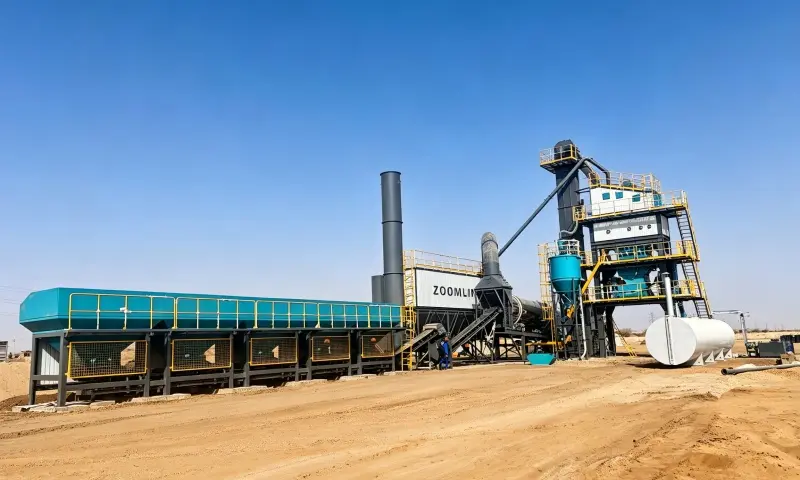
Stationary Asphalt Plants: Built for Long-Term Fixed Production
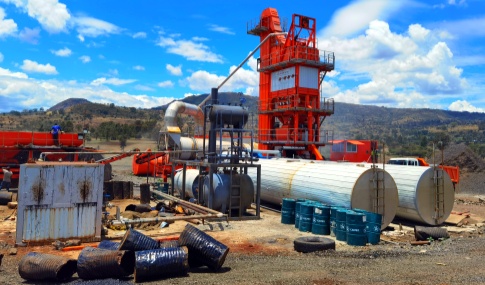
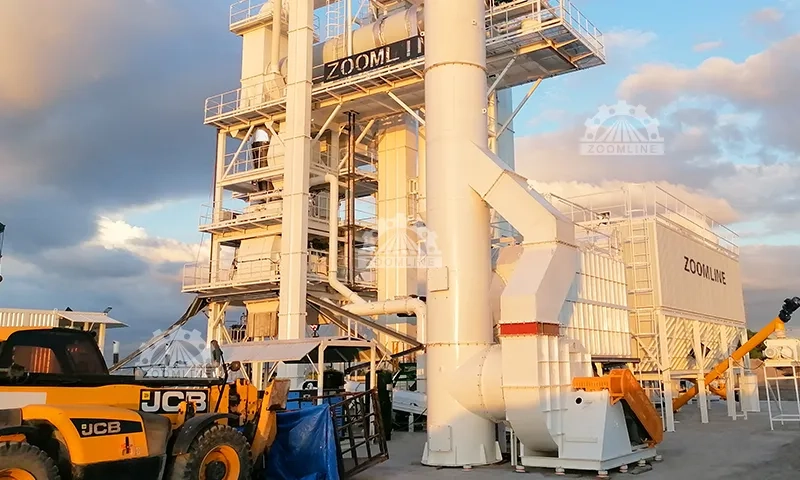
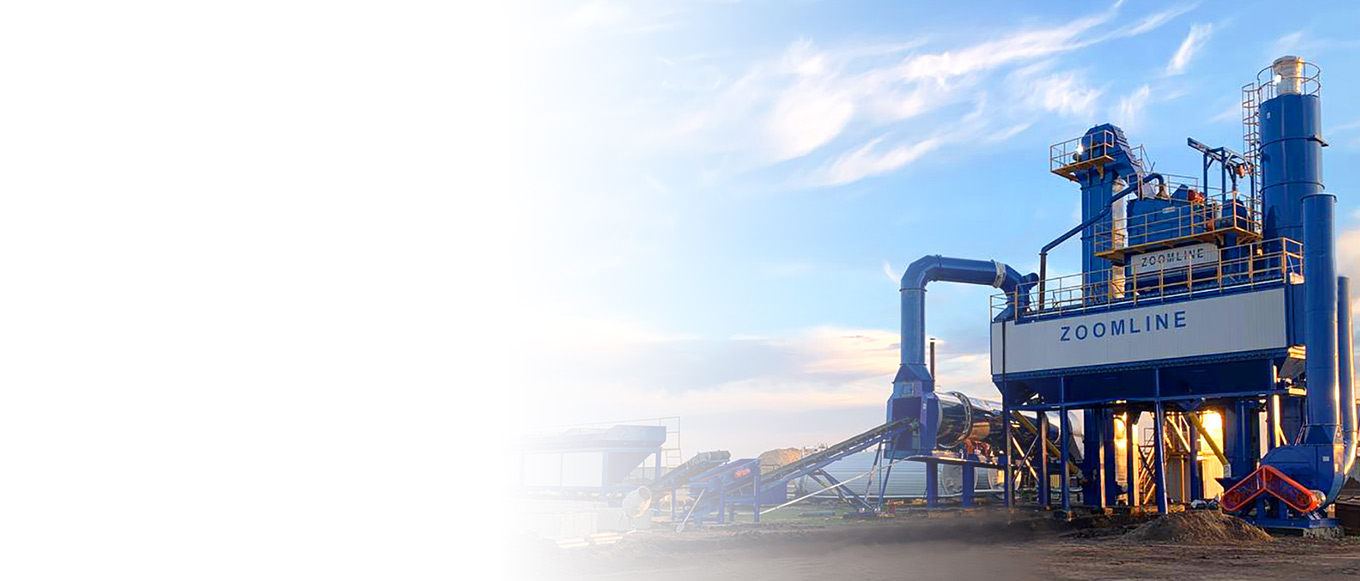
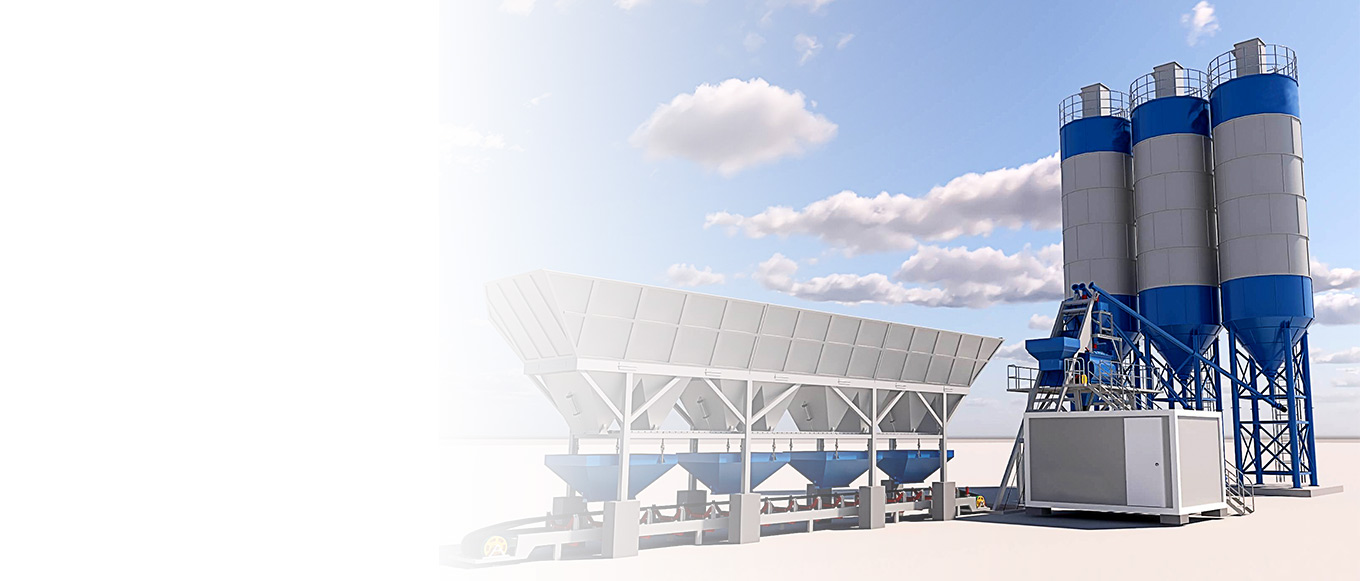
It is a permanent or semi-permanent production equipment, and its core design goal is to achieve large-scale, high-precision and stable production at a single site. It is the mainstream configuration of long-term large-scale infrastructure projects.
This type of asphalt mix plant requires complete site infrastructure, including exclusive equipment foundation, bearing base, drainage system, power distribution system, dust removal supporting facilities, etc., with large amount of early civil construction work, high investment cost and long installation and commissioning cycle. The overall structure of the equipment is integrated and large-scale, the relocation is extremely difficult, the disassembly process is complex, and frequent transfer is basically not supported.
Core Strengths: high production capacity, strong production stability, high mixture ratio accuracy, low equipment failure rate, long-term continuous mass production, the lowest production cost per unit of finished materials, suitable for building standardized production bases.
Key Limitations: strict site preparation requirements, high initial infrastructure investment, long transition period, extremely high relocation cost, poor site flexibility, unable to adapt to multi-point, short-term and scattered construction projects.
Typical application: highways, national trunk highways, large-scale municipal supporting projects, long-term fixed-point supply of building materials production base.
Mobile Asphalt Plants: Balanced Mobility & Production Stability
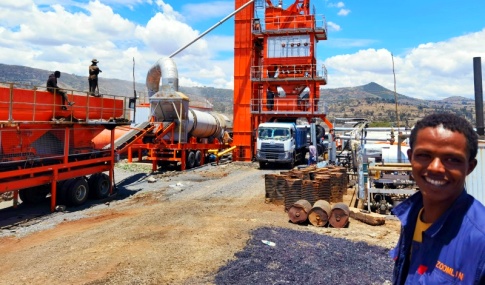
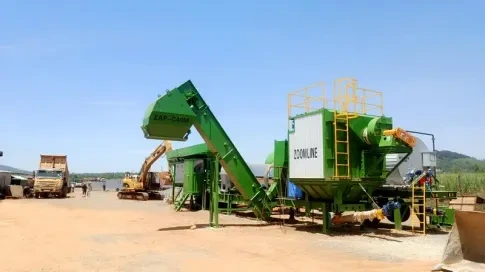
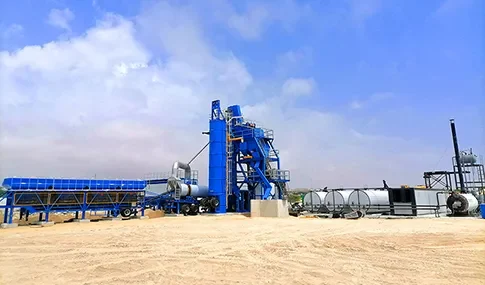
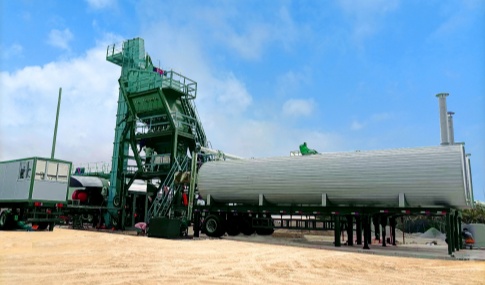
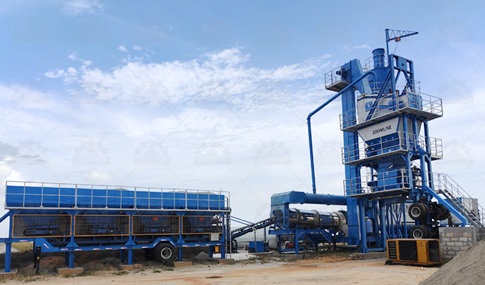
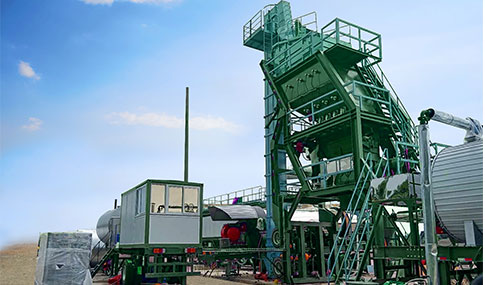
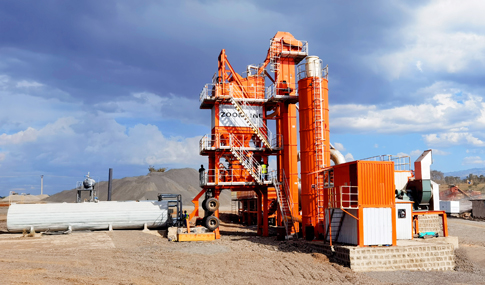
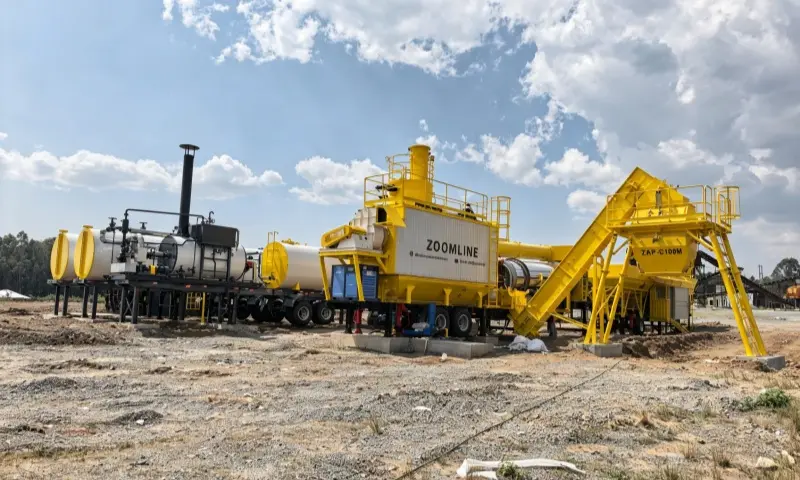
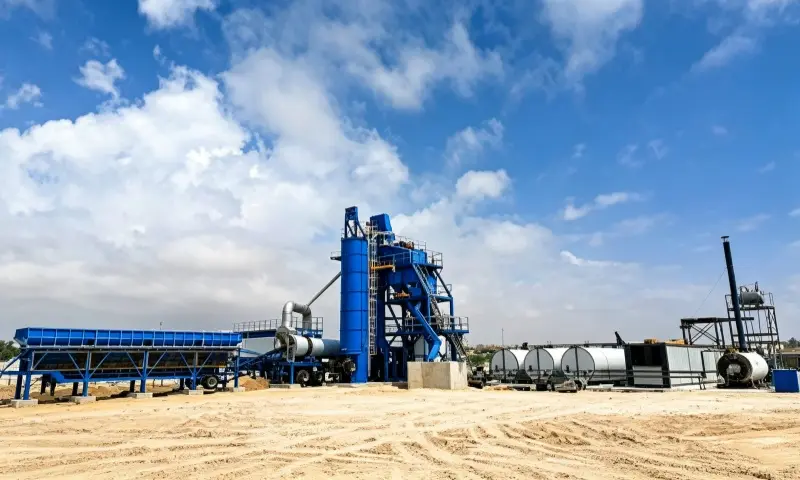
Adopts modular split design, specially built for multi-site construction contractors, the core advantage is to break the site limit of fixed equipment, support cross-site transfer operation, deployment efficiency is much better than traditional fixed equipment.
The whole equipment adopts modular assembly structure, each functional unit is separated independently and combined conveniently, without large-scale civil construction, which can quickly complete site construction and production, and perfectly adapt to the enterprise operation mode of regional multi-point construction.
Core advantages: strong site adaptability, no permanent infrastructure, moderate transition flexibility, stable production performance, balance capacity demand and mobile demand, adapt to most small and medium-sized, multi-site road projects.
Key Limitations: It is not a quick-deployment equipment that is ready to be moved. Each transfer still needs to complete the processes of disassembly, transportation, site reset, equipment reinstallation, system calibration, trial production, etc., and a certain transition period needs to be reserved.
Important clarification: conventional “mobile” is not equal to “instantaneous movement”, the actual transfer efficiency is affected by multiple factors such as equipment configuration, site conditions, local transportation policies, construction supporting personnel, etc.
Super Mobile Asphalt Plants: Designed for Minimal Downtime & Fast Deployment
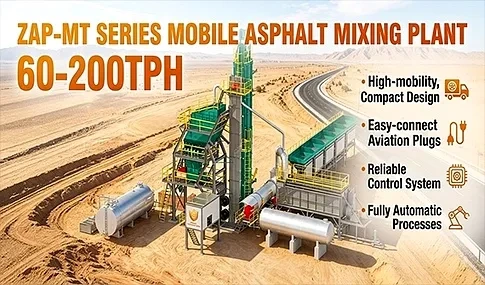
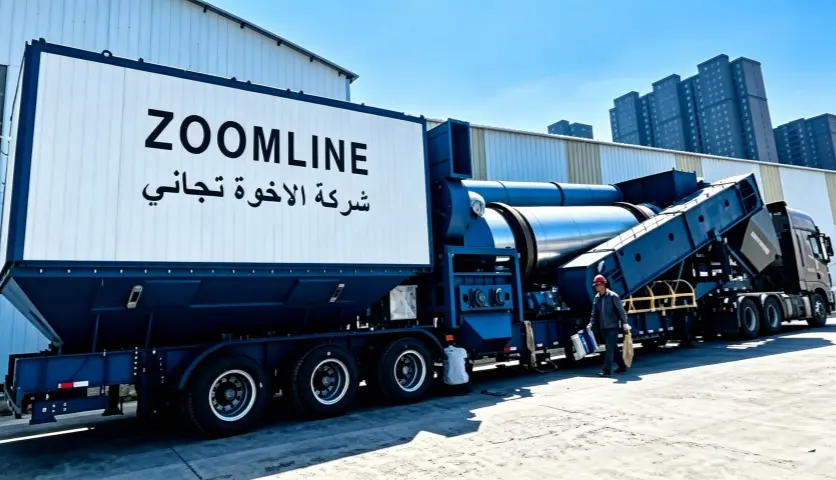
It is a new category of engineering equipment iteration in 2026. Its core design logic is different from conventional mobile asphalt plant equipment: not only can it be transported, but also can minimize the transition process, reduce site preparation, reduce downtime and realize rapid resumption of production.
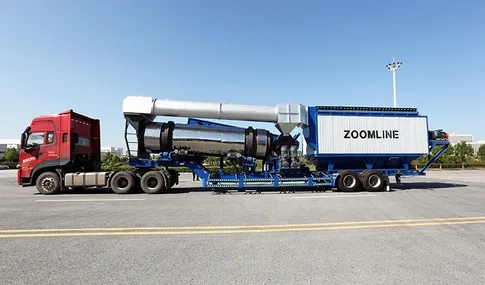
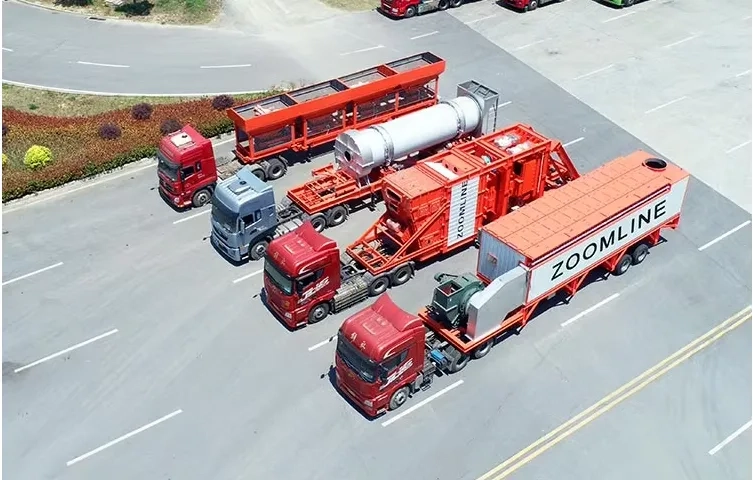
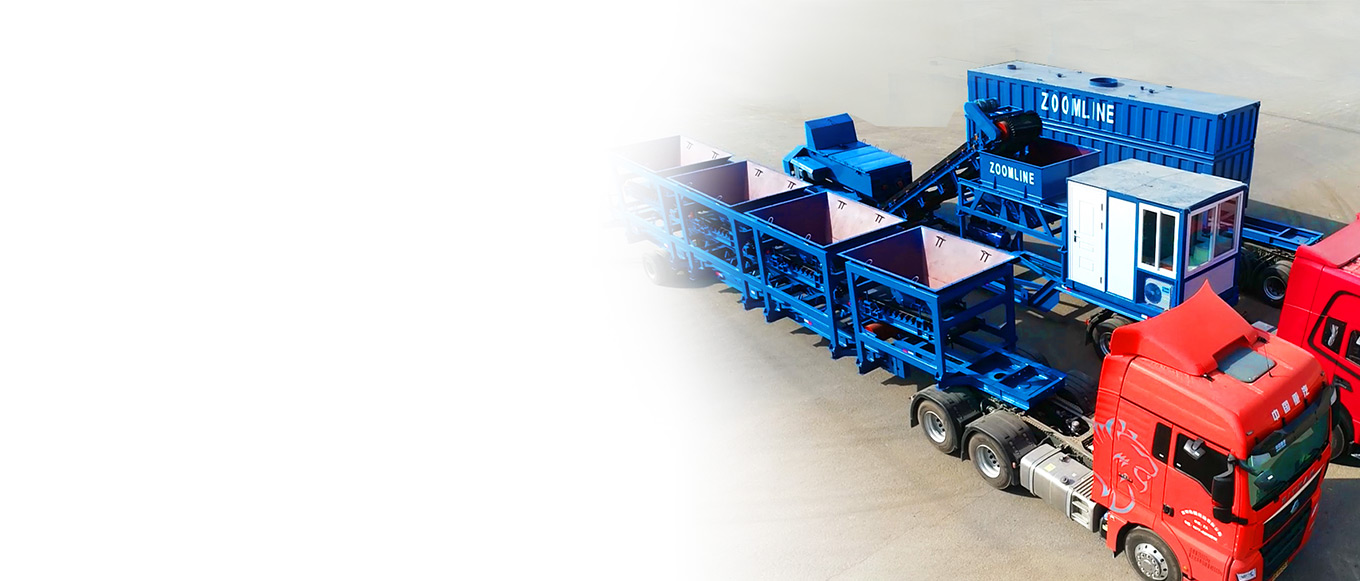
The equipment adopts a highly integrated trailer integration structure, and the modular integration of the whole machine is extremely high, which greatly reduces the number of split parts, does not require complex foundation construction, and gets rid of the dependence of traditional mixing plants on site infrastructure. From equipment disassembly, transportation, mobilization, installation to commissioning and production, the efficiency of the whole process has been greatly improved, and the pain points of high-frequency transition, remote construction and tight construction period have been specially solved.
Core Strengths: extreme deployment speed, no upper limit on transition frequency, strong site adaptability, almost no need for civil engineering preparation, which can minimize shutdown loss caused by equipment relocation, and perfectly adapt to decentralized, remote and emergency construction projects.
Key Considerations: Extreme mobility does not mean adaptation to all working conditions, and the corresponding configuration still needs to be selected according to the project capacity demand and mixture ratio standard; at the same time, the actual production speed will be affected by the site terrain, local construction specifications and supporting logistics conditions.
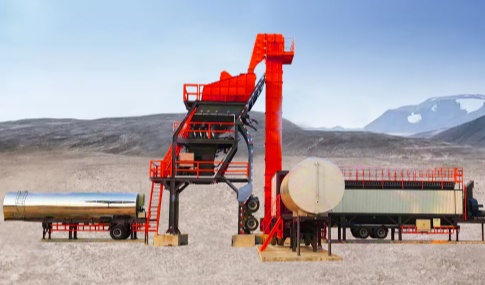
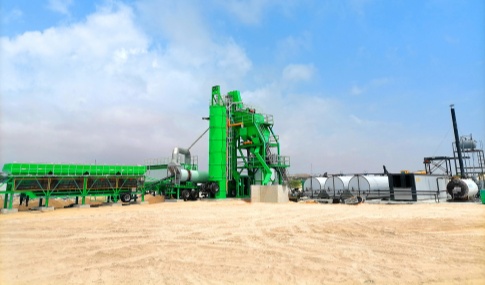
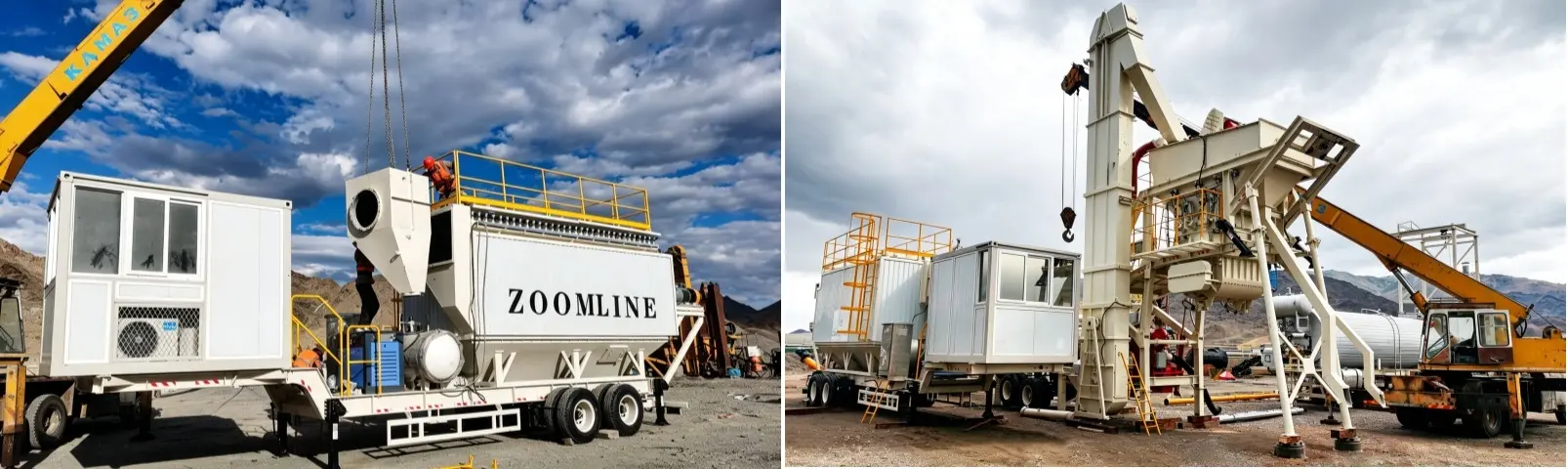
The super mobile asphalt plant stands out for its one-trailer integrated structure, high mobility without capacity loss, and adaptive performance for scattered road projects. A typical real-world application is the 120TPH super mobile asphalt plant deployed in Peru, which fully demonstrates the advantages of rapid relocation, continuous mixing and high RAP recycling efficiency in complex mountain road construction: From One Trailer to 120 TPH: How a Super Mobile Asphalt Plant Is Solving Road Construction Challenges in Peru
Mobile Asphalt Plant vs. Stationary Asphalt Plant vs. Super Mobile Asphalt Plant: Side-by-Side Comparison
The following table compares the key differences of stationary asphalt mixing plant, mobile asphalt mixing plant and super mobile asphalt mixing plant from the core construction dimension, visually presenting the core basis for selection, covering the requirements of procurement, construction and cost control.
| Comparison Factor | Stationary Asphalt Plant | Mobile Asphalt Plant | Super Mobile Asphalt Plant |
| Mobility Level | Low | High | Very High |
| Site Preparation Work | Heavy | Moderate | Minimal |
| Foundation Requirement | Strict & Large | Configuration-dependent | Light / No Foundation |
| Installation Time | Long | Moderate | Short |
| Relocation Complexity | Very Complex | Planned Relocation Required | Simplified & Integrated |
| Suitable Relocation Frequency | Low / Never | Moderate | High / Frequent |
| Relocation Downtime | High | Moderate | Very Low |
| Civil Work Investment | High | Moderate | Low |
| Multi-Site Flexibility | Low | High | Very High |
| Best Project Model | Long-term fixed production hub | Multi-site periodic projects | Scattered & frequent-move projects |
Table explanation: The essential gap between the three types of asphalt mixer plant equipment is not a simple “can move”, but a comprehensive gap between site input cost, transition time cost and shutdown delay cost, which is also the core consideration point for fine selection of 2026 projects.
The Real Cost Difference: Installation, Relocation, and Hidden Downtime Cost
Most purchasers only pay attention to the purchase unit price of batch mix asphalt plant, ignoring the comprehensive cost of the whole life cycle, which is the core reason for the loss of selection. Professional procurement logic in 2026 must cover the full-dimensional costs of equipment installation, transfer, commissioning, delay, etc.
Initial Site Setup & Civil Work Cost
Stationary asphalt mixing plant: complete site leveling, equipment foundation pouring, drainage system construction, power distribution facilities laying, plant supporting construction and other projects are required. The amount of civil engineering in the early stage is large, the cycle is long, and the capital investment is high. It is only suitable for long-term production projects, and short-term projects cannot recover the cost completely.
Conventional mobile asphalt mixing plant: no large-scale permanent infrastructure, only simple site hardening and supporting facilities, moderate civil construction cost, suitable for medium-term and multi-cycle projects.
Super mobile asphalt mixing plant: relying on integrated structure, basically get rid of infrastructure dependence, site rectification, foundation construction costs are extremely low, can maximize the savings in early investment.
Key cognition: the lowest unit price of equipment does not mean the lowest comprehensive cost of the project, and the civil engineering input is a large fixed expenditure that is easy to be ignored.
Transportation & Relocation Cycle Cost
Asphalt mixing plant transfer cost is not only including transportation costs, but covers truck transportation, lifting equipment leasing, manual disassembly, remote reloading, logistics planning, cross-regional approval and other expenses.
Stationary asphalt mixing plant: complicated disassembly, numerous parts, many times of transfer transportation, high labor cost and long time consuming;
Conventional mobile asphalt mixing plant: moderate transition cost, suitable for low-frequency, planned transition; (how to reduce mobile asphalt plant downtime?)
Super mobile asphalt mixing plant: high integration, convenient disassembly, can greatly reduce labor, logistics and lifting costs.
Key Cognition: The cost calculation of batch mix asphalt plant mobility needs to be based on the unit of complete transition period, rather than simply transportation distance.
Installation & Commissioning Cost
Assembly, electrical wiring, system calibration, trial production and commissioning acceptance of batch mix plant after mobilization are key links affecting construction progress.
Stationary asphalt mixing plant: complex commissioning process and long cycle;
Mobile asphalt mixing plant: moderate difficulty in equipment debugging;
Super mobile asphalt mixing plant: high equipment pre-installation, simple commissioning, can quickly complete the commissioning acceptance.
The Hidden Cost of Production Downtime
For engineering construction enterprises, the shutdown and shutdown during the relocation of asphalt batch mix plant is the most easily overlooked but most expensive hidden cost. Every more day of equipment shutdown will cause multiple losses such as delay of construction period, idle labor, equipment vacancy, delay of project payment, etc., which will directly compress the net profit of the project.
Relocation Economics Formula: Total Moving Cost = Transportation + Labor + Site Civil Work + Installation & Commissioning + Production Downtime Loss
Under the short-cycle and high-turnover engineering mode in 2026, shutdown and delay cost has become the largest hidden expenditure of decentralized projects and the core value of super mobile asphalt mixing plant.
Which Asphalt Plant Is Best for Different 2026 Road Construction Scenarios?
In 2026, various road engineering adaptation equipment schemes are combined with the current engineering construction mode to match bitumen batch mix plants according to real project scenarios, which is more accurate than simply selecting according to project size and can perfectly meet various construction needs.
Long-Term Highway & Expressway Construction
Feature: long construction period, fixed site, stable mixture demand, long production cycle, suitable for building permanent production base.
Best fit: stationary asphalt mixing plant, long-term steady state mass production can dilute the fixed input of civil engineering, the lowest unit production cost, the best production accuracy and stability.
General Contractors with Multiple Regional Projects
Feature: undertaking multiple regional projects at the same time, rotating construction sites, staggered construction periods, and continuous supply.
Best fit: conventional mobile asphalt mixing plant, balance capacity stability and site flexibility, adapt to periodic transition needs, adapt to the normal operation of enterprises.
Remote & Geographically Isolated Road Projects
Feature: long distance between construction points, high cost of long-distance transportation of materials, simple site and no perfect infrastructure.
Best fit: mobile/super mobile asphalt mixing plant, nearby production, reduce material transportation costs, adapt to simple site conditions.
Short-Cycle Projects with Frequent Relocation
Feature: short duration of single project, frequent replacement of construction points, and inability to withstand long-term shutdown loss.
Best fit: super mobile asphalt mixing plant, extremely compressed transition and resumption time, completely solve the pain point of high-frequency transition period and cost.
Remote Areas with Poor Site Conditions
Feature: narrow site, complex terrain, no infrastructure conditions, unable to carry out large-scale civil construction.
Best fit: super mobile asphalt mixing plant, minimal site requirements, no complex foundation construction, fast landing and commissioning.
Emergency Repair & Fast-Track Infrastructure Projects
Feature: extremely tight construction period, rapid mobilization, rapid commissioning, rapid completion, and insufficient preparation time.
Best fit: super mobile asphalt mixing plant, relying on rapid deployment capacity, to meet the emergency construction needs of short construction period and fast production.
How 2026 Road Construction Trends Are Changing Asphalt Plant Selection
With the refinement, greening and efficient upgrading of the infrastructure industry, the traditional selection logic has been subverted, and new industry trends are changing the asphalt hot mix plant procurement standards.
Multi-Site Operation Makes Mobility a Core Competitiveness
At present, road engineering is no longer dominated by single long-term projects, multi-point dispersion, sporadic transformation, regional road network upgrading projects continue to increase, mobile asphalt mixing plants with flexible deployment capability have become the core competitive advantages of small and medium-sized engineering enterprises.
Tighter Project Schedules Make Downtime Cost Unaffordable
The stricter requirements of the industry construction period, the delay penalty and the delay loss of the construction period are greatly increased, the shutdown time caused by the transition of hot mix plant directly determines whether the project is profitable or not, and the rapid resumption ability becomes the key selection index.
Buyers Shift from “Low Purchase Price” to “Total Cost of Ownership”
In 2026, professional procurement will no longer only look at the selling price of hot mix asphalt plant, but comprehensively calculate the purchase price of equipment, civil construction cost, transportation transfer cost, operation and maintenance cost, energy consumption cost, shutdown loss cost, and the cost performance of the whole life cycle will become the core judgment standard.
Environmental & Energy Efficiency Become Hard Selection Indicators
Environmental protection control standards in various places have been continuously upgraded. Dust removal system, exhaust gas treatment, energy consumption control and energy-saving configuration of hot asphalt mixing plant have become necessary assessment items. Equipment mobility is only one of the selection dimensions. Environmental compliance, energy conservation and efficiency are the hard bottom lines of all projects.
Practical Buyer Checklist: How Much Mobility Do You Actually Need?
Before purchasing asphalt mixing plant, you can check through 8 core problems, accurately lock the appropriate model, and completely avoid the selection error:
How long does a single on-site construction of asphalt plant last? Do you need long-term fixed operation?
How many equipment transfers do you need to complete each year? How frequent is the transition?
What is the distance and dispersion between various construction projects?
Is the project time limit tight and what is the maximum allowable downtime?
Is it worth repeating civil capital costs across multiple sites?
Does this procurement serve a single short-term project or adapt to the long-term project layout of the enterprise?
What is the hourly mix capacity standard required for the project?
Is the project suitable for batch mixing or drum mixing production process?
The production process is the foundation for selection; please refer to the previous article: Batch Mix vs. Drum Mix: Which Asphalt Plant Is Better in 2026?
Core 2D Selection Framework: Production Technology × Mobility Level
Professional asphalt mixing plant selection must rely on two core dimensions, which is also the most perfect procurement decision-making system in 2026:
Dimension 1: Production process selection determines mixture production quality, formula flexibility and capacity mode, which is divided into two types: batch mixing and drum mixing.
Dimension 2: mobile grade selection, which determines equipment deployment efficiency, site cost and construction period stability, is divided into three types: stationary type, mobile type and super mobile type.
The optimal equipment configuration is an accurate match between the two dimensions and the project requirements. The classic adaptation scheme is as follows:
- Long-term fixed construction + high formulation flexibility demand → stationarybatch asphalt mixing plant
- multi-site construction + variable formulation production demand → mobile batch asphalt mixing plant
- high-frequency transition + continuous stable mass production demand → super mobile continuous asphalt mixing plant
- long-term fixed-point large-scale continuous production → stationary drum asphalt mixing plant
Important tips: The above is a standard adaptation model, and the final configuration needs to be flexibly adjusted in combination with project capacity, mixture standard, site conditions and local policies.
Final 2026 Recommendation: Which Asphalt Plant Should You Choose?
- Select stationary asphalt mixing plant: suitable for long-term stable mass production, ultra-low unit production cost, fixed-site long-term projects, maximizing dilution of fixed infrastructure investment.
- Select mobile asphalt mixing plant: suitable for regional multi-project operation, need to balance capacity and flexibility, periodic transition engineering enterprises.
- Select super mobile asphalt mixing plant: suitable for high-frequency transition, remote construction, tight construction period, strict control of shutdown losses, and the pursuit of ultimate deployment efficiency.
Closing conclusion: In 2026, asphalt mixing plant selection, should not blindly pursue large capacity or high mobility. The optimal equipment is the equipment that can accurately match the project production demand, site conditions, transition frequency, and long-term operation planning, and realize the four-dimensional balance of production capacity, cost, efficiency and compliance.
Frequently Asked Questions
What is the core difference between a mobile asphalt mixing plant and a stationary asphalt mixing plant?
Core differences are deployment model, infrastructure costs, transition flexibility, and application scenarios.
- Stationary asphalt mixing plants focus on long-term steady mass production, mobile asphalt mixing plants focus on multi-site flexible construction, and the comprehensive cost structure is completely different.
What is a super mobile asphalt plant?
- It is a new generation of highly integrated asphalt mixing plant equipment, with the core design goal of “fast transition, minimal infrastructure and extremely low delay”. The mobility and deployment efficiency are far superior to conventional mobile equipment, and it is suitable for high-frequency transition construction scenarios.
Does mobile asphalt mixing plant need to be a foundation?
- Conventional mobile asphalt mixing plants need simple hardening foundation, no large-scale permanent infrastructure; super mobileasphalt mixing plants can mostly realize no foundation or minimal foundation landing, and the site adaptability is extremely strong.
How long does it take to relocate a mobile asphalt plant?
- No fixed time, affected by equipment configuration, personnel proficiency, site conditions. A super mobile asphalt mixing plant can greatly reduce the transition period, saving more than 50% of the time lost than conventional mobile asphalt mixing plant.
Which asphalt plant is best for highway projects?
- A stationary asphalt mixing plant is preferred for long-term high-speed projects to ensure mass production stability and mixture accuracy; segmented and remote high-speed construction can be matched with mobile asphalt mixing plant equipment for auxiliary operation.
Is a super mobile asphalt plant suitable for high-capacity production?
- Yes, the current mainstream super mobile asphalt mixing plant can meet medium and high production capacity requirements, fully able to meet the mass production standards of conventional road engineering, taking into account mobility and production capacity.
Can mobile asphalt mixing plant and stationary asphalt mixing plants produce the same asphalt quality?
- The production ratio, mixing process and quality control standards of qualified asphalt mixing plant are unified. As long as the equipment is debugged in place, the parameters are compliant, and there is no obvious difference in the quality of finished materials, they can meet the national standard construction requirements.
How to choose between batch mix and drum mix technology?
- Variable formula, high standard pavement engineering choose batch mix; stable mass production, conventional pavement construction choose drum mix.
Is a super mobile asphalt plant worth the investment?
- For multi-site, high-frequency transition, remote construction enterprises, can greatly reduce the comprehensive cost, reduce the loss of construction period, high return on investment; single fixed long-term projects do not need to be selected.
RELATED NEWS