

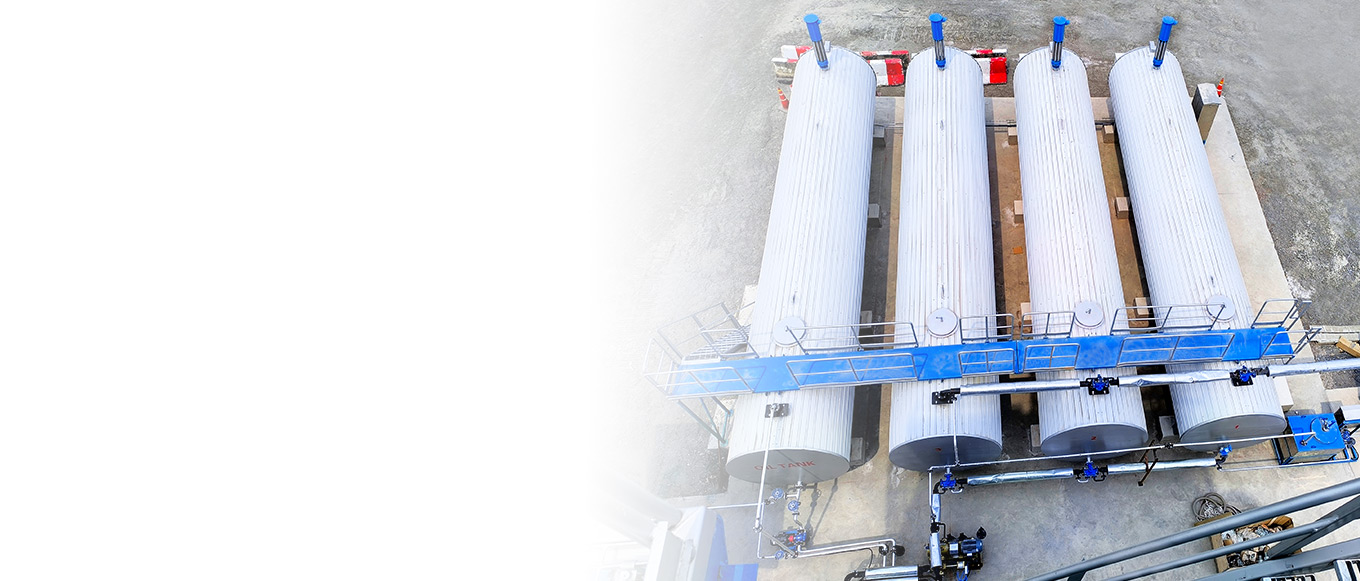


How to Choose a RAP Crushing Plant: Capacity, Configuration, and Equipment Selection
Introduction
With the continuous popularization of road recycling resources utilization technology, the recycling and reprocessing of waste asphalt pavement materials (RAP) has become the core way of asphalt production, road maintenance engineering cost reduction and efficiency improvement, and green construction. RAP crushing production line, as the core equipment of waste asphalt material treatment, directly determines the finished product quality, production efficiency and overall project income of recycled aggregate.
In the process of industry selection, most buyers will fall into a misunderstanding: only a single selection of crusher host equipment, ignoring the systematic matching of the entire production line. In fact, a qualified RAP crushing production line is not a simple superposition of single equipment, but an integrated system engineering integrating feeding, crushing, screening, conveying and recycling.
If you want to select the RAP crushing production line suitable for the project, you need to comprehensively consider eight core factors: the actual processing capacity of the project, RAP raw material characteristics, finished product particle size standards, crushing and screening configuration, material circulation logic, construction site conditions, operation and maintenance requirements, and manufacturer supporting services. In this paper, a systematic RAP crushing production line selection framework will be established based on practical engineering experience to help asphalt production enterprises, road construction contractors and renewable resource operators accurately match equipment and avoid common problems such as selection errors, capacity mismatch and operation stagnation.
Core selection concept: high-quality RAP crushing plant, must be based on the whole set of processing system as the core for selection, rather than simply refer to a single equipment parameters.
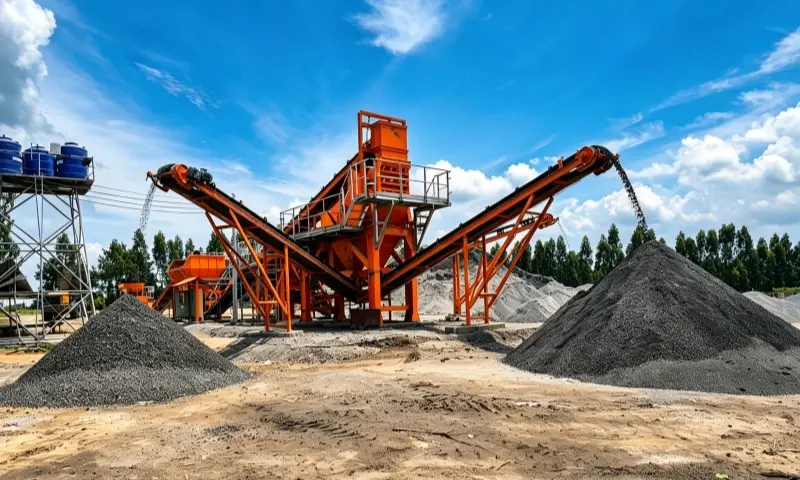
Define Your RAP Processing Requirements Before Choosing Equipment
The premise of all equipment selection is to meet the actual needs of the project. Before comparing equipment parameters such as crushers and vibrating screens, it is necessary to sort out the application scenarios, finished product standards and production scale of the project, so as to avoid problems such as excess equipment, insufficient production capacity and substandard finished products from the root cause.
Identify Your RAP Processing Application
Different RAP processing application scenarios have significant differences in production line capacity, equipment configuration and process plan requirements. This article focuses on how to determine the equipment selection in the scenario, and the RAP regeneration general process without redundancy. The six core engineering scenarios and corresponding selection points are as follows:
- Self-owned asphalt production supporting processing: RAP aggregate is only used by self-owned mixing station, and the core of selection is to ensure accurate matching of equipment capacity, finished particle size and back-end asphalt mixing plant production equipment to maintain production continuity.
- Commercial RAP material supply: market-oriented external supply, selection needs to give priority to supporting multi-specification finished product classification, stable and continuous discharge, and adapt to diversified customer material standards.
- Material preparation for asphalt recycling plant: As the pre-treatment link of the back-end recycling process, the equipment selection shall strictly conform to the feed particle size and capacity admission standards of the asphalt recycling plant equipment.
- Independent operation of dedicated regeneration plant: suitable for long-term and large-scale continuous production, with emphasis on system operation stability, low failure rate and long-term operation and maintenance capability.
- Special material treatment for road maintenance: short project cycle, unstable site, scattered construction scenarios, giving priority to equipment schemes with strong flexibility and rapid installation and commissioning.
- Multi-project temporary mobile processing: equipment needs high-frequency relocation and multi-point operation, and the core of selection is equipment portability, rapid production ability and low site dependence.
Define Your Target RAP Product Sizes
The particle size specifications of finished aggregates directly determine the crushing process, screening configuration and return system design of the entire production line, which is the core technical basis for equipment selection. All configuration schemes need to be developed around the finished product standard.
Four core requirements need to be identified in the selection process:
Whether the project requires a single specification finished product or a variety of particle size graded materials;
The compliance of the finished product particle size interval and error standards;
The specification for the use of materials for asphalt mixing and road construction at the rear end;
Whether it needs fine screening, ultra-specification material cycle crushing function.
Core points: it is necessary to determine the technical parameters and use standards of RAP finished products, and then reverse match the configuration of the RAP crushing and screening system, rather than selecting equipment first and then adjusting the production process.
Before determining the finished product particle size standard, it is also necessary to understand the basic characteristics of RAP raw materials such as grading, moisture content and cleanliness, because these factors will further affect the equipment configuration of crushing, screening and subsequent recycling processing. For RAP raw material quality and pretreatment, please refer to how to prepare high-quality RAP.
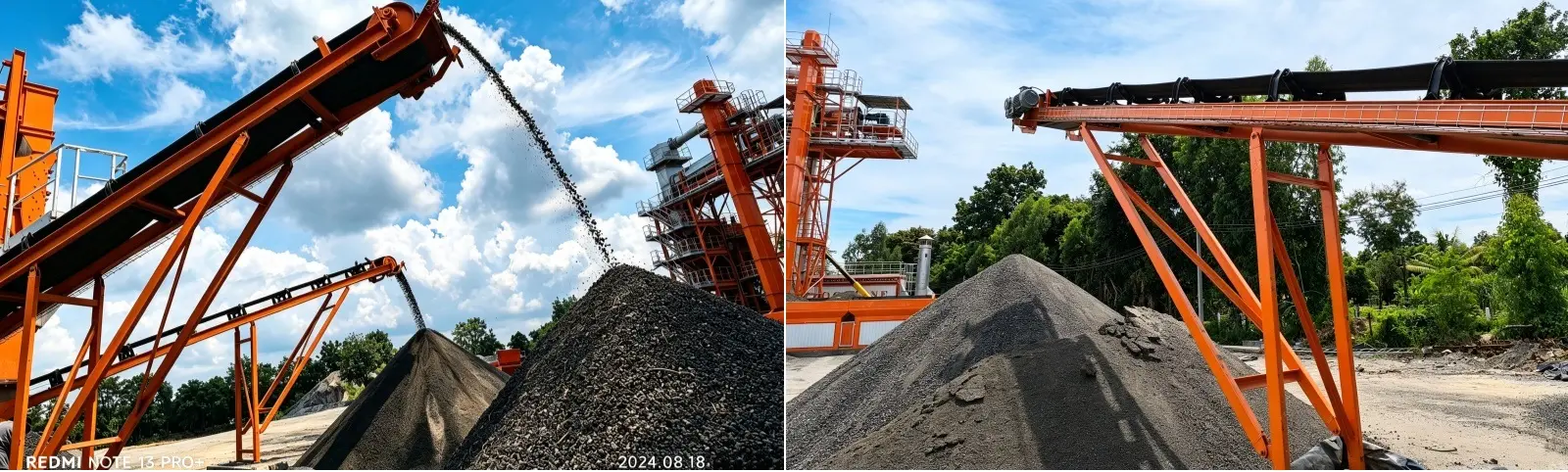
Assessment of Project Production Scale and Operation Cycle
In addition to the material and finished product standards, the project production volume and operation mode will also directly affect the capacity selection and equipment configuration. It is necessary to comprehensively investigate and arrange six key dimensions: the overall RAP processing volume of the project, the daily effective operation time, the overall construction cycle, seasonal production fluctuations, RAP raw material supply stability, and peak production capacity demand. At the same time, it is necessary to consider the capacity matching degree of the existing supporting equipment at the back end to avoid the disconnection of upstream and downstream production capacity.
Summary of this section: RAP crushing production line selection must follow the principle of “determining project requirements first, then selecting equipment configuration”, all equipment parameters and process schemes are served by the actual production scenario of the project.
Determine the Required Capacity of Your RAP Crushing Plant
Capacity is the core indicator of RAP crushing production line selection, too much capacity will cause equipment idle, investment waste, insufficient capacity will lead to delay in construction period, production stuck, accurate matching capacity is the key to ensure project income.
Scientific Calculation of Required Hourly Processing Capacity
Industry general accurate capacity accounting formula:
Required Hourly Capacity = Total RAP to Be Processed ÷ Effective Operating Hours
In which the effective operating hour is not the natural working time. It is necessary to deduct all kinds of invalid working hours such as equipment start-up and shutdown debugging, daily routine maintenance, material loading and unloading replacement, site sudden shutdown, production parameter adjustment, etc., and calculate the effective time of real continuous production. Based on this, the model selection can avoid the disconnection between theoretical capacity and actual production.
For example, a road recycling project needs to treat 50,000 tons of waste asphalt, and the effective operation time in the project cycle is 1000 hours, so the hourly capacity of the equipment required for the project is 50 tons/hour. Reasonable allowance shall be reserved on this basis during selection.
Understand Rated Capacity vs. Actual Throughput
Most purchasers are prone to cognitive errors: equating the rated capacity marked on the equipment nameplate with the actual discharge capacity on site.
Professional selection in the industry needs to distinguish three levels of capacity dimensions, which are indispensable and progressive:
Rated Capacity → Effective Capacity → Required Capacity
Rated capacity is the theoretical reference value under the manufacturer’s standard working conditions, which is only used as a reference for basic parameters; effective capacity is the actual capacity that the equipment can stably and continuously output after deducting various production disturbances; the required capacity is the target discharge standard that is truly adapted to the project landing in combination with the project working condition accounting.The three are usually not completely equal, which is the core professional basis for selection.
The core factors affecting the actual production capacity include: RAP raw material feed particle size, aging degree of waste asphalt, material moisture content, crusher gap setting, vibrating screen screening efficiency, material recycling ratio, conveyor conveying capacity, standardization degree of operators, equipment failure shutdown time, etc.
Therefore, when selecting and evaluating, we cannot only refer to the rated capacity of a single machine, but must take the actual stable discharge capacity of the whole production line as the core evaluation standard.
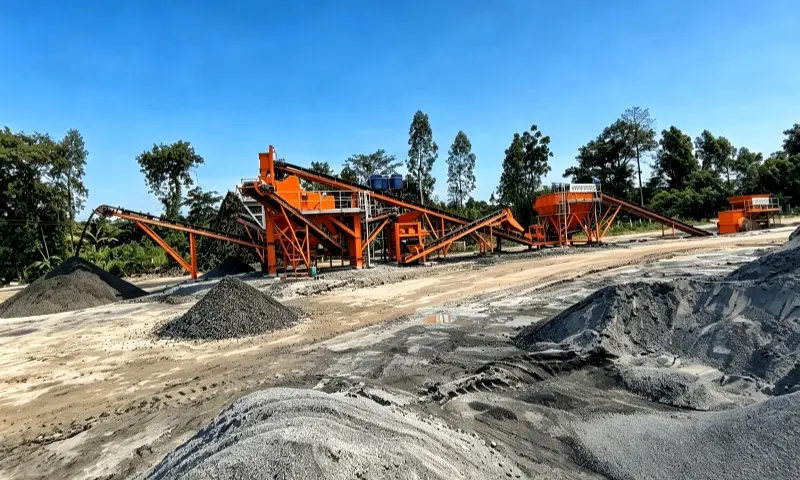
Achieve Balanced Capacity Matching of Crusher, Screen, Feeder, and Conveyor
RAP crushing production line is a closed-loop circulation system, capacity matching needs to follow the principle of full-line equilibrium, complete material circulation link: feeding → crushing → screening → recycling → conveying → stacking. Any link capacity imbalance will become the bottleneck of the whole production line.
Common capacity bottleneck problems in the industry: Crusher overcapacity, but insufficient screening capacity of vibrating screen, resulting in material accumulation, blocking shutdown; feeding equipment feeding instability, fast and slow, resulting in crusher load fluctuations, uneven finished products; conveyor capacity is insufficient, unable to timely transfer finished materials; over-specification return is too large, exceeding the crushing system load, resulting in cycle congestion.
When selecting models, the parameters of the whole RAP crushing line must be made clear to ensure that the production capacity of feeding, crushing, screening, conveying and returning systems is matched layer by layer, without short board and redundancy.
Consider Future Production Requirements
The type selection of reserved future production expansion space cannot only meet the current production demand, and reasonable expansion space shall be reserved in combination with the long-term planning of the project. Focus on the existing RAP raw material storage capacity, future waste asphalt recycling increment, asphalt mixing plant capacity expansion planning, recycling plant scale upgrading needs, etc.
At the same time, it is necessary to follow the principle of moderate reservation, not blindly select large-capacity equipment, avoid idle equipment and high investment costs, and balance current production demand with long-term development planning.
Summary of this section: Capacity selection should be based on real production conditions, taking into account current demand and future expansion, focusing on ensuring balanced discharge capacity of the entire RAP crushing production line, rather than maximizing single equipment parameters.
Third, core equipment selection: Crusher, screening machine and supporting equipment accurately match
Select the Right Crushing, Screening and Supporting Equipment
RAP waste asphalt and natural raw stone aggregate material characteristics are significantly different. Affected by source, aging degree, moisture content and original particle size, RAP materials may contain aged asphalt, irregular particles and impurities, and the state of materials fluctuates greatly. This differentiation characteristic determines that RAP processing cannot directly apply the selection logic of raw stone crushing equipment, and it is necessary to match special crushing and screening equipment according to material characteristics.
Choose a Crusher Suitable for RAP Processing
Crusher as the core host of the crushing production line, material characteristics are an important reference premise, but the selection needs to focus on standardized equipment core parameters, with equipment adaptability as the only core, key selection indicators include: maximum feed particle size, target finished particle size, hourly processing capacity, crushing ratio, body gap adjustment range, wear parts quality, operation and maintenance convenience, closed-loop material return adaptation capacity. The production requirements brought by all material characteristics need to be matched to the above equipment parameters, rather than simply optimizing the material processing method, so as to avoid overlapping with the RAP material preparation content in the station.
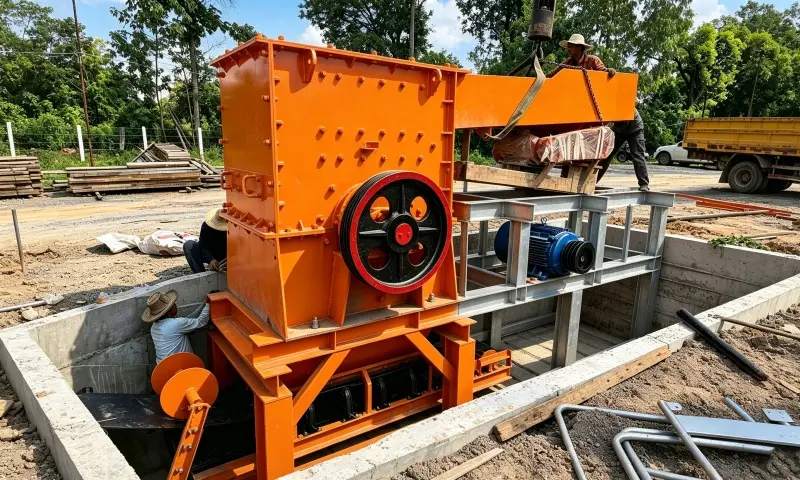
For example, RAP materials are easy to bond and uneven particles, requiring crushers to have a wider range of adjustable gaps, anti-blocking structures and high-quality wear-resistant accessories to adapt to special material conditions and ensure stable discharge.
Select the Right Screening Equipment
Screening effect directly determines the uniformity and qualified rate of finished RAP aggregate, and at the same time affects the circulation efficiency of the whole production line. The selection core focuses on five dimensions:
Finished product classification requirements: match the corresponding screening layers and sieve hole configuration according to the requirements of single specification/multi-specification finished products;
Sieving capacity and area: the effective screening area of the screen should be accurately matched with the crushing capacity to avoid screening lag;
Sieve layer structure configuration: select suitable sieve layer layout according to material characteristics to ensure classification accuracy;
Anti-blocking screen performance: for wet RAP materials easy to bond, easy to block the net problem, give priority to the anti-blocking screen design;
Screening efficiency: High screening efficiency can reduce the backflow of unqualified materials and improve the overall production capacity and finished product quality.
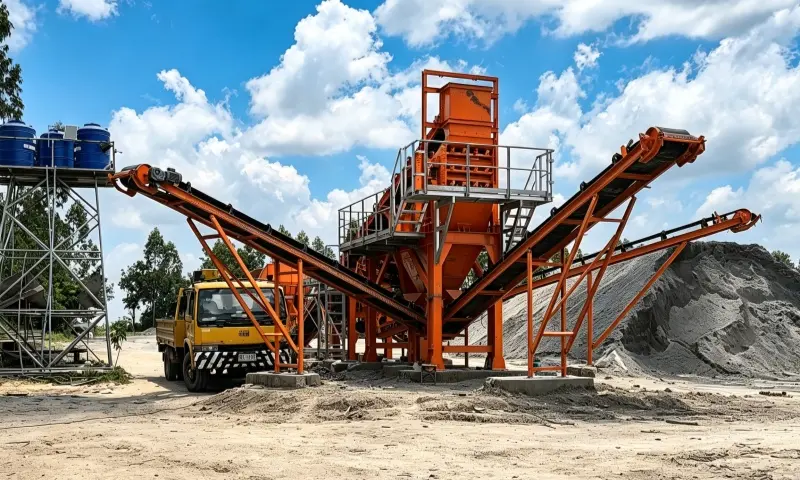
Evaluate Feeders and Conveyors as Part of the Complete System
Feeding, conveying equipment system matching equipment is to ensure the stable operation of the production line basis, parameters can not be ignored, the core evaluation of three modules: The stability of the bin and quantitative feeding equipment, to ensure uniform and continuous feeding, to avoid load fluctuations;
The conveyor capacity, transfer point design, to ensure rapid material transfer, no accumulation; The discharge conveyor and finished product stacking area layout adaptation, convenient material storage and transfer.
Consider Oversize Material Handling and Recycling Crushing Equipment
For the oversize large particle materials produced after screening, it is necessary to complete the return conveying and closed-loop crushing system. According to the precision requirements of finished products, the return conveyor can be configured to return unqualified materials to the crusher for secondary crushing to form closed-loop production.
Base materials, low-precision scenarios can simplify the circulation system; for high-standard materials for asphalt mixing, the configuration of closed-loop recycling process can help improve the consistency of finished particle size control and reduce the risk of over-specification materials entering the final product.
Summary of this section: RAP crushing production line is an integrated system, which needs to realize the matching of feeding, crushing, screening, conveying and returning materials. Do not judge the performance of crushing plant alone.
Choose the Right RAP Crushing Plant Configuration
After determining the core equipment, it is necessary to combine the equipment and design process according to the RAP crushing project requirements. Different process configurations are suitable for different scenarios. Reasonable system configuration is the key to efficient production.
Single-Stage Crushing vs. Multi-Stage Crushing
There is no absolute advantage or disadvantage between the two crushing processes, which need to be comprehensively selected according to raw material particle size, finished product standard, crushing ratio, capacity demand, investment cost and operation difficulty:
Single-stage crushing: simple structure, low investment, convenient operation and maintenance, suitable for small raw material particle size, finished product accuracy requirements of the general project;
Multi-stage crushing: large crushing ratio, more uniform finished product particle size, higher production capacity, suitable for large-particle RAP raw materials, high-precision finished products, large-scale mass production projects, equipment complexity and operation and maintenance costs are relatively higher.
Open-Circuit Processing vs. Closed-Circuit Processing
Open-circuit production process: the material flow is “feeding → crushing → screening → finished product discharge”, no recycling cycle, simple process flow, less equipment, convenient operation and maintenance, suitable for basic recycling projects with low requirements for finished product particle size consistency.
Closed-loop production process: the material flow is “feeding → crushing → screening → over-specification material recycling → secondary crushing”, forming a closed-loop cycle, which can accurately control the finished product particle size, greatly improve the material utilization rate, balance the equipment load, and have a high qualified rate of finished products.
The selection needs to compare the finished product control accuracy, material circulation ratio, equipment load, system complexity of the two, and optimize the configuration according to the project requirements.
Integrated RAP Crushing and Screening Systems
Integrated RAP crushing and screening system integrates feeding, crushing, screening, conveying, returning and centralized control systems into one. The compliant integrated system can effectively simplify equipment coordination and docking, optimize the overall material circulation planning, unify the control system logic, streamline the site layout, reduce the connection deviation and operation jam caused by the split equipment collocation, and meet the selection requirements of most standardized RAP regeneration projects.
Mobile, Portable, or Stationary RAP Crushing Plant
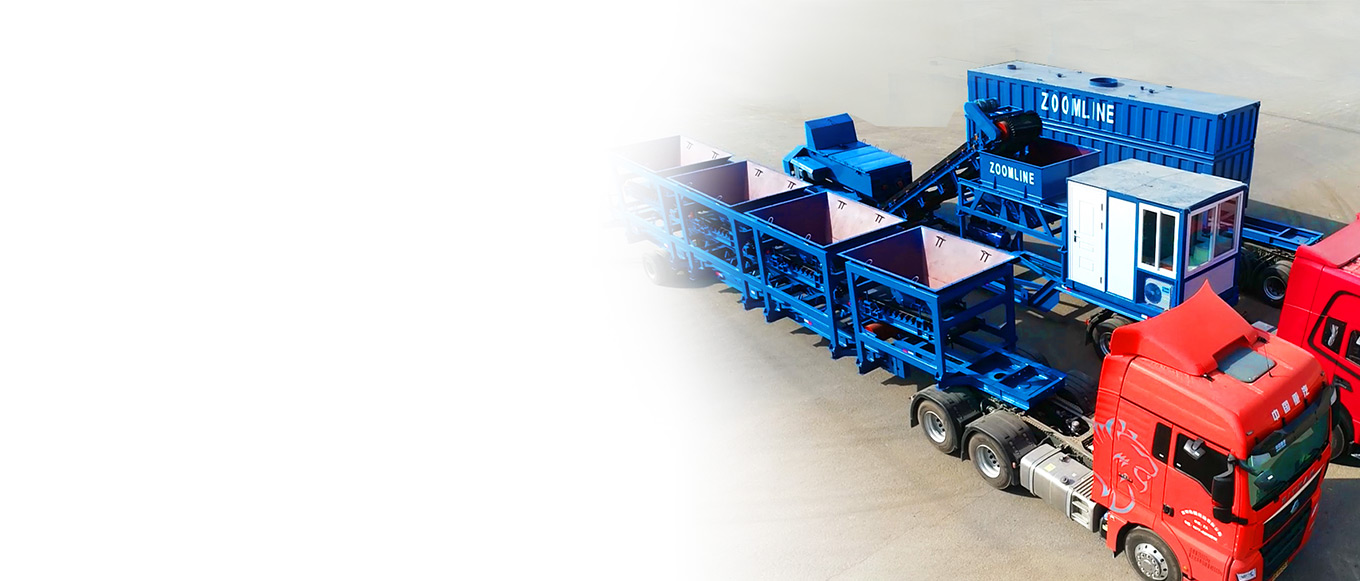
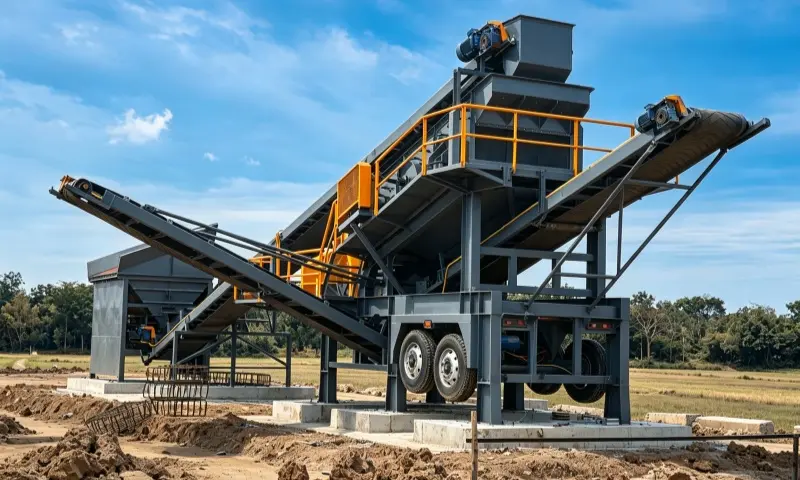
The industry mainstream RAP crushing plant equipment form divided into stationary RAP crushing plant, mobile RAP crushing plant, portable RAP crushing plant three categories, the core according to the project cycle, relocation frequency, site conditions, transportation needs, long-term operation planning, the number of construction points selection. Different equipment manufacturers have slightly different definitions of “mobile” and “portable”, mainly reflected in the different requirements for equipment mobility and installation and commissioning. When selecting the type, it is necessary to combine the manufacturer’s configuration standards with the actual working conditions of the project. Stationary RAP crushing production line has strong stability and sufficient production capacity, suitable for long-term fixed plant scale operation. The mobile/portable RAP crushing production line is convenient to relocate, put into production quickly, and has low infrastructure dependence. It is suitable for short-term projects, multi-point construction, and scenarios with limited site conditions.
Summary of this section: The process configuration of the RAP crushing production line shall be determined comprehensively in combination with the finished product standard, capacity demand, site condition and equipment mobility demand, and the optimal scheme shall be customized according to the needs.
Check Plant Layout, Material Flow, and Site Compatibility
If the equipment configuration with the optimal theoretical parameters cannot adapt to the construction site conditions, problems such as production inefficiency, operation and maintenance difficulties, and safety hazards will still occur. Site layout and material circulation design are an indispensable part of the selection.
Optimization of Equipment Layout and Material Flow Path
The optimal equipment layout sequence:
Feed Hopper → Crusher → Screen → Return System → Conveyors → Stockpiles
Core principles of layout: shorten material transfer distance, reduce repeated loading and unloading, ensure smooth material circulation, and reserve sufficient equipment operation space to avoid equipment congestion and inconvenient operation and maintenance.
Allow Space for Feeding, Stockpiling, and Truck Access
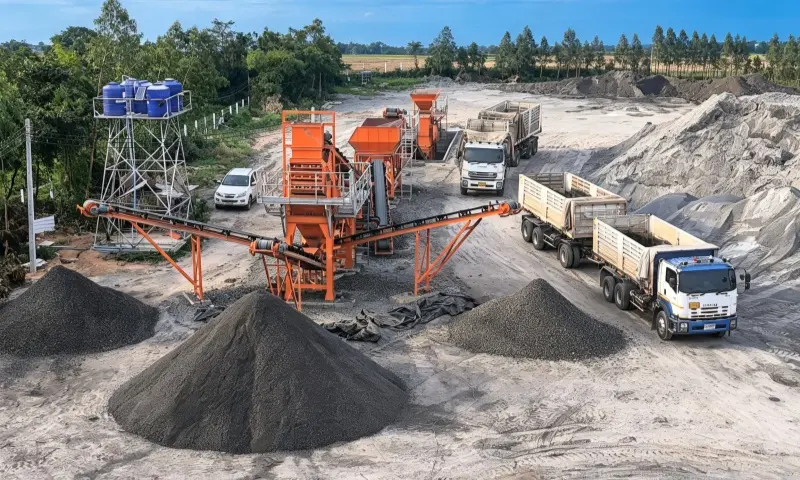
Reserved space for operation, stacking and passage shall be fully reserved in site planning: loader feeding operation space, vehicle passage and loading and unloading area, RAP raw material stacking area, multi-specification finished aggregate sub-area stacking area, transportation vehicle parking and loading area, so as to ensure orderly operation on site without mutual interference.
Consider Maintenance and Safety Access
When planning the layout of equipment for operation and maintenance and safe operation channels, sufficient space for daily inspections, parts replacement, and equipment maintenance must be reserved. At the same time, emergency access channels must be set up to ensure the safety of equipment maintenance, emergency disposal, and personnel operations, and avoid potential safety hazards.
Consider Installation and Relocation Requirements
For mobile crushing and portable crushing production lines, site leveling, infrastructure requirements, equipment installation and commissioning cycle, relocation and transportation costs, rapid docking and production capacity shall be evaluated in advance to adapt to short-term and temporary construction scenarios; for stationary crushing plant equipment, infrastructure adaptability and long-term layout rationality shall be considered.
Summary of this section: RAP crushing equipment selection cannot only depend on parameters, but must conform to site conditions, material circulation logic and operation requirements in order to achieve long-term stable and efficient production.
Evaluate Operating Costs, Maintenance, and Service Support
Equipment procurement can not only pay attention to initial quotation, but also rely on the concept of full life cycle cost (TCO) to comprehensively evaluate long-term costs such as investment, operation and maintenance, and avoid industry pain points of low-price procurement and high-price operation and maintenance.
Look Beyond the Initial Purchase Price
The complete RAP crushing equipment investment cost includes: equipment purchase cost, transportation installation and commissioning cost, equipment power consumption cost, wear parts replacement cost, manual operation cost, daily maintenance cost, spare parts reserve cost, equipment shutdown production loss, etc.The initial purchase price is only a part of the overall cost, and the long-term operation and maintenance cost directly determines the profitability of the project.
Review Wear Parts and Maintenance Accessibility
Before evaluating the wear parts and operation and maintenance convenience, it is necessary to confirm: the replacement cycle of core wearing parts, the difficulty of disassembly and assembly of accessories, the convenience of original spare parts supply, and the downtime required for routine maintenance.Give priority to equipment with convenient operation and maintenance, universal accessories and stable supply, so as to minimize downtime losses.
Evaluate Automation and Operational Control
Automatic configuration is an auxiliary selection factor, not the core standard for RAP crushing production line selection. It can be appropriately selected according to the large-scale needs of the project. The core practical functions include centralized control, equipment linkage protection, operation status monitoring, fault alarm, and production data statistics. It can stabilize production conditions, reduce manual operation errors, and adapt to large-scale production projects.
Consider Technical Support and Spare Parts Availability
High-quality after-sales support is the key to long-term operation of equipment. It is necessary to check whether the manufacturer provides installation guidance, commissioning service, technical training for operators, long-term spare parts supply, exclusive technical support, equipment warranty and lifetime maintenance service, so as to avoid problems that cannot be solved due to unmanned operation and maintenance in the later stage.
Summary of this section: Equipment selection shall be based on the value of the whole life cycle, balance between initial investment and long-term operation and maintenance and service costs, and optimize the overall life cycle use cost of equipment.
How to Select a Reliable RAP Crushing Plant Manufacturer
Equipment parameters are the basis, the manufacturer’s technical strength and service capabilities are the core guarantee for the project’s implementation effect, and high-quality suppliers can accurately match the plan, avoid selection risks, and ensure long-term Stable operation.
Verify RAP Equipment Experience
Verification of RAP special engineering experience of manufacturers focuses on confirming whether manufacturers have professional RAP crushing system design experience, whether there are similar waste asphalt recycling project landing cases, whether equipment is suitable for local RAP material characteristics, whether complete project cases and technical data can be provided, and prevent general equipment manufacturers from blindly applying raw stone crushing schemes.
Review the Complete Technical Proposal
Regular manufacturers need to provide complete technical solutions, including: process flow chart, complete equipment list, rated capacity parameters, feed/finished product particle size standards, total equipment power, site layout, core equipment technical parameters, scope of supply description, eliminate fuzzy quotation, parameter false standard, configuration shrinkage.
Check Customization Capability
The capacity, finished product specifications, site conditions and equipment form requirements of different projects are different. High-quality manufacturers can customize the matching capacity scheme, screening configuration, transportation layout, mobile/fixed equipment form and site planning scheme according to the actual situation of the project, instead of applying standardized templates.
Evaluate After-Sales Service
Comprehensive evaluation of the manufacturer’s installation and commissioning, technical training, quality assurance service, spare parts supply, fault response, post-upgrade transformation and other service capabilities, perfect after-sales system is the core guarantee for long-term stable operation of equipment.
In addition, professional suppliers can provide standardized and complete quotation schemes to provide clear basis for procurement and selection. Complete RAP crushing production line quotation shall include: detailed equipment list, rated capacity parameters, feed and finished product particle size standards, total installed power of equipment, screening and conveying system configuration, site layout scheme, scope of supply, installation and commissioning services, spare parts, warranty clauses, delivery standards and other core contents.
Summary of this section: screening manufacturers need to compare the overall technical scheme, customization ability and after-sales service, do not simply take the quotation as the selection standard.
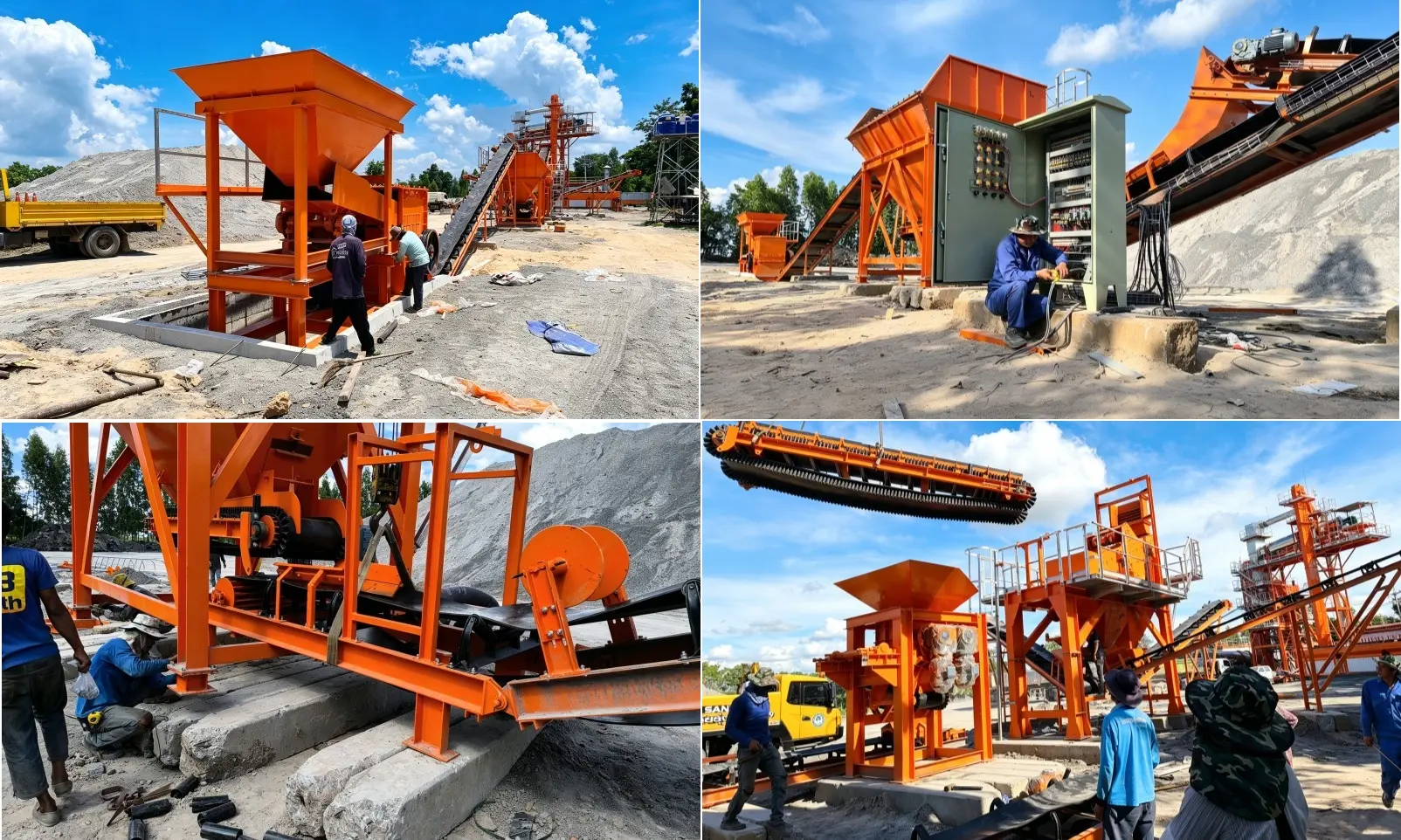
RAP Crushing Plant and Asphalt Recycling Plant: When Do You Need Both?
Many purchasers are easy to confuse the functional positioning of RAP crushing equipment and asphalt recycling equipment, resulting in selection deviation. The core of this section helps the purchaser to judge the equipment combination required for the project: purchase RAP crushing production line separately, support asphalt recycling equipment separately, or cooperate with the two, only define the function distinction and selection scenario, do not expand the asphalt recycling process popularization, and avoid overlapping with the existing process articles in the station.
The Essential Difference Between RAP Crushing Plant and Asphalt Recycling Plant
RAP crushing production line: The core function is to crush, screen and classify waste asphalt raw materials, and produce recycled RAP aggregates with qualified particle size and uniform quality. It belongs to raw material pretreatment equipment.
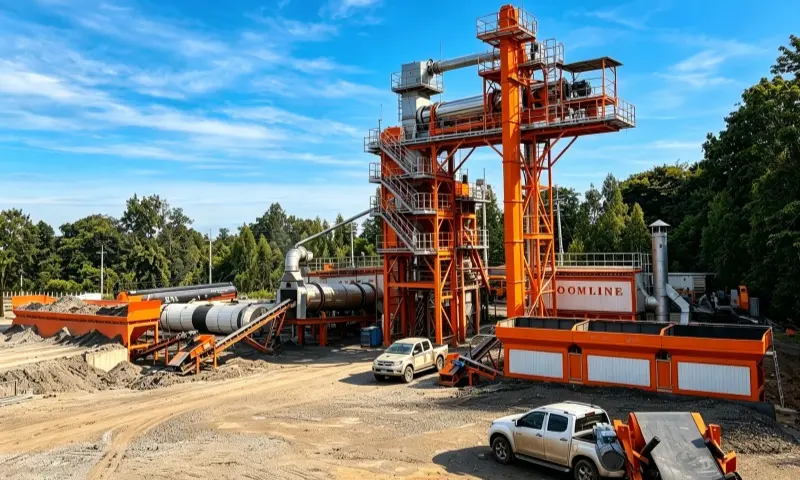
Asphalt recycling production line: the core function is to mix the pre-treated RAP recycled aggregate with new aggregate, asphalt and other auxiliary materials to produce finished asphalt mixture up to standard, which belongs to finished product production equipment. If you want to know more about the system composition and complete workflow of asphalt recycling equipment, please refer to how an asphalt recycling plant works.
When Should You Purchase a RAP Crushing Plant Separately?
Self-owned asphalt recycling equipment has sufficient capacity, only supporting raw material pretreatment equipment is needed;
RAP raw materials need to be processed intensively and stored for long-term use in the future;
Equipment contractors provide standardized RAP finished aggregate supply services;
The project only needs to complete RAP crushing and screening without supporting asphalt mixing production process.
When Does an Integrated Solution Make Sense?
Large-scale, long-term RAP recycling projects, stable mass production demand; for regional markets where asphalt recycling technology has been adopted on a large scale, it is also possible to understand the actual application of RAP recycling equipment in combination with specific market cases, such as recycling asphalt plants in Thailand.
Projects that require integrated operations from raw material crushing to finished asphalt production.
For projects that plan to increase the proportion of RAP used in recycled asphalt mixtures, in addition to the front-end RAP crushing and screening system, it is also necessary to focus on RAP feeding, heating and process control capabilities of the back-end recycled asphalt equipment. For equipment and process considerations for high RAP content production, please refer to how to increase RAP percentage in an asphalt recycling plant.
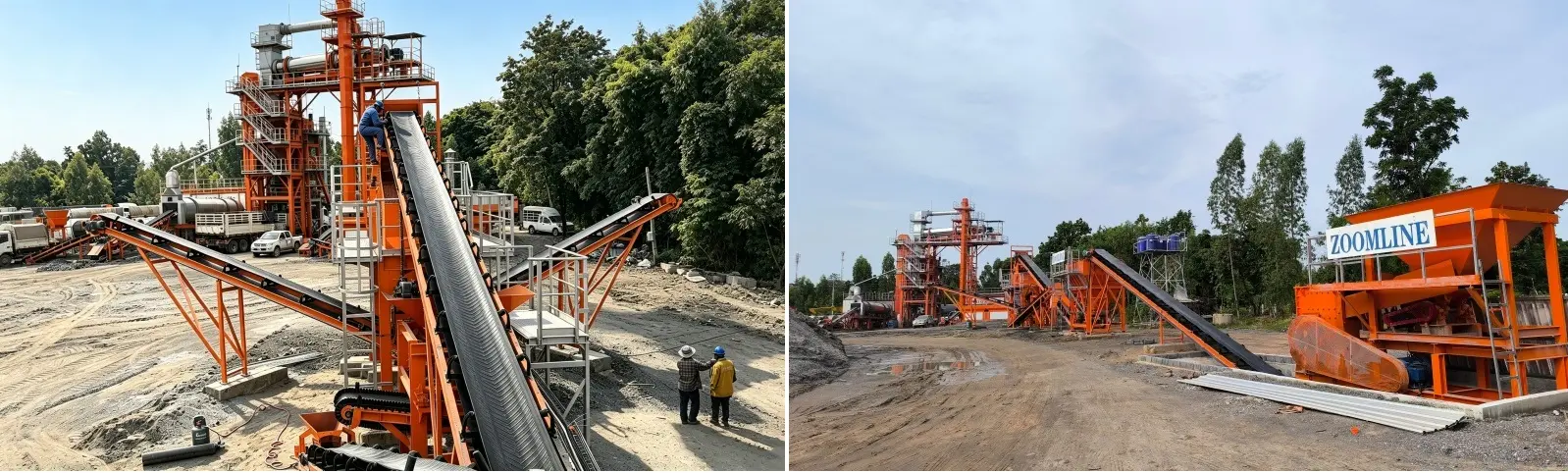
Professional RAP processing plant
ZOOMLINE RAP Crushing and Asphalt Recycling Solutions
ZOOMLINE can customize the RAP crushing production line according to the project requirements, with the appropriate asphalt recycling equipment, combined with capacity requirements, finished product standards, site conditions, to provide personalized equipment configuration, site layout, capacity matching solutions, support single equipment supporting, integrated system customization, comprehensively meet the needs of asphalt recycling projects of different scales and scenarios.
Consulting: If you are planning a RAP recycling project, you can provide raw material characteristics, required capacity, finished particle size standards, site conditions, ZOOMLINE team can accurately match RAP crushing production line configuration for you, and match asphalt recycling integrated solutions on demand.
Conclusion: Choose a RAP Crushing Plant Based on Your Complete Project Requirements
In summary, scientific selection of RAP crushing production line is required to comprehensively match the project requirements around eight standardized core dimensions, forming a complete selection closed loop: overall project requirements, required production capacity, feed material characteristics, target finished product particle size standards, crushing and screening equipment configuration, site layout and working condition adaptation, operation and maintenance costs and full life cycle management, manufacturer technical strength and after-sales guarantee.
The RAP crushing production line with optimal adaptability is not the equipment with the largest parameters and the most complex configuration, but a customized system scheme that can meet the project capacity requirements, material conditions, site conditions and long-term operation planning to achieve stable production, low-cost operation and maintenance and efficient output.
If you need to customize the RAP crushing production line, please contact ZOOMLINE. We will accurately match the equipment configuration according to your project raw materials, capacity requirements, finished product standards and site conditions, and provide integrated RAP crushing and asphalt recycling solutions on demand.
Frequently Asked Questions About RAP Crushing Plants
Q1: What Is a RAP Crushing Plant?
RAP crushing production line is an integrated processing equipment developed for waste asphalt pavement materials, integrating feeding, crushing, screening, transportation, recycling and other functions. The core function is to process waste block and irregular RAP raw materials into recycled asphalt aggregates with uniform particle size, quality and secondary utilization. It is the core equipment for road recycling resources utilization.
Q2: What Capacity Should I Choose for a RAP Crushing Plant?
There is no fixed standard for capacity selection, which shall be comprehensively calculated in combination with the total processing capacity of the project, daily effective operation time, finished product discharge demand, back-end equipment capacity and future expansion demand. Stable discharge capacity under actual effective working conditions shall be taken as the core selection basis, and large-capacity equipment shall not be blindly selected.
Q3: What Is the Difference Between a RAP Crusher and a RAP Crushing Plant?
RAP crusher is a single crushing host equipment, only with the material crushing function; RAP crushing production line is a complete integrated system including crusher, screening machine, feeder, conveyor, control system and return system, which can independently complete a full set of RAP raw material processing procedures.
Q4: Can a RAP Crushing Plant Produce Different RAP Sizes?
RAP crushing and screening production line with reasonable configuration can produce finished aggregates of various specifications. The specific particle size classification quantity, precision and range depend on the equipment type, screening layer and configuration, overall process design, feed material characteristics and finished product technical standards.Through adaptive adjustment of crusher gap, replacement of screen, configuration of closed-loop return system, differentiated classification material requirements can be met.
Q5: Should I Choose a Mobile RAP Crushing Plant or Stationary RAP Crushing Plant?
Short-term projects, multiple construction sites, limited sites, frequent relocation of equipment, mobile RAP crushing production line is preferred;
For recycling projects with long-term fixed plant area, large-scale mass production and stable operation, stationary RAP crushing production line shall be preferred.
Q6: Can a RAP Crushing Plant Work Together with an Asphalt Recycling Plant?
Yes, both can form complementary upstream and downstream processing systems. RAP crushing production line is responsible for front-end RAP raw material pretreatment, providing standard aggregates for asphalt recycling equipment, which can be used separately or in coordination according to project requirements to meet the recycling production needs of different scales.
Q7: What Information Should I Provide When Requesting a RAP Crushing Plant Quotation?
Accurate quotation and scheme customization shall provide core information such as RAP raw material characteristics, maximum feed particle size, required hourly capacity, target finished product particle size specification, finished product classification quantity, daily operation time, site conditions, mobile/fixed equipment requirements, and whether supporting asphalt recycling equipment is required.