




Preventive Maintenance Checklist & Troubleshooting Guide for Concrete Batching Plants
Introduction
Keeping a concrete batching plant in top operating condition is critical to maintaining productivity, preventing unplanned downtime, and safeguarding project profitability. Even minor mechanical failures can escalate into costly production interruptions if not detected in time. Preventive maintenance, as a core part of the operation and management of a concrete batching plant, is self-evidently important – it not only avoids all kinds of operational risks, but also protects the equipment for long-term stable operation.
Bad maintenance habits will bring multiple hidden dangers to the operation of the concrete batching plant, which are as follows: frequent unplanned downtime, disrupting the construction schedule; unstable concrete quality, affecting the acceptance of the project; a significant increase in operating costs, compressing profit margins; accelerated wear and tear of the equipment, shortening its service life; and may also lead to various types of safety hazards, threatening the personal safety of the operators.
With the continuous upgrading of industry technology, the importance of predictive maintenance and digital monitoring in the operation of modern concrete batching plant is becoming more and more prominent, through intelligent means to achieve early warning of failures, maintenance and accurate scheduling, has become an important trend to improve the operational efficiency of concrete batching plant.
This article will comprehensively cover the core value of preventive maintenance of concrete batching plant, key maintenance components, full-cycle maintenance list, common failure detection program, as well as the industry’s best practices, for the concrete batching plant operations managers, equipment maintenance personnel to provide a comprehensive, practical guide to the landing, to help avoid operational risks, improve equipment performance.
Why Preventive Maintenance Matters for Concrete Batching Plants
Preventive maintenance is not simply regular maintenance, but through systematic and standardized inspection, cleaning, lubrication, calibration and other measures, to detect potential failures in advance, to avoid risks at the source, its core value is reflected in the following aspects, not only to ensure the stable operation of the concrete batching plant, but also to improve the operational efficiency of the key.
Reduce Unplanned Downtime
Regular inspection is the core means of preventing unexpected failures. Through regular inspection of the components of the concrete batching plant, minor hidden dangers – such as loose belts, abnormal sensors, slight leakage of pipelines, etc. – can be discovered and dealt with in time, so as to avoid minor problems from escalating into major failures that lead to production standstill. Without systematic maintenance, minor hazards will gradually deteriorate and eventually lead to production interruptions.
The impact of unplanned downtime on construction progress and project profitability is extremely significant: on the one hand, it will lead to delays in the construction schedule, facing the risk of breach of contract; on the other hand, it will result in the waste of labor, materials and energy, and at the same time affect the advancement of downstream processes, which will further magnify the economic losses.
Improve Concrete Quality Consistency
Accurate weighing and batching is a prerequisite to ensure the quality of concrete, and preventive maintenance can ensure the accurate operation of the weighing system and batching mechanism, and avoid inaccurate batching caused by equipment deviation. Calibration process is the most important, it can effectively guarantee: batch of concrete quality is stable, in line with the design requirements of the proportion, the material proportion is uniform, fundamentally avoid the uneven strength of concrete, segregation and other quality problems, to ensure that the quality of the project meets the standard.
Extend the Service Life of Concrete Batching Plant
The core components of the concrete batching plant, such as mixer, conveyor, bearings, pneumatic system, etc., are in the state of high-intensity operation for a long time, and are prone to wear and aging. Preventive maintenance through regular lubrication, cleaning and overhauling can effectively reduce component friction, reduce wear and tear speed, and avoid premature failure of components. Among them, reasonable lubrication is especially critical, which can reduce friction, minimize wear and tear, prevent early damage to parts, thereby extending the service life of the entire concrete batching plant equipment and reducing equipment replacement costs.
Improve Workplace Safety
During the operation of the concrete batching plant, safety is the primary premise, and preventive maintenance can comprehensively investigate all kinds of safety hazards, and build a solid line of defense for safe production. The key points include:
Regular testing of the emergency stop system to ensure rapid shutdown in case of emergencies;
Safety inspection of the electrical system to avoid leakage, short-circuit and other electrical risks;
Maintenance of the dust control system to reduce dust leakage and protect the respiratory health of the operators;
Cleaning and maintenance of the safety channel to ensure smooth passage in case of emergencies.
In all aspects of the concrete batching plant, must strictly follow the safety requirements, and preventive maintenance is an important part of safety protection.
At the same time, it is necessary to strictly implement the production safety responsibility system, regularly organize safety training and emergency drills to ensure that operators are proficient in safety procedures and emergency measures, to create a “safety first, prevention-oriented” safety culture.
Lower Maintenance & Operating Costs
Compared with the passive maintenance mode of “repair after failure”, preventive maintenance can significantly reduce the comprehensive cost.
On the one hand, it can reduce the occurrence of major failures and lower maintenance costs by checking for hidden dangers in advance; on the other hand, regular maintenance can reduce the frequency of replacement of spare parts, avoid collateral failures due to damage of components, and optimize the operating efficiency of equipment, improve the utilization rate of fuel and energy, and further reduce the operating costs, thus reducing costs and achieving cost-effectiveness.
Main Components That Require Regular Maintenance
The stable operation of the concrete batching plant depends on the cooperative work of the core components, and different components have different operating loads, different degrees of susceptibility to damage, and different maintenance priorities. The following are the core components that need to be paid attention to and regularly maintained, which provide a clear direction for the subsequent full-cycle maintenance list.
Mixer System
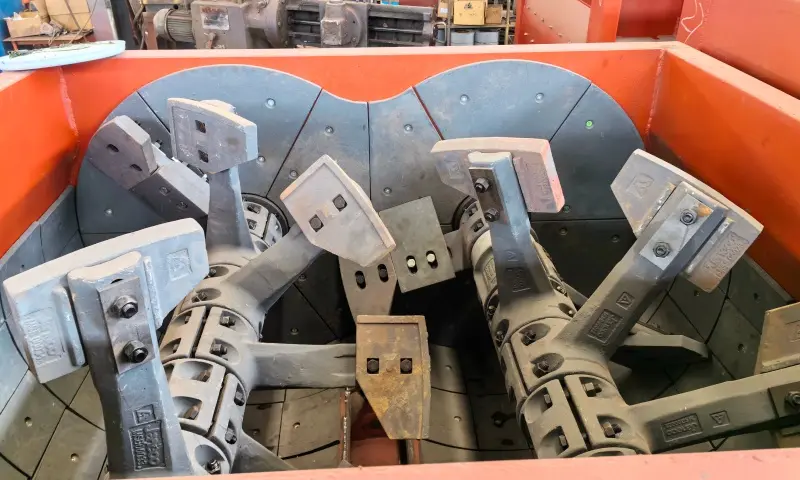
The mixing system is the core of the concrete batching plant, which directly determines the quality and efficiency of concrete mixing, and it is necessary to focus on the maintenance of the following components:
Mixing blades, liners, mixing arms, regular inspection of wear and tear, and timely replacement of worn parts;
The discharge gate, check the flexibility of the switch and the sealing, to avoid leakage of materials;
The motor and the gearbox, regular inspection of the operating status, lubrication, to ensure the stability of power transmission.
Regularly check the degree of wear and abrasion resistance of mixing blades is the key to ensure the normal operation of the mixing system.
In addition, slurries such as cement mortar or cement net paste used to lubricate the inner wall of the concrete pump and conveying pipe should be separately loaded and transported, properly recycled after pumping out, and not used as structural concrete.
Aggregate Bins & Feeding System
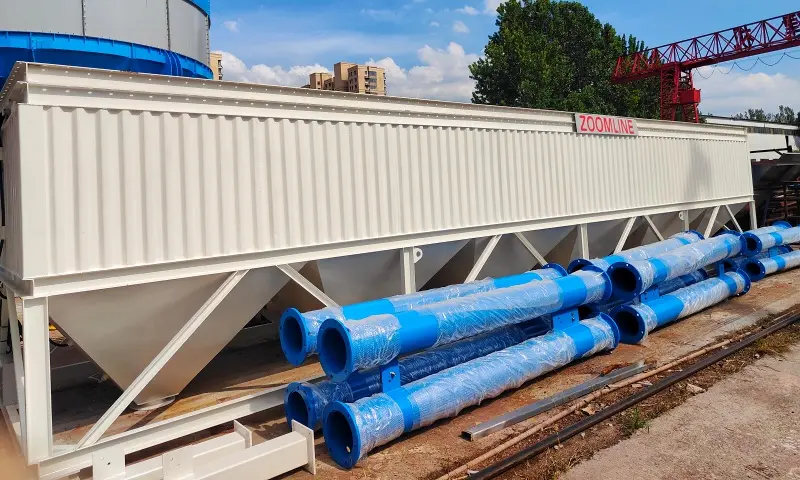
Aggregate silo is used to store sand, gravel and other aggregates, and the feeding system is responsible for accurately conveying the aggregates to the mixing host.
Maintenance focuses include:
Material flow monitoring to ensure smooth delivery of aggregates to avoid clogging; Gate checking to ensure that the gate is flexible to accurately control the amount of aggregates discharged;
Anti-clogging measures to regularly clean up aggregates attached to the wall of the silo to avoid clumping blockage.
Aggregate silo storage sand, gravel and other materials, need to continuously monitor the flow of materials to prevent congestion, to ensure the consistency of the mixing ratio.
Cement Silo & Screw Conveyor
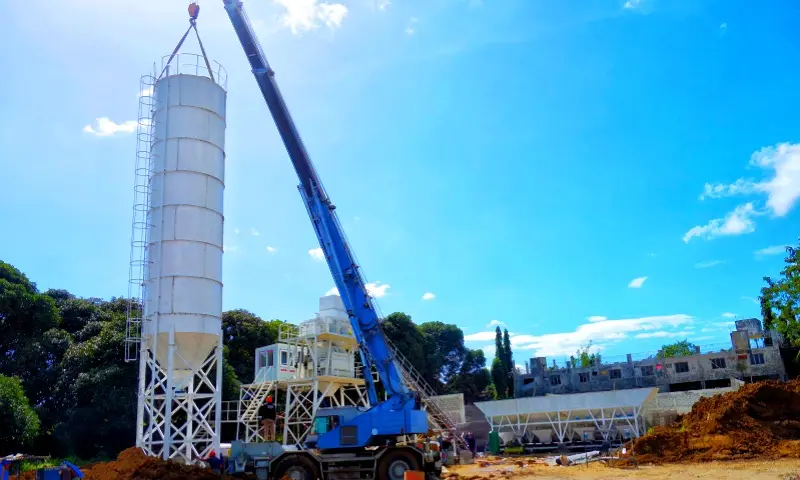
Cement silo and screw conveyor are responsible for storing and conveying cement.
Maintenance focuses include:
Sealing inspection of cement silo to prevent cement from moisture caking;
Maintenance of dust filter, regular cleaning and replacement of filtering parts to avoid dust leakage;
Inspection of screw conveyor for wear and tear, checking the wear of screw blades and barrels, and repairing and replacing them in time;
Checking of aeration system to ensure that the aeration is normal and to prevent cement from caking.
Conveyor Belt System
Conveyor belt system is responsible for the transfer of materials.
Maintenance focus includes:
Belt alignment check to avoid belt deflection leading to material leakage, belt wear;
Belt tension adjustment, to ensure that the tension is moderate, to avoid skidding or overstretching;
Pulleys and pulleys check to see the wear and looseness of the situation, and timely fastening, replacement;
Anti-material leakage measures, check the integrity of the belt edges, baffles, to reduce the waste of materials.
Pneumatic & Hydraulic Systems
Pneumatic and hydraulic system provides power for all kinds of actuators of the concrete batching plant, and the maintenance focuses include:
Air pressure check to ensure stable air pressure to meet the operational needs of the equipment; Hydraulic leakage check to find and deal with the leakage of pipes and joints in a timely manner, to avoid the waste of hydraulic oil and lack of power;
Cylinder operation check to ensure that the cylinder action is flexible and in place;
Valve performance check to see the flexibility of valve switching and sealing, and timely repair and replacement of faulty valves.
Timely repair and replacement of faulty valves.
Weighing & Load Cell System
The accuracy of weighing system directly affects the quality of concrete proportioning, and the key points of maintenance include:
Regular calibration process to ensure the weighing accuracy and avoid the impact of calibration drift on the proportion of batching;
Sensor accuracy check, clean the sensor surface to avoid material adhesion, damage, and ensure the accuracy of signal transmission;
Cable check to see if the cable is worn, loose, and avoid signal interruption.
The accuracy of the weighing system depends on regular calibration, which needs to be completed before the drift affects the dosage ratio to ensure the accuracy of the ratio. At the same time, it is necessary to establish a sound equipment maintenance system, clear calibration period, content and process, to improve the accuracy of equipment operation.
Electrical & Control System
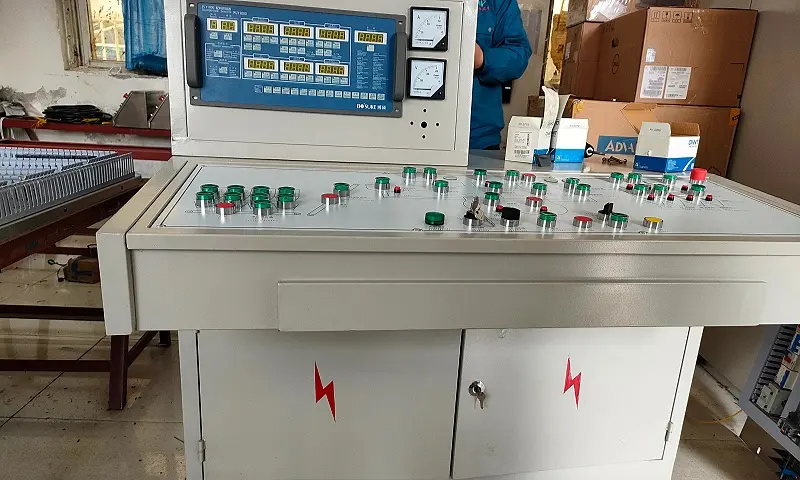
Electrical and control system is the “brain” of the concrete batching plant, responsible for coordinating the operation of the equipment, the maintenance focus includes:
PLC inspection, check the operating status, timely processing of fault codes;
Software update, regular update of the control software, optimize the operating logic, reduce operating errors;
Emergency stop test, to ensure that the emergency stop function is normal to ensure safe production;
Line inspection, checking the lines, to ensure that the lines are accurate. Production;
Line check, check the line wear, loose, short circuit and other hidden dangers, to ensure the stable operation of the electrical system.
The control system coordinates the whole batching process. According to statistics, the outdated control system is easy to trigger production errors, which affects the production efficiency and quality.
In addition, the control room of the concrete batching plant (building) should be kept clean and tidy to reduce noise, vibration and other disturbances, and to ensure that the temperature, lighting and illumination are good to ensure the stable operation of the control system.
Concrete Batching Plant Preventive Maintenance Checklist
Combined with the operating characteristics and maintenance needs of each component of the concrete batching plant, develop a sub-cycle, floor-to-ceiling maintenance list, covering five dimensions: daily, weekly, monthly, quarterly/semi-annual, and annual, to clarify the maintenance tasks, maintenance priorities, and to facilitate the maintenance personnel to operate according to the process.
Daily Maintenance Checklist
– Clean the mixing drum and unloading area, remove residual concrete to avoid hardened buildup affecting subsequent mixing and unloading.
– Check the conveyor belt alignment and adjust it in time to avoid running away.
– Check the air pressure and leakage of the pneumatic system to ensure stable air pressure and no leakage.
– Check the level of hydraulic oil, make sure the level is within the standard range, and replenish it in time when it is insufficient.
– Remove the hardened concrete buildup on the surface of the equipment and key parts to prevent parts from jamming.
– Test the emergency stop system to ensure that the button is sensitive and the stop function is normal.
– Check aggregate gates and discharge points to ensure that the switches are flexible and free of leaks and blockages.
Daily inspections should also include: checking for leaks in the hydraulic system, ensuring that all safety guards are in place, and checking belt tension to avoid potential hazards from the details. At the same time, it is necessary to check the basic state of the mixer truck and make a good record of daily maintenance to provide a basis for subsequent maintenance.
Weekly Maintenance Checklist
– Lubricate all moving parts such as bearings, mixing arms, conveyor belt rollers, etc. and add lubricant/grease that meets the requirements.
– Check all the screws, bolts and fasteners of the equipment, and tighten them in time when looseness is found to prevent the parts from falling off and shifting.
– Check the integrity of belt wiper and skirt plate, clean the attached materials in time, and replace them in time when damaged.
– Clean the air filter and dust collector, remove the dust on the filter parts to ensure the ventilation and dust removal effect.
– Check the operation status of pneumatic cylinders and valves to ensure flexible movement, no jamming and no leakage.
Lubrication of moving parts is the core task of weekly maintenance, which can effectively reduce wear and tear of parts and extend their service life. In addition, a comprehensive safety inspection should be carried out once a week, focusing on checking the risks of fire safety, facility and equipment safety, electricity and gas safety and other aspects of the process, to ensure that the whole process is safe and controlled.
Monthly Maintenance Checklist
– Calibrate the load cell and the whole weighing system, so as to ensure the weighing accuracy of concrete batching plant meets the standard and avoid batching deviation.
– Check the ventilator and dust collector of the cement silo, clean up the dust and sundries, so as to ensure smooth ventilation and prevent the cement from being damp and caking.
– Check the oil level of the gearbox, and replenish it in time when it is insufficient, meanwhile check the cleanliness of the oil and replace it when necessary.
– Check the electrical wiring and terminals, and troubleshoot whether there is wear and tear, looseness, oxidation, etc. If there are such conditions, they need to be dealt with in time to avoid electrical failure of the equipment.
– Test the dosage accuracy of the water dosing system to ensure that the water dosing is uniform, accurate and in accordance with the requirements of the proportion.
Monthly maintenance focuses on calibration and troubleshooting, including checking and recalibrating the scales and sensors to ensure accurate operation of the concrete batching plant, as well as checking the cement silo filter vents and dust collectors to ensure stable operation of the concrete batching plant.
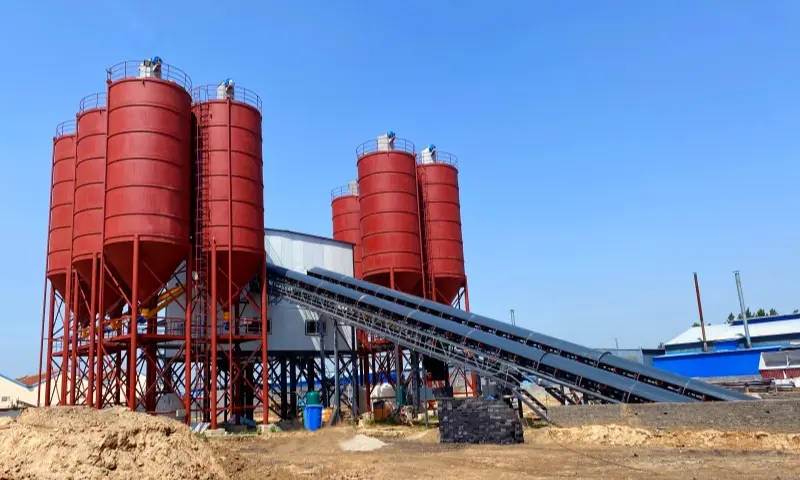
Quarterly / Semi-Annual Maintenance Checklist
– Check the wear and tear of all the belts and replace the damaged V-belt to avoid belt breakage affecting the normal production of the concrete batching plant.
– Check the feed screw and suspension bearings, and do timely repair or replacement if there is wear and looseness.
– To prevent lumps or clogging, you need clean all the storage bins, as well as remove the materials and dust attached to the walls .
– Check the structural parts of the concrete batching plant to see if have problems such as corrosion, cracks and other problems, and carry out rust removal and reinforcement treatment in time if have these problems. It is necessary to focus on checking the corrosion of concrete structural components, and take anti-corrosion measures such as applying acid and alkali resistant coatings to avoid structural deterioration especially in corrosive environments such as acid and alkali and high humidity, .
– In order that the accurate signal transmission and normal operation, you need check humidity sensors and automation systems.
Annual Overhaul Checklist
– Timely replace wearable parts such as worn liners and mixing blades when conducting a comprehensive inspection of the concrete batching .
– In order to ensure the stable operation of the conveyor belt, it is necessary to replace worn conveyor belt rollers and bearings in a timely manner.
– Examine whether there are deformation, corrosion, cracks and other hidden dangers, when checking the integrity of the structural framework of the concrete batching plant, if there are any of these problems need to be reinforced and repaired in a timely manner. Need to take additional anticorrosion measures in accordance with the requirements of the concrete structure durability design specifications, blocking the intrusion of corrosive media to protect the structural safety, especially long-term in the corrosive environment of the equipment.
– Enhance the automation water of the concrete batching plant by upgrading the outdated PLC or control software system to optimize the operation logic.
– Conduct a comprehensive test of the entire electrical system to identify potential faults, thus ensuring safe and stable electrical operation.
What to Include in a Concrete Batching Plant Maintenance Checklist?
Inspection Categories
– Visual inspection: Through visual observation, check whether the parts are worn, deformed, leaking and dust accumulation.
– Function test: Conduct hands-on test on various functions of the concrete batching plant to ensure normal function, such as emergency stop, valve switch, motor operation, etc., .
– Cleaning process: comprehensively clean the surface, internal and filtering parts of the concrete batching plant, to avoid material accumulation or dust blockage.
– Lubrication program: add lubricant/grease regularly in strict accordance with the lubrication requirements of different parts to ensure lubrication is in place.
– Calibration verification: Regularly perform professional calibration of equipment such as metering and sensors to ensure that the accuracy meets the standard.
– Safety Inspection: Focus on the investigation of safety protection devices, electrical safety, dust control and other hidden dangers, and carry out at least one quarterly “full staff, full process, full elements, full coverage” safety inspection.
– Maintenance records: Detailed records of the time and content of each maintenance, the problems found and the results of targeted treatment, to facilitate the subsequent traceability and optimization of the maintenance plan, as well as the establishment of the concrete batching plant’s maintenance ledger, to achieve the full process of traceability.
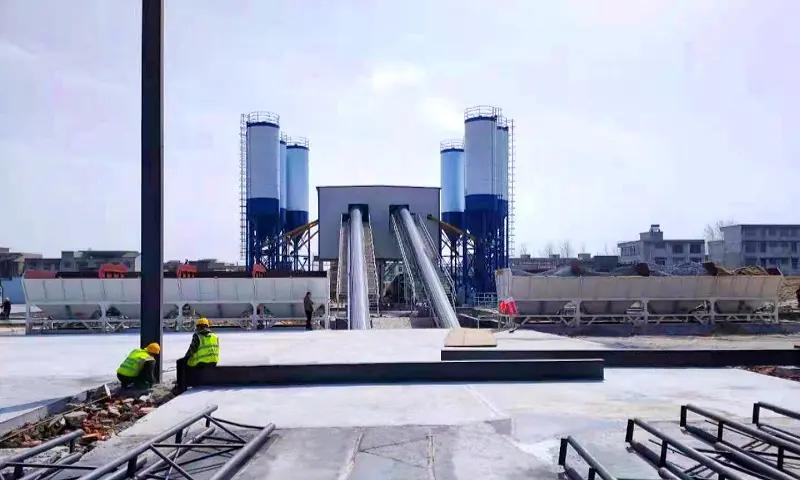
Essential Systems to Include
– Mixer and mixing drum: clean the blades, mixing arms, liners, check whether there are cracks, wear, deformation and other problems, if necessary, timely treatment or replacement.
– Conveyor belt system: check the belt alignment and tension, troubleshoot the wear and tear of bearings and pulleys, and adjust and repair them in time.
– Pneumatic system: discharge condensate, check whether there is leakage in pipelines and joints, so as to ensure the normal operation of pneumatic components.
– Dedusting system: verify the pulse cycle of the filter, check the integrity of the filter element and filter bag, and need to clean or replace the filter bag in time.
– Electrical and control panel: clean the dust of the panel, check whether the lines and terminals are loose to ensure reliable electrical connection, while keeping the environment of the control room tidy to ensure stable operation of the control system.
Common Concrete Batching Plant Problems and Troubleshooting Guide
| Failure Phenomenon | Possible Cause | Solution |
| Abnormal batching accuracy | Sensor drift, sensor pollution, unstable material humidity, calibration error | Recalibrate the weighing system to ensure that the accuracy is in line with the standard; clean the sensor surface regularly to avoid material adhesion and pollution; check the humidity of the material and adjust the ratio in time; check the calibration process and correct the calibration error. |
| Mixer abnormal | Mixing blade wear, motor failure, equipment overload, hardened concrete accumulation | Replace the worn mixing blade, check the wear of mixing arm and liner plate; check the motor operation status, investigate the motor failure and repair; control the feeding quantity to avoid equipment overload; clean the mixing cylinder regularly and remove the hardened concrete accumulation. |
| Conveyor belt deflection, material leakage
|
Improper belt tension, pulley wear, pulley misalignment
|
Adjust the belt trajectory to ensure that the belt is aligned; adjust the belt tension so that it is in a moderate state; replace the worn out pulleys, check the position of the pulleys, and correct misaligned pulleys in a timely manner; check the edge of the belt, baffle plate, repair the damaged parts, and reduce the material leakage. |
| Cement silo clogging
|
Moisture contamination, poor aeration, dust accumulation
|
Check the sealing of the cement silo, repair the leakage parts, prevent moisture from entering; check the aeration system, ensure that the aeration is normal, and prevent the cement from slating; clean the cement silo vents, filters, and remove the accumulation of dust, and manually clean up the clogged cement if necessary. |
| Pneumatic gate failure
|
Leakage, moisture in the air pipe, cylinder damage | Exhaust air tank condensate, check the air pipe, joints, repair the leakage site; replace the worn seals to ensure that the pneumatic system sealing; check the cylinder operating status, repair or replace the damaged cylinder; check the performance of the compressor, to ensure that the air pressure is stable. |
| Hydraulic system leaks
|
Worn hoses, damaged fittings, low oil level
|
Replace the damaged hydraulic hoses and fittings, check whether the pipeline is worn, and repair it in time; check the hydraulic oil level, and replenish the hydraulic oil that meets the requirements in time when it is insufficient; check the seals, replace the aging and damaged seals, and keep the pressure of the hydraulic system stable. |
| PLC and control system failure
|
Software error, loose lines, sensor communication failure | Update the dosage software, repair software error; check the electrical lines, terminals, tighten the loose parts, troubleshooting line failure; check the sensor communication, repair communication failure, ensure accurate signal transmission; test the control module, repair or replace the faulty module. Professional maintenance software that is deeply coupled with the hardware of the concrete batching plant can be selected to enhance the stability of the control system. |
| Dust collector and environmental protection problems
|
Filter bag clogging, fan failure, excessive dust accumulation
|
Regular replacement of filters, filter bags, clean filter parts to avoid clogging; check the operating status of the dust collector fan, repair or replace the faulty fan; monitor the dust collector pressure difference, timely clean up the dust accumulation, to ensure that the effect of dust removal, in line with the requirements of environmental protection. |
| Structural components corrosion cracking
|
Long-term in a corrosive environment, did not take effective anti-corrosion measures, maintenance is not in place
|
On the corrosion of parts of the rust, reinforcement treatment, coating acid and alkali resistant coatings or the use of penetrating silane impregnation and other anticorrosion measures; to improve the concrete’s own denseness, reduce the ratio of water to rubber, mixing of mineral admixtures, to enhance the ability to resist corrosion; regular inspection of structural components, the establishment of a corrosion monitoring account, to avoid the accelerated cycle of corrosion. |
It should be noted that improperly calibrated equipment often leads to inaccurate batching, while software problems or electrical failures are also prone to cause production interruptions, which need to be focused on and dealt with in a timely manner. At the same time, for the corrosion of structural components, can not rely on the “natural alkalinity” of concrete self-healing, need to take active anti-corrosion measures to avoid structural failure.
Best Practices for Concrete Batching Plant Maintenance
On the basis of preventive maintenance, following the best practices below can further improve maintenance efficiency, optimize equipment operation, reduce operating costs, and achieve long-term stable and efficient operation of the concrete batching plant.
Implement Scheduled Deep Cleaning
Weekly or monthly deep cleaning process is the key to ensure the normal operation of the concrete batching plant. Focus on cleaning the key parts such as mixing drum, aggregate bin, cement bin, conveyor belt, etc., to remove hardened concrete, dust and debris, to avoid material accumulation resulting in parts stagnation and blockage, and at the same time to reduce wear and tear of the parts and prolong the service life of the concrete batching plant.
Establish Proper Lubrication Management
Effective lubrication plays a decisive role in protecting the mechanical integrity of the equipment. According to the operation requirements of different parts, choose suitable lubricant/grease, set up clear lubrication cycle, add lubrication for moving parts regularly to avoid parts wear and jamming caused by insufficient lubrication, meanwhile check the lubrication effect regularly, and replenish or replace the lubricant/grease in time.
Monitor Wear Components Regularly
The bearings, chains, seals, liners, drums, etc. of the concrete batching plant are all wearing parts, which should be regularly monitored for wear and tear, and an account of wearing parts should be established for timely replacement of worn parts. Delayed replacement often leads to secondary failures, unplanned downtime, and increased maintenance costs, so early detection and early treatment is required.
Maintain Accurate Calibration
Calibration is the core of guaranteeing the quality of concrete, and it is necessary to regularly calibrate the aggregate scale, cement weighing system, water meter, admixture system, etc. to ensure accurate measurement. The calibration period can be adjusted by combining the frequency of concrete batching plant operation and the use of the environment, and at the same time make a good record of calibration, so as to facilitate subsequent traceability and optimization, and avoid concrete quality problems caused by calibration deviation.
Keep Detailed Maintenance Records
Establish a perfect maintenance record system, record in detail the time of each maintenance, maintenance content, found problems, treatment results, replacement of spare parts and other information. Complete maintenance records can not only facilitate the subsequent traceability of concrete batching plant operating status, but also help managers analyze equipment failure patterns, optimize the maintenance plan, and make more scientific operational decisions. At the same time, the need to establish a mixer truck maintenance ledger to ensure that the full life cycle of the equipment can be traced. In addition, with the help of professional maintenance software, digital management of maintenance records to enhance management efficiency, part of the software can also be based on historical data to intelligently optimize the maintenance plan, recommend the optimal ratio.
Digital Monitoring & Predictive Maintenance for Modern Batching Plants
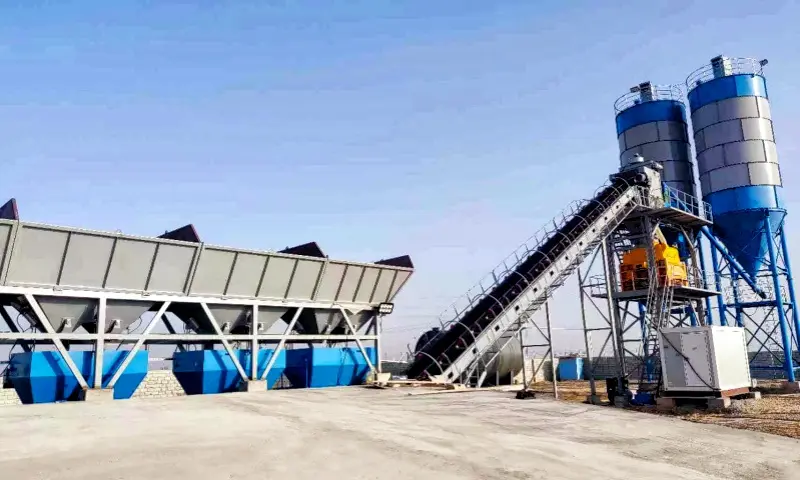
With the development of digital and intelligent technology, digital monitoring and predictive maintenance has become the development trend of modern concrete batching plant, which can significantly improve the maintenance efficiency, reduce operational risks, and provide more accurate and efficient support for concrete batching plant operation. Especially in the context of accelerated transformation of infrastructure construction to digital intelligence, digital monitoring and predictive maintenance has become an important means to enhance the competitiveness of concrete batching plants.
Benefits of Maintenance Software
Professional maintenance software can provide all-round support for concrete batching plant maintenance, and its core advantages include:
Automatically sending inspection reminders to avoid missing maintenance tasks;
Real-time monitoring of equipment operating status to detect abnormalities in time;
Issuing fault alarms to remind maintenance personnel to deal with potential faults in a timely manner;
Tracking the maintenance history to facilitate the traceability and optimization of the maintenance plan, so as to realize the standardized and intelligent management of maintenance work.
At present, there are a number of mature concrete batching plant maintenance software on the market, which can be selected according to the project needs, equipment ecology and other comprehensive choices to realize the whole process of closed-loop management and improve maintenance and production efficiency.
IoT & Remote Diagnostics
Relying on IoT technology, real-time monitoring based on sensors can be realized. By installing sensors in each core component of the concrete batching plant, real-time operational data is collected, realizing all-weather monitoring of the operating status of the equipment;
Combining with predictive maintenance technology, equipment failures can be predicted through data analysis, and maintenance can be arranged in advance to avoid unplanned shutdowns; meanwhile, it supports remote troubleshooting, so that the maintenance personnel can view equipment operating data, diagnose failures and provide targeted maintenance and production efficiency through a remote terminal.
At the same time, it supports remote troubleshooting, which allows maintenance personnel to view equipment operation data, diagnose faults and provide targeted maintenance guidance through remote terminals, improving troubleshooting efficiency and reducing maintenance costs.
At present, there are mature concrete batching plant maintenance software, which can issue timely alarms when equipment components fail, providing convenient support for maintenance work. Part of the software can also be deeply integrated with the intelligent construction platform to support SAAS services and customized development, so as to realize the digital management of the whole process from planning to delivery, and to meet the maintenance needs under complex working conditions.
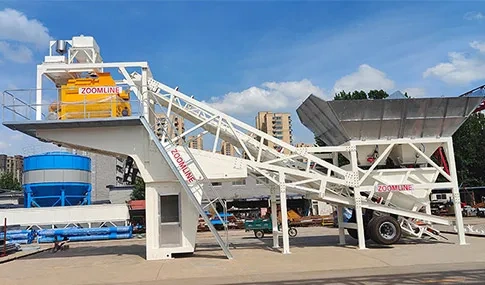
Maintenance Differences Between Mobile Concrete Batching Plants and Stationary Concrete Batching Plants
The structure and usage scenarios of mobile concrete batching plants and stationary concrete batching plants are different, and the maintenance focus and difficulties are also different, so it is necessary to formulate a targeted maintenance plan to ensure that the maintenance effect is in line with the needs of the product line of the concrete batching plant, and cover the relevant long-tail keywords.
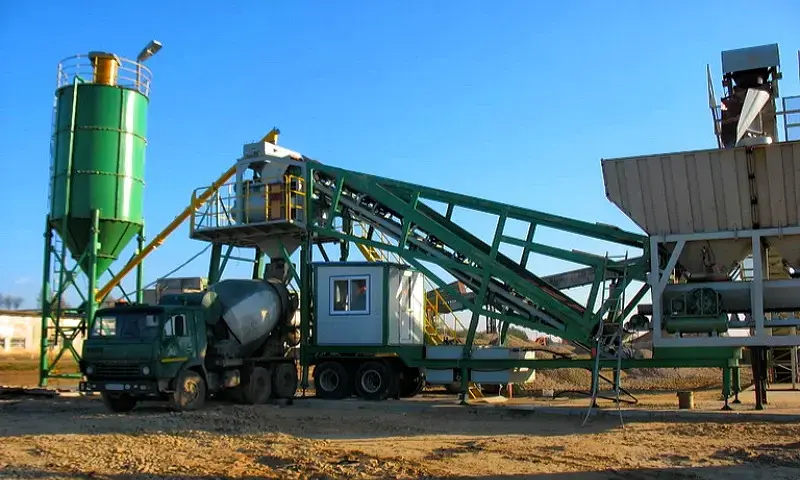
Mobile Concrete Batching Plant Maintenance Challenges
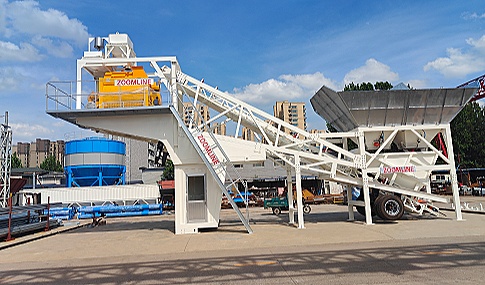
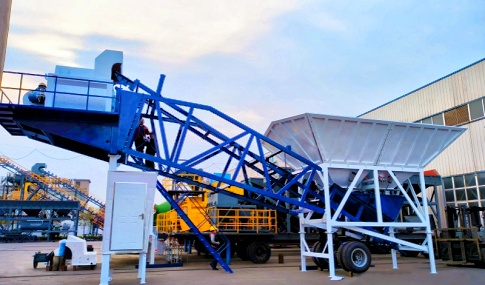
Mobile concrete batching plants are mostly used in field construction, temporary projects and other scenarios due to the advantage of flexible transfer, and the maintenance difficulties mainly include:
Vibration caused by frequent transportation, which is easy to cause loosening and wear of parts;
Rapid installation and dismantling process, easy to lead to wear and tear of components, connection is not solid;
Compact structure of the equipment, some parts of the maintenance space is narrow, maintenance is inconvenient, need to focus on parts fixation, vibration protection and monitoring and replacement of wearable parts.
In addition, the field construction environment is complex, and it is necessary to strengthen the anticorrosion and dustproof maintenance of the mobile concrete batching plant equipment to avoid equipment failure caused by environmental factors.
Stationary Concrete Batching Plant Maintenance Priorities
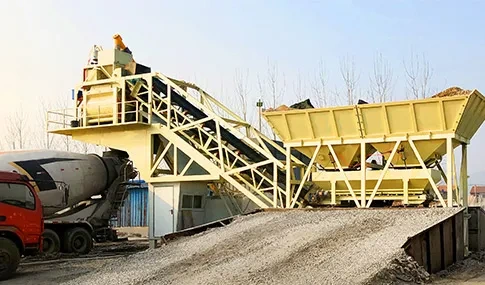
Stationary concrete batching plant is mostly used for long-term and large-scale production, and the maintenance focus mainly includes:
High-capacity production brings about faster wear and tear of components, and it is necessary to strengthen the monitoring and replacement of wearable parts;
Corrosion and aging of structural components caused by long-term operation, which requires regular rust removal and reinforcement treatment, especially in corrosive environments such as acid, alkali, high humidity, etc., additional anticorrosive measures need to be taken in accordance with the relevant standards to avoid structural cracking and spalling;
The long-term stable operation of the dust collector system needs to strengthen cleaning and maintenance to ensure compliance with environmental protection requirements, while regularly checking the equipment foundation to avoid foundation settlement and structural deformation caused by long-term load.
In addition, the stationary concrete batching plant needs to establish a perfect production safety management system and carry out regular safety inspections and emergency drills to ensure operational safety.
Conclusion
Preventive maintenance of concrete batching plant is the core link to ensure stable operation of equipment, improve production efficiency and reduce operating costs, and it is an important prerequisite to ensure concrete quality and safe production. A set of systematic and standardized maintenance list can effectively reduce unplanned downtime, extend the service life of the equipment, optimize the quality of concrete, and at the same time, through scientific troubleshooting, quickly solve all kinds of problems in the operation to avoid small faults from escalating into major losses. Especially in the context of digital transformation and increasing safety requirements, standardized maintenance work is the key to efficient operation of concrete batching plants.
It is worth noting that reliable concrete production does not only rely on equipment design, but also requires standardized operation and perfect preventive maintenance strategies. With the development of digital and intelligent technologies, predictive maintenance and digital monitoring are reshaping the concrete batching plant maintenance model, providing more efficient and accurate support for concrete batching plant operations; at the same time, strengthening structural anti-corrosion and implementing the production safety responsibility system are also important measures to extend the service life of the concrete batching plant and safeguard operational safety.
As a professional manufacturer of concrete batching plant and asphalt concrete batching plant, we rely on years of industry experience, combined with the latest industry standards and technology trends, to provide customers with customized maintenance guidance and high-quality spare parts support, to help customers minimize downtime, improve production efficiency, and achieve long-term, stable and efficient operation of the concrete batching plant. For more detailed maintenance support, please feel free to contact us.
Frequently Asked Questions (FAQ) about Concrete Batching Plant Maintenance
– Q1: How often does the concrete batching plant need to be maintained?
A: The maintenance of the concrete batching plant needs to follow the principle of sub-cycle, daily maintenance once a day (before/after operation), weekly maintenance once a week, monthly maintenance once a month, quarterly/semi-annual maintenance once a year for a comprehensive overhaul.
The specific maintenance cycle can be adjusted appropriately according to the frequency of equipment operation, use of the environment, wear and tear of components. At the same time, at least one safety inspection of “all staff, all process, all elements, all coverage” should be carried out every quarter to ensure safe production.
– Q2: What is the most common failure of concrete batching plant?
A: The most common failures of concrete batching plant include abnormal batching accuracy, conveyor belt deviation, cement silo blockage, hydraulic system leakage, PLC and control system failure, and mixer mixing abnormality.
Most of these failures are related to inadequate maintenance, component wear and calibration deviation, which can be greatly reduced through standardized preventive maintenance. In addition, long-term in the corrosive environment of the stationary concrete batching plant, structural components corrosion cracking is also a common failure, need to focus on prevention.
– Q3: How to calibrate the load cell of concrete batching plant?
A: The calibration steps are as follows:
- Make sure the weighing system is free of materials and sundries, and is in no-load condition;
- Start the calibration program, operate according to the equipment manual, and access the standard weights;
- Adjust the sensor parameters to make sure that the weighing display is the same as the weight of the standard weights;
- Repeat the calibration for 2-3 times to verify the accuracy;
- Record the calibration results and complete the calibration.
It is recommended to calibrate once a month and fully calibrate once a quarter, and at the same time establish a calibration account for easy follow-up.
– Q4: Why is my concrete ratio unstable?
A: The core reasons for unstable concrete proportioning include:
drift of load cell, calibration error, contamination of load cell; unstable humidity of material, resulting in deviation of actual proportioning; wear and tear of mixing system, resulting in uneven mixing; and clogging and leakage of feeding system, resulting in inaccurate material delivery.
These problems can be solved by regular calibration of the weighing system, cleaning of sensors, control of material humidity, and maintenance of the mixing and feeding system. Meanwhile, selecting the appropriate maintenance software can intelligently optimize the proportion and improve the stability of proportion.
– Q5: What is the service life of concrete batching plant?
A: Under normal circumstances, the service life of a concrete batching plant is 8-15 years, depending on the quality of the equipment, maintenance level and frequency of use.
Through standardized preventive maintenance, timely replacement of wear parts and optimization of operating parameters, the service life can be effectively extended, and the service life of some core components can be further improved with proper maintenance.
For the concrete batching plant in the corrosive environment for a long time, good anti-corrosion maintenance can avoid structural deterioration and extend the overall service life.
– Q6: What are the reasons for inaccurate dosage?
A: There are 4 main reasons for inaccurate batching:
- Drift or damage of load cell, resulting in loss of weighing accuracy;
- Material adherence and contamination on the surface of the sensor, affecting the signal transmission;
- Non-standard calibration process, there are calibration errors;
- Unstable humidity of material, resulting in the deviation of the actual weight of the material from the theoretical weight, which affects the accuracy of batching.
In addition, the control system software error may also lead to inaccurate dosage, you need to update the software and troubleshooting regularly.
– Q7: How often do I need to check the conveyor belt?
A: The inspection of conveyor belt needs to be carried out at different levels:
daily maintenance is checked once a day, focusing on alignment, tension and leakage;
weekly checking of the integrity of the belt wiper, skirt plate, and the wear of the pulleys and pulleys; monthly checking of the belt wear, adjusting or replacing it if necessary;
quarterly checking of the conveyor belt joints, to avoid the joints from loosening and breaking.
– Q8: Why is my cement silo clogged?
A: The main reasons for cement silo clogging include:
- Cement silo sealing is not tight, moisture into the cement resulting in moisture caking;
- Aeration system failure, aeration is not enough, the cement can not flow properly;
- Ventilators, filters clogging, dust accumulation, resulting in cement caking;
- Cement storage time is too long, caking occurs.
Clogging can be avoided by strengthening the sealing, maintaining the aeration system, and cleaning the vents and filters regularly.
– Q9: What maintenance does a mixer require?
A: The core maintenance of the mixer includes:
- Daily cleaning to remove the residual concrete in the mixing drum and discharge door;
- Regular checking of the wear and tear of mixing blades, liners and mixing arms, and timely replacement;
- Regular lubrication of the motor, gearbox and mixing shaft bearings;
- Checking of the flexibility of the opening and closing of the discharge door and its sealing, and timely maintenance;
- Regular checking of the motor operation status, troubleshooting, and ensuring that the power transmission is Stability.
In addition, the slurry used to lubricate the concrete pump and conveying pipe should be handled separately and should not be used as structural concrete.
– Q10: How to prevent corrosion and cracking of structural parts of the concrete batching plant?
A: There are 3 main preventive measures:
- Take anti-corrosion measures in advance, such as applying acid and alkali resistant coatings, adopting penetrating silane impregnation, especially in corrosive environments, which should strictly follow the requirements of ISO 16282 and GB/T 50476 standards;
- Inspect structural components on a regular basis, set up corrosion monitoring accounts, and carry out descaling and reinforcing of corroded and cracked parts in a timely manner;
- Increase the densities of concrete, reduce the water-cement ratio, and mix the concrete with water-cement ratio, so as to ensure stable power transmission.
The concrete should be made more compact, reduce the water-cement ratio, and add mineral admixtures such as silica fume and mineral powder to enhance the corrosion resistance.
– Q11: When choosing concrete batching plant maintenance software, what aspects should be focused on?
A: We need to focus on four points:
- The adaptability of the concrete batching planthardware, give priority to software that is deeply coupled with its own equipment;
- Functional completeness, to ensure that there is real-time monitoring, fault warning, maintenance records, calibration reminders and other core functions;
- The level of intelligence, give priority to the integration of AI, edge computing technology, can be intelligently optimized maintenance plan, with the ratio of the software;
- The experience of the industry on the ground, choose the software that has mature application in key projects and has a good reputation. Industry experience, choose the products of vendors with mature application and good reputation in key projects to ensure the reliability and adaptability of the software.
RELATED NEWS