


Eco-Friendly Mobile Concrete Batching Plants for Sustainable Urban Construction
Introduction
Urban Construction Is Entering a Low-Carbon Era
Globally, the pressure brought by rapid urbanization and large-scale infrastructure expansion is becoming more and more prominent, and the environmental transformation in the field of urban construction has become an inevitable trend. Currently, countries around the world are becoming more and more stringent in the control of emissions, dust, noise and other environmental indicators in urban areas, and the traffic congestion and inefficiency faced by concrete transportation in large cities not only affects the progress of engineering projects, but also contradicts the concept of low-carbon development. In this context, the market demand for flexible, localized and low-carbon concrete production solutions continues to grow, and the demand for environmentally friendly mobile concrete batching plants, sustainable urban construction and low-carbon concrete supply has gradually become the focus of the industry.
Challenges of Traditional Stationary Concrete Batching Plants
Traditional stationary concrete batching plant faces many bottlenecks that are difficult to break through in urban construction. Its long transportation distance will lead to a significant increase in carbon emissions, and cement production itself is one of the important sources of global carbon emissions. Meanwhile, traffic congestion tends to reduce the freshness of concrete, which in turn disrupts the project schedule; and the waste of materials brought about by overproduction runs counter to the goal of sustainable development.
In addition, traditional stationary concrete batching plants are difficult to adapt to temporary, space-constrained or decentralized urban construction projects, and the high compliance costs for environmental upgrades further limit their application in urban construction.
Why Eco-Friendly Mobile Concrete Batching Plants Are Becoming Essential
The rise of environmentally friendly mobile concrete batching plant is to break the dilemma of traditional stationary concrete batching plant and become the core support of low-carbon urban construction. It can be flexibly deployed near urban construction areas, significantly reducing the reliance on long-distance transportation; the on-demand production mode can minimize material waste and reduce carbon footprints, which is a perfect fit for the city’s low-carbon transformation and “dual-carbon” goals. At the same time, it can provide strong support for the construction of sustainable urban infrastructure and smart city construction. With the advantages of high efficiency and low cost, it becomes the optimal solution for enterprises to realize environmental compliance and operational efficiency.
What Is an Eco-Friendly Mobile Concrete Batching Plant?
Definition and Working Principle
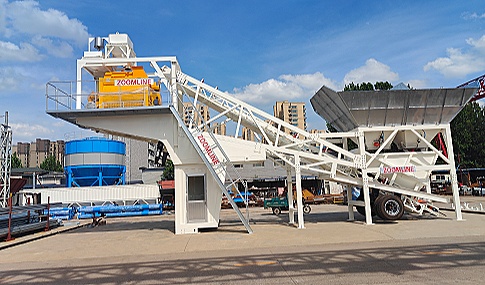
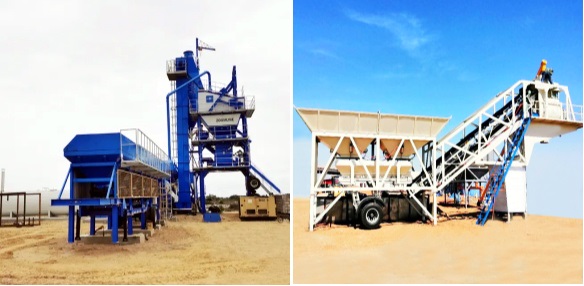
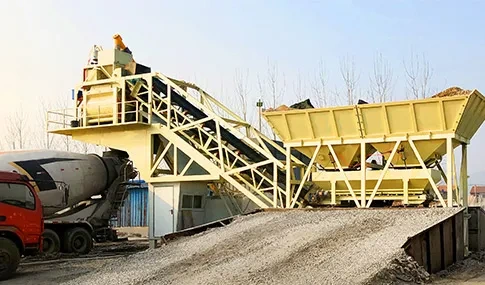
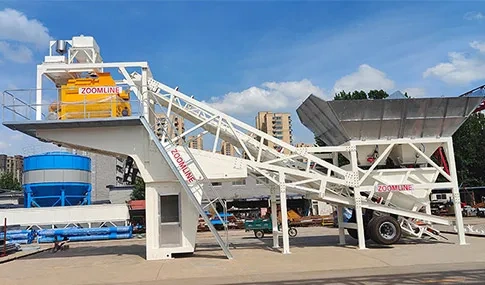
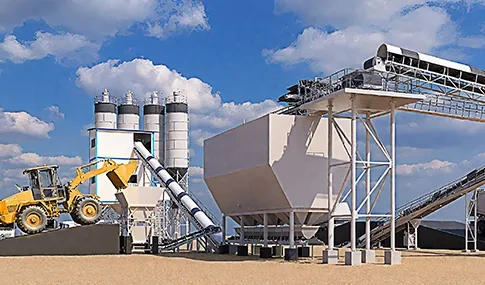
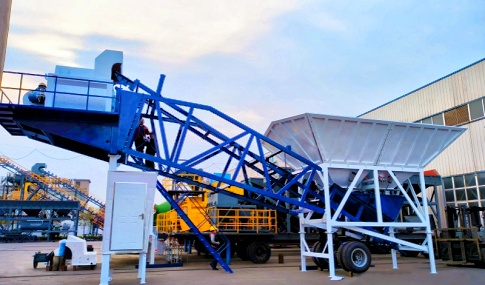
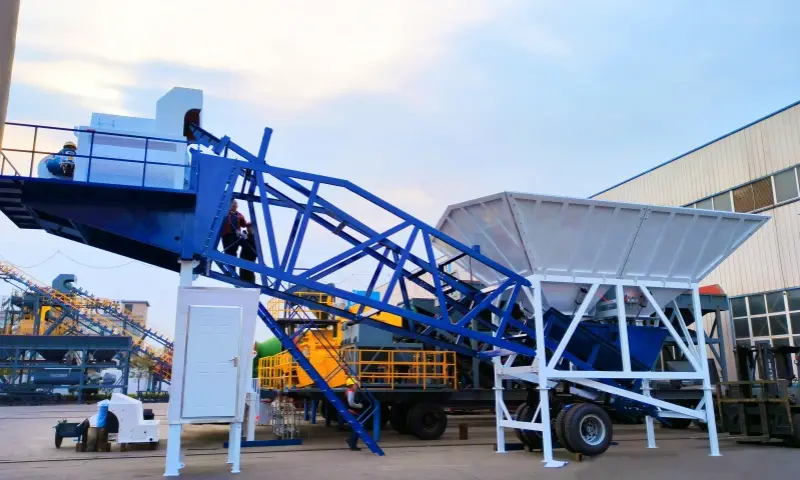
Eco-friendly mobile concrete batching plant is a kind of mobile concrete production equipment that deeply integrates mobility and green production concept, the core of which is to realize localized and environmentally friendly production of concrete through modular design and intelligent control. Compared with the traditional traditional stationary concrete production, it does not need a fixed site and can be flexibly moved according to the construction demand. Its complete production process covers the whole chain of raw material batching, mixing and discharging, which reduces the environmental pollution in the production and transportation process from the source, and its core value is to take into account the mobility and convenience as well as the requirements of green production, and accurately meet the diversified needs of urban construction.
Core Components of Mobile Concrete Batching Plant
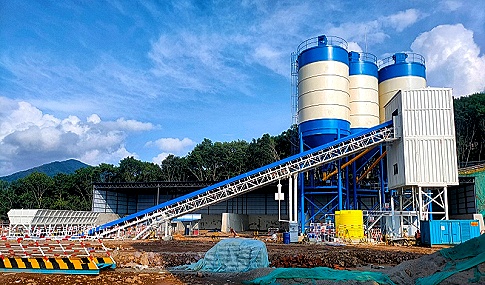
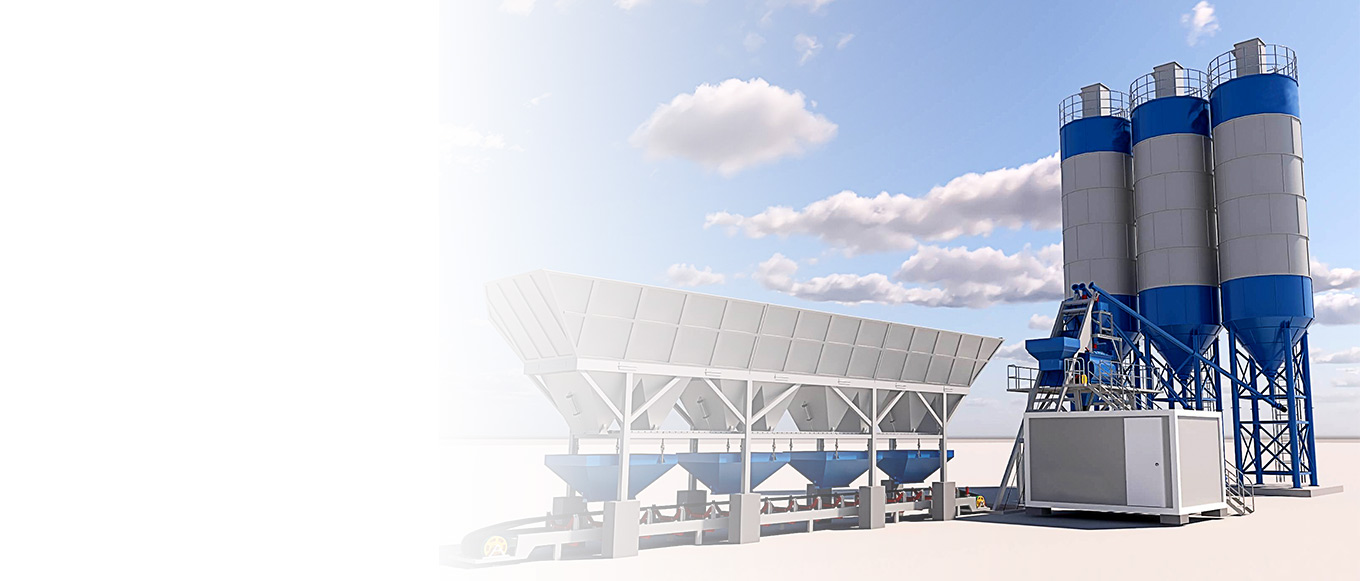
The core components of the mobile concrete batching plant are centered on high efficiency, environmental protection and accurate production, which mainly include five systems.
Aggregate Batching System: Responsible for the accurate weighing and transportation of raw materials to ensure the accurate batching ratio;
Mixing Unit: Adopts high-efficiency and low-noise mixer to ensure even mixing and stable quality of concrete;
Cement Silo: Cement silo adopting closed design and equipped with dust control device to eliminate dust pollution from the source;
Water and Admixture System: Realize precise proportioning through intelligent control to improve the performance of concrete;
Intelligent Control System: PLC as the core, realizing automatic operation of the whole process, guaranteeing production efficiency and environmental protection.
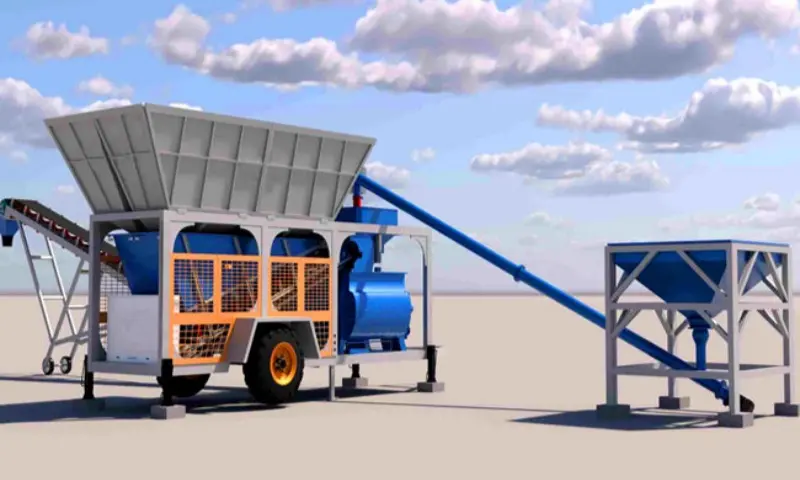
Comparison Between Mobile Concrete Batching Plant and Stationary Concrete Batching Plant
There is a significant difference between mobile concrete batching plants and stationary concrete batching plants in terms of core performance.
Mobility: The mobile concrete batching plant is highly flexible, whereas the stationary concrete batching plant cannot be moved;
Installation lead time: Mobile concrete batching plants can be installed and commissioned in a few hours to a few days, whereas stationary concrete batching plants can take several weeks;
Transportation efficiency: mobile concrete batching plants can be supplied nearby, while stationary concrete batching plants rely on long-distance transportation;
Site adaptability: Mobile concrete batching plants are compact, space-saving and adaptable to a variety of complex sites, while stationary concrete batching plants are limited by fixed sites and are not flexible enough;
Environmental impact: mobile concrete batching plants have lower emissions and are more in line with urban environmental requirements, while stationary concrete batching plants have higher carbon emissions and pollution risks.
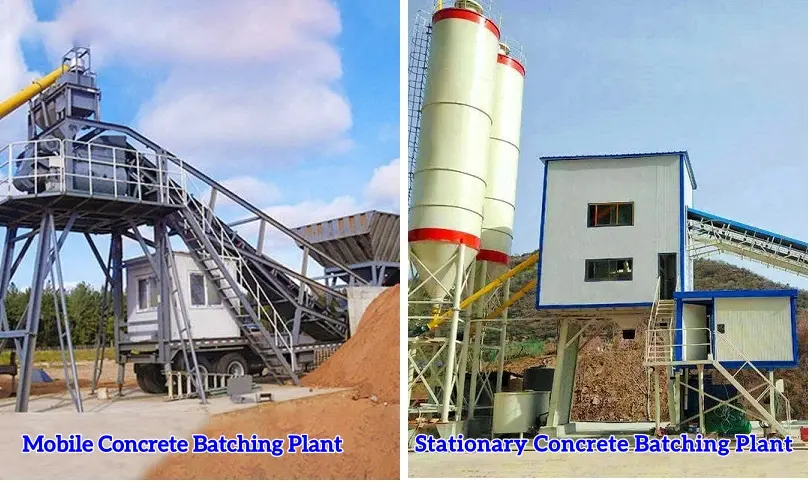
The Core Embodiment of “Environmentalization” of Mobile Concrete Batching Plant
A mobile concrete batching plant can be called “environmentally friendly”, the core lies in its comprehensive upgrade in pollution control, energy saving and consumption reduction.
Dust control: Adoption of fully enclosed conveying system and pulse dust collector can realize efficient dust collection;
Low noise design: Adapted to densely populated urban areas through multiple noise reduction measures to minimize the impact on the surrounding residents;
Water Recycling System: Adopting closed-loop treatment mode to recycle the cleaning and mixing wastewater, realizing the reuse of water resources;
Energy-saving motors: with frequency conversion drive and intelligent control, effectively reducing power consumption;
Automation system: Minimize material waste and energy loss through precise control to realize green production.
Why Sustainable Urban Construction Needs Mobile Concrete Plants in 2026?
Carbon Reduction Pressure in Urban Construction
The concrete industry is an important contributor to global carbon emissions. With the advancement of carbon-neutral targets by governments and the improvement of green building incentives, green procurement policies for urban infrastructure projects are becoming more and more stringent. Low-carbon concrete production not only meets the environmental requirements, but also brings significant cost advantages for enterprises, and its operating costs can be reduced by a certain percentage compared with the traditional production mode, which has become a key hand for urban construction to realize the goal of carbon reduction.
Transportation Emissions and Urban Traffic Challenges
Long-distance transportation of traditional concrete not only generates a large amount of fuel consumption and carbon emissions, but is also easily affected by urban traffic congestion, resulting in low transportation efficiency and delayed project progress, while long-distance transportation will reduce the freshness and performance of concrete, affecting the quality of the project. The mobile concrete batching plant realizes “local mixing, nearby supply”, and the transportation radius can be controlled within 1-5 kilometers, and even zero transportation, which fundamentally solves a series of problems caused by long-distance transportation.
Rising Environmental Compliance Costs
At present, the dust emission standards, wastewater discharge requirements, and noise control indicators in urban construction areas are becoming more and more stringent. Enterprises that fail to meet the environmental compliance requirements will face the risk of fines and work stoppage, and the cost of environmental compliance continues to rise. Through perfect pollution control measures, the environmentally friendly mobile concrete batching plant can easily meet national and local environmental standards, help enterprises avoid environmental risks, reduce compliance costs, and ensure the smooth progress of the project.
Demand for Flexible and Distributed Concrete Supply
In urban construction, short-cycle projects such as repairs and renovations require high response speed for concrete supply, and the site constraints of multi-location decentralized construction and temporary infrastructure projects also put forward higher requirements for the flexibility of concrete supply. Mobile concrete batching plant can flexibly adapt to small-scale and high-frequency concrete supply demand, quickly respond to the construction rhythm of different projects, and become the core carrier of urban distributed concrete supply.
Smart City and Green Infrastructure Trends
With the further advancement of smart city construction, the integration of sustainable urban planning and low-carbon intelligent construction system is getting closer, and digital construction management and real-time supply synergy have become the new demand of urban construction. Mobile concrete batching plant can complement stationary concrete batching plant, optimize urban concrete supply network, adapt to the diversified needs of urban construction, and provide strong support for high-quality urban development.
Typical Urban Construction Applications of Mobile Concrete Batching Plants
Municipal Roads and Bridge Maintenance
In the maintenance project of municipal roads and bridges, the mobile concrete batching plant can realize night construction and minimize the interference with urban traffic. For pothole repair, bridge deck renovation and other rapid maintenance projects, its small batch precision production capacity can effectively reduce material waste, while adapting to the staggered construction schedule, improve construction safety and efficiency, ensure that the maintenance project is quickly landed, and reduce the impact on the public travel.
Tunnel, Pipeline, and Rail Infrastructure Projects
Tunnels, pipelines and rail transit projects are mostly long linear projects with multiple construction work surfaces, requiring high continuity and flexibility in concrete supply. Mobile concrete batching plant can flexibly migrate along the project route, match the construction progress, realize continuous production in phases, avoid long-distance transportation delays, and at the same time can flexibly adjust the concrete proportion according to the structural requirements of different construction segments to ensure the quality of the project.
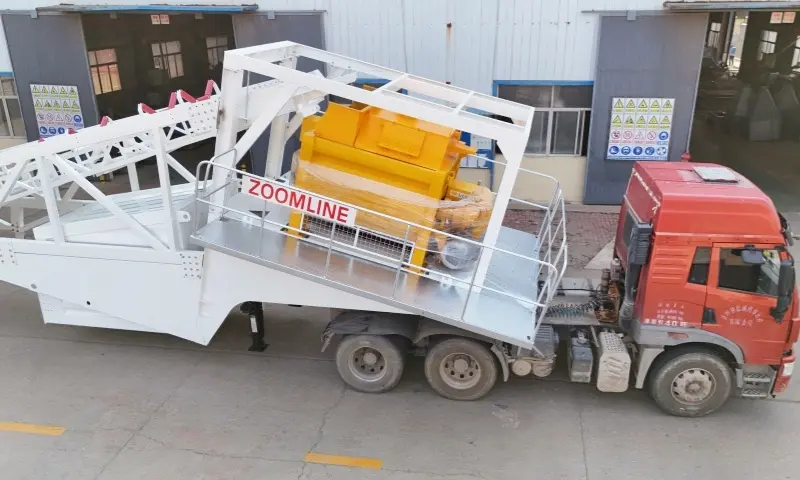
Space-Constrained Urban Construction Sites
Construction sites in urban centers and old districts are often narrow, with limited space for temporary storage, which cannot be adapted by traditional concrete batching plants. With compact structure and small footprint, mobile concrete batching plant can be flexibly deployed in narrow sites or temporary working areas, which is suitable for urban renewal and infill development projects. Moreover, the installation and dismantling speed is fast, which is suitable for short-term construction projects and maximizes the use of limited site resources.
Emergency Repair and Short-Cycle Projects
Emergency repair projects such as natural disasters and sudden infrastructure failures, as well as short-cycle projects such as small-scale renovation and temporary facility construction, require a high degree of timeliness in concrete supply. Mobile concrete batching plant can realize on-demand batching, accurately control the production volume, and reduce material waste. At the same time, it has the ability to respond quickly, arrive at the site and put into production, so as to adapt to the accelerated construction plan and ensure the smooth completion of emergency repair and short-cycle projects.
Urban Redevelopment and Smart City Projects
In urban renewal and municipal facilities upgrading projects, the mobile concrete batching plant can provide flexible concrete supply support to meet the diversified needs of urban renewal. At the same time, it can be deeply integrated with the digital construction management system to provide green and efficient concrete supply for the smart city transportation system and sustainable urban infrastructure construction, and help the city develop in a low-carbon and intelligent way.
Environmental Benefits of Eco-Friendly Mobile Concrete Plants
Reduced Transportation Emissions
Adopting the localized production mode, the Eco-friendly Mobile Concrete Batching Plant shortens the transportation distance to 1-5 kilometers, which significantly reduces the fuel consumption and exhaust emissions of concrete transportation vehicles, and at the same time reduces the vehicular traffic pressure on urban roads. Compared with the traditional stationary concrete batching plant, the carbon footprint of the plant has been significantly reduced, which provides a strong support for the realization of the city’s carbon-reducing goals.
On-Demand Production and Material Waste Reduction
Relying on the intelligent control system, the mobile concrete batching plant can realize accurate batching and flexible adjustment of production volume according to the real-time demand of the project, which fundamentally avoids the problem of concrete waste caused by overproduction in traditional stationary concrete batching plants. At the same time, the accurate batching control improves the utilization rate of raw materials and further reduces material loss, which is in line with the concept of sustainable development.
Energy-Efficient Production Systems
The mobile concrete batching plant is equipped with frequency conversion drive motors, which can flexibly adjust the motor speed according to the production load to avoid energy waste; the intelligent power management system and optimized mixing process further improve the mixing efficiency and reduce the power consumption per unit of concrete production, thus realizing the dual goals of energy saving and efficient production.
Water Recycling and Wastewater Reuse
For the cleaning waste water and mixing waste water generated in the production process, the mobile concrete batching plant adopts a closed-loop water recycling system, which realizes the recycling of waste water through sedimentation, filtration, disinfection and other treatment processes, and uses it for concrete batching or equipment cleaning, which greatly reduces the consumption of fresh water resources, and at the same time avoids the pollution of the environment caused by the discharge of waste water.
Dust and Noise Pollution Control
In terms of dust control, the mobile concrete batching plant adopts a fully enclosed conveying system with pulse dust collector and spraying dust reduction technology, which effectively prevents dust leakage and ensures that the production environment meets the standards; in terms of noise control, through the noise reduction design of the equipment and sound insulation measures, it realizes low-noise operation and reduces the interference with the surrounding city residents, which is suitable for the construction in densely populated areas.
Compatibility with Low-Carbon Concrete Materials
The environment-friendly mobile concrete batching plant can be flexibly adapted to a variety of low-carbon concrete materials, and can effectively utilize auxiliary cementitious materials such as fly ash, slag, silica fume, etc. At the same time, it can be blended with recycled aggregate and calcined clay, etc., so as to realize the reduction of the hidden carbon in concrete through the substitution of cement, and to further enhance the environmental friendliness of the production of concrete, which is in line with the requirements for the development of green buildings.
Intelligent Technologies Driving Green Concrete Production
PLC and Automation Control System
PLC automation control system is the core support for mobile concrete batching plant to realize green production, which can realize the automatic operation of the whole process of batching, mixing and discharging, accurately control the proportion of batching, and avoid the waste of materials and quality problems caused by human error. At the same time, through the optimization of mixing process, while improving the quality of concrete, reduce energy consumption, to achieve efficient and environmentally friendly production.
IoT-Based Monitoring and Remote Management
The application of Internet of Things (IoT) technology enables the mobile concrete batching plant to realize real-time production monitoring and data management, which can collect various parameters in the production process in real time, and carry out data analysis and abnormal early warning. Remote diagnostic function can reduce the cost of on-site maintenance, and the cloud platform operation and management system can realize the cooperative management of multiple sites, improve the overall operational efficiency, and ensure the stable operation of the equipment.
AI-Assisted Mix Optimization
Artificial intelligence technology can dynamically adjust the concrete ratio according to the performance of raw materials and project demand, to achieve ratio optimization, not only to ensure that the concrete performance is up to standard, but also to minimize the consumption of raw materials. At the same time, through predictive quality control, quality risks can be avoided in advance, material waste can be further reduced, and the intelligence and green level of production can be improved.
Predictive Maintenance Systems
The predictive maintenance system can monitor the running status of the mobile concrete batching plant in real time, discover potential faults in a timely manner, realize advance maintenance and accurate maintenance, reduce equipment downtime and lower maintenance costs. At the same time, the system can extend the service life of the equipment, so that the service life of the mobile concrete batching plant far exceeds that of the traditional stationary concrete batching plant, and further enhance the utilization rate of the equipment and economic benefits.
Smart Energy Management Systems
Intelligent energy management system optimizes energy use efficiency and realizes automated energy-saving operation through real-time analysis of mobile concrete batching plant power consumption. It dynamically adjusts the energy supply according to the production load, optimizes the peak load distribution, effectively reduces the cost of electricity, and at the same time reduces the waste of energy, helping to achieve the goal of low-carbon production.
Integrated Environmental Monitoring
The integrated environmental protection monitoring system can monitor dust and noise emissions in the production process in real time, track pollutant emission data, generate environmental compliance reports, and ensure that equipment operation meets urban environmental standards. At the same time, the production parameters can be actively adjusted according to the monitoring data, realizing the dual improvement of environmental compliance and production efficiency.
Economic and Operational Advantages of the Contractor
Lower Transportation and Logistics Costs
The mobile concrete batching plant’s nearby production mode significantly shortens the concrete transportation distance, reduces the fuel consumption and vehicle loss of transportation vehicles, and significantly reduces the transportation cost compared with the traditional stationary concrete batching plant. At the same time, there is no need to rely on a large-scale transportation fleet, which further reduces logistics costs and management costs, and improves the economic efficiency of the project.
Reduced Concrete Waste and Material Consumption
The on-demand batching mode can minimize the loss of returned concrete, and the accurate batching control improves the utilization rate of raw materials and avoids the waste of materials caused by overproduction. At the same time, by optimizing the batching ratio, it reduces the consumption of cement, aggregate and other raw materials, further reduces the production cost, and improves the profit margin of the project.
Faster Deployment and Higher Project Efficiency
The mobile concrete batching plant adopts a modular design and is quick to install and dismantle, which saves a lot of installation time compared with the traditional stationary concrete batching plant and enables it to be put into production quickly. At the same time, it can be flexibly relocated between multiple construction sites to improve equipment utilization, accelerate project turnaround, improve on-site responsiveness, and ensure that the project is pushed forward on time.
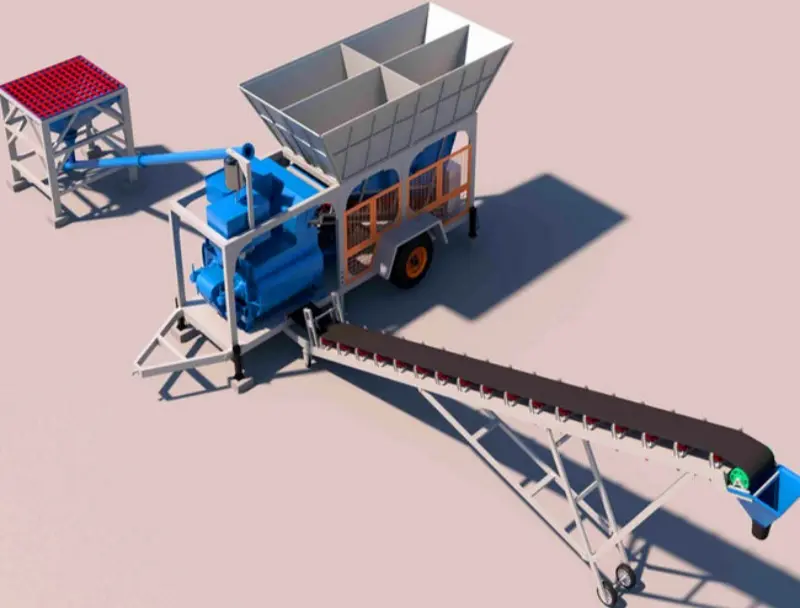
Lower Maintenance Costs and Longer Equipment Life
The core components of the mobile concrete batching plant are made of high-strength wear-resistant materials, which not only can adapt to the complex construction environment of urban construction, reduce wear and tear of components, but also can extend the service life of the equipment. Intelligent monitoring and predictive maintenance system can reduce the failure downtime of mobile concrete batching plant, lower maintenance costs, and further enhance the long-term operational benefits of the equipment.
Easier Environmental Compliance
The design of the environmentally friendly mobile concrete batching plant is in line with the requirements of modern urban environmental protection regulations, and it can easily meet the standards for dust, noise, wastewater and other pollutants, reducing the risk of fines and work stoppages faced by enterprises due to environmental non-compliance. At the same time, environmental compliance can also improve the approval rate of the project, which will help the company to get more opportunities for urban construction projects.
Improved ROI for Urban Construction Projects
Lower operating costs and higher equipment utilization enable mobile concrete batching plants to bring significant cost savings to contractors and improve long-term project profitability. Whether it is a small maintenance project or a large infrastructure project, its flexible adaptability and efficient operation can help companies optimize the allocation of resources and improve the return on investment.
Mobile Concrete Batching Plants vs Traditional Stationary Concrete Batching Plants
Comparison of Production Models
There are significant differences between mobile concrete batching plant and traditional stationary concrete batching plant in terms of production mode.
Mobility: Mobile concrete batching plant has a high degree of flexibility and can be relocated flexibly according to the construction demand, while the traditional stationary concrete batching plant is fixed in a specific site and cannot be moved;
Installation time: Mobile concrete batching plants have a short installation period, while traditional stationary concrete batching plants have a long installation period;
Transportation Distance: Mobile concrete batching plants can be supplied nearby and have a short transportation distance, while traditional stationary concrete batching plants need to be transported over long distances;
Carbon Emissions: Mobile concrete batching plants have lower emissions, while traditional stationary concrete batching plants have higher emissions;
Site Flexibility: Mobile concrete batching plant is highly adaptable and saves space, while traditional stationary concrete batching plant has large site restrictions;
Environmental Adaptability: Mobile concrete batching plants are more adaptable to complex urban environments, while traditional stationary concrete batching plants are moderately adaptable.
Which Type Is Better for Urban Construction?
Different types of concrete batching plants are suitable for different urban construction scenarios.
Mobile concrete batching plant is more suitable for temporary projects, high-frequency maintenance works, densely populated urban centers, etc., and can flexibly cope with the problems of decentralized construction and site constraints, while traditional stationary concrete batching plant is more suitable for large-scale and long-term urban infrastructure projects, and can meet the demand for large-volume concrete supply, and both of them have their own advantages, and need to be reasonably selected according to the characteristics of the project.
Hybrid Supply Models for Modern Cities
In order to optimize the efficiency of urban concrete supply, mobile concrete batching plant and traditional stationary concrete batching plant form a complementary and synergistic mixed supply mode to build a perfect urban concrete supply network. Through the production layout of “centralized + distributed”, combined with the intelligent urban concrete logistics system, it realizes the organic combination of large-volume supply and flexible replenishment, which not only meets the large-scale demand of large-scale projects, but also adapts to the flexible demand of small-scale and temporary projects, and improves the overall efficiency and sustainability of urban concrete supply.
How Mobile Concrete Plants Support Circular Economy Goals
Recycling Returned Concrete and Washout Materials
The Mobile Concrete Batching Plant actively practices the concept of circular economy. Wastes such as returned concrete and equipment washing residues are processed through a professional recycling system, which realizes the recycling of aggregates, reuse of water resources and recycling of cement slurries, and transforms the original wastes into reusable raw materials, reduces the waste of resources, and realizes the resourcefulness of wastes.
Recycled Concrete Aggregate (RCA) Applications
In concrete production, mobile concrete batching plants can incorporate recycled concrete aggregate (RCA), which comes from urban demolition of construction waste, and its application not only reduces the mining of natural aggregate, but also reduces the amount of construction waste in landfills, and realizes the recycling of resources. In the application of non-structural concrete, recycled concrete aggregate can realize a certain proportion of substitution, which not only guarantees the performance of concrete, but also promotes the development of environmental protection.
Industrial Byproduct Utilization
Mobile concrete batching plant can effectively utilize industrial by-products such as steel slag, recycled glass, crushed bricks and other industrial by-products as alternative aggregates to enrich the source of raw materials and reduce the emission of industrial waste and landfill. These industrial by-products can not only realize the resourcefulness of waste, but also enhance the performance of concrete to a certain extent, realizing the double enhancement of environmental protection and efficiency.
Closed-Loop Resource Management
By building a sustainable raw material recycling system, the mobile concrete batching plant realizes closed-loop resource management, minimizes the generation of waste and improves the efficiency of resource utilization. The on-demand production mode reduces material waste, and the recycling system realizes waste resourcing, forming a closed loop of “production-recycling-reuse”, which is in line with the requirements for the development of the circular economy, and contributes to the sustainable development of the city.
Industry Trends in Sustainable Concrete Supply
Transition Toward Distributed Concrete Supply Networks
In the future, concrete supply will gradually transform from centralized to distributed, and flexible production systems and decentralized batching strategies will become the mainstream of the industry. Mobile concrete batching plant, as the core carrier of distributed supply, will synergize with traditional stationary concrete batching plant to build a flexible and efficient urban concrete supply network to meet the diversified needs of urban construction.
Carbon-Neutral Construction Targets
With the advancement of the global carbon neutral goal, the green building certification system is becoming more and more perfect, and the construction of net-zero infrastructure has become an important direction for urban development. Low-carbon concrete production will become the industry standard, and mobile concrete batching plant, with its low-carbon advantages, will play an important role in carbon-neutral construction and promote the transformation of the concrete industry to green.
Electrification and Renewable Energy Integration
Electrification has become the development trend of concrete production equipment, the application of solar-powered mixing plants and energy storage systems is becoming more and more widespread, and electrified equipment is gradually replacing traditional fuel equipment to further reduce carbon emissions. Mobile concrete batching plant will gradually realize the deep integration of renewable energy and production system, and enhance the sustainability of energy utilization.
Smart City Integration and Digital Construction
Technologies such as digital dispatching system, intelligent transportation fusion and real-time construction collaboration will be deeply integrated with concrete supply to realize the digital management of the whole process of concrete production, transportation and supply. The mobile concrete batching plant will be integrated into the smart city infrastructure to enhance the supply efficiency through digital technology and realize precise synergy with urban construction.
Expansion of Recycled and Low-Carbon Materials
The application of auxiliary cementitious materials will continue to grow, green concrete standards continue to improve, and regulations related to sustainable materials are becoming increasingly stringent, promoting the widespread application of recycled aggregates, low-carbon cement and other materials in concrete production. The mobile concrete batching plant will further enhance the adaptability to low-carbon materials and help the green transformation of the concrete industry.
How to Choose an Eco-Friendly Mobile Concrete Batching Plant?
Determine Required Production Capacity
When choosing an environmentally friendly mobile concrete batching plant, the first thing you need to do is to determine the production capacity according to the project scale.
Small urban projects require low production capacity, municipal infrastructure projects need to choose medium production capacity equipment, and large urban infrastructure projects need to be matched with high-capacity mobile concrete batching plants to ensure that the concrete supply can meet the construction demand.
Evaluate Mobility and Installation Requirements
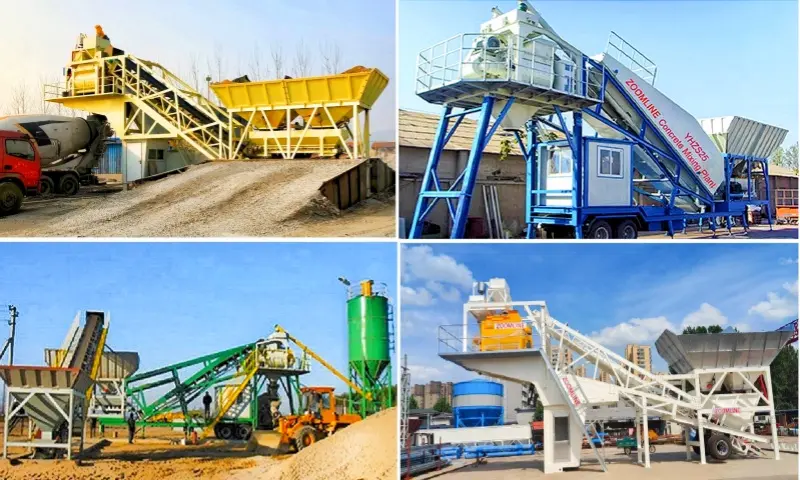
According to the mobility requirements of the construction scenario, choose the appropriate type of equipment, including different types of mobile concrete batching plant such as trailer type and modular type. At the same time, evaluate the installation and dismantling difficulty of the equipment in light of the relocation frequency and transportation convenience of the project to ensure that the equipment can be flexibly adapted to the needs of different construction sites.
Assess Environmental Protection Features
Environmental performance is the core indicator for selecting an environmentally friendly mobile concrete batching plant, focusing on assessing the dust control system, water recycling system and noise control measures. Ensure that the equipment is equipped with pulse dust collector, fully enclosed conveying system, perfect waste water recycling and treatment capacity, and that the noise emission is in line with urban environmental standards.
Check Automation and Intelligent Technology Capabilities
In order to ensure the automation and accuracy of the production process, mobile concrete batching plant equipped with PLC control system and automatic batching function is preferred. At the same time, evaluate the intelligent functions of the mobile concrete batching plant such as remote monitoring and artificial intelligence ratio optimization, so as to improve the production efficiency and green level of the mobile concrete batching plant, and reduce labor costs and material waste.
Verify Compatibility with Sustainable Concrete Materials
Ensure that the mobile concrete batching plant is not only capable of adapting to sustainable materials such as recycled aggregates, auxiliary cementitious materials and low-carbon cement, but also has the ability to flexibly adjust the batching ratio, and at the same time can optimize the specific production process according to the characteristics of the materials, so as to achieve the guarantee of concrete quality and low-carbon production.
Consider After-Sales Service and Long-Term Maintenance
In order to ensure that the mobile concrete batching plant can obtain timely spare parts support and technical services in the process of using, it is necessary to choose a mobile concrete batching plant supplier with a perfect after-sales service system. At the same time, it is also important to assess the upgrade potential of the mobile concrete mixing plant to ensure that it can continue to adapt to future environmental standards and technological developments, extend its service life and improve long-term operational efficiency.
Conclusion
The Future of Sustainable Urban Concrete Supply
In the future, low-carbon development will become the core direction of urban construction, and the integration of flexible infrastructure construction and smart city engineering will become increasingly close. The environmentally friendly mobile concrete batching plant will become the core carrier of sustainable urban concrete supply, promoting the transformation of concrete supply to low-carbon, flexible and intelligent, and assisting the high-quality development of cities.
Why Mobile Concrete Plants Will Continue to Grow?
The environmental advantages of mobile concrete batching plants will become more and more prominent as the city’s environmental compliance requirements continue to improve:
Its efficient operation mode and cost advantages can bring significant economic benefits to contractors; its strong urban adaptability enables it to meet diversified urban construction needs; at the same time, its high degree of compatibility with the concept of circular economy will also promote its sustainable development in urban construction.
Final Thoughts
In the context of sustainable urban construction, the environmentally friendly mobile concrete batching plant is no longer an optional equipment for urban construction, but a core infrastructure solution to support modern sustainable urban development. It can not only solve the environmental protection and efficiency dilemma of traditional concrete supply, but also promote the development of recycling economy, help achieve carbon neutrality, and provide strong support for the greening, intelligentization and sustainability of urban construction. Choosing the right environmentally friendly mobile concrete batching plant will become the key to enhance the core competitiveness of enterprises in the field of urban construction.
RELATED NEWS