

What is a Mobile Concrete Batching Plant?
In large-scale construction projects, a continuous and stable supply of concrete is a key factor determining project progress. Whether it’s highway or bridge construction, or large-scale residential development projects, mobile concrete batching plants are becoming indispensable equipment in modern construction due to their unique flexibility and high efficiency. Unlike traditional stationary batching plants, mobile concrete batching plants can provide concrete production solutions directly on the construction site, significantly reducing transportation costs, time wastage, and dependence on external suppliers. This article will explore in depth why mobile concrete batching plants are the ideal choice for large-scale projects.
What is a Mobile Concrete Batching Plant?
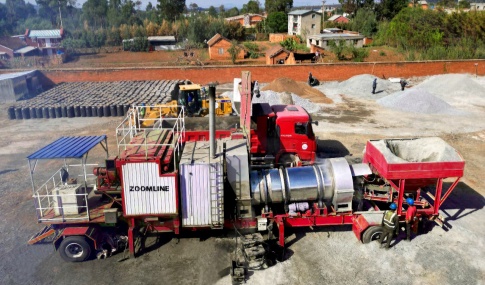
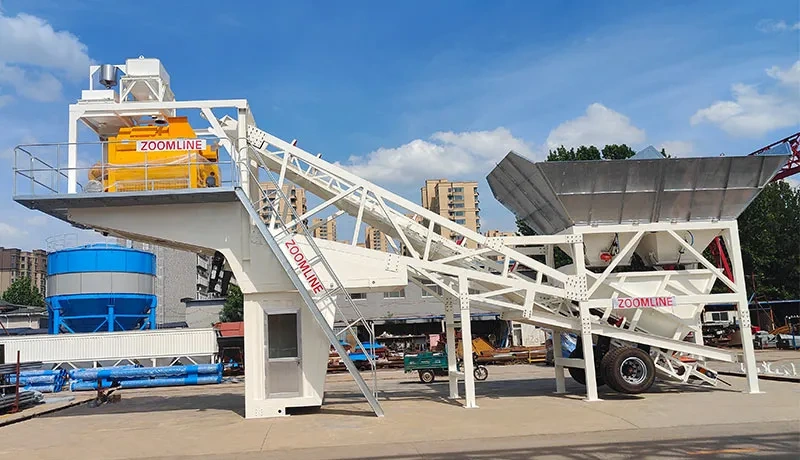
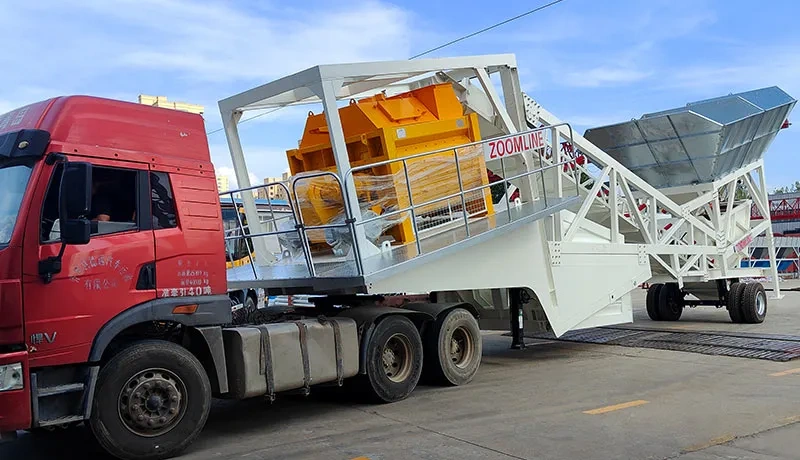
A mobile concrete batching plant is an integrated, mobile, and highly efficient concrete production equipment designed specifically for efficient concrete production on the construction site. Unlike bulky stationary batching plants, mobile batching plants compactly integrate all core components—aggregate feeding devices, cement weighing systems, mixers, control rooms, water tanks, etc.—on a single mobile chassis, making the overall structure easy to transport.
This design allows contractors to produce concrete directly where it is needed, completely solving problems such as long-distance transportation delays and reliance on remote ready-mix suppliers. Its compact design and high mobility make it particularly suitable for projects that require frequent site changes or operations in remote, complex terrain.
Core Components of a Mobile Concrete Batching Plant
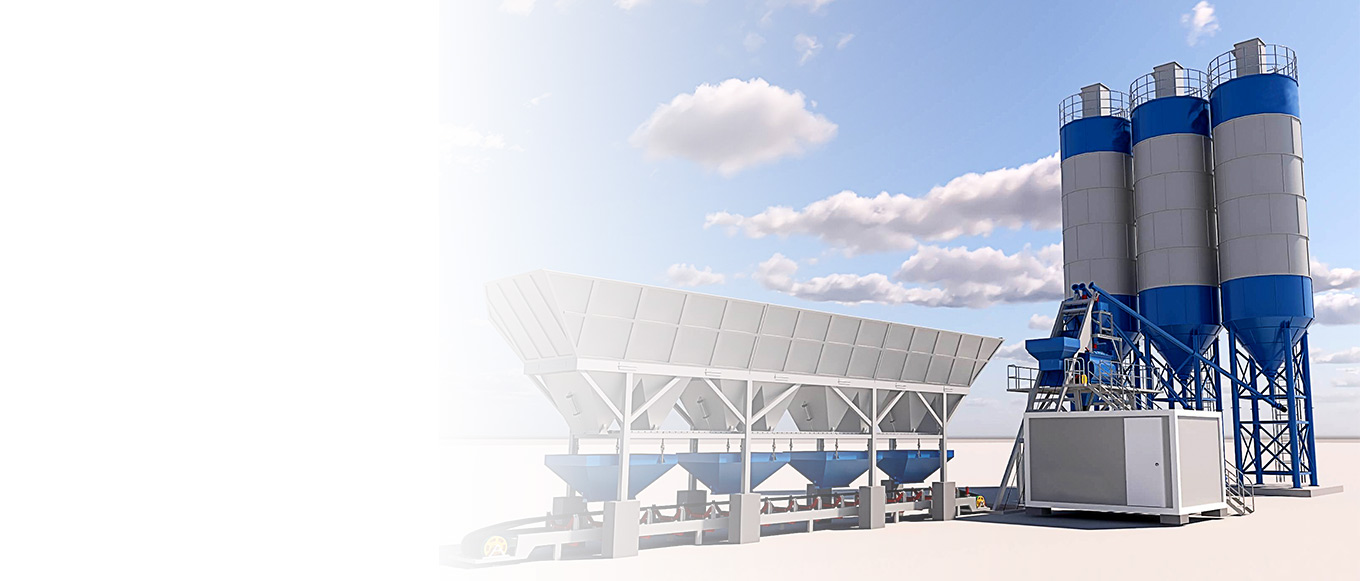
A mobile concrete batching plant integrates the main functional units of a traditional stationary batching plant onto one or more mobile chassis, facilitating rapid relocation and installation. Its main components include:
Batching System
Aggregate Batching Machine: Used to store and measure aggregates of different specifications, such as crushed stone, gravel, and sand. Multi-bin design adapts to different aggregates. Metering methods include belt scales and volumetric metering.
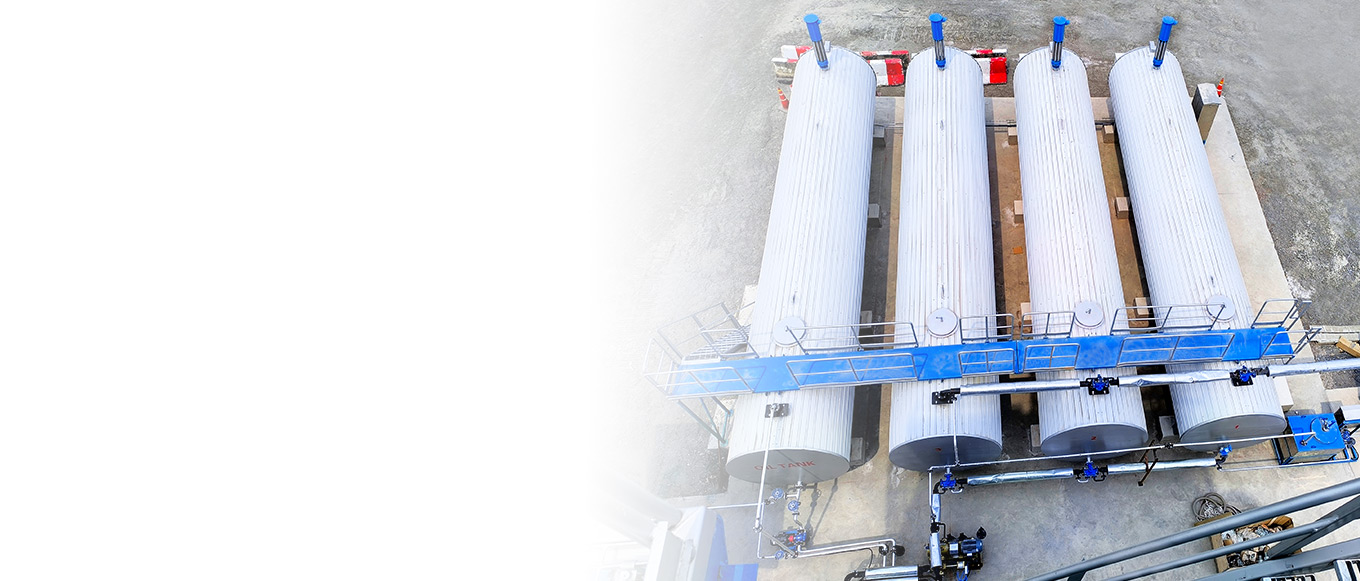
Cement Silo: Used to store cement. It features a sealed structure for moisture protection and is equipped with a screw conveyor to transport cement to the metering device.
Fly Ash Silo (Optional): Used to store fly ash and other admixtures. Its structure and conveying method are the same as the cement silo.
Water Metering System: Flow meters or weighing systems accurately control the amount of water used in mixing.
Admixture Metering System (Optional): Metering pumps or weighing systems accurately measure and proportion various admixtures.
Conveying System
Aggregate Conveyor: Transports aggregates from the batching machine to the mixing unit, typically using a belt conveyor.
Cement/Fly Ash Conveyor: A screw conveyor transports powder materials to the mixing host.
Mixing System
Mixing Host: The core component of concrete mixing; common types include twin-shaft forced mixers and planetary mixers.
Unloading System: The unloading gate is opened and closed pneumatically or hydraulically to discharge finished concrete.
Control System
Control Room/Control Cabinet: The control center of the mixing plant, containing a PLC control system, industrial computer, display screen, and operation buttons. It controls the batching, conveying, mixing, and unloading processes, coordinating the entire automated operation.
Weighing Control Instruments: Displays and controls the metering data of various materials.
Mobile Chassis
Trailer Chassis or Self-Propelled Chassis: The foundation of the mobile mixing plant, integrating all components. Trailer-mounted chassis require a tractor unit, while self-propelled chassis are self-powered.
Other Auxiliary Equipment
Air Compressor: Provides compressed air for pneumatic components.
Water Pump: Responsible for water supply.
Dust Removal System: Reduces dust pollution.
Lighting System: Supports nighttime construction.
In-depth Understanding of Mobile Concrete Batching Plants
Mobile concrete batching plants, also known as portable concrete batching plants, are facilities that mix water, cement, aggregates (sand, crushed stone, etc.), and admixtures according to a set ratio to produce concrete. Unlike stationary batching plants, the core advantage of mobile batching plants is their rapid transport and dismantling capabilities, providing significant flexibility and efficiency for construction projects.
Production Capacity
Production capacity refers to the amount of concrete a mobile concrete batching plant can produce per unit time, usually measured in cubic meters per hour (m³/h). For example, a batching plant with a capacity of 100 m³/h means it can produce 100 cubic meters of concrete per hour, providing a stable and reliable supply for large-scale projects. This level of capacity is ideal for infrastructure projects, commercial development, and residential construction, effectively reducing downtime, accelerating construction progress, and ensuring uninterrupted construction schedules.
Types of Mobile Concrete Batching Plants
Dry-Mix Mobile
All raw materials except water are dry-mixed; water is added during transportation or on-site. This type is suitable for projects where the uniformity of the concrete is not particularly critical.
Mobile Wet-Mix Concrete Batching Plant
All raw materials, including water, are mixed within the batching plant, resulting in better uniformity and meeting the requirements for high-quality concrete production.
Workflow of a Mobile Concrete Batching Plant
The workflow of a mobile concrete batching plant is efficient and orderly, typically including the following steps:
Aggregate Loading: A loader feeds aggregates of different specifications into the batching machine hoppers.
Aggregate Metering: According to the mix proportions, aggregates are accurately weighed by a weighing system and then conveyed by a belt conveyor to the collection hopper above the mixing unit.
Powder Conveying: Powders such as cement and fly ash are conveyed from storage silos to the weighing hopper via a screw conveyor, accurately weighed, and then fed into the mixing unit.
Water and Admixture Conveying: Water and admixtures are accurately weighed by a pumping system and then added to the mixing unit.
Mixing: The mixing unit thoroughly mixes all raw materials to form finished concrete.
Unloading: After mixing, the concrete is unloaded through the discharge gate into concrete trucks or used directly.
Control and Monitoring: The entire process is automatically completed by a PLC control system, and operators can monitor and adjust parameters in real time through the control room.
Core Advantages of Mobile Concrete Batching Plants
Mobile concrete batching plants offer intelligent solutions to many challenges on construction sites in the building industry. They enable contractors to flexibly produce concrete wherever needed, without relying on third-party suppliers or enduring transportation delays. Here are some of the most significant advantages:
On-site production ensures freshness and saves time
In many large or decentralized projects, transporting concrete from a central ready-mix concrete plant can lead to delays, material waste, and even compromised quality due to premature setting during transport. Mobile batching plants produce concrete directly at the construction site:
Eliminate the risk of premature setting during long-distance transport;
Proximity of the mixing point to the pouring point facilitates smoother construction progress;
Saves on mixer trucks and additional labor costs;
Batch production can be adjusted according to daily demand;
Not dependent on third-party suppliers or affected by traffic conditions.
Precise Batching, Strict Control of Mixing Quality
Mobile concrete batching plants are equipped with digital weighing systems and PLC-based control panels to ensure that each material (cement, sand, aggregate, water, admixtures) is added in the correct proportions:
Weighing sensors achieve precise measurement of raw materials;
Moisture content correction function allows for real-time adjustment of water usage;
Match proportions (e.g., M15, M25) can be stored and repeatedly recalled;
Operators can monitor and adjust parameters through a human-machine interface;
Reports are generated for each batch for easy auditing;
Reduces the risk of errors from manual batching.
Savings on Transportation, Material, and Labor Costs
Since concrete is produced on-site, there is no need for substantial expenditures on transporting ready-mixed concrete. At the same time, the automated system reduces the need for manual labor, avoiding the waste common in manual mixing or large-volume delivery:
Bulk raw materials can be stored on-site and used as needed;
Reduces reliance on expensive mixer truck or pump truck rentals;
One operator can manage the entire batching system;
Mixing can be paused or restarted at any time without material loss.
Rapid Installation and Inter-site Transfer
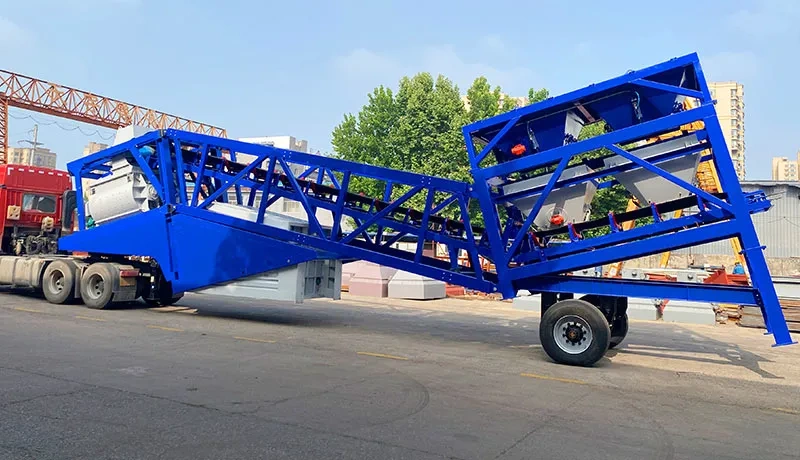
Mobile batching plants are designed for rapid relocation and easy installation. Components are typically mounted on skids or trailers for easy transport and simple installation, requiring minimal foundation work:
Installation and production can be completed in just 1-2 days;
Movement to new sites can be completed without dismantling major components;
No deep concrete foundations are needed, making it suitable for temporary sites;
An excellent choice for rental companies and fleet operations;
Suitable for rural or mountainous projects where RMC supply is difficult.
Adapting to Diverse Project Needs
Whether for road construction, wind turbine foundations, railway engineering, or canal lining, mobile concrete mixing plants can adapt to various scenarios:
Supports customized concrete grades and slump types;
Can meet both large and small batch concrete supply needs; Batch-level control enables better project planning; Suitable for staged pouring or mobile pouring areas; Commonly used in defense, power, or irrigation projects.
Cleaner Operation and Lower Environmental Impact
Mobile mixing plants are compact and feature features that control dust, noise, and material waste: Enclosed conveyor and silo systems reduce dust generation; Water consumption is controlled through metered feeding and a water circulation system; Silent motors and enclosed mixers reduce noise; Materials are stored in silos or bins to minimize spillage.
Why are mobile concrete batching plants the preferred choice for large-scale projects?
Providing on-site production nearby, eliminating concrete transportation losses and delays
Large-scale infrastructure, highway, bridge, and large-scale building construction projects cover a wide area and have long construction lines. Relying on long-distance commercial concrete plants for supply can lead to premature setting, segregation, and deterioration of concrete during long-distance transportation, affecting the quality of pouring. Mobile batching plants can be directly stationed on-site, flexibly deployed according to construction locations, producing and pouring as needed. The freshness and workability of the concrete are controlled throughout the process. This also avoids downtime caused by road congestion and insufficient transportation capacity, significantly shortening the construction period.
Flexible relocation, adaptable to multi-point and segmented construction in large-scale projects
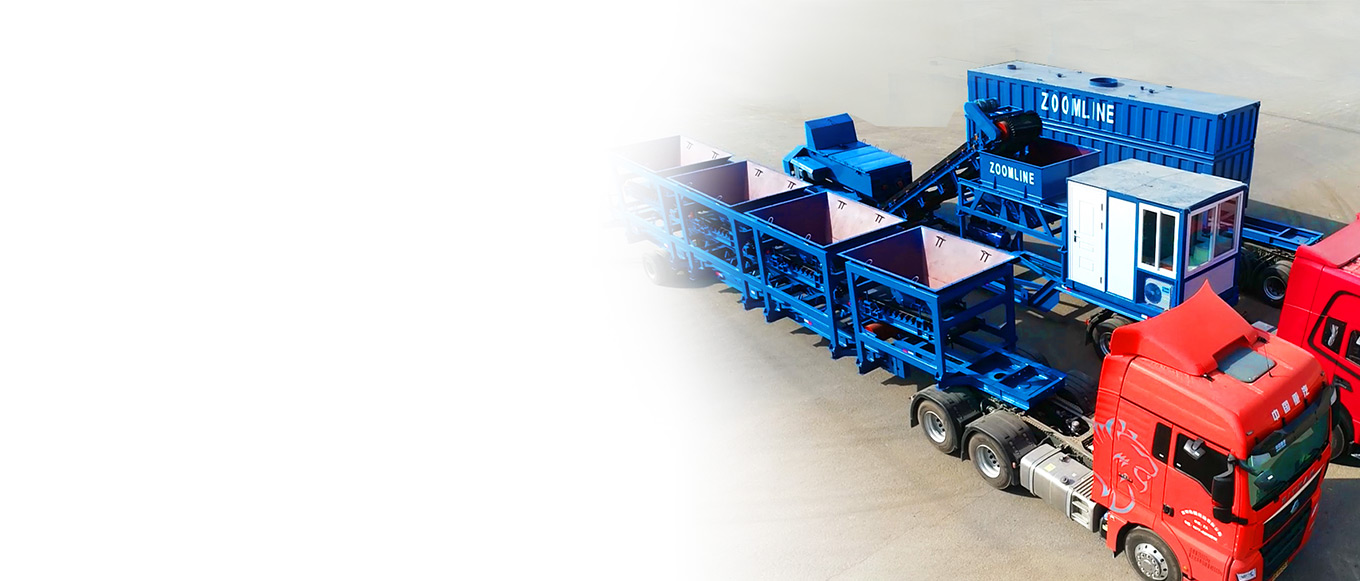
Large-scale projects often involve segmented operations and multi-point construction, with large construction areas and constantly shifting work surfaces. The integrated trailer chassis design of mobile batching plants eliminates the need for large-scale dismantling, allowing for rapid relocation from one construction section to the next. Construction requires no complex civil engineering foundations, and production can begin in 1-2 days, perfectly meeting the mobile construction needs of long-distance large-scale projects such as highways, railways, pipelines, and irrigation areas.
Significantly Reduced Overall Costs, Savings on Transportation, Equipment, and Labor Costs
Eliminates substantial long-distance transportation costs for ready-mixed concrete, as well as costs associated with mixer truck rental and dispatching.
Fully automated PLC batching control system allows for operation by a single person, reducing on-site mixing and material feeding labor. Raw materials are stockpiled locally in batches and mixed as needed, minimizing waste and material loss in finished concrete.
Precise and stable batching ensures high-standard quality for large-scale projects
Large-scale projects have stringent requirements for concrete grade and mix proportion stability. The mobile batching plant, equipped with a high-precision weighing module and intelligent control system, automatically and accurately proportions sand, cement, water, and admixtures. It can store multiple engineering formulas, ensuring consistent batch quality and generating production ledgers for easy project acceptance and quality control traceability, avoiding engineering risks caused by manual batching errors.
Suitable for complex sites and remote large-scale construction sites
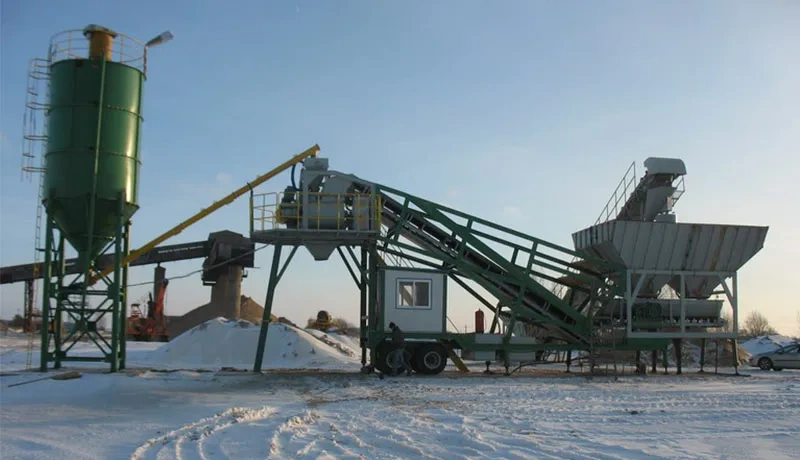
Many large infrastructure projects are located in suburbs, mountains, and rural areas where commercial concrete batching plants are scarce and transportation infrastructure is weak. Mobile mixing plants are compact, highly adaptable, and have low requirements for site flatness, allowing for rapid deployment in mountainous areas, wilderness, and temporary construction sites, solving the problem of unavailable commercial concrete supply for large-scale projects in remote locations.
Green and environmentally friendly construction, meeting the environmental control requirements of large-scale projects
Standard configuration includes sealed silos, enclosed conveying systems, and dust and noise reduction systems, resulting in low dust emissions and low operating noise. Wastewater can be recycled, meeting the dust control and green construction standards of large-scale municipal and infrastructure projects, eliminating the need for work stoppages or rectification due to environmental issues.
Flexible and controllable production capacity, matching the continuous pouring needs of large projects
Mobile mixing plants have a production capacity ranging from 25–120 m³/h, capable of meeting the needs of large-area foundations and large-volume continuous pouring of beams and slabs, while also allowing for small-batch replenishment as needed. This flexible adaptation to the different stages of large-scale projects ensures uninterrupted supply.
Conclusion
Mobile concrete batching plants have revolutionized how large-scale projects meet their concrete needs. Their high capacity, flexibility, and on-site production capabilities make them an indispensable tool for projects requiring a reliable, efficient, and high-volume supply of concrete. When selecting a mobile batching plant, factors such as project size, timeline, relocation frequency, and matching capacity and configuration should be considered to ensure the equipment is tailored to the specific needs of the project.
Whether it’s a large infrastructure project, a series of residential constructions, or complex bridge construction, mobile concrete batching plants offer seamless solutions, delivering consistent, high-quality concrete when and where it’s needed.
FAQ
Q1: How long does it take to move and install a mobile concrete batching plant?
Mobile concrete batching plants are designed for rapid deployment. Typically, from unloading from the transport vehicle to completion of installation and commencement of production, it only takes 1-2 days. Some models can even complete basic assembly within hours, significantly shortening the project preparation cycle.
Q2: Can the production capacity of a mobile concrete batching plant meet the needs of large projects?
Absolutely. Modern mobile concrete batching plants have production capacities ranging from 30 m³/h to over 100 m³/h, with some large models reaching up to 120 m³/h. For projects requiring a continuous supply of concrete, such as highways, bridges, and large residential areas, this capacity is more than sufficient to meet construction schedule requirements.
Q3: Is there a difference in concrete quality between mobile and stationary batching plants?
No difference, and it may even be better. Mobile concrete batching plants are equipped with the same PLC automatic control system and high-precision weighing sensors as stationary plants, enabling precise control of mix proportions. Since concrete is freshly produced on-site, quality loss during transportation is avoided, resulting in more reliable finished product quality.
Q4: Are the maintenance costs of mobile concrete batching plants high?
The maintenance costs of mobile concrete batching plants are relatively low. Their compact, modular design makes daily maintenance and replacement of vulnerable parts easier. Furthermore, high automation reduces human error. As long as regular maintenance is performed according to the manufacturer’s requirements, long-term operating costs are better than frequent purchases of ready-mixed concrete.
Q5: Are mobile concrete batching plants suitable for use in remote areas or harsh climates?
Absolutely. This is one of the core advantages of mobile concrete batching plants. In remote mountainous areas, deserts, high-altitude regions, or cold areas, the supply of ready-mixed concrete is often unreliable. Mobile batching plants can follow projects into these areas, achieving self-sufficient concrete production. Many models are also equipped with heating systems and insulation measures to adapt to low-temperature construction environments.
Q6: What configurations should be prioritized when purchasing?
Prioritize weighing accuracy, mixer type, level of automation, chassis stability, and environmental protection features, matching project requirements and site conditions.