

What is The Concrete Batching Plant
In modern construction engineering, traffic infrastructure, water conservancy facilities construction, concrete is the largest amount, the core of the application of basic building materials.The traditional manual mixing concrete has low efficiency, chaotic mix ratio and uneven quality, which has long been unable to meet the needs of large-scale and standardized construction.Concrete Batching Plant, as an automatic and intelligent complete set of production equipment, has become the core carrier of high-quality concrete batch production, running through the whole process of construction of various large and small projects.
Basic Definition and Core Applications of Concrete Batching Plants
Definition
Concrete batching plant is a set of integrated precision production system, relying on automatic control system, according to the preset formula accurate measurement of sand aggregate, cement, fly ash, water, admixtures and other raw materials, through uniform mixing process, batch production of stable proportion, performance standards of commercial concrete.
The whole set of equipment integrates modules such as material storage, metering, transportation, mixing, dust removal, intelligent control, etc., completely solves the error problem of manual mixing, and is an essential equipment for realizing efficient, standardized and large-scale construction in the modern construction industry.
Core Functions
Controllable Strength
Strictly control the proportion of cement and aggregate, accurately match the design standards of C30, C35, C40 and other different grades of concrete, and avoid engineering hidden dangers such as structural cracking and insufficient strength;
Construction Adaptation
intelligently adjust the water consumption and admixture content, ensure the workability of concrete, prevent material segregation and solidification too fast, and adapt to the pouring requirements of different construction environments;
Quality Uniformity
Standardized batch production, eliminate quality deviation of different batches of concrete, and ensure the overall structural stability of large-scale buildings and long-term infrastructure.
Main Application Scenarios of Concrete Batching Plants
Concrete has a wide range of uses. Different projects have different requirements for concrete strength, impermeability, wear resistance and other indicators. The concrete mixing station can customize the proportion of materials to meet the construction needs of many fields:
Civil and Commercial Construction Engineering
Specially for building foundation, building beams, floors and other structures, customized production of C30, C40 and other different grades of standard concrete, to ensure the stability and safety of the main structure of the building.
Transportation infrastructure engineering
For highway subgrade, bridge pier, railway infrastructure, production of high durability, high compression special concrete, adapt to outdoor complex road conditions and long-term load environment.
Water Conservancy Flood Control Project
P6 and P8 grade impervious concrete is formulated and applied to dams, sluices, irrigation channels, flood control dams and other facilities to effectively resist water infiltration and corrosion.
Special customized construction scenarios
For special sites such as industrial plant ground, port dock platform, mine plant area, customized wear-resistant concrete, lightweight concrete and other special formula materials to meet differentiated construction standards.
Core Components of a Concrete Batching Plant
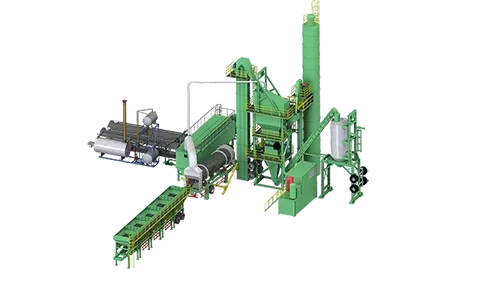
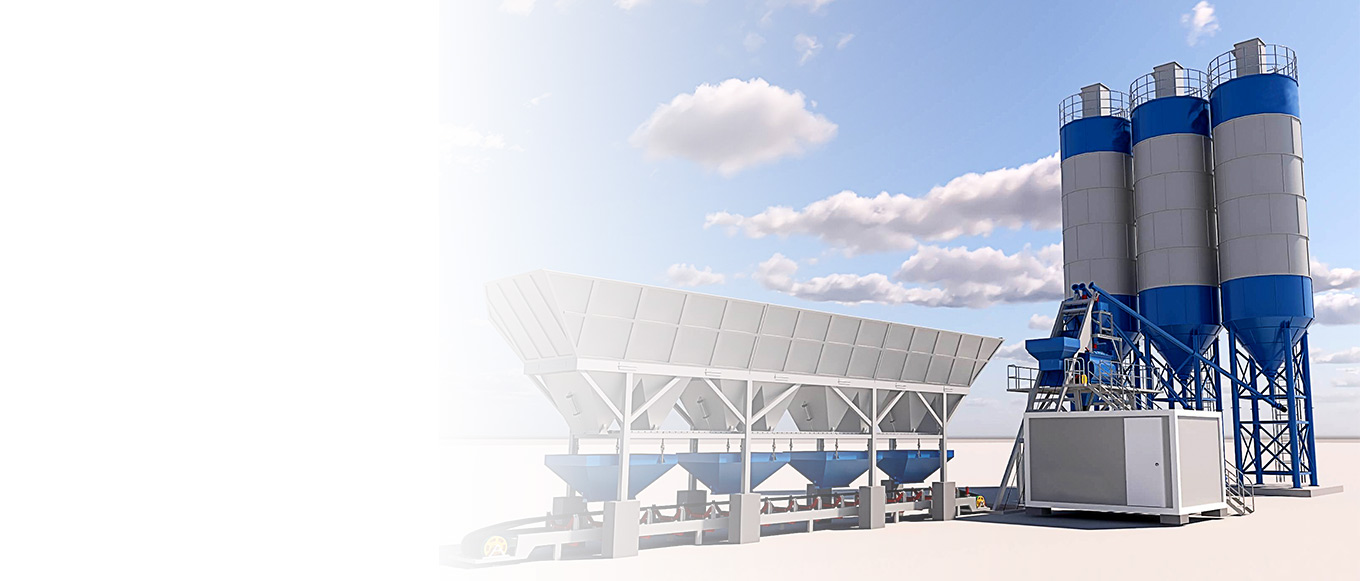
A complete set of concrete mixing plant consists of several core components working together, and each module has a clear division of labor to ensure continuous and stable operation of production:
Aggregate bin
sand, gravel, pebble and other aggregates of different specifications are stored in separate areas to avoid mixing of materials. Anti-clogging vibration device is equipped to ensure smooth discharge of materials;
Cement Silo (Powder Silo)
sealed large-scale storage tank, storage cement, fly ash and other powder raw materials, equipped with dust removal device and material level monitor, moisture-proof dust, powder quantitative storage;
Conveying Equipment
Including belt conveyors and screw conveyors, which are responsible for horizontal/inclined aggregate transportation and closed powder transportation respectively, with automatic feeding and reduced manual intervention;
Metering hopper
Core precise metering component, equipped with weighing sensor, independent weighing of aggregate, cement, water and admixture, ensuring the matching accuracy from the source;
Mixing Host
Equipment core heart, common dual-axis forced, planetary, drum-type mixing models, mixing and kneading all raw materials to form uniform homogeneous concrete;
Intelligent Control System
PLC computer automatic control, support formula storage, one-button start and stop, remote monitoring, data recording, real-time adjustment of production parameters, simple and convenient operation;
Auxiliary Systems
Including water circulation system, additive metering system, pulse dust removal equipment, sound insulation device, temperature regulation component, giving consideration to environmental protection production and complex climate construction adaptability.
Working Principle and Production Process of a Concrete Batching Plant
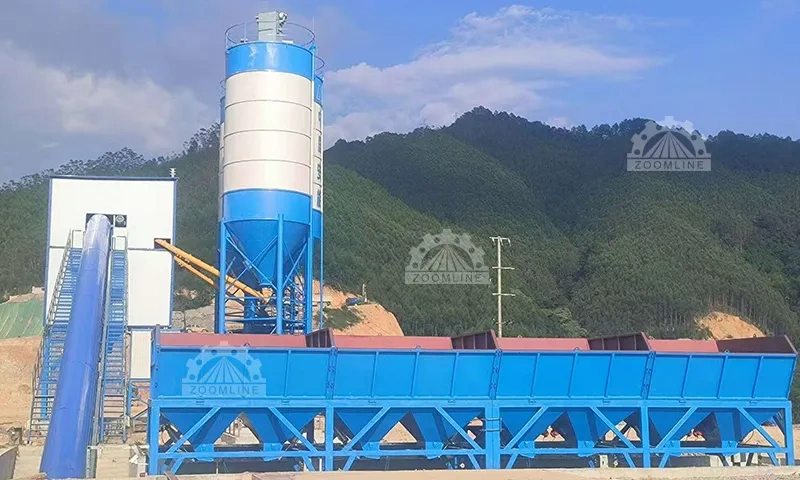
Concrete mixing plant adopts integrated assembly line operation, production process standardization, programming, the whole process is divided into five core steps, efficient completion of raw materials to finished concrete conversion:
Material Storage and Preparation
All kinds of aggregates are stored in aggregate bin, cement and other powder materials are stored in cement bin, water and additives are stored in special storage tank, and production pre-storage is completed;
Accurate metering ingredients
Control system to obtain preset formula, weighing hopper automatically measures all kinds of raw materials, strictly control the amount of each material, eliminate mixing error;
Automated Conveying and Feeding
The measured aggregate is conveyed to the mixing area by belt conveyor, the powder is conveyed by screw conveyor, and the water and additive are conveyed quantitatively by pipeline;
Centralized mixing
All raw materials are put into the mixing host in sequence, and the mixing time is set according to the concrete grade, and the mixing is fully mixed to ensure that the materials are evenly mixed;
Finished product discharge transportation
The qualified concrete after mixing is directly discharged to the mixing truck and transported to the construction site. The equipment is cleaned synchronously and enters the next round of production cycle.
Classification and Characteristics of Concrete Batching Plants
According to the different moving methods, mixing processes and use scenarios, concrete mixing plant can be divided into four mainstream types, each with its own advantages and adapted to different project needs:
Stationary Concrete Batching Plant
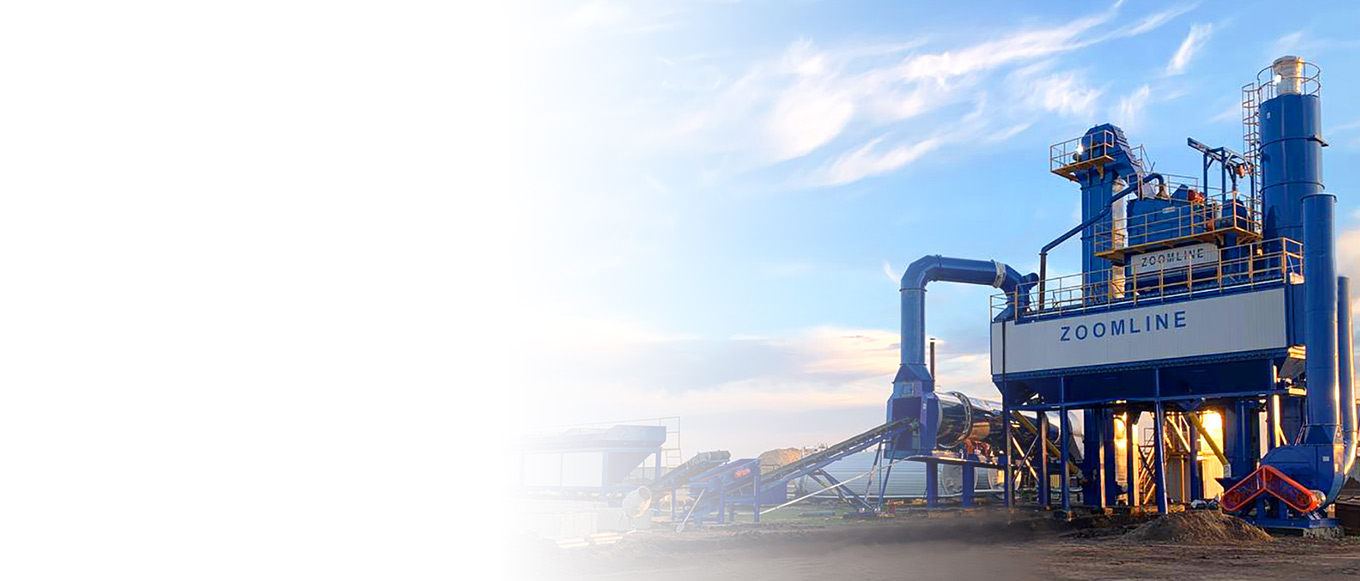
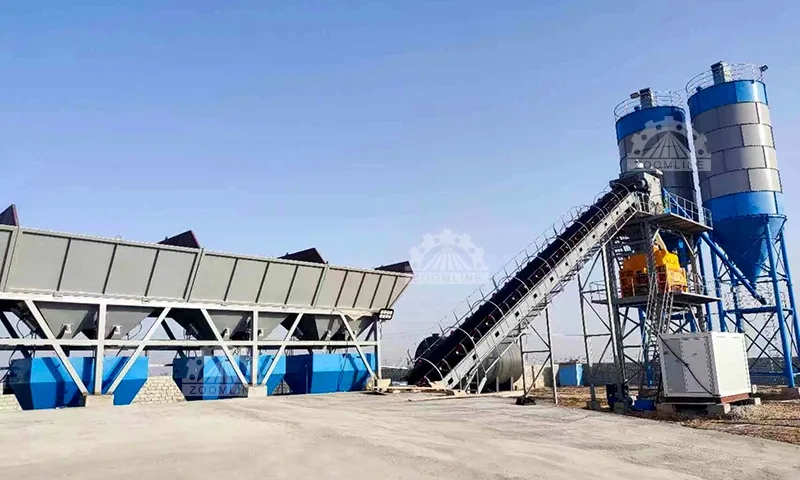
Stationary batching plant is a large equipment installed on the ground, which needs fixed foundation construction. It has strong capacity, and the output per hour can reach 120-300m³. It has high automation and stable operation.
The advantages lie in strong continuous production capacity, low long-term operation cost and high proportion accuracy, which are suitable for long-term projects with construction period of more than 2 years and large concrete demand, such as large dams, airports, urban commercial concrete mixing centers and inter-provincial high-speed infrastructure projects.The disadvantage is that the installation cycle is long, the area is large, and it is impossible to migrate at will.
Mobile Concrete Batching Plant
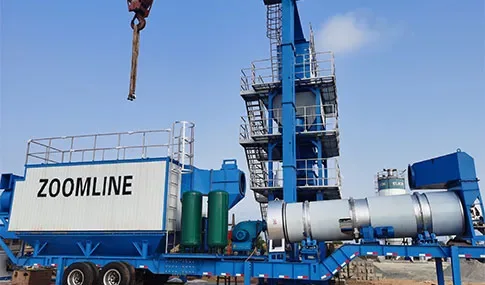
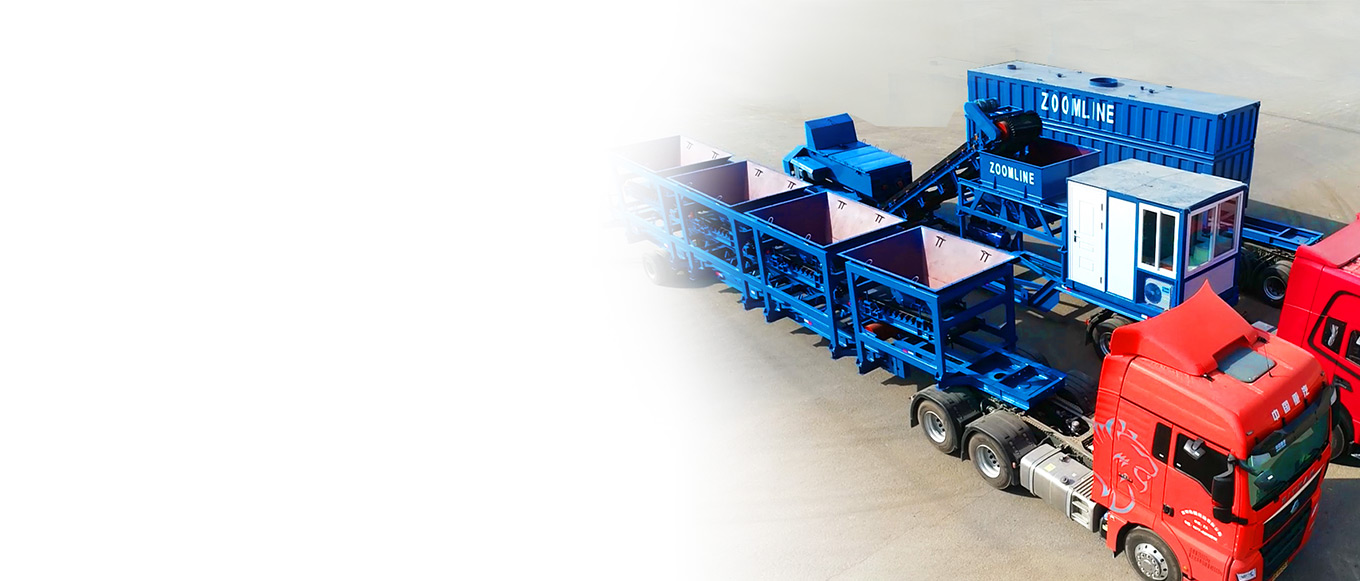
Integrated trailer chassis modular design, integrated assembly of the whole machine, no complex infrastructure, can be quickly loaded and transported, 1-3 days to complete disassembly and commissioning, put into operation.
It is mainly flexible and suitable for projects with scattered construction sites, short construction period and frequent transfer, such as rural road repair, small-scale municipal reconstruction and temporary works in remote areas.The equipment is compact in size, occupies less land, and has high cost performance. It is the best choice for small and medium-sized short-term construction projects.
Compact Concrete Batching Plant
Combines the advantages of fixed and mobile, adopts modular simplified design, high space utilization, suitable for small urban construction sites with limited space.Considering medium production capacity and convenient deployment, low operation and maintenance cost and energy consumption saving, it is widely used in medium-sized projects such as urban and rural small and medium-sized buildings and township infrastructure.
Semi-Mobile (Temporary) Batching Plants
Positioned between stationary and mobile, can be disassembled and moved in stages, the production capacity is better than mobile equipment, the deployment speed is fast, mainly suitable for medium-term large-scale temporary projects, and meets the centralized concrete supply demand in stages.
Supplementary classification: Dry-Mix and Wet-Mix Batching Plants
Wet mixing plant: all raw materials with water content are uniformly mixed in the station, and the finished concrete is directly used, the quality is uniform and stable, and it is suitable for high standard large projects;
Dry mixing station: only dry materials are accurately mixed, mixed with water during transportation or on site, suitable for long-distance transportation, remote construction without fixed mixing point.
Key Differences Between Stationary VS mobile concrete batching plant
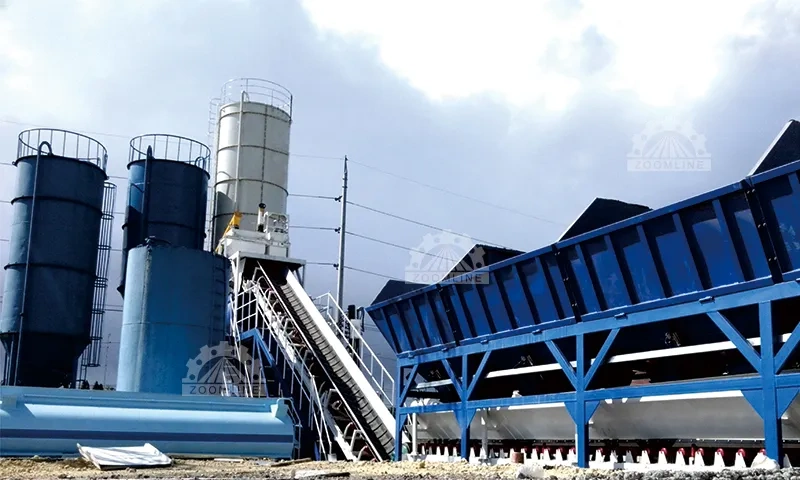
Many engineering parties in equipment selection, it is difficult to distinguish between fixed and mobile mixing plant, the core difference between the two is clear:
Deployment mode: fixed permanent installation, immovable; mobile trailer mounting, flexible transfer;
Production capacity: fixed high-capacity continuous operation; mobile medium-capacity, on-demand production;
Construction cost: fixed installation investment is high; mobile type does not need infrastructure, investment is lower;
Application cycle: fixed adaptation to long-term permanent projects; mobile adaptation to short-term, multi-site scattered projects;
Operation and maintenance difficulty: fixed structure complex, regular professional maintenance; mobile structure streamlined, simple maintenance.
Key Advantages of Using a Concrete Batching Plant
Enhanced Production Efficiency
Full-process automation operation, replacing manual high-intensity labor, concrete output speed greatly improved, effectively speeding up the construction progress;
Comprehensive Cost Savings
Accurate measurement reduces raw material waste, automated production reduces labor costs, and long-term large-scale production can significantly control building materials expenses;
Customized adaptability
Can store multiple groups of mixing formula, adjust concrete strength, impermeability, fluidity as needed, to meet the needs of different construction technology;
Green environmental protection construction
standard pulse dust removal, closed transportation, wastewater recovery system, effectively inhibit dust diffusion, reduce noise pollution, in line with local environmental emission standards;
Quality and safety assurance: intelligent control of the whole process, traceability of production data, avoidance of building material quality problems from the source, and reduction of potential safety hazards.
Guide to Selecting the Right Concrete Batching Plant
Combined with the actual needs of the project reasonable selection, in order to maximize the value of equipment, the core reference four dimensions:
Project Scale and Duration
Combined with project scale and construction period, large-scale long-term project (construction period ≥2 years): priority shall be given to fixed mixing plant, relying on high production capacity and low unit consumption to realize long-term stable supply;
Small short-term/multi-site projects (construction period ≤1 year): mobile and compact mixing plants are selected to reduce transition costs and idle losses.
Calculate Production Capacity Requirements
Calculate the daily peak concrete consumption of the project, calculate the minimum demand capacity per hour in combination with the daily construction time, and reserve an additional 15%-20% capacity buffer to avoid accelerated wear of equipment under full load operation and prevent material shortage from delaying the construction period.
Consider Site and Environmental Requirements
Considering the site and environmental protection requirements, urban and residential projects give priority to equipment with low noise and high dust removal configuration; compact modular equipment for small areas; remote field projects, focusing on equipment durability and simple operation and maintenance design.
Match Mixing Process Requirements
Forced wet mixing plant shall be selected for high-standard house construction and bridge engineering; dry mixing plant shall be selected for long-distance transportation and scattered construction in the field to improve construction flexibility.
Comparison of the difference between commercial concrete factory and on-site batching plant
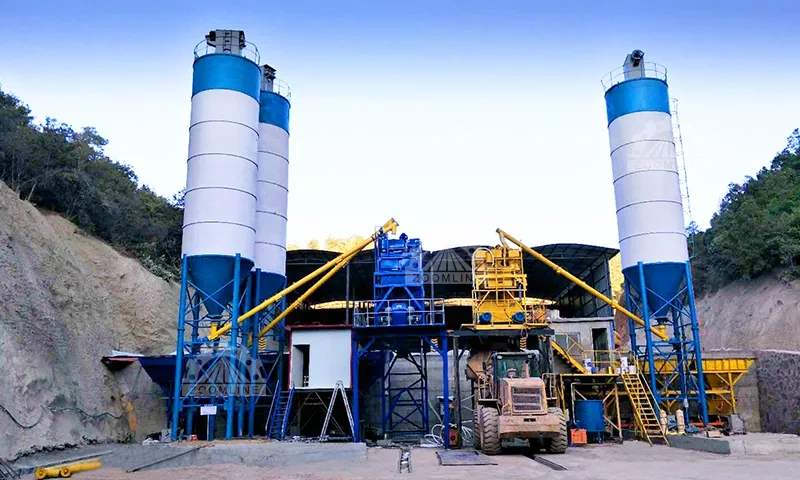
Many construction parties will struggle to purchase commercial concrete or build their own on-site mixing station. The difference between the two is clear:
Project adaptation scale
Commercial concrete factory is suitable for super-large unified projects; small decentralized projects, self-built mixing plants are more flexible.
Cost input
The single unit price of purchased commercial concrete is high, and it is more cost-effective to purchase in large quantities; the initial equipment investment of self-built mixing plant is large, but the long-term construction cost performance is higher.
Operation and Control
Commercial concrete depends on transportation scheduling and is easily affected by road conditions; on-site mixing station produces on site, discharging on demand, and control is more convenient.
Environmental protection and energy consumption
Long-distance transportation of commercial concrete has high energy consumption and more exhaust emissions; the transportation radius of on-site mixing plants is small, and the overall energy consumption and pollution are lower.
Conclusion
In summary, concrete mixing plant is an indispensable core production equipment in modern construction industry. Through automatic precise batching and standardized mixing process, it solves the pain points of low efficiency, poor quality and high loss of traditional concrete production.
From large-scale national infrastructure to small-scale urban and rural reconstruction projects, from fixed large-scale mass production to mobile flexible operation, different types of concrete mixing plants can meet diversified construction needs in an all-round way.Understanding the definition, structure, principle and selection logic of concrete mixing plant can help construction enterprises optimize production schemes, control construction costs, ensure project quality, and lay a solid foundation for the steady advancement of various infrastructure projects.