

Stationary Concrete Batching Plants vs Mobile Concrete Batching Plants: How to Choose for Your Construction Project?
Introduction
In the construction of modern engineering projects, concrete as a core building material, its production efficiency, quality and stability directly determine the progress of the project, safety and ultimate benefits. Whether it is a large-scale infrastructure projects or small-scale temporary projects, the choice of concrete batching plant is a key link that affects the success or failure of the project – selecting the right concrete batching plant can effectively improve the construction efficiency and cost control, while selecting the wrong one may lead to delays in the construction period, substandard quality, and even increase the loss of additional inputs.
Currently, the construction industry on the flexibility of concrete production, cost-effective requirements continue to improve, the mainstream concrete batching plant on the market is divided into two categories: stationary concrete batching plant and mobile concrete batching plant. There are significant differences between the two in terms of application scenarios, performance parameters, cost investment, etc., and the choice should be based on the actual needs of the project for comprehensive consideration.
In this article, we will compare the core differences between stationary concrete batching plants and mobile concrete batching plants, analyze their application scenarios, structural composition, advantages and features, and provide a scientific selection guide to help engineering contractors, project managers, and concrete batching plant equipment purchasers to quickly grasp the logic of selection, avoid common misunderstandings, and choose the most suitable concrete batching plant solution for their projects.
oplus_0
Quick Comparison: Stationary Concrete Batching Plant vs Mobile Concrete Batching Plant
The core difference between a stationary concrete batching plant and a mobile concrete batching plant is reflected in mobility, capacity, cost, applicable scenarios and other dimensions, clear these differences is the basis for good selection; the specific comparison is as follows:
| Feature Dimension | Stationary Concrete Batching Plant | Mobile Concrete Batching Plant |
| Mobility & Installation | Adopts the fixed installation mode, which requires complex foundation construction, time-consuming and laborious installation and dismantling process, and high cost. | With modular design, it can be transported as a whole or relocated quickly. The installation and dismantling process is simple and can usually be deployed within a few days, making it far more flexible than a stationary concrete batching plant. |
| Production Capacity | Designed for large-scale, high-efficiency production, with output that can meet the continuous supply needs of large-scale projects. | Due to mobility constraints, the scale is relatively small and capacity is low to medium, making it more suitable for medium demand projects. |
| Investment Costs | Initial investment is high, and in addition to the equipment itself, additional costs such as infrastructure and site rental need to be borne. | Relatively low initial investment, no need for complex foundation construction, can effectively reduce the pressure of preliminary capital. |
| Suitable Project Types | More suitable for long-term, centralized large-scale projects. | Suitable for short-term, decentralized, emergency projects, both application scenarios are clearly divided. |
| Automation and Environmental Performance | Easier to achieve high levels of automated control; dust and noise control facilities are more comprehensive and effective, better meeting strict environmental requirements.
|
Although automation and environmental performance are continuously improving, mobility constraints limit the overall completeness of facilities compared to stationary concrete batching plants. |
| Site Requirements | The site requirements are high, requiring a fixed, spacious and flat site with specific requirements for geological conditions, as well as meeting the needs of long-term use. | Lower site requirements, only need a relatively flat area can be quickly deployed, without the need to occupy the site for a long time. |
| Long-Term Operating Costs | High for the initial investment, but with the advantages of automation and scale, the unit cost per cubic meter is lower for long-term operation. | Operating costs per cubic meter are relatively high, but can be partially balanced by significant savings in transportation costs in remote projects. |
Which Is Better for Your Project?
Core factors in determining the selection
There is no absolute advantage or disadvantage in choosing stationary concrete batching plant or mobile concrete batching plant, the core depends on the specific conditions of the project, mainly including the following factors:
Project duration, total concrete demand and daily output requirements, construction site conditions (whether centralized, space size), concrete transportation distance and cost, budgetary constraints and return on investment targets.
Only by combining these factors in a comprehensive evaluation can the most suitable concrete batching plant be selected.
Choose a Stationary Concrete Batching Plant If:
If your project meets the following conditions, it will be more advantageous to choose a stationary concrete batching plant:
The project duration is more than 6-12 months, which is a long-term operation project;
Requires large-scale and continuous supply of concrete with high capacity requirements;
The construction site is centralized and the site can be used for a long period of time;
Stringent requirements for consistency in concrete quality, e.g. for high standard scenarios such as precast elements and high strength concrete;
Engaged in the commercial concrete batching business, which requires centralized supply for multiple projects in the vicinity;
Strict environmental compliance standards at the project site, with high requirements for dust and noise control.
Typical Projects
Typical application scenarios for stationary concrete batching plants include: commercial concrete production, high-rise building construction, large-scale infrastructure such as airports and highways, water conservancy projects such as dams and hydroelectric power stations, and precast concrete plants. The common characteristics of these projects are long construction period, high demand and high quality requirements, which can fully utilize the capacity advantage and quality stability of stationary concrete batching plant.
Choose a Mobile Concrete Batching Plant If:
If your project has the following characteristics, mobile concrete batching plant will be a better choice:
The project is temporary or short-term with a construction period of no more than 3 months;
The construction site is remote or requires frequent changes of location;
The need for quick installation and relocation of equipment to accommodate tight construction schedules;
Moderate demand for concrete that does not require a large-scale continuous supply;
Difficult and costly transportation of commercial concrete, such as projects in remote mountainous areas;
Limited initial investment budget and desire to reduce upfront capital investment.
Typical Projects
Typical application scenarios for mobile concrete batching plants include: rural road construction, railroad projects, bridge maintenance projects, emergency repair projects, and small and medium-sized infrastructure projects. These projects are mostly short-term and decentralized, which require high flexibility and rapid deployment of equipment, and mobile concrete batching plants can effectively meet these needs.
What Is a Stationary Concrete Batching Plant?
Definition and Working Principle
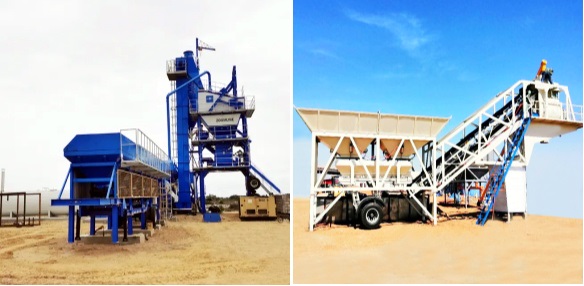
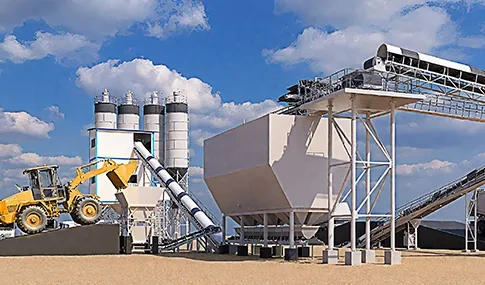
Stationary concrete batching plant is a kind of special equipment specially designed for continuous production of various kinds of high-quality concrete, which is mainly applicable to large and medium-sized projects with long-term fixed operation, and is the most mainstream concrete production equipment in the construction industry at present. Its core working principle is to realize continuous and stable production of concrete through accurate proportioning of aggregates, cement, water and additives, which are fully mixed by professional concrete batching plant to provide concrete supply that meets the quality standard for the project.
Main Components
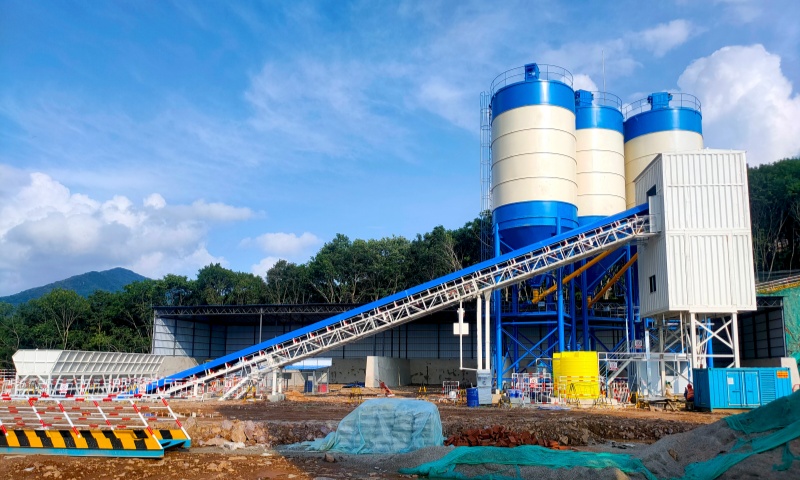
The stationary concrete batching plant consists of several core units that work together to ensure stable production. The main components include aggregate storage silo, aggregate weighing conveyor, aggregate conveyor or hopper, cement silo, cement screw conveyor, cement-water-additive weighing scale, mixer, main chassis, control cabinet and computerized fully automatic control system, air compressor and pneumatic equipment. These components cooperate with each other, from raw material storage, weighing, conveying to mixing and discharging, forming a complete concrete production process, guaranteeing production efficiency and product quality.
Types of Stationary Concrete Plants
There are two main types of stationary concrete batching plants, which are suitable for different project requirements:
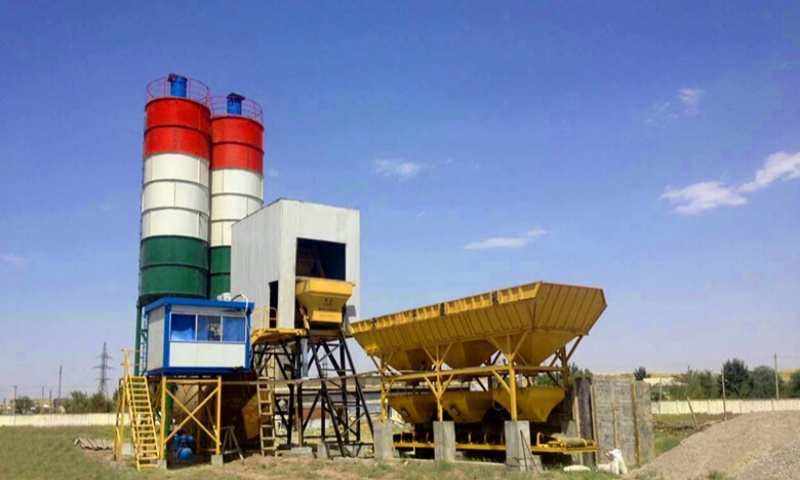
Bucket Concrete Batching Plant
With compact layout and relatively low investment cost, bucket concrete batching plant is suitable for projects with limited space and moderate demand, and can realize efficient production in limited space;
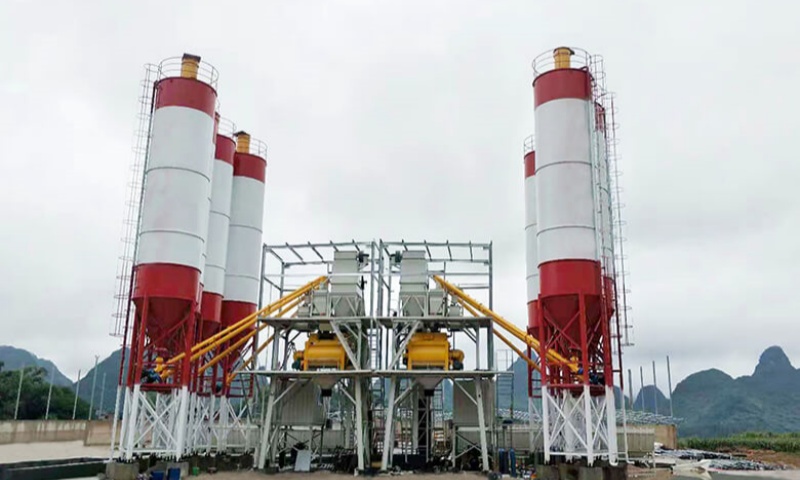
Belt Concrete Batching Plant
With fast feeding speed and stable and reliable performance, belt concrete batching plant is suitable for large and medium-sized projects with high capacity requirements, and can meet the needs of large-scale continuous production.
Main Advantages
The core advantages of stationary concrete batching plant are very prominent, comprehensively covering the key dimensions of capacity, quality, cost, customization and environmental protection, which can fully meet the core requirements of large-scale and long-term projects.
High Production Capacity
Tailor-made for large-scale projects, the hourly production capacity can reach over 240 cubic meters, which can stably realize the continuous supply of concrete, effectively avoiding delays due to insufficient production capacity and providing a solid guarantee for the efficient progress of the project.
Superior Mix Consistency
Equipped with double horizontal axis or planetary professional mixers, the mixing is highly uniform and stable, which can accurately meet the quality requirements of high standard construction scenarios such as prefabricated components and high-strength concrete, and ensure that the concrete performance meets the standards and the quality of batches is consistent.
Long-Term Cost Efficiency
Although the initial investment is relatively high, relying on the advantages of automated operation and large-scale production, the operating cost per cubic meter of concrete is significantly lower in the long run, which effectively compresses the overall cost of the project and improves the cost-effectiveness of the investment.
Customization & Scalability
Multiple storage silos, conveyors and automation control systems can be flexibly configured according to the specific production requirements of different projects, easily adapting to diversified concrete production requirements, with both practicality and expandability.
Environmental Compliance
It can be equipped with environmental protection facilities such as dust collector, noise barrier, waste water recycling system, etc., which can strictly meet various environmental protection standards at home and abroad, and effectively control the dust and noise pollution, which is suitable for long-term and stable operation, and is in line with the development trend of green construction.
What Is a Mobile Concrete Batching Plant?
Definition and Working Principle
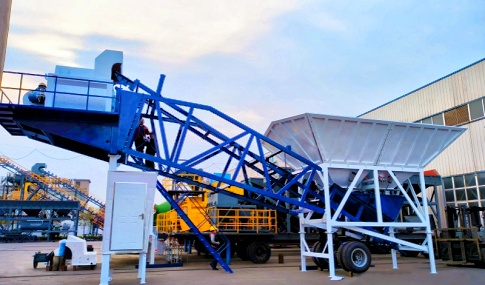
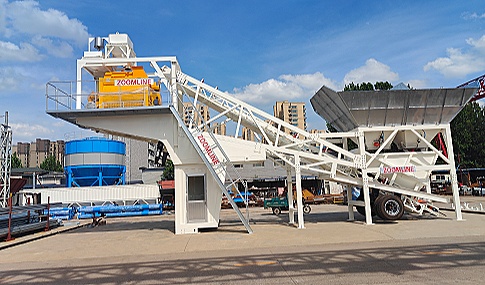
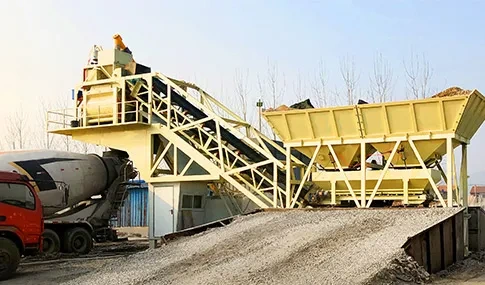
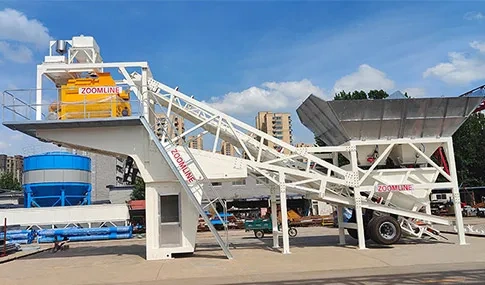
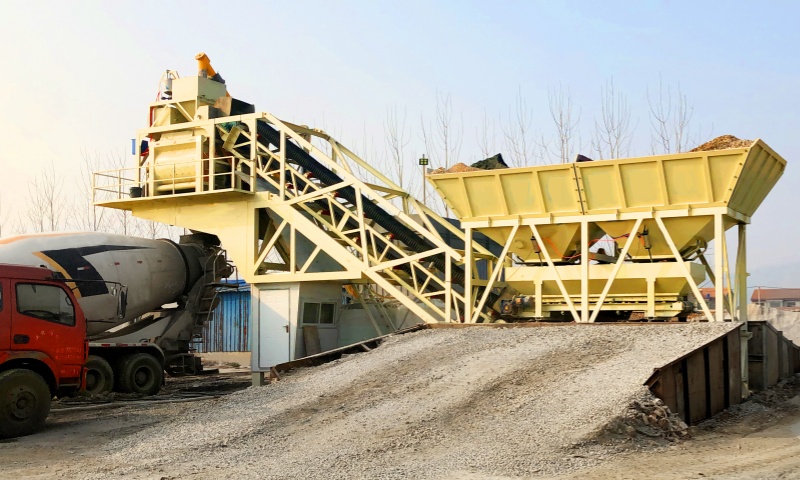
Mobile concrete batching plant is a portable concrete production equipment, with flexibility and convenience as the core design concept, suitable for various scales and types of construction projects. The equipment can accurately proportion water, aggregate, cement, fly ash and other raw materials, and can produce tens to hundreds of cubic meters of concrete per hour, which can meet the output requirements of different projects. Compared with stationary concrete batching plants, mobile concrete batching plants do not require a fixed foundation, can be flexibly moved and rapidly deployed, and adopt a modular structure for easy installation and dismantling, making them ideal for temporary sites, remote areas, and small, decentralized projects. During operation, the mobile concrete batching plant needs to work with concrete pumps, transportation trucks and other equipment to ensure timely delivery and pouring of mixed concrete, effectively reducing site occupation and relocation costs. Although the production capacity is relatively low, it can be perfectly adapted to short-term, decentralized concrete supply needs.
Main Components
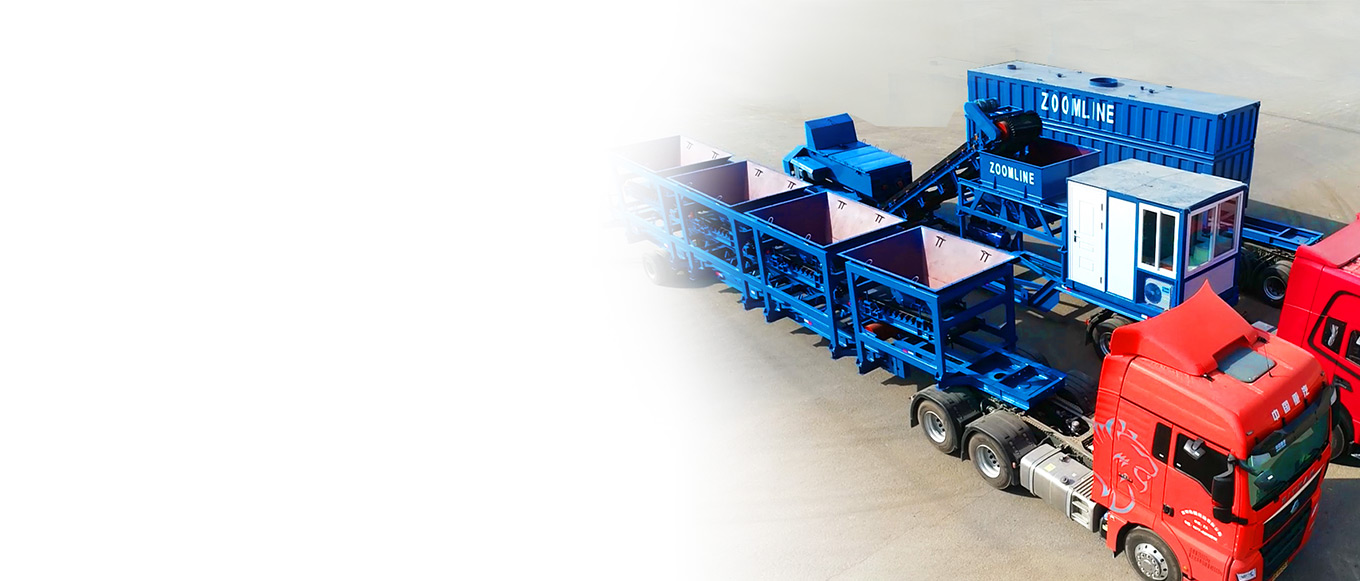
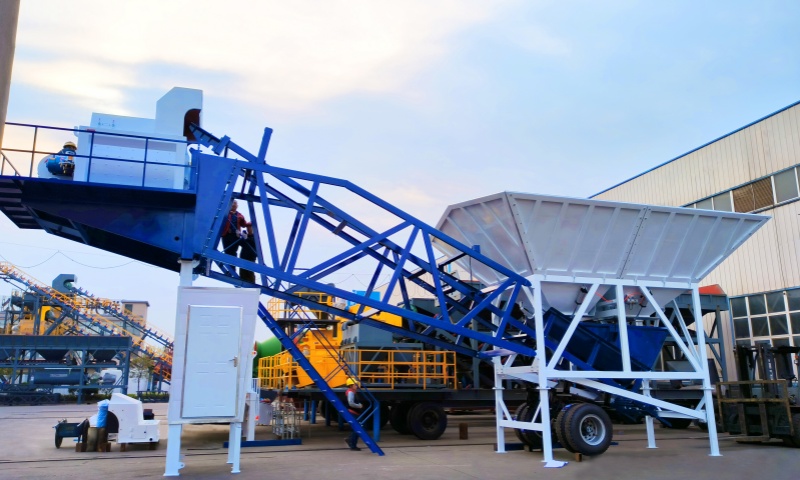
Mobile concrete batching plant is designed with portability as its core, and its main components include mobile aggregate bin, mobile mixing unit, conveying system, portable cement silo, and mobile control room. All components (including aggregate bin, conveyor, mixer, storage bin, control system, etc.) are mounted on a transportable frame or trailer unit, which is easy to relocate between projects without the need to build a permanent production facility. Contractors can install the equipment directly at the project site, and then quickly dismantle and relocate the equipment at the end of the project, so that it can be flexibly adapted to meet the needs of different sites.
Main Advantages
The core advantages of the mobile concrete batching plant are centered on the core dimensions of flexibility, cost-effectiveness, quality control, deployment efficiency, etc., and accurately adapt to the actual needs of short-term, decentralized and remote projects, with the core advantages as follows:
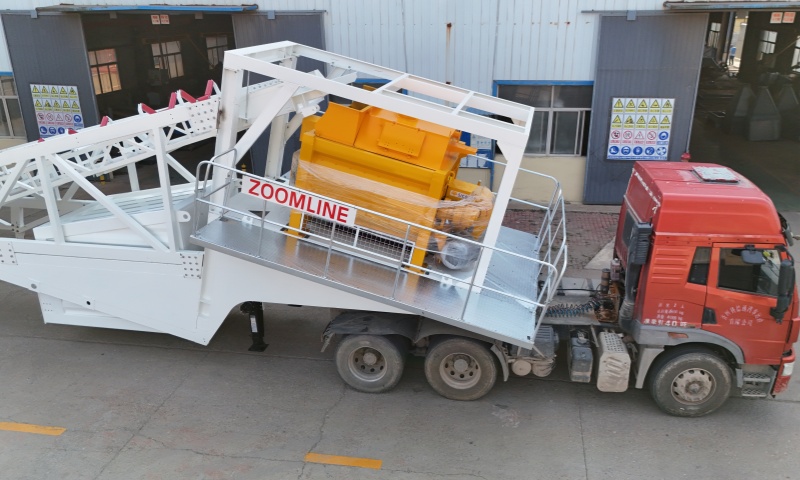
Outstanding Flexibility
With strong mobile adaptability, it can quickly complete installation and dismantling operations, realize concrete production directly at the project site, significantly shorten the time consuming concrete transportation, reduce transportation costs, and perfectly adapt to the operation scenarios of frequent changes in the construction site without the need to repeat the construction of production facilities.
Low Initial Investment
The initial investment threshold is low, so there is no need to invest a lot of money in infrastructure, and it can be operated in a flexible rental mode, which effectively reduces the pressure on the initial capital investment, and is more suitable for the equipment configuration needs of limited budgets or short-term projects.
Enhanced Quality Control
Adopting on-site production mode ensures the freshness of concrete and avoids possible quality loss during transportation from the source; meanwhile, it can be produced on demand according to the construction demand, which effectively reduces the waste of concrete and further improves the efficiency of quality control.
High Deployment Efficiency
Compared with the traditional stationary concrete batching plant, which takes weeks to install, the mobile concrete batching plant can be fully installed and commissioned in a few hours, making it efficient and quick to deploy, and fully adapting to the needs of emergency and temporary projects with tight construction schedules.
Environmentally Friendly
Significantly reducing the long-distance transportation of concrete, effectively reducing carbon emissions and dust pollution during transportation, practicing the concept of green construction, and meeting the current industry requirements for environmentally friendly construction.
Highly Customizable
According to the specific construction requirements of different projects, we can flexibly adapt the production standards of various types of concrete to meet the concrete quality and capacity requirements of different scenarios, which is highly practical.
Advanced Technology
Modern mobile concrete batching plants are generally equipped with advanced automation control systems, which can realize precise control of raw material proportioning and mixing production, significantly improve production efficiency and concrete quality stability, and reduce manual operation errors.
Typical Capacity Range
The capacity of mobile concrete batching plant is mainly determined by the equipment configuration, and its hourly capacity is usually within the range of 25-240 cubic meters, which can be flexibly matched with the configuration plan according to the actual concrete demand of the project. The mobile concrete batching plant is highly adaptable to low and medium demand scenarios, and can efficiently meet the concrete production needs of small infrastructure construction, temporary works and other scenarios.
Best Applications for Each Type of Concrete Batching Plant
Best Applications for Stationary Concrete Plants
The application scenarios of stationary concrete batching plants mainly focus on large-scale, long-term, and centralized projects, specifically including the following categories:
Large-Scale Construction Projects
This is the core application scenario of stationary concrete batching plant, including high-rise buildings, commercial complexes, office buildings and other real estate projects. These projects have large concrete demand, long construction period, centralized construction site, and very high requirements for concrete quality and stability, and the high productivity and quality stability of stationary concrete batching plant can perfectly match the demand.
Infrastructure Construction
Stationary concrete batching plants play a key role in infrastructure projects such as bridges, tunnels, subways, highways and airport runways. These projects have stringent requirements for concrete strength, durability and impermeability, and require a long-term, continuous supply of concrete, which can be met by stationary concrete batching plants with high standards and high productivity.
Precast Component Production
In the precast component manufacturing field, stationary concrete batching plant is the core equipment for standardized production. Whether it is precast wall panels, pipe piles, staircases or bridge components, all of them need concrete with stable quality and high consistency. Through automated control system, stationary concrete batching plant can realize accurate control of raw material proportioning, ensure uniform quality of concrete between batches, support the large-scale production of precast components, and improve production efficiency and product quality.
Ready-Mix Concrete Industry
Stationary concrete batching plant is the core production equipment of commercial concrete enterprises. Many concrete suppliers have centralized production by building stationary concrete batching plants, providing concrete supply to multiple construction sites in the vicinity at the same time. Its high capacity meets the simultaneous demand of multiple projects, and its closed design effectively reduces dust and noise pollution, meets the requirements of environmental protection laws and regulations, and is suitable for long-term, large-scale operation.
In addition, stationary concrete batching plants are also widely used in large-scale projects such as water conservancy, hydropower and new urbanization construction, providing large-scale and stable concrete supply for the projects and guaranteeing the smooth progress of the projects.
Best Applications for Mobile Concrete Batching Plants
The application scenarios of mobile concrete batching plant mainly focus on short-term, decentralized and remote projects, including:
Rural and Remote Road Construction
These projects are usually constructed in remote locations, and the concrete transportation is difficult and costly. The mobile concrete batching plant can be deployed directly at the site to realize the “zero distance” supply of concrete, which effectively reduces the transportation cost and guarantees the freshness of concrete.
Railway and Bridge Projects
Railroad and bridge construction is mostly segmented, the construction site is scattered and changes frequently, the flexibility of the mobile concrete batching plant highlights the advantages, can be flexibly relocated according to the construction progress, to adapt to the concrete demand of different road sections and different bridge sections.
Temporary Construction Projects
These projects have a short construction period, the site is leased temporarily and the space is limited. The mobile concrete batching plant does not require infrastructure construction, can be installed and dismantled quickly, and can be moved quickly after the project is over, leaving no construction waste, which is suitable for the use of temporary sites.
Post-Disaster Reconstruction and Emergency Projects
In reconstruction work after earthquakes, floods and other disasters, or in emergency projects such as road repair and temporary building construction, the rapid deployment capability of the mobile concrete batching plant is crucial, and it can be put into production in a short period of time, providing a timely supply of concrete for emergency construction.
Small-Scale Construction Projects Across Multiple Sites
For example, for multiple rural houses and small infrastructure projects in the same area, the construction sites are scattered, and the mobile concrete batching plant can circulate between multiple sites, eliminating the need for repeated construction of concrete batching plants, effectively improving construction efficiency and reducing investment costs.
How to Choose Between Stationary Concrete Batching Plants and Mobile Concrete Batching Plants?
Project Scale and Total Concrete Demand
Project scale and total concrete demand are the core basis for selection.
If the project scale is large and the total concrete demand is ≥10,000 cubic meters, it is suitable to choose a stationary concrete batching plant, such as large-scale infrastructure (high-speed railways, highways, bridges, hydroelectric power stations, and large-scale factories), multi-block residential complexes, commercial complexes, foundations of large-scale chemical equipments, and the floors of heavy-duty factories, etc. The reason is that the stationary concrete batching plant can be used in a variety of projects. The reason is that the high capacity of stationary concrete batching plant can quickly meet the demand of the project, avoiding the situation of “equipment running at full capacity but still unable to keep up with the schedule”, and the unit cost of long-term operation is lower, which can effectively reduce the overall cost of the project.
If the project scale is small, the total demand for concrete ≤ 5000 cubic meters, it is suitable for choosing mobile concrete batching plant, such as small infrastructure (rural highways, township bridges, small water conservancy projects), rural self-built houses, urban detached houses / townhouses, old building renovation, temporary site construction, road repair and other emergency projects. The reason is that there is no need to invest a lot of money in the construction of stationary concrete batching plant, which can avoid the waste of resources of “big equipment doing small work” and reduce the pressure of preliminary investment.
Project Duration and Site Usage Period
The duration of the project and the utilization cycle of the site directly determine the suitability of the concrete batching plant.
If the project duration is ≥6 months and the site can be used for a long time (owned or leased for a long time), it is more suitable to choose a stationary concrete batching plant. If the project duration is up to 2-3 years, and the site is exclusive to the project or can be leased for a long period of time, the advantage of “high investment + long-term low cost” of stationary concrete batching plant will gradually come to the fore – the initial infrastructure costs can be apportioned to long-term production, and the equipment is more stable and more suitable for long-term continuous operation. It is more suitable for long-term continuous operation.
If the project duration is less than 3 months, and the site is leased temporarily, it is more advantageous to choose mobile concrete batching plant. If the duration of the project is only 1-2 months, or the site is temporary municipal land, the mobile concrete batching plant does not require infrastructure construction, and its quick installation and dismantling can avoid the problem of “the stationary concrete batching plant cost not yet recovered at the end of the project”, and there will be no construction waste left behind after the relocation, which is more in line with the needs of temporary projects.
Site Conditions
Site conditions are a mandatory constraint for selection, which directly determines whether the concrete batching plant can be deployed and operated properly.
When choosing a stationary concrete batching plant, you need to have a fixed and sufficient site, and at the same time meet two conditions: the site ownership or lease period matches the project duration; the site is flat, and can accommodate the storage silo (sand and gravel storage), the main concrete batching plant equipment, the control room, and the vehicle access road (usually need to reserve a 10-15 meter wide access road). It should be noted that some cities have environmental restrictions on the location of stationary concrete batching plants (e.g., away from residential areas, water sources), and planning permission procedures need to be handled in advance.
Choosing a mobile concrete batching plant is suitable for scenarios with limited, scattered or no fixed sites, such as road reconstruction projects within urban residential areas, where the site is narrow and cannot accommodate a stationary concrete batching plant; and 3-5 rural self-build projects in the same area, where the mobile equipment can circulate the operation without the need to repeatedly build concrete batching plants, effectively saving the site and the input cost.
Concrete Transport Radius and Cost
Concrete transportation has a “golden radius” (usually ≤15km), beyond this radius, the concrete is prone to segregation, the phenomenon of initial solidification, and the cost of transportation will rise significantly.
If all the construction sites are concentrated in the vicinity of the concrete batching plant, the transportation distance is ≤ 10 km, it is more appropriate to choose a stationary concrete batching plant, its high capacity can be matched with the transportation efficiency, which can effectively reduce the overall transportation costs and protect the quality of concrete.
If the construction site is remote and scattered, and the transportation radius is more than 15 kilometers, such as mountainous highway reconstruction and remote rural self-built housing projects, it is difficult to guarantee the high cost and quality of concrete transported from the stationary concrete batching plant in the city, so it is more suitable to choose the mobile concrete batching plant, which is directly produced at the project site, realizing the “Zero Distance Supply”, which can significantly reduce the transportation cost and ensure the freshness of the concrete. This can greatly reduce the transportation cost and ensure the freshness and quality of concrete.
Concrete Mix Ratio Requirements
The need for stability of the concrete batching ratio is also an important basis for selection.
If the project requires only 1-2 types of concrete batching ratios and has high requirements for the stability of the mixing ratios, it is more appropriate to choose a stationary concrete batching plant, which has a high accuracy of the batching system (error of ±1%) and small fluctuations in the quality between batches, so that the quality of the concrete can be better controlled, and it is suitable for the needs of high-standard construction.
If the project requires frequent change of concrete batching ratios and focuses on small batch and multi-species production, it is more flexible to choose mobile concrete batching plant, whose batching system can quickly adjust the mixing ratios, which can better adapt to small batch and multi-species production needs and enhance the flexibility of construction.
Environmental and Policy Requirements
The current environmental protection policy is becoming increasingly strict, especially in urban and neighboring areas, environmental compliance has become an important prerequisite for equipment selection.
If the project is located in environmentally sensitive areas (e.g. urban built-up areas, scenic areas) and needs to be operated for a long period of time, it is more appropriate to choose a stationary concrete batching plant, which can be equipped with facilities such as fully enclosed storage silo, pulse dust collector, waste water recycling system, etc., and can easily pass the environmental protection acceptance, which is suitable for long-term and stable operation.
If the project is located in remote areas (e.g. rural areas), the environmental acceptance standard is relatively loose, due to eco-friendly mobile concrete batching plants for sustainable urban construction, choose the mobile concrete batching plant to meet the demand, equipped with basic dust removal facilities (such as bag filter) can meet the basic environmental standards, and the project can be quickly relocated after the end of the project, without the need to bear the long-term environmental protection and maintenance costs.
Cost Comparison and ROI Analysis
Initial Investment Comparison
The initial investment of a stationary concrete batching plant is high, mainly including equipment procurement costs, infrastructure costs, site rental and infrastructure investment, etc., and a large amount of money needs to be invested in equipment purchase and site renovation in the early stage.
On the other hand, the initial investment of mobile concrete batching plant is relatively low, the equipment procurement cost is lower than that of stationary concrete batching plant, and there is no need for complex infrastructure, and only a small amount of site leveling costs, which can effectively reduce the pressure on the preliminary funds.
Installation and Relocation Costs
The installation and relocation costs of a stationary concrete batching plant are high. The installation process requires foundation construction and equipment assembly, which is time-consuming and laborious; if the plant needs to be relocated after the project is completed, the dismantling and transportation of the equipment is expensive, the cycle is long, and construction waste is easily generated.
The mobile concrete batching plant is designed for frequent relocation, with low installation and relocation costs, convenient transportation and deployment, and rapid completion of installation and dismantling, which significantly reduces the cost of manpower and material resources in the relocation process.
Operating Cost per Cubic Meter
From the perspective of long-term operation, the stationary concrete batching plant has a lower operating cost per unit cubic meter of concrete by virtue of automation and scale advantages, and the cost advantage will become more obvious with the expansion of the production scale.
The operating cost per unit cubic meter of mobile concrete batching plant is relatively high, but in remote projects, it can save a lot of concrete transportation costs, which can effectively balance part of the operating cost, and the overall cost is more advantageous instead.
ROI and Payback Period Analysis
Stationary concrete batching plant is more suitable for long-term, high-yield projects, although the initial investment is high, but the long-term operation of the ROI is higher, the cost recovery cycle is relatively long, suitable for the pursuit of long-term stable income of enterprises or projects.
Mobile concrete batching plant is suitable for temporary and mobile projects with low initial investment, short payback cycle and quick profitability, suitable for short-term projects or enterprises with limited capital.
Hidden Costs Often Overlooked by Buyers
In the selection process, many purchasers are prone to ignore some hidden costs, resulting in later inputs exceeding the budget.
These hidden costs mainly include: concrete transportation costs (especially for remote projects), site preparation costs (infrastructure for stationary concrete batching plant, site formation for mobile concrete batching plant), downtime loss during the relocation of the concrete batching plant, environmental compliance costs (investment in environmental protection facilities, environmental protection testing costs), spare parts and maintenance costs of the concrete batching plant (spare parts procurement, routine maintenance, fault repair).
When selecting the model of concrete batching plant, these hidden costs need to be considered comprehensively to avoid cost overruns at a later stage.
Common Mistakes When Choosing a Concrete Batching Plant
In the selection process of concrete batching plant, many buyers and project managers are prone to fall into some misunderstandings, resulting in improper equipment selection, affecting the project progress and cost control, the common misunderstandings are mainly the following points:
Relying Solely on Price
Only price as the basis for selection, ignoring the quality of concrete batching plant, capacity, long-term operating costs and other key factors, resulting in frequent equipment failures in the late stage, insufficient capacity, but to increase additional investment;
Neglecting Future Project Expansion
Neglecting the demand for future project expansion, choosing a concrete batching plant with insufficient capacity or function, which cannot be adapted to larger-scale projects in the later stage and requires the re-purchase of equipment, resulting in a waste of resources;
Underestimating the infrastructure requirements
Underestimating the infrastructure requirements of a stationary concrete batching plant, resulting in substandard site preparation, inability to properly install the equipment, and delays in the construction period;
Choosing Oversized Concrete Batching Plant
Choosing a concrete batching plant that is too big or too small. A concrete batching plant that is too big will be “too big for the job”, wasting investment and operating costs, while a concrete batching plant that is too small will not be able to meet the capacity requirements of the project, affecting the construction period;
Ignoring Local Environmental Regulations
Neglecting the requirements of local environmental protection laws and regulations, the selected concrete batching plant cannot pass the environmental acceptance, and is forced to stop the work for rectification, which increases the extra cost;
Failing to Consider Concrete Transport Radius
Failure to consider the radius of concrete transportation, resulting in high transportation costs or substandard concrete quality;
Neglecting After-Sales Service and Spare Parts Support
Neglecting after-sales service and spare parts support, the concrete batching plant cannot be repaired in time after failure, resulting in loss of downtime and affecting project progress.
Technology Trends in Concrete Batching Plants
With the transformation and upgrading of the construction industry and technological progress, the technological development of the concrete batching plant shows the trend of intelligence, modularization and environmental protection, which mainly includes the following aspects:
Full Automation and AI Integration
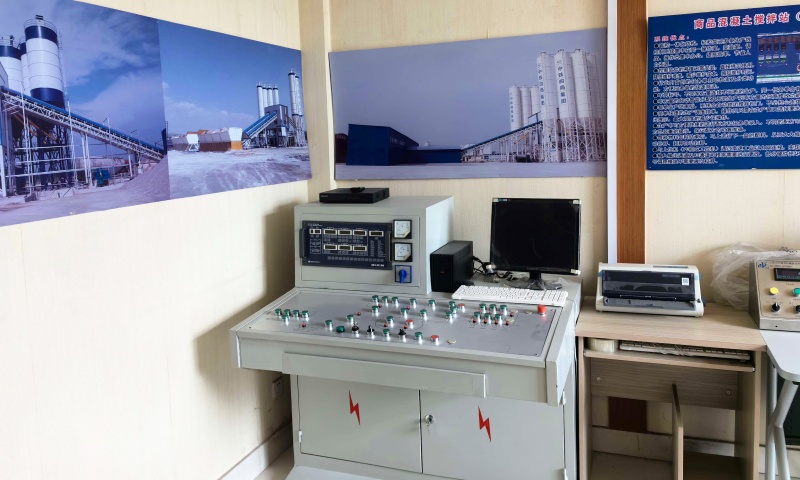
Modern concrete batching plants are commonly equipped with intelligent control systems, combining artificial intelligence and Internet of Things technology to realize real-time monitoring, predictive maintenance and automated decision-making of equipment operation, reduce manual operation, improve batching accuracy and production efficiency, and reduce human error.
Modular and Compact Design
In order to adapt to site constraints and relocation needs, concrete batching plant manufacturers have introduced modularized equipment, which makes installation, dismantling and relocation more convenient. Meanwhile, the compact design of the equipment significantly reduces the area occupied by the site under the premise of guaranteeing production capacity, which is suitable for urban or small-site projects.
Eco-Friendly Features
With the increasingly stringent environmental protection policy, environmental protection has become one of the core competitiveness of the concrete batching plant. Advanced concrete batching plant is equipped with perfect dust removal system, waste water recycling system and energy-saving mixer, which effectively reduces dust, noise pollution and water waste, and meets the requirements of the strict environmental protection regulations.
High-Precision Weighing Systems
Digital weighing and automatic calibration systems have become a standard feature of concrete batching plants, ensuring the accuracy of raw material proportions, reducing raw material waste, and guaranteeing the consistency of concrete quality to meet the demands of high-standard construction.
Remote Operation and Troubleshooting
Relying on the Internet of Things technology, the concrete batching plant can be remotely controlled. Operators can monitor the running status of the equipment, adjust the production parameters, and receive early warnings of malfunctions from any location, so as to quickly complete the troubleshooting and repairs, reduce the downtime, and improve the operational efficiency.
Customized Configurations for Niche Markets
Manufacturers provide customized solutions for different scenarios such as prefabricated component production, large-scale infrastructure projects, and mobile deployments, so that the equipment can better fit the project needs and improve the return on investment.
Conclusion
Stationary concrete batching plants and mobile concrete batching plants each have their own unique advantages, and there is no absolute “better” choice, only the solution that better suits the needs of the project. Stationary concrete batching plant is suitable for large-scale, long-term, centralized projects, with high capacity, high quality, long-term low-cost advantages, can effectively support the continuous production needs of large-scale projects; mobile concrete batching plant is suitable for temporary, remote, decentralized projects, with flexibility, rapid deployment, low initial investment characteristics, to adapt to short-term projects and the needs of multi-site operations.
The core logic of choosing a concrete batching plant is to make a comprehensive assessment by combining factors such as project duration, site conditions, budget level, transportation radius and production demand, rather than focusing solely on the initial investment. Ultimately, it is recommended that the whole life cycle cost of the equipment should be evaluated comprehensively, including the initial investment, operating costs, hidden costs, etc. At the same time, avoiding the common selection misunderstandings, and choosing the most suitable equipment in accordance with the actual needs of the project.
FAQ
Q1: Are mobile concrete batching plants cheaper?
A1: The initial investment of mobile concrete batching plant is usually lower, and the infrastructure cost is also less, but the operating cost per cubic meter of concrete may be higher in long-term operation. The specific cost should be judged in combination with the project duration, transportation distance and other factors.
Q2: How long does it take to install a stationary concrete batching plant?
A2: The installation time depends on the scale of the concrete batching plant and the complexity of the foundation, and usually takes several weeks, including foundation construction, equipment assembly, commissioning and other aspects.
Q3: What kind of concrete batching plant is suitable for highway projects?
A3: Large-scale highway projects usually choose stationary concrete batching plants, which can meet the demand for large-scale and continuous concrete supply; while remote or segmented highway projects can choose mobile concrete batching plants, which are suitable for decentralized construction.
Q4:Can mobile concrete batching plant produce high-strength concrete?
A4: Yes. Equipped with suitable mixers and control systems, modern mobile concrete batching plants can produce high-strength concrete and special concrete to meet the quality requirements of different projects.
Q5: What is the transportation radius of commercial concrete?
A5:The recommended transportation radius is usually within 10-15 kilometers, depending on the weather conditions, traffic conditions and concrete type, beyond which problems such as concrete segregation and initial consolidation are likely to occur.
Q6:Can mobile concrete batching plant be used for commercial concrete production?
A6: Yes, but stationary concrete batching plant is more suitable for long-term and large-scale commercial concrete production, while mobile concrete batching plant is more suitable for short-term or temporary commercial concrete supply needs.
Q7: What capacity of concrete batching plant do I need?
A7: The choice of capacity depends on the project scale, daily demand of concrete, transportation and logistics conditions and construction progress, which need to be combined with these factors to ensure that the capacity of the equipment can meet the requirements of the project progress, while avoiding the waste of capacity.
RELATED NEWS