









How to Prepare High-Quality RAP for Asphalt Recycling Plants
Introduction: RAP Quality Is the Foundation of Asphalt Recycling Success
In Thailand, asphalt recycling technology is undergoing a rapid expansion phase, with more and more road construction and maintenance projects abandoning the traditional waste pavement treatment model and adopting asphalt recycling solutions that are both economical and environmentally friendly. Demand for asphalt recycling continues to rise, with the core drivers focusing on three levels, which together are driving the industry’s scaling up:
Reducing project costs: By recycling waste asphalt pavement materials (RAP), we can reduce the purchase and transportation inputs of new asphalt, sand and gravel and other virgin raw materials, optimizing the project cost structure, especially in the current situation of frequent fluctuations in the price of raw materials, which is a more prominent advantage;
Practicing the concept of sustainable construction: avoiding land occupation and environmental pollution caused by landfill of waste asphalt pavement materials, realizing the closed loop of resource recycling, which is in line with the development trend of green and low-carbon;
Adapt to the demand of efficient road projects: asphalt recycling can be “locally sourced and processed”, which can shorten the supply cycle of raw materials, improve construction efficiency and shorten the construction period under the premise of guaranteeing the quality of the project.
The success of any asphalt recycling project begins with high-quality RAP materials – the foundation of the entire recycling process, and a key prerequisite for determining the performance of recycled asphalt and ensuring project quality. Even with advanced asphalt recycling mixing plant and mature technology, can not make up for the inherent defects of poor quality RAP: wet RAP will destroy the bonding effect of the mixture, resulting in insufficient strength, easy to segregate; polluted RAP impurities will reduce the strength and durability of recycled asphalt, shorten the life of the road, increase maintenance costs; poor grading RAP will lead to uneven particles of mixture, affecting the density and stability, and even lead to rework. Even trigger rework. Therefore, before focusing on equipment selection, the construction side must first master the preparation of high-quality RAP, to build a solid foundation for the success of the project.
What Defines High-Quality RAP?
Determination of high-quality RAP need to rely on clear, rigorous technical benchmarks, which is to establish industry trust, to protect the quality of recycled asphalt core prerequisites, the key technical features include the following four points, are strictly adapted to the actual production scenarios and recycled processing needs:
Gradation Consistency
RAP particle size distribution is uniform, no too large, too small particles abnormal aggregation phenomenon, can effectively guarantee the uniformity and stability of recycled mixture, for the subsequent recycling process to provide a solid support for the smooth progress of the link.
Cleanliness
RAP does not contain soil, weeds, construction waste and other types of pollutants, can be avoided from the source of impurities to destroy the bonding properties of asphalt, and effectively protect the strength and durability of recycled asphalt, to ensure that it meets the standards for road engineering.
Water Content Control
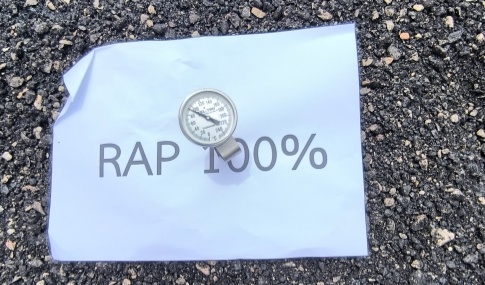
RAP water content needs to be strictly controlled in the reasonable range of 3% -5%, if the water content is too high, will not only increase the subsequent recycling process of fuel consumption, but also may lead to segregation of the mixture, directly affecting the final quality of recycled asphalt.
Aging Binder Stability
RAP in the aging asphalt binder needs to maintain good stability, to avoid excessive aging, brittleness caused by lack of toughness, to ensure that the recycled asphalt can meet the use of road engineering requirements, and effectively extend the service life of the road.
The above four characteristics, not only directly determine the quality level of recycled mixture, but also profoundly affect the processing efficiency of RAP and reuse effect, is to determine whether RAP meets the requirements of asphalt recycling processing of the core scale.
Key Principles for RAP Preparation
Preparation of high-quality RAP, need to strictly follow the four core principles. These principles do not depend on specific processing equipment, is the basis of all asphalt recycling projects need to strictly abide by the guidelines, but also to ensure that the quality of RAP stable and meet the standards of the key:
Source Separation
According to the source of RAP, the initial quality of the classification of storage, to eliminate different quality, different sources of RAP mixed stacking, from the source to avoid the risk of pollution, firmly control the quality of RAP the first gate.
Moisture Content Control
During the whole process of RAP recovery and storage, we need to take perfect rainproof and moisture-proof measures, and carry out professional drying treatment in time for RAP with water content exceeding the standard, so as to ensure that its water content strictly complies with the standard requirement of 3%-5%.
Pollution Avoidance
In each key link of RAP recycling, crushing and transportation, a strict impurity prevention and control mechanism should be established to prevent soil, debris and other pollutants from mixing in an all-round way, so as to ensure that the cleanliness of RAP meets the standard.
Gradation Consistency
In the crushing and screening process, we need to accurately control the size of RAP particles, and scientifically adjust the parameters of processing equipment to ensure that the RAP gradation meets the requirements of subsequent regeneration processing, and to avoid the problem of uneven particle size.
These principles seem simple and easy to understand, but by the site construction environment, workflow specifications, personnel operating level and other factors, the actual realization of sustained and stable landing, the difficulty is far more than expected.
RAP Processing in Practice — Challenges and Limitations
Basic Processing Steps
The basic processing of RAP consists of four core steps, each step is closely linked, indispensable for the subsequent recycling of asphalt to build a solid foundation:
Crushing: With the help of professional RAP-C Recycled Material Crushing Plant, the waste asphalt pavement material is crushed precisely to a particle size that meets the recycling requirements and ensures a uniform distribution of the particles, which provides strong support for the subsequent screening process.
Screening: Through professional screening equipment, the particles are graded according to their size, and the particles that do not meet the grading requirements are precisely eliminated to further guarantee the consistency of the RAP grading and meet the recycling processing standards.
Cleaning: Remove the impurities and pollutants in RAP through professional cleaning process, further enhance the cleanliness of RAP, and avoid the impact of impurities on the bonding performance and overall quality of recycled asphalt from the source.
Storage: Store the processed RAP in a dry, ventilated and leveled special site, and take strict measures against rain, moisture and dust to avoid secondary contamination of RAP or absorption of water, and to ensure that its quality remains stable during the storage period.
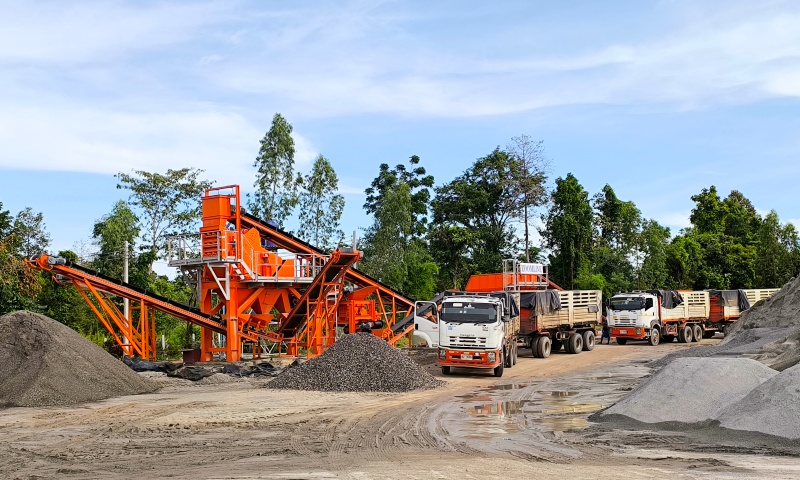
Common Problems in Actual Projects
During the actual construction process, RAP processing is prone to various quality problems, including uneven particle size, high moisture content (especially in Thailand’s tropical high humidity and rainy climate), impurity contamination, and segregation of the material, which will directly affect the smoothness of the subsequent recycling process and the final results.
These quality problems are often underestimated at the beginning of a project, but their negative impacts will gradually appear as the production progresses, and ultimately translate into concrete economic losses: high water content will increase fuel consumption during the recycling process, uneven particles will reduce the capacity of asphalt recycling equipment, impurity contamination and segregation of materials will increase the frequency of equipment maintenance, resulting in fluctuations in the quality of recycled asphalt, and the long-term accumulated efficiency losses will seriously undermine the overall profitability of the project. The long-term accumulation of efficiency loss will seriously weaken the overall profitability of the project.
Why Traditional RAP Preparation Becomes a Bottleneck
With the popularization of asphalt recycling technology, the use of RAP in various types of road projects continues to increase, the industry’s quality requirements for RAP has become more stringent, the stability of production has become a core factor affecting the efficiency of the project, especially large-scale recycling projects, the consistency of the quality of RAP and the stability of the supply of a higher standard.
In this context, the limitations of the traditional RAP preparation method are becoming more and more obvious: excessive reliance on manual operation and lack of standardized workflow lead to large fluctuations in the quality of RAP output; manual operation not only has high labor costs, but also is prone to quality problems due to operational deviations; at the same time, the traditional method lacks a systematic process control system, and is unable to monitor and dynamically adjust the key indicators such as water content, grading, cleanliness, etc., which makes it difficult to meet the requirements of large-scale regeneration projects. At the same time, the traditional method lacks a systematic process control system, and is unable to monitor and dynamically adjust key indicators such as RAP moisture content, grading and cleanliness in real time, which makes it difficult to meet the demand for large-scale, high-quality recycling. At this time, RAP preparation is no longer a simple material processing link, but upgraded to a set of standardized, controllable professional processing.
From Basic Handling to Controlled Processing
In order to achieve a stable and uniform quality of RAP, the construction side is increasingly using integrated processing, the core contains three core modules: integrated crushing, screening system and controlled material flow. These three modules work together seamlessly, forming the core support for RAP preparation from rough processing to standardized control – among them, the integrated crushing can accurately adjust the crushing granularity according to the specific needs of the recycling project, avoiding the problem of excessive deviation of particle size in traditional crushing equipment; the screening system is equipped with a multi-stage screening device, which is capable of The screening system is equipped with a multi-stage screening device, which can accurately separate RAP particles with different particle sizes, eliminate oversized particles, and further guarantee the consistency of gradation; the controllable material flow is controlled by intelligent regulation, which realizes the orderly flow of RAP from crushing, screening to storage, avoiding the accumulation and mixing of materials, and reducing the fluctuation of quality from the source.
The value of this type of integrated processing system is outstanding, mainly reflected in three aspects:
The first is to standardize the quality of RAP output, ensuring that key indicators such as gradation, moisture content, cleanliness, etc. of each batch of RAP meet the regeneration processing standards;
The second is to reduce the fluctuation of RAP performance, avoiding the disturbance of the subsequent regeneration process due to uneven quality;
The third is to enhance the processing efficiency of downstream regeneration plants – high-quality and uniform RAP raw materials can directly enter the regeneration system without additional pre-treatment, significantly reducing the regeneration plant’s feed sorting, drying and other processes, reducing the incidence of equipment failures, saving operating costs, and realizing synergistic efficiency gains in upstream and downstream processing links.
It should be clear that the basic RAP preparation methods (such as simple crushing, manual screening), although with low cost, easy to operate, can be applied to small-scale, low percentage of RAP blending recycling project – this type of project on the quality of the RAP requirements are relatively loose, and the scale of production is relatively small, can make up for the lack of processing through manual intervention. The method can be used for small-scale, low-percentage RAP blending projects – projects with relatively loose RAP quality requirements and small production scales, where manual intervention can compensate for processing deficiencies. However, it should be noted that the basic method can not meet the high proportion of RAP blending scenario quality requirements: with the popularity of asphalt recycling technology, more and more medium and large-scale projects are beginning to pursue 40% and above the high proportion of RAP blending, and high blending ratio, the quality and stability of the RAP directly determines the performance of the recycled asphalt, which must be used in a more controllable integration of the processing method. This is exactly where the technical threshold of large-scale asphalt recycling projects, but also why many constructors in the regeneration demand for the enhancement, will gradually turn to the core reason for the dedicated RAP processing system – through the system’s standardized processes and intelligent control, in order to meet the scale, high quality recycling needs, and enhance the efficiency of the project to provide support.
In many medium and large-scale asphalt recycling projects, dedicated RAP crushing and processing equipment has been widely used to ensure that the recycled material meets the requirements of modern asphalt recycling systems. Such special equipment not only has efficient crushing and screening capacity, but also equipped with a real-time monitoring system that can dynamically monitor and adjust key indicators such as moisture content and particle size of RAP to ensure that the processing process is controllable; at the same time, its standardized workflow can effectively avoid manual deviations, achieve stable output of RAP quality, and lay a solid foundation for the efficient promotion of subsequent recycling processing.
Why RAP Quality Directly Impacts Recycling Asphalt Plant Performance?
Asphalt recycling plant as the core processing of asphalt recycling project, its operational performance, production efficiency and output quality, and the quality of RAP raw materials are inextricably linked directly – RAP as a recycling plant’s core feed, is the basic raw material for the production of recycled asphalt, and the quality of its quality directly determines the recycling plant’s processing difficulty, Its quality directly determines the processing difficulty, operation cost and final output effect of the recycling plant.
If the RAP entering the recycling asphalt plant is of poor quality, it will bring a series of negative impacts on the normal operation of the asphalt recycling plant:
Uneven particle size of RAP will lead to clogging of the inlet, interrupting the production process and increasing the workload of equipment cleaning and maintenance; RAP with excessive moisture content will increase fuel consumption in the regeneration process, requiring additional energy for drying, and may also lead to segregation of regenerated mixture, affecting the quality of the process; RAP with impurities will wear out the parts of the equipment, increase the frequency of equipment failures, prolong the downtime and maintenance time, seriously affecting the normal operation of the regeneration station. Maintenance time, seriously affecting the productivity of the recycling station and project benefits, and may even lead to the recycled asphalt quality does not meet the standard, can not meet the road project requirements.
On the contrary, if the recycling asphalt plant is the standardized processing of qualified RAP, the recycled asphalt plant can give full play to the performance of the equipment, to achieve efficient, stable and low-cost operation:
On the one hand, qualified RAP gradation uniformity, high cleanliness, water content standards, can make the recycling station to achieve 40% -60% of the high RAP mixing ratio, significantly reducing the new asphalt, sand and gravel and other primary raw material inputs, significantly reducing the cost of raw materials; on the other hand, high-quality RAP can be directly adapted to the asphalt recycling plant’s processing process, without additional pre-treatment, and effectively improve the production of On the other hand, high-quality RAP can be directly adapted to the asphalt recycling plant processing process, without additional pre-treatment, effectively improving the continuity and stability of production, reducing the incidence of recycled asphalt equipment failures and energy consumption, optimizing operating costs; at the same time, the stable quality of RAP ensures that the performance of recycled asphalt is uniform, up to par, fully meet the technical requirements of the road project to improve the quality of the project and reduce the cost of maintenance.
Therefore, the performance of asphalt recycling plant depends largely on the quality of RAP preparation before entering the system, high-quality RAP is the core of the recycled asphalt mixing plant to achieve efficient, stable, low-cost operation of the guarantee, but also give full play to the advantages of the asphalt recycling technology to maximize the benefits of the project’s key prerequisites. Only by ensuring that the quality of RAP preparation is up to standard, can the equipment performance of the recycled asphalt mixing plant be given full play to achieve high-quality, efficient production of recycled asphalt.
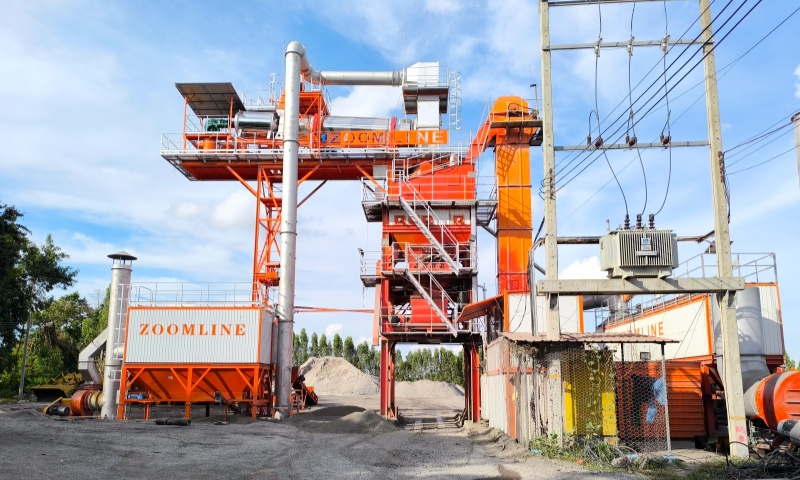
Thailand Case Context: Why RAP Preparation Matters Even More?
Combined with Thailand’s local climate characteristics, market demand and policy guidance, the importance of RAP preparation is more prominent than in other regions, the core reason for the development of Thailand’s asphalt recycling industry with the status quo, the local objective conditions are highly compatible with the specific can be divided into three points, each of which has a direct impact on the quality of Thailand’s asphalt recycling projects and benefits.
First of all, Thailand has a tropical monsoon climate with high temperature and high humidity throughout the year, and this unique climatic condition brings great challenges to the recycling and storage of RAP – the waste asphalt pavement materials are very easy to absorb the moisture in the air during recycling and stockpiling, or be soaked by frequent rainfall, resulting in the exceeding of the water content. Once RAP with excessive moisture content enters the recycling system, it will not only increase fuel consumption, but also seriously affect the bonding performance and strength of recycled asphalt, which is one of the core pain points faced by many asphalt recycling projects in Thailand. Therefore, it is especially critical to do a good job in controlling the moisture content and standardizing the preparation process of RAP under the Thai scenario.
Secondly, with the continuous improvement of road infrastructure construction in Thailand, the demand of road maintenance market continues to expand, more and more road maintenance projects and road reconstruction projects start to use asphalt recycling technology, the use of RAP is increasing year by year, and the application scenarios are constantly enriched, from small pavement repair to large-scale road reconstruction, and the quality requirements for RAP are also becoming more and more stringent. Especially for medium and large-scale projects, the requirements for RAP grade consistency, cleanliness and other indicators are more demanding. If the quality of RAP preparation is not up to standard, it will not only affect the quality of recycled asphalt, but also lead to rework of the project, which will increase the cost of construction, therefore, the standardization of RAP preparation has become an urgent need for the construction side in Thailand.
Finally, the Thai government is vigorously promoting sustainable development and green infrastructure construction, resource recycling as an important development direction, asphalt recycling as the core of the recycling of waste pavement materials, can effectively reduce environmental pollution, save natural resources, in line with the government’s policy of sustainable development, has been strongly supported and guided by the government. High-quality RAP is the basis for realizing the advantages of environmental protection and high efficiency of asphalt recycling technology. Only by preparing qualified RAP can we truly realize the policy objectives of resource recycling, environmental protection and emission reduction, and promote the sustainable development of Thailand’s asphalt recycling industry.
As mentioned in the article “Why Recycling Asphalt Plants Dominate Thailand’s Road Construction Market (Backed by Hundreds of Installations)”, at present, Thai constructors are rapidly adopting asphalt recycling technology, and the asphalt recycling industry has entered into the stage of large-scale and standardized development, and RAP, as the core raw material of the recycling technology, and its quality control is also more and more critical, which is directly related to the sustainable development of Thailand’s asphalt recycling industry, and even more so, affects the ultimate benefits of each recycling project. Therefore, under the Thai scenario, doing a good job of RAP preparation is an important prerequisite to promote the popularization of asphalt recycling technology and maximize the benefits of the project.
Project Outcome Comparison
In the actual application of global asphalt recycling projects, the use of standardized processing of qualified RAP and the lack of any quality control of poor quality RAP, the difference between the results of the project is very significant, this stark contrast, a clearer reflection of the core value of standardized RAP preparation, but also for the construction side of the choice to provide a clear reference – Standardized RAP preparation not only ensures the quality of the project, but also achieves the long-term improvement of project benefits.
By adopting standardized processing of high-quality RAP, the constructor can realize project benefits in many aspects:
First, higher production stability. High-quality RAP with uniform gradation, standardized moisture content and high cleanliness can effectively reduce equipment failures and feed clogging during the recycling process, ensuring a smooth and continuous production process, avoiding interruptions due to raw material quality problems, and improving overall construction efficiency;
Second, better fuel efficiency, qualified RAP without additional drying, sorting and other pre-treatment processes, can be directly into the regeneration system, significantly reducing fuel consumption in the regeneration process, optimize operating costs;
Third, more consistent asphalt quality, stable RAP raw materials can ensure that the performance of recycled asphalt is uniform, up to standard, to meet the technical requirements of the road project, to reduce the later pavement damage, rework and other problems, reduce maintenance costs, and thus enhance the overall benefits and reputation of the project.
On the contrary, if the constructor relies on RAP without any quality control, the project will face a series of continuous operational problems and higher long-term costs:
On the one hand, poor quality RAP with uneven particle sizes, excessive moisture content and high impurities can lead to clogging of the recycling station’s feed, frequent equipment failures, prolonged downtime and high maintenance costs, which can have a serious impact on production efficiency;
On the other hand, poor quality RAP will lead to large fluctuations in the quality of recycled asphalt, which may have insufficient strength, poor durability and other problems, which can not meet the project requirements, which in turn triggers rework and increases construction costs;
In the long run, this type of project not only can not realize the asphalt recycling “cost savings, environmental protection and efficiency” core objectives, but also due to the quality of the project does not meet the standards affect the reputation of the enterprise, seriously weakening the level of profitability of the project, and even lead to project losses.
Conclusion
The quality of RAP is not a secondary factor in the asphalt recycling project, but the core foundation of the project and the premise of its quality directly determines the asphalt recycling technology can give full play to its advantages, to achieve the expected benefits of the project. The core value of asphalt recycling technology lies in “recycling, cost saving, environmental protection and high efficiency”, and all this must be built on the basis of high quality RAP – no high quality RAP, even if equipped with the most advanced asphalt recycling equipment, with the most mature recycling process, can not realize the benefits of the project. Without high-quality RAP, even with the most advanced asphalt recycling equipment, with the most mature regeneration process, but also can not achieve efficient, high-quality regeneration results, it is more difficult to achieve cost savings, environmental sustainability of the project goals, and may even lead to project failure.
At present, the global asphalt recycling industry is experiencing a key transformation change: from the traditional rough RAP base processing, gradually shifted to the standardized, systematic, controllable professional processing mode, which is not only the inevitable trend of the industry’s development, but also the construction side to achieve long-term benefits, enhance the core competitiveness of the key initiatives. With the increasing use of RAP, the industry’s increasingly stringent requirements on the quality of recycling, only the real importance of RAP preparation work, standardized preparation concept throughout the entire process of RAP recycling, RAP-C Recycled Material Crushing, screening, storage, strict adherence to the principle of preparation, accurate control of technical benchmarks, in order to lay a solid foundation for the efficient promotion of asphalt recycling projects. Only in this way can we give full play to the advantages of asphalt recycling technology, truly achieve the multiple goals of resource recycling, project cost optimization, construction efficiency, and promote the sustainable development of the asphalt recycling industry, but also for the construction side to create higher long-term value.
RELATED NEWS