

Asphalt Plant For Sale in Thailand
With the in-depth development of Thailand’s Eastern Economic Corridor, the renovation and expansion of expressways nationwide, the upgrading of urban roads, the renovation of rural road networks, and the ongoing construction of infrastructure such as airports and industrial parks, demand for asphalt mixtures in Thailand continues to surge. For road contractors, engineering firms, and asphalt producers with a strong presence in Thailand, selecting an asphalt mixing plant that is suited to local operating conditions, has the right production capacity, offers controllable energy consumption, and meets all regulatory standards directly determines project construction efficiency, mix quality, operating costs, and return on investment.
Currently, the Thailand market not only has a strong demand for brand-new asphalt mixing equipment, but the demand for RAP (Recycled Asphalt Pavement) generated by road rehabilitation projects is also rising rapidly. Building in-house mixing plants to replace purchased mixtures has become a core strategy for Thailand engineering firms to reduce costs, improve efficiency, and maintain control over construction operations. Drawing on the experience gained from hundreds of Southeast Asian projects completed by ZOOMLINE Machinery, this article provides a comprehensive analysis of the investment value, equipment types, selection criteria, localized customization solutions, pricing and costs, procurement processes, and after-sales support for asphalt mixing plants in Thailand, offering Thailand clients a one-stop procurement guide.
Why Invest in an Asphalt Mixing Plant in Thailand
Thailand’s road and transportation infrastructure has long enjoyed the dual benefits of new construction and the renewal of existing infrastructure. Various engineering projects continue to generate stable demand for asphalt, and operating an in-house asphalt mixing plant offers significantly greater flexibility and cost-effectiveness compared to purchasing mix from third parties.
Diverse Projects Drive Steady Demand, Ensuring Market Stability
Covering all types of infrastructure projects in Thailand—including high-grade expressways, construction and expansion of national highways, urban road renovation and upgrading, rural road improvements (DRR projects), airport runways and municipal supporting facilities, logistics roads in industrial parks, and comprehensive road maintenance and pavement resurfacing projects—there is a year-round need for a stable supply of high-quality hot-mix asphalt.
In-House Production Ensures Control Over Project Costs and Timelines
Purchasing asphalt mixtures from third parties poses challenges such as unstable supply, price fluctuations, and limited delivery ranges. Building an in-house mixing plant allows for flexible adjustment of mix proportions and independent control over production schedules. This is particularly well-suited for scenarios such as racing against the clock during Thailand’s rainy season and construction in remote areas, significantly reducing outsourcing costs.
The Rise of RAP Recycling Aligns with Thailand’s Green Infrastructure Trends
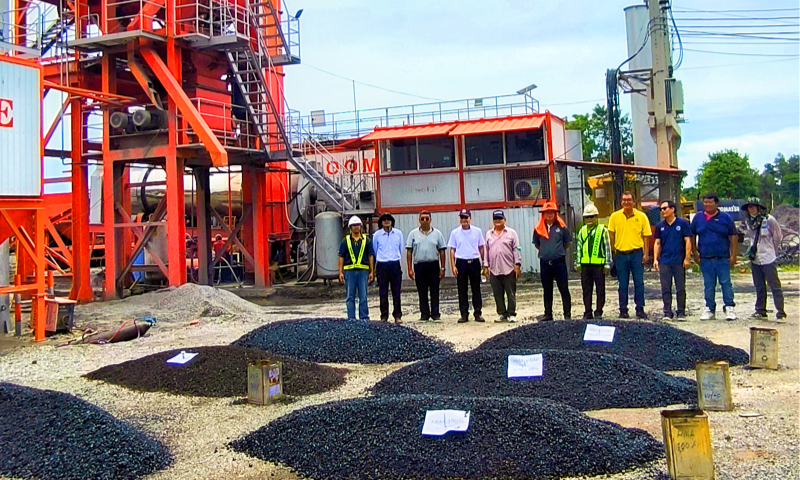
As Thailand’s environmental policies continue to tighten, the recycling and reuse of old asphalt pavement materials have become a mainstream industry trend. RAP (Recycled Asphalt Pavement), after being crushed, screened, heated, and blended, is reintroduced into production and can replace 30%–40% of new aggregates and asphalt raw materials, significantly reducing raw material costs. ZOOMLINE Machinery’s 60 TPH asphalt recycling project in Khon Kaen, Thailand, has achieved stable, high-ratio RAP blending and is widely applicable to Thailand’s road maintenance and rehabilitation projects.
Mainstream Types of Asphalt Mixing Plants in the Thailand Market and Their Suitable Applications
Thailand’s terrain varies significantly between the north and south, construction projects range widely in scale, and job sites are widely dispersed; therefore, a single plant model cannot meet the needs of all scenarios. Currently, the mainstream equipment on the market includes five major categories: stationary, mobile, batch, continuous, and recycling plants, each with clearly defined applications and distinct advantages.
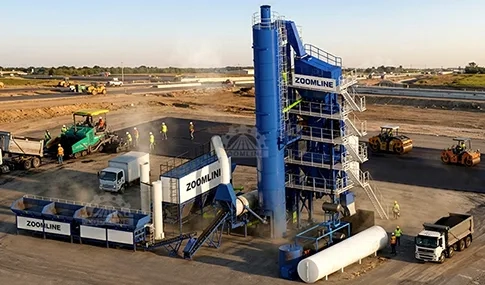
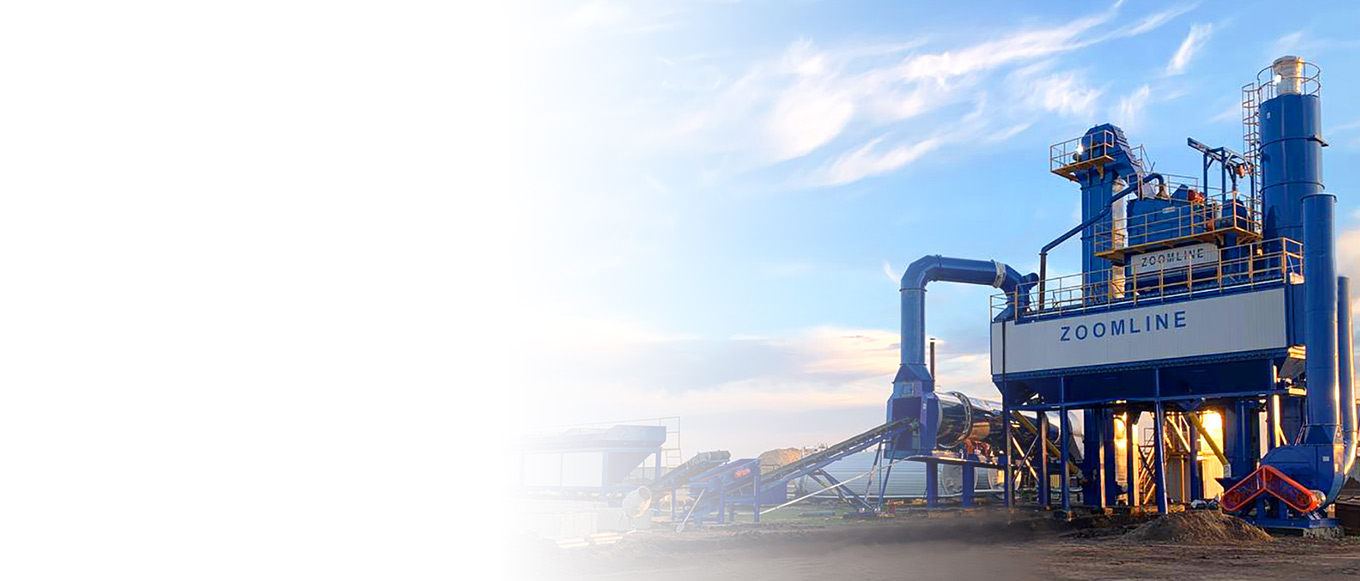
Stationary Batch-type Asphalt Mixing Plant
Main Production Capacity: 80–400 t/h
Suitable Applications:
Major highways such as Thailand’s Route 35, high-grade national highways, large-scale fixed mixing plants in suburban areas, and long-term, high-volume supply projects
Key Advantages:
Utilizes batch-type production with extremely high precision in aggregate and asphalt metering; features a mature screening process; offers flexible and adjustable mix proportions; delivers consistent output quality; complies with the Thailand Department of Highways’ specifications for high-grade pavement construction; and is suitable for high-standard, long-term, large-scale infrastructure projects.
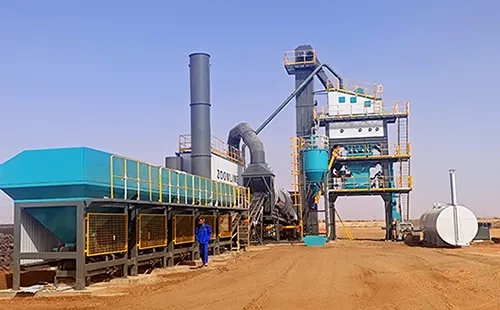
Mobile Batch Mix Asphalt Plant
Main Production Capacity: 40–160 t/h
Suitable Applications:
Island construction projects in south-central Thailand, road paving in remote mountainous areas, short-term maintenance projects, mobile construction projects across multiple locations
Key Advantages:
Modular integrated design requires no complex civil engineering foundations; disassembly, relocation, and reassembly can be completed in 3–5 days, significantly reducing infrastructure, transportation, and site rental costs. ZOOMLINE ZAP-M series of mobile models covers the full capacity range of 60–200 t/h and is the mainstream choice for local road upgrades and sporadic maintenance projects in Thailand.
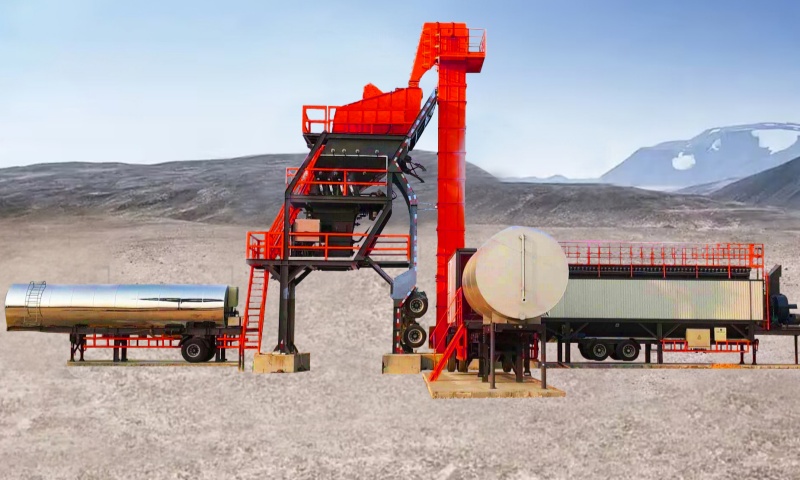
Recycling Asphalt Plant
Key Advantages: Supports precision processing of RAP (Recycled Asphalt Pavement) waste material, high-ratio blending, and energy efficiency and environmental protection
Suitable Applications: Road rehabilitation, road maintenance, and eco-friendly construction projects in Thailand, helping enterprises reduce raw material costs and ensure compliance with environmental impact assessments
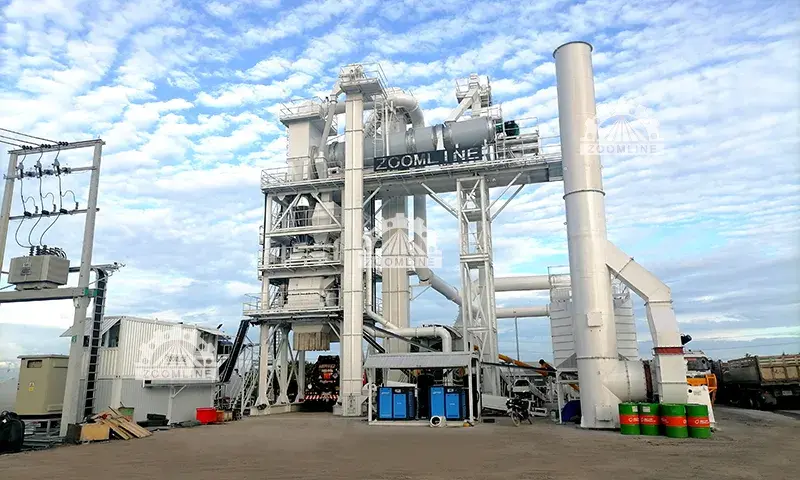
Continuous Drum Mix Asphalt Plant
Key Advantages:
Compact structure, 24-hour continuous production, stable operation, and low operation and maintenance costs
Suitable Applications:
General road construction and basic maintenance projects requiring fixed mix designs and large-volume continuous material supply
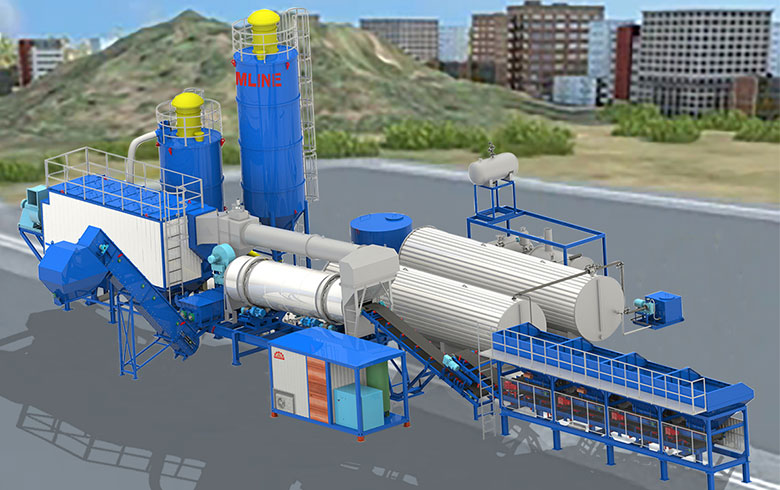
Batch vs. Drum: A Comparison of Key Selection Criteria for Procurement in Thailand
Thailand contractors often struggle to choose between these two mainstream machine types; the decision should be based on project standards and production requirements:
Verification authority qualification certification
Regular export-grade equipment must have CE, ISO, EAC and other international authoritative certification, equipment technology, safety standards, environmental protection standards in line with international norms, can be successfully cleared, to meet the requirements of national construction acceptance.
| Comparison Criteria | Batch Mix Asphalt Plant | Drum Mix Asphalt Plant |
| Production Method | Batch-wise, intermittent production | Uninterrupted, continuous production |
| Batching Accuracy | Extremely high, within ±0.5% | Stable, suitable for standard mix ratios |
| Formula Adjustment | Flexible; can switch between multiple mix specifications at any time | Suitable for fixed formulas; adjustments are more difficult |
| Suitable Projects | High-speed highways, municipal roads, and other high-grade road projects | Large-volume general road construction and maintenance projects |
| Equipment Cost | Mid-to-high range; cost-effective for high-standard projects | Economical,lower operation and maintenance costs |
Recommended Best-Selling Models for the Thailand Market (High Market Share, Fast Return on Investment)
Taking into account the scale of Thailand construction projects, budgets, construction practices, and climatic conditions, the following three models from ZOOMLINE Machinery have extremely high market share and are suitable for the vast majority of projects in Thailand:
| Model | Rated Capacity | Suitable Mixes | Key Advantages and Applications |
| ZAP-S120(Stationary) | 120tons/hour | All specifications of high-grade asphalt mixtures | The best value-for-money option for medium-sized projects in Thailand, featuring moderate investment and a short payback period. It meets the demands of Thailand’s mainstream highway renovation, expansion, and municipal engineering projects, offering stability, durability, and a low failure rate. |
| ZAP-S160(Stationary) | 160tons/hour | Standard asphalt/modified asphalt | The top choice for medium-to-large-scale projects, with ample production capacity to handle the intense rush to meet deadlines during Thailand’s rainy season. Supports the production of high-specification materials such as modified asphalt and is suitable for major expressway projects. |
| ZAP-M80(Mobile Batch Mix Type) | 80tons/hour | Standard asphalt mix | The benchmark for flexible site relocation—requires no complex infrastructure and is suitable for road upgrades and scattered construction projects in Thailand. It can be set up and moved as needed, with convenient operation and maintenance. |
| ZAP-S160&RAP80(RAP plant ) | 160 tons per hour of virgin material, 80 tons per hour of RAP recycled material
|
Conventional Asphalt, Modified Asphalt, RAP (Recycled Asphalt Pavement) | The preferred choice for Thailand’s Green Highway Project, this stationary primary mixing plant is equipped with a complete hot recycling system that fully utilizes milled material recovered from existing road surfaces, significantly reducing the procurement costs of aggregate and asphalt. It can produce primary mix independently or simultaneously produce a blend of primary and recycled materials, making it suitable for major highway repairs, existing road renovations, and eco-friendly municipal road projects in Thailand. It complies with local environmental policies regarding the use of recycled materials while balancing high production capacity with resource recycling. |
Customized Solution for Thailand’s Specific Operating Conditions (Adapted to the Tropical Climate and Local Regulations)
Thailand has a tropical monsoon climate characterized by year-round high temperatures, high humidity, and heavy rainfall. Additionally, the country experiences fuel price volatility, strict environmental regulations, and fixed electrical standards (380V/50Hz). ZOOMLINE Machinery has implemented comprehensive, customized optimizations tailored to Thailand’s operating conditions to prevent equipment failures at the source and ensure compliance with local regulations:
High-Temperature and Moisture-Resistant Electrical System
Equipped with industrial-grade, moisture-resistant, high-temperature air conditioning, the system utilizes core electrical components from international brands such as Schneider Electric and Siemens. This eliminates issues such as circuit short-circuits, system freezes, and equipment downtime caused by Thailand’s humid and high-temperature conditions during the rainy season, ensuring stable year-round operation.
Multi-Fuel Compatible Combustion System for Significant Cost Savings
Compatible with Thailand’s mainstream fuels—including diesel, heavy oil, and LNG/CNG—the system supports one-touch switching. This allows for flexible adjustments based on local fuel price fluctuations, effectively reducing fuel consumption per metric ton of mix and lowering overall energy consumption by 10%–15%.
High-Standard Environmental Dust Removal for Effortless Environmental Impact Assessment Compliance
The system employs a dual-stage dust removal system consisting of “primary cyclone dust removal + secondary baghouse filtration,” achieving flue gas emission concentrations below 20 mg/Nm³—far exceeding Thailand’s EPA and DOH environmental emission standards. This ensures compliance with environmental inspections and guarantees project compliance during construction.
Bilingual Intelligent Automation Control System
Equipped with a bilingual (Chinese-English) PLC intelligent control system, it supports one-touch weighing calibration and intelligent self-diagnostic fault detection. Material mixing accuracy is maintained within ±0.5%, meeting the Thailand Department of Highways’ output specifications, reducing reliance on manual labor, and enhancing production precision.
Optimized Logistics and Infrastructure Design
The equipment’s modular design minimizes the need for out-of-gauge (OOG) shipping, reducing sea freight costs to Bangkok Port and Laem Chabang Port by 20%–30%. The lightweight design reduces infrastructure requirements, shortens on-site installation time, and saves on local labor and equipment rental costs in Thailand.
Analysis of Prices and Total Cost of Ownership (TCO) for Asphalt Mixing Plants in Thailand
There are no fixed prices for asphalt mixing plants in Thailand; equipment costs are influenced by multiple factors, including production capacity, model type, configuration, logistics, installation, and after-sales service. Professional procurement does not focus on low base prices for the equipment alone but emphasizes the total cost of ownership (TCO) over the entire lifecycle.
Key Price Determinants
These primarily include: equipment production capacity, plant type (stationary/mobile/recycling), burner configuration, dust collection system grade, RAP recycling system, asphalt storage tank capacity, automation level, ocean freight customs clearance, and on-site installation and commissioning costs.
Key Points for Full-Cycle Cost Control
Procurement Costs: Equipment prices vary across a range based on production capacities from 40 to 400 t/h; select a model based on actual needs to avoid waste from underutilized capacity;
Logistics and Customs Clearance Costs: Modular equipment reduces the need for oversized shipments and is compatible with Thailand’s major ports, significantly reducing ocean freight and customs clearance costs;
Operational Energy Costs: High-efficiency combustion and drying systems continuously reduce fuel consumption, while intelligent material blending minimizes material waste;
Installation and O&M Costs: A quick-assembly design shortens construction time, and the supply of standardized original manufacturer parts reduces future maintenance and downtime costs.
Standardized Procurement Process for Asphalt Mixing Plants in Thailand
When procuring asphalt mixing plants from China, a standardized process helps mitigate risks and ensures successful delivery and implementation. The complete process is as follows:
Define Project Requirements: Determine the construction site, project type, construction schedule, average daily production capacity, whether RAP recycling is required, and fuel type;
Select Equipment Model: Choose between stationary, mobile, continuous, or recycling equipment based on the construction scenario;
Confirm Customized Configuration: Finalize core configurations such as burners, dust collection systems, aggregate bins, asphalt storage tanks, control systems, and RAP blending systems;
Compare Manufacturer Capabilities: Focus on manufacturing capacity, overseas project experience, international certifications, and after-sales support systems—do not rely solely on price comparisons;
Confirm Logistics and Delivery: Finalize the seaport of destination, container loading plan, customs clearance procedures, and local land transport and crane installation plans;
Factory Quality Inspection: Support on-site factory inspections or video verification to check equipment craftsmanship, component quality, and factory test reports;
On-site Installation and Commissioning: Complete hoisting, wiring, commissioning, and trial production after the equipment arrives at the port;
Long-term After-sales Support: Arrange operator training, spare parts supply, 24-hour technical support, and maintenance services.
Why do Thailand contractors prioritize ZOOMLINE?
Procurement should not only look at the bare metal price of equipment, but also calculate the total cost of the whole life cycle, which is the key to controlling the project cost.
Proven experience with localized projects in Thailand
With years of deep engagement in the Southeast Asian market, we are well-versed in Thailand’s 380V/50Hz voltage standards, maritime customs clearance procedures, environmental policies, and engineering specifications.
We have operational projects in Chiang Mai, Chonburi, Rayong, Khon Kaen, and other locations, and can arrange on-site visits to these projects.
Full Range of Equipment and Customization Capabilities
Our product portfolio covers the full range of asphalt mixing equipment, including stationary, mobile, batch, continuous, eco-friendly, and RAP recycling models. We provide one-on-one customized solutions based on project budgets, production capacity requirements, environmental standards, and construction scenarios. Our equipment holds international certifications such as CE, ISO, and EAC, and complies with overseas export standards.
Proven and Verifiable Implementation Cases
The ZAP-M120 mobile asphalt mixing plant project in Thailand leverages the advantages of modular design and rapid relocation to support mobile construction across multiple sites; the 60 TPH asphalt recycling plant project in Khon Kaen consistently achieves a high RAP blend ratio of 30%–40%, providing a proven solution for green road maintenance in Thailand.
One-Stop Lifetime After-Sales Support
We provide on-site installation guidance, equipment commissioning, and operator training in Thailand by our overseas engineers; 24/7 online remote technical support and rapid cross-border delivery of genuine spare parts ensure stable equipment operation throughout the entire process, resolving after-sales challenges in overseas construction projects.
Frequently Asked Questions (FAQ) About Asphalt Plants in Thailand
Q1: What is the approximate price of an asphalt mixing plant in Thailand?
There is no fixed price; costs depend on production capacity, model, configuration, logistics, and installation. We recommend providing your project requirements to receive a customized quote.
Q2: Which model is most suitable for projects in Thailand?
For long-term, fixed-site large-scale projects, choose a stationary batch-type plant; for short-term mobile or maintenance projects, choose a mobile plant; if you need to recycle waste material, pair it with a RAP recycling system.
Q3: How do I choose the appropriate equipment capacity?
40–60 TPH is suitable for small-scale maintenance projects; 60–120 TPH is suitable for medium-sized road projects; 120–200 TPH is suitable for large-scale highway infrastructure projects. Select a model based on your needs to avoid underutilization of capacity.
Q4: Can the equipment process RAP (recycled asphalt pavement)?
Yes. Customizable RAP crushing, screening, heating, and metering systems are available to achieve a high rate of recycled material utilization.
Q5: Is the equipment compatible with local fuels in Thailand?
The entire product line supports multi-fuel switching between diesel, heavy fuel oil, and natural gas, making it compatible with Thailand’s local energy infrastructure.
Q6: Can Chinese manufacturers provide on-site installation and after-sales service in Thailand?
ZOOMLINE Machinery offers comprehensive after-sales support, including on-site installation and commissioning in Thailand, on-site training, remote diagnostics, and spare parts supply.
Conclusion
Against the backdrop of Thailand’s booming infrastructure market, selecting an asphalt mixing plant that is tailored to local operating conditions, offers high cost-effectiveness, features low energy consumption, and meets all regulatory standards is crucial for companies to capture market share, control costs, and boost profits. Leveraging its proven experience in Thailand projects, a comprehensive range of equipment, dedicated localized customization solutions, and a robust overseas after-sales support system, ZOOMLINE Machinery can provide one-on-one, tailored end-to-end solutions—covering procurement, installation, and operation—for asphalt mixing plants to all types of Thailand road construction companies.
To obtain precise model specifications, on-site operation videos, the latest on-site quotes, and customized investment plans, please feel free to contact ZOOMLINE team of overseas engineering experts at any time to customize the optimal equipment configuration for your project in Thailand!