


How Super Mobile Drum Mix Asphalt Plants Solve Road Construction Challenges in Africa
Introduction
For many road construction projects in Africa, the challenge is not merely the production capacity of asphalt mixture, but rather how to ensure a continuous supply of asphalt mixture at the right locations, at the right time, and with manageable logistics costs. From rural road upgrades and regional road network construction to road corridors connecting cities, ports, and borders, as well as cross-border highway projects, these various projects are often characterized by dispersed construction sites, long transport distances, tight schedules, and constantly changing construction areas.
For such projects, if the asphalt production site is too far from the paving site, long-distance transportation not only increases logistics costs but may also complicate temperature control of the mix and transportation logistics. At the same time, some projects require adjusting the production location as construction progresses along the route.
Therefore, in addition to meeting basic production capacity requirements, asphalt mixing plant equipment must also offer greater mobility, on-site deployment capabilities, and adaptability to project needs. The Super Mobile Drum Mix Asphalt Plant, through its trailer-mounted integrated design, continuous production, and high degree of on-site integration, offers a more flexible asphalt production solution for remote, dispersed, and frequently relocating road projects.
What Makes Asphalt Production Challenging for Road Projects in Africa?
Road construction projects in Africa cover a wide area, with construction conditions and project organization varying significantly across different regions. For contractors, before selecting a mobile asphalt plant for Africa, it is essential to first understand the specific requirements that a given project places on asphalt production equipment.
Geographically Dispersed Road Construction Projects
Many road projects are characterized by linear construction, particularly regional roads, road corridors, and long-distance highway projects, where the construction front may advance continuously along a long stretch of road. For contractors undertaking construction on multiple road sections simultaneously, the distance between the asphalt production plant and the paving site may constantly change.
If there is a long-term reliance on centralized production at fixed mixing plants, excessively long transport distances may increase transportation costs and impose higher demands on mix transportation and temperature control.
Therefore, for asphalt plants used in scattered road projects, the ability of the equipment to be located close to the construction site and to adjust its production location as the project progresses is a key consideration.
Remote Construction Sites and Difficult Logistics
Some rural roads, mountain roads, border highways, and infrastructure projects in remote areas are located far from established urban and industrial zones. These sites may lack adequate equipment foundations, roads, electricity, or other supporting infrastructure.
For such remote road construction projects, the requirements for asphalt production equipment go beyond simply pursuing higher production capacity; rather, the focus is on ensuring the equipment can be transported smoothly to the site, deployed quickly, and maintain stable production under actual construction conditions.
Therefore, asphalt production for remote construction sites requires greater consideration of equipment transportation methods, on-site installation procedures, foundation requirements, and follow-up technical support.
Tight Construction Schedules and the Need for Faster Deployment
Road projects typically have clear construction schedules. If the equipment installation, commissioning, and start-up cycle is too long, it may cut into the actual paving time and affect the overall construction schedule.
For short-cycle projects or those with limited construction windows, a fast-installation asphalt plant can help contractors reduce the time spent on the equipment deployment phase, allowing asphalt production to reach normal operation sooner.
Frequent Project Relocation
For long-distance highways, road corridors, and phased construction projects, the construction front advances gradually as the project progresses. For contractors managing multiple construction zones simultaneously, the location of equipment production may also need to be adjusted as the project progresses.
If the process of dismantling, transporting, and reinstalling the mixing plant is complex, the relocation itself can become a factor affecting project progress.
Therefore, for projects requiring frequent relocation of the asphalt plant, the method of equipment movement and the ability to redeploy it on-site must align with the construction organization model.
Different Projects Require Different Production Capacities
African road projects vary significantly in scale, ranging from small-scale road maintenance and upgrades to regional roads and large-scale arterial highway projects; consequently, the demand for asphalt mix production capacity differs accordingly.
Equipment with insufficient production capacity may fail to meet paving demands, while equipment with excessive capacity may result in low actual utilization rates. Therefore, when selecting equipment, decisions should be based on average daily paving volume, working hours, project duration, and expected equipment utilization rates—rather than simply choosing a fixed production capacity based on road type alone.
How Super Mobile Drum Mix Asphalt Plants Address These Challenges
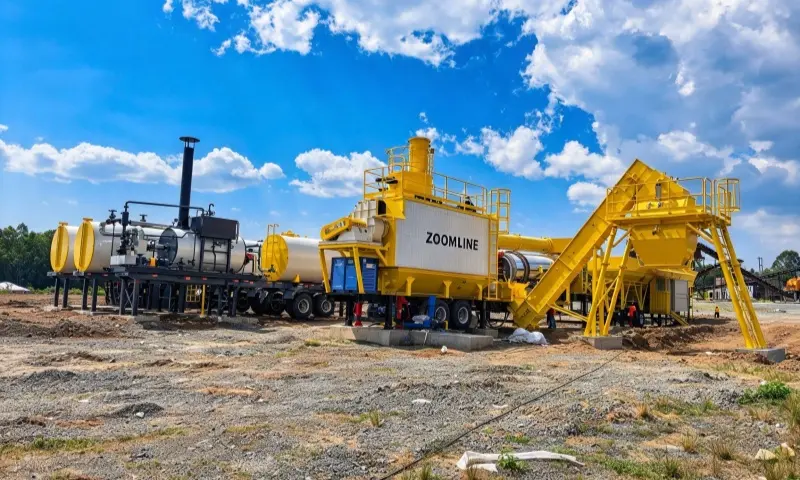
Faced with remote and dispersed construction sites, rolling construction schedules, and varying on-site infrastructure conditions, the Super Mobile Drum Mix Asphalt Plant offers more flexible asphalt production options for various types of road projects through its mobile structure, highly integrated design, and continuous production process.
Rather than focusing solely on the features the equipment possesses, it is more important to consider how these design elements address actual construction needs.
Trailer-Mounted Mobility for Remote and Scattered Projects
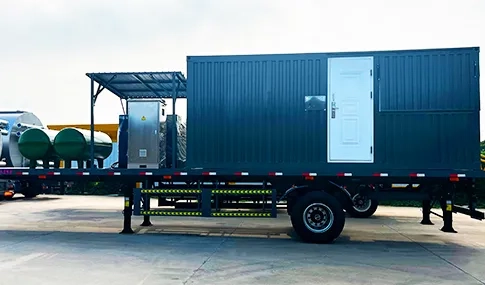
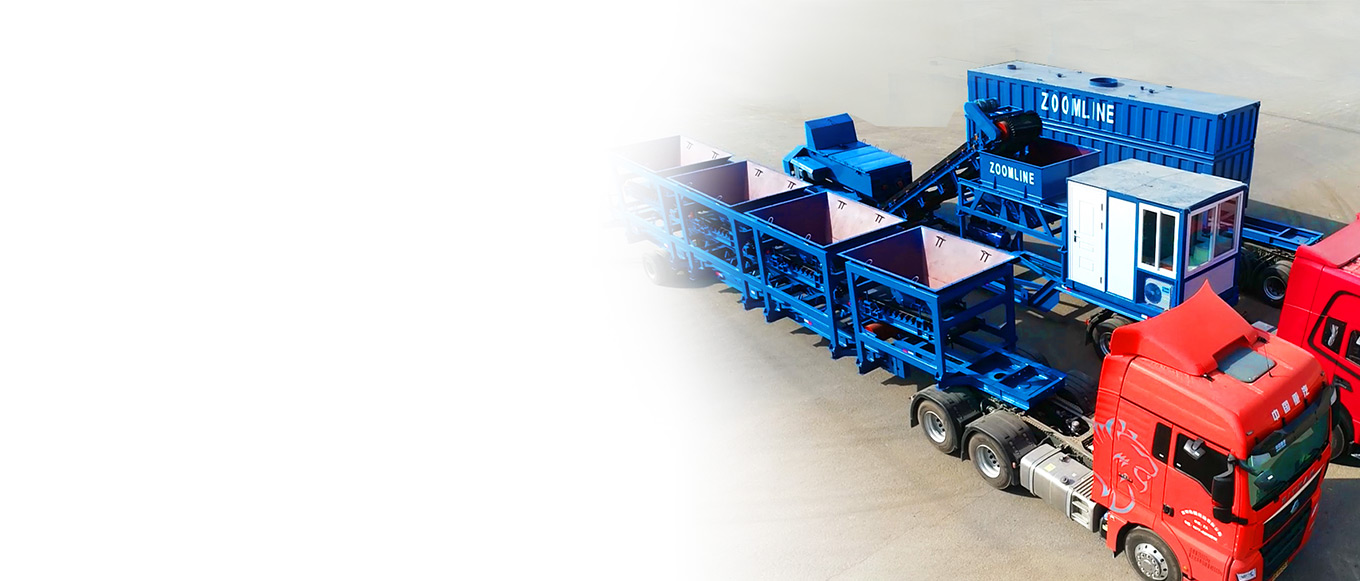
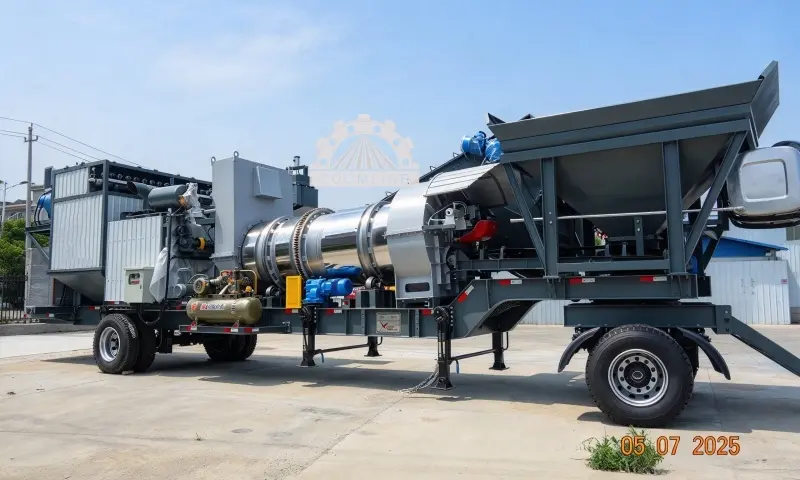
The Super Mobile Drum Mix Plant features an integrated trailer-mounted structure, allowing the equipment to be transported between different construction sites via a transport vehicle, thereby reducing the reliance on a single production location typical of traditional stationary asphalt mixing plant.
For mobile asphalt plants used in remote projects, the value of this design lies in the fact that when a project site is far from major infrastructure or when different road sections require separate construction, contractors can plan the location of asphalt production based on the project’s organizational structure.
Placing the production site closer to the paving site also helps shorten transport distances and reduces the pressure that long-distance transport places on construction organization.
Highly Integrated Design for Faster Deployment
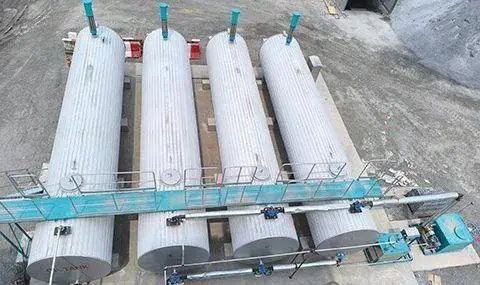
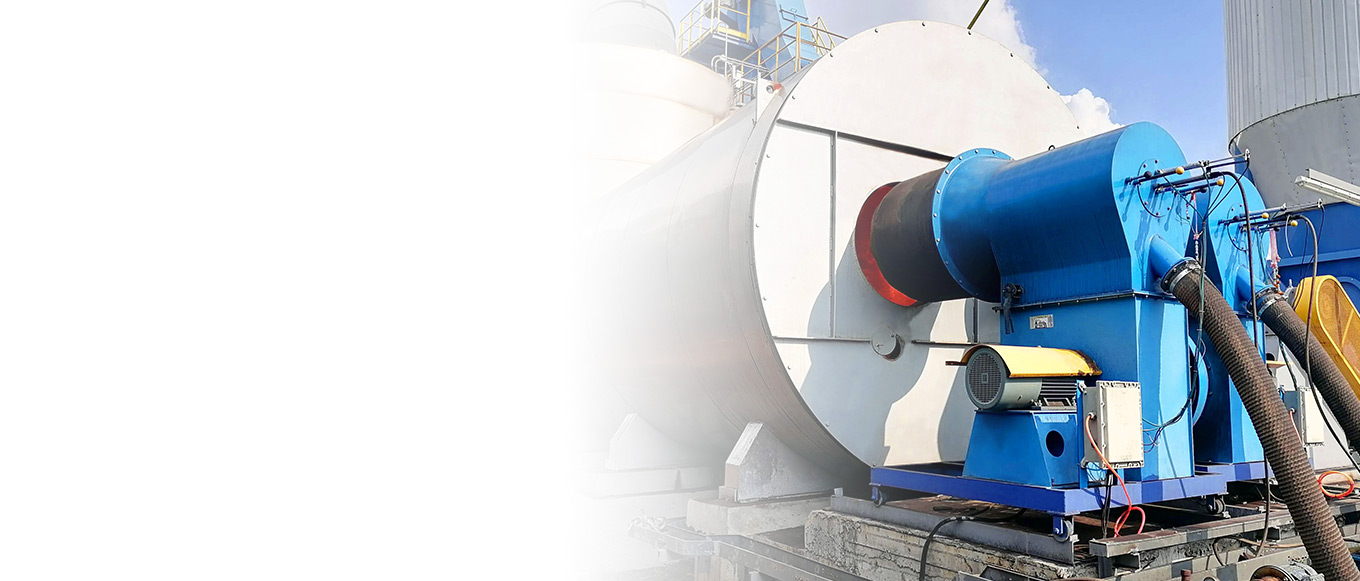
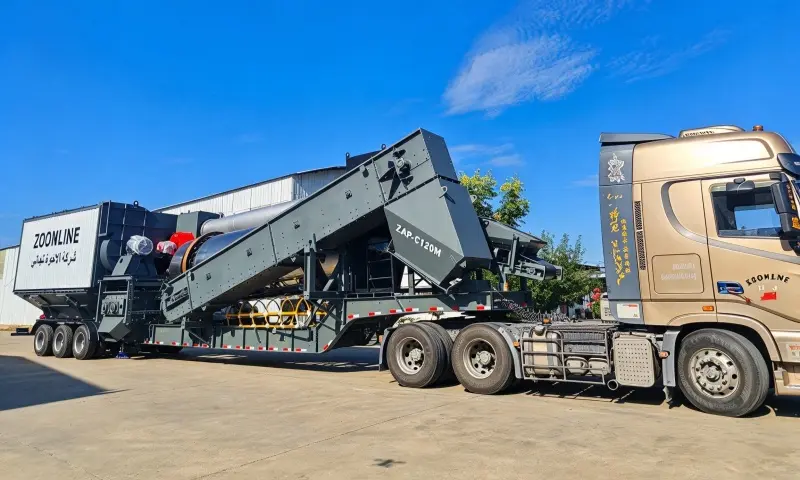
The Super Mobile Drum Mix Asphalt Plant highly integrates key systems—including feeding, drying, mixing, dust removal, and control—thereby reducing the extensive equipment assembly work required on-site.
For portable asphalt plants used in road projects, a higher degree of integration means that once the equipment arrives at the construction site, the necessary installation and commissioning can be completed more quickly.
In a 40 TPH Super Mobile Drum Mix Asphalt Plant project in Kenya, ZOOMLINE specifically highlighted the project’s rapid installation, completed in 1–2 days. This 1–2 day timeframe should be understood as specific to that particular project and not as a standard installation cycle for all projects.
Continuous Production for Stable Asphalt Supply
As a continuous asphalt mixing plant, the Super Mobile Drum Mix Asphalt Plant employs a continuous production method, enabling the continuous drying and heating of aggregates as well as the production of asphalt mixture.
For long-distance road construction and projects requiring continuous paving operations, a stable, continuous feed helps reduce unnecessary batch intervals during production, better aligning the pace of asphalt production with that of paving.
At the same time, the system structure of a drum mix asphalt plant is relatively centralized; for projects requiring long-term operation in remote areas, the equipment’s structural design and ease of daily maintenance are also factors to consider during selection.
Compact Configuration for Challenging Project Sites
For projects with temporary construction sites or limited infrastructure, the equipment’s footprint and on-site preparation requirements can also impact its deployment.
The Super Mobile Asphalt Plant features a high degree of system integration, which can reduce some of the on-site installation and layout work. For portable asphalt plants used in road projects, this compact equipment configuration helps improve adaptability across different construction sites.
However, the specific site layout must still be planned based on equipment transport routes, aggregate storage, finished material transport, equipment safety clearances, and local construction requirements; it cannot simply be assumed that “no site preparation is required” for all projects.
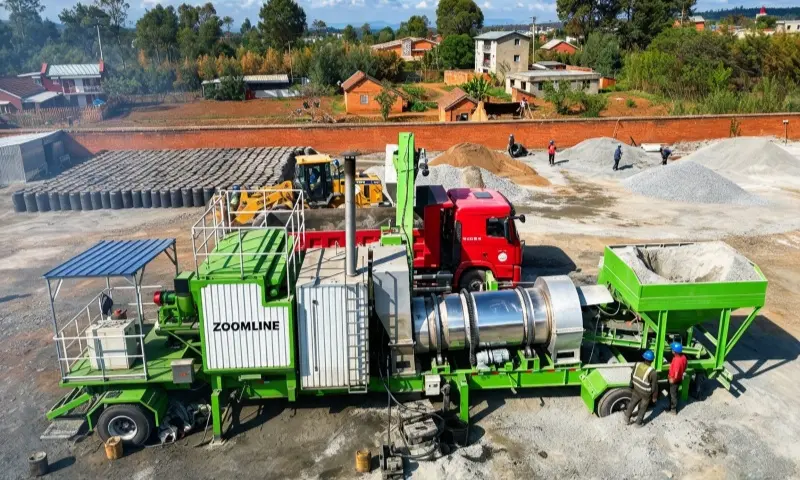
Flexible Capacity for Different African Road Projects
The ZOOMLINE Super Mobile Drum Mix Asphalt Plant series covers a production capacity range of approximately 20–200 TPH and can be configured according to the specific production requirements of each road project.
When selecting a model, it is not recommended to make a judgment based solely on the formula “rural roads = low capacity, highways = high capacity.” Instead, the following factors should be considered:·
Estimated average daily demand for asphalt mix;
Daily effective production time;
Paving equipment capacity;
Project duration;
Raw material supply capacity;
Expected equipment utilization rate.
This approach helps avoid insufficient production capacity or prolonged low-load operation of the equipment, and helps determine how to select the right asphalt plant capacity.
RAP Capability for Projects Seeking Material Efficiency
For old road renovation and pavement rehabilitation projects, RAP recycling configurations can be considered based on the project’s material conditions.
By appropriately utilizing recycled asphalt pavement (RAP) materials, the demand for new materials can be partially reduced, providing more flexible material utilization solutions for road maintenance and rehabilitation projects.
If the project focuses on RAP processing, crushing, or screening, separate planning should be conducted based on the specific process requirements of the RAP crushing plant and recycling asphalt plant; the recycling solution should not be determined solely based on the asphalt plant itself.
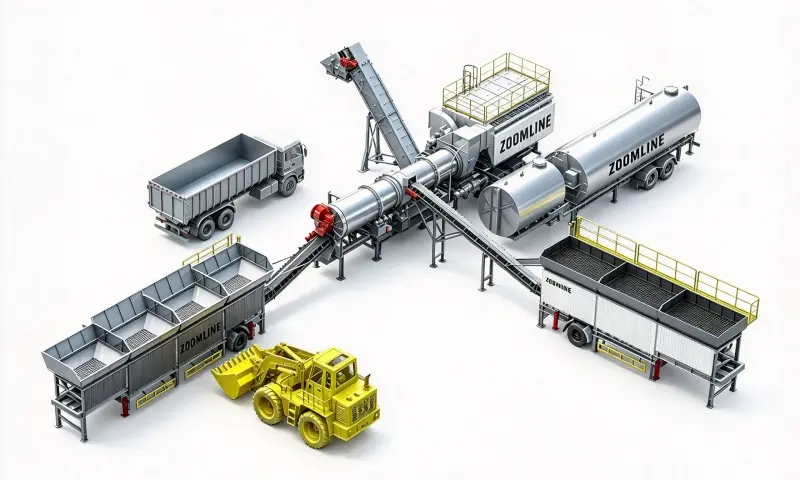
Real-World Super Mobile Drum Mix Asphalt Plant Projects in Africa
Whether the equipment is truly suitable for road projects in different regions ultimately requires validation through actual engineering projects.
ZOOMLINE currently has project case studies featuring its Super Mobile Drum Mix Asphalt Plant in African markets such as Kenya, Nigeria, Madagascar, Zimbabwe, and Mali. The production capacities and application contexts vary across different projects, demonstrating the Super Mobile series’ ability to be configured to meet diverse construction needs.
Kenya Project—Fast Deployment for Decentralized Road Projects
For a road construction project in Kenya, ZOOMLINE supplied a 40TPH Super Mobile Drum Mix Asphalt Plant.
The project involved dispersed road construction and long-distance road building, requiring the equipment to adapt to changing construction locations. This case study highlights the Super Mobile equipment’s high mobility and rapid installation capabilities, with the unit being installed in just 1–2 days.
For road projects that require advancement across multiple construction zones, this approach to equipment organization reduces on-site deployment time and enhances the flexibility of moving equipment as the project progresses.
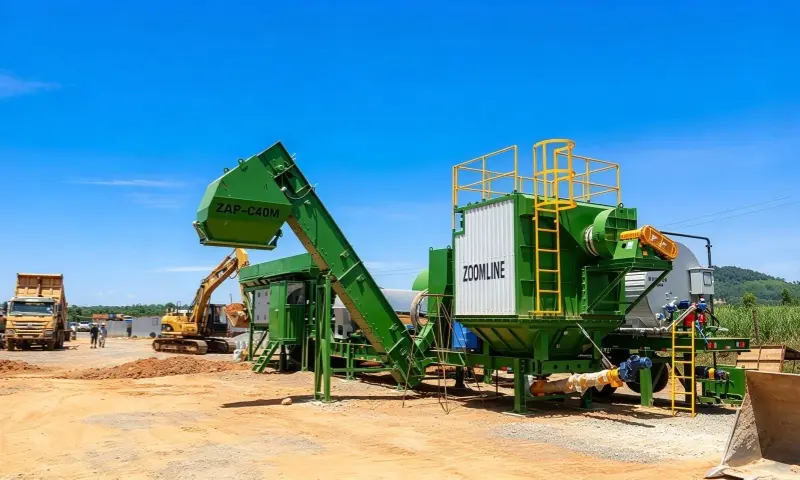
Nigeria Project—Flexibility for Scattered and Short-Cycle Road Projects
ZOOMLINE successfully installed and commissioned a 40TPH Super Mobile Drum Mix Asphalt Plant in Nigeria.
This case study demonstrates the equipment’s application in road construction scenarios where work sites are relatively dispersed and project timelines and locations require flexible adjustments. The equipment’s integrated design facilitates installation, commissioning, and subsequent operator training.
This case not only highlights the equipment’s inherent mobility but also illustrates that, for overseas projects, services such as installation, commissioning, and operator training are equally critical components for the successful commissioning of the equipment.
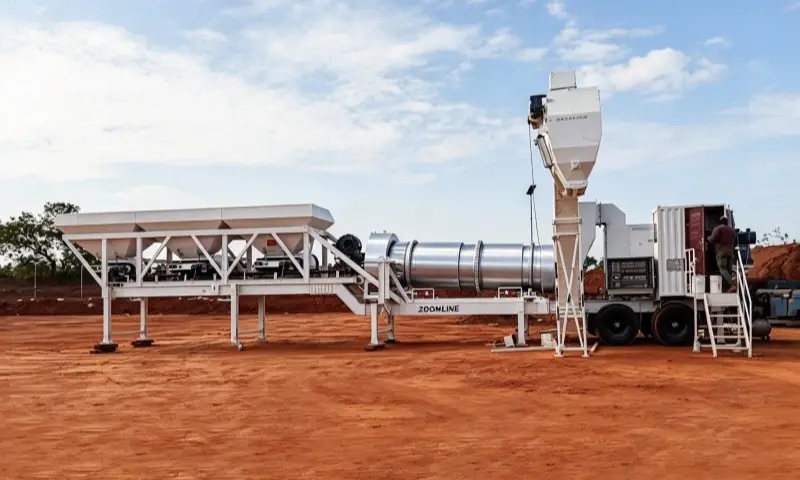
Madagascar Project—One-Trailer Design for Integrated Deployment
In Madagascar, ZOOMLINE supplied a 60 TPH Super Mobile Drum Mix Asphalt Plant.
The equipment for this project features a highly integrated single-trailer design that combines key production processes—including cold aggregate feeding, drying, mixing, dust removal, and finished product conveying—ensuring stable production once the plant is operational.
This case study demonstrates the Super Mobile series’ strengths in equipment integration and on-site deployment, while also illustrating how production capacity can be tailored to the specific needs of different projects.
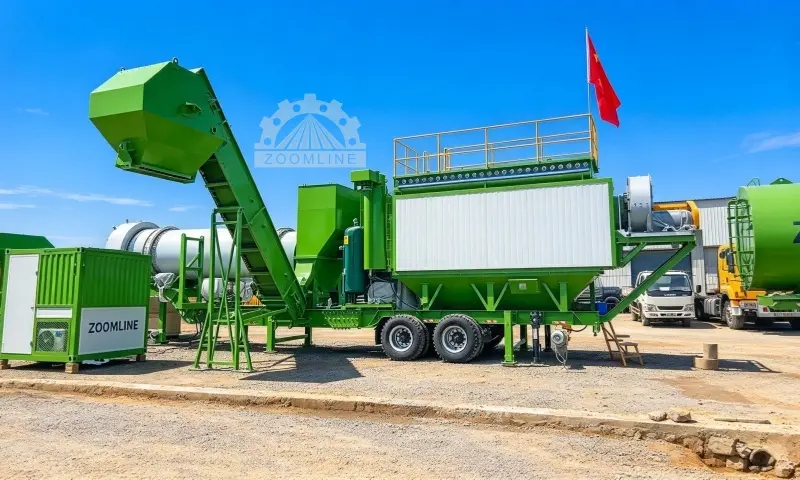
Zimbabwe Project—Addressing Local Asphalt Supply Shortages
For a project in Zimbabwe, ZOOMLINE supplied a ZAP-C80M Super Mobile Asphalt Plant.
The project faced challenges with insufficient asphalt mixture supply; however, once the equipment was put into operation, it enabled stable production, providing a continuous on-site supply of asphalt mixture for the project.
This case highlights another value of mobile asphalt production equipment: for projects with limited local supply capacity, establishing on-site asphalt production capabilities can reduce reliance on external supplies of finished asphalt.
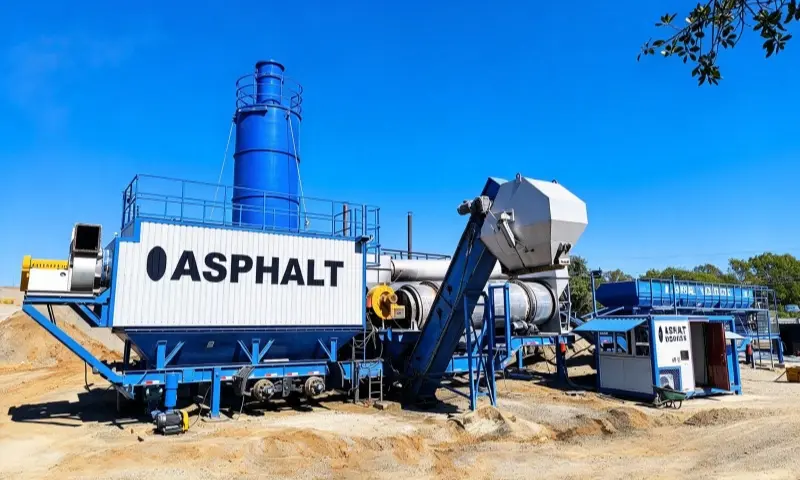
Mali Project—A Compact Capacity Solution for an Infrastructure Project
ZOOMLINE also deployed a 20 TPH Super Mobile Drum Mix Asphalt Plant in Mali.
Compared to large-scale road projects, this lower-capacity configuration demonstrates that the Super Mobile series is not limited to large-scale road construction; rather, it allows for the selection of relatively compact production capacities based on specific project requirements.
For actual procurement, production capacity should still be calculated based on project needs, rather than judged solely by the project’s country of location or road classification.
What African Road Contractors Should Consider Before Choosing a Super Mobile Drum Mix Asphalt Plant?
The selection of Super Mobile equipment must still be based on the specific project. Rather than simply comparing equipment specifications, African road projects should focus more on how well the equipment aligns with the construction site, relocation frequency, on-site conditions, and service infrastructure.
Project Location and Accessibility
First, it is necessary to assess the equipment transport route, road conditions at the construction site, available space, aggregate storage locations, and finished material transport routes.
For projects in mountainous, rural, or border areas with poor accessibility, it is crucial to confirm whether the equipment can be transported and deployed smoothly—rather than relying solely on the equipment’s inherent mobility.
How Frequently Will the Plant Need to Move?
If a project is concentrated in a single construction area for an extended period, the frequency of equipment relocation may be low.
However, for projects involving multi-site construction, phased construction, or continuously advancing work fronts, the ability of the equipment to be transported and redeployed efficiently becomes even more critical.
Therefore, for projects requiring frequent relocation of the asphalt plant, special attention should be paid to the equipment’s transportation methods, disassembly and assembly procedures, and the workload required to resume production.
For a more detailed evaluation of equipment types, production capacity, mixing methods, and other selection factors, see our mobile asphalt mixing plant selection guide.
What Production Capacity Does the Project Actually Require?
Equipment production capacity should be determined by considering:
Average daily production requirements;
Daily effective working hours;
Paver capacity;
Project duration;·
Raw material supply;
Expected equipment utilization rate.
A comprehensive assessment should be conducted.
If further capacity calculations are required, detailed calculations can be performed using existing asphalt plant capacity selection methods; it is not recommended to determine equipment models solely based on road type.
What Site Infrastructure Is Available?
For remote construction sites, the following must be confirmed in advance:
Power supply;
Fuel supply;
Aggregate storage;··
Site conditions;··
Transportation routes;··
Environmental protection facilities;
Equipment foundation and installation requirements.
If local infrastructure is limited, it is also necessary to confirm the equipment’s fuel, electrical, and on-site configuration plans with the manufacturer prior to procurement.
What Local Environmental and Climate Conditions Need to Be Considered?
Climate conditions vary significantly across different regions of Africa, and some projects may face extreme climate conditions such as high temperatures, rainfall, wind and sand, or high humidity .
Therefore, specific projects should consider equipment insulation, dust protection, rain protection, dust removal, and other environmental protection measures based on local environmental conditions.
It is particularly important to note that climate conditions should be treated as project-specific factors, rather than simply categorizing “Africa” as a single climate environment.
What Installation and After-Sales Support Is Available?
For overseas projects—especially those in remote locations—equipment delivery does not mark the end of project services.
Prior to procurement, it is essential to confirm whether the manufacturer can provide:
On-site installation and commissioning;
Operator training;
Technical support;
Supply of wear parts and spare parts;
Fault diagnosis;
Long-term after-sales service.
For mobile asphalt plant suppliers, these service capabilities can directly impact the equipment’s actual utilization rate and the stability of project operations.
Why Manufacturer Experience Matters for African Asphalt Plant Projects?
When selecting an asphalt plant supplier in Africa, equipment specifications are certainly important, but for overseas road construction projects, project experience, customization capabilities, and after-sales support are equally crucial components of the equipment’s investment value.
Proven Experience Across Different African Markets
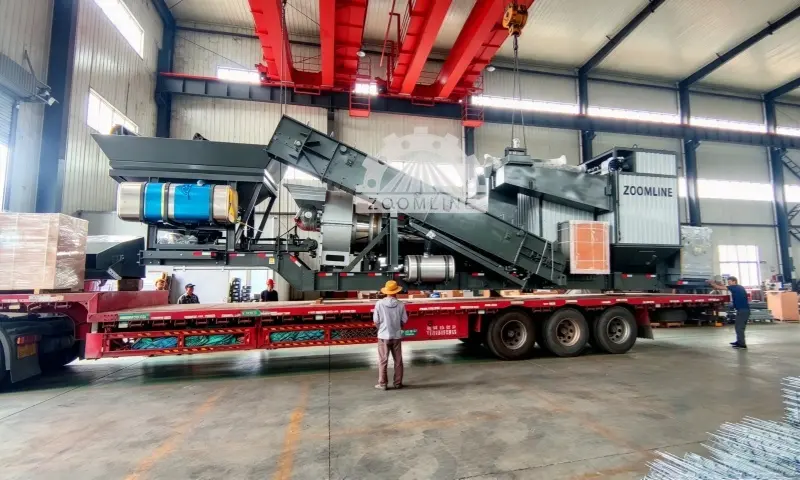
ZOOMLINE’s Super Mobile Drum Mix Asphalt Plant has already established a track record of successful projects in markets such as Kenya, Nigeria, Madagascar, Zimbabwe, and Mali.
Since production capacity, construction conditions, and equipment configurations vary across different countries and projects, these case studies can serve as a reference for equipment selection and solution design in new projects.
Ability to Adapt Equipment to Project Requirements
Road projects in different regions of Africa may have varying requirements regarding production capacity, fuel, electrical systems, environmental regulations, transportation methods, and RAP utilization.
Therefore, a manufacturer’s ability to configure and adjust equipment based on actual project needs is more important than simply providing standard equipment specifications.
Installation and Commissioning Support
For overseas projects, installation, commissioning, and operator training must still be completed after the equipment arrives at the construction site.
A case study on installation, commissioning, and training for a project in Nigeria demonstrates that comprehensive project support can help clients transition more smoothly from equipment transportation to full-scale production.
Spare Parts and Long-Term Technical Support
For remote road projects, a single equipment failure can result in more significant downtime impacts than at typical job sites.
Therefore, prior to procurement, it is essential to verify whether the manufacturer can provide long-term spare parts supply, remote technical support, and necessary on-site services to mitigate maintenance risks during the equipment’s long-term operation.
Conclusion — Matching Asphalt Production to Africa’s Road Construction Needs
Road construction projects in Africa are highly diverse. From rural road upgrades to regional road networks and corridors, and on to long-distance and cross-border highway projects, the requirements for asphalt production equipment vary significantly across different projects.
For projects with dispersed construction sites, remote locations, continuously advancing work fronts, or those requiring frequent adjustments to production locations, the Super Mobile Drum Mix Asphalt Plant offers contractors more flexible asphalt production options through its high mobility, high integration, continuous production, and a variety of production capacity configurations.
More importantly, real-world project case studies from Kenya, Nigeria, Madagascar, Zimbabwe, and Mali demonstrate that the Super Mobile series has already been successfully deployed across various African markets. For any specific project, the final equipment selection should still be based on a comprehensive assessment of the project location, production capacity requirements, relocation frequency, on-site conditions, and long-term service capabilities.
Planning an Asphalt Plant for Your African Road Project?
Please provide details such as the project location, estimated production capacity, construction timeline, relocation frequency, site conditions, and raw material availability. ZOOMLINE can evaluate suitable configurations for the Super Mobile Drum Mix Asphalt Plant based on your specific project requirements and provide equipment specifications, project case studies, and corresponding solution recommendations to help you develop a comprehensive plan—from equipment selection and on-site deployment to ongoing operational support.
Frequently Asked Questions
1. What is a Super Mobile Drum Mix Asphalt Plant?
The Super Mobile Drum Mix Asphalt Plant is a continuous-type mobile asphalt mixing plant featuring a trailer-mounted integrated design. It primarily integrates systems such as cold aggregate feeding, drying, mixing, dust removal, and control, enabling more convenient transportation and deployment of the equipment.
This equipment is particularly suitable for road construction projects requiring mobile production, rapid deployment, or constantly changing construction locations.
2. Why are Super Mobile Drum Mix Asphalt Plants suitable for African road projects?
It is not because all African projects share the same construction conditions, but rather because some African road projects are characterized by remote project locations, dispersed construction sites, long road distances, rolling construction fronts, and varying on-site infrastructure conditions.
The mobile structure and highly integrated design of the Super Mobile equipment provide a more flexible asphalt production method tailored to these project characteristics.
3. How quickly can a Super Mobile Drum Mix Asphalt Plant be installed?
Installation time depends on the specific equipment configuration, site conditions, foundation preparation, and project organization.
In ZOOMLINE’s 40 TPH project in Kenya, the equipment was installed in just 1–2 days. This figure reflects the actual performance of that specific project and should not be interpreted as a standard installation timeframe for all Super Mobile projects.
4. What capacity of Super Mobile Drum Mix Asphalt Plant is suitable for an African road project?
There is no fixed production capacity standard that applies to all projects.
It is recommended to make a comprehensive assessment based on the project’s average daily asphalt demand, working hours, paving capacity, project duration, and equipment utilization rate. The ZOOMLINE Super Mobile Drum Mix Asphalt Plant offers various production capacity configurations; the specific model should be determined based on the project’s actual needs.
5. Are Super Mobile Drum Mix Asphalt Plants suitable for remote road construction?
Yes, it is particularly well-suited for projects requiring the deployment of asphalt production equipment to remote road construction sites.
However, prior to procurement, it is still necessary to assess the equipment’s transportation route, on-site space, infrastructure, fuel supply, and subsequent maintenance conditions to ensure the equipment can be successfully deployed and operated.
6. What should I consider when buying a Super Mobile Asphalt Plant for Africa?
It is recommended to focus on the following:
Project location and transportation conditions;·
Frequency of equipment relocation;··
Actual production capacity requirements;·
On-site infrastructure;··
Local environmental protection requirements;·
Fuel and power conditions;
The manufacturer’s installation and commissioning capabilities;
Spare parts and long-term technical support;·
The manufacturer’s track record in similar projects.