


How to Select the Right Capacity of Asphalt Mix Plant
In the construction of roads, bridges, and municipal infrastructure, the production capacity of an asphalt mixing plant directly determines construction efficiency, project timelines, and return on investment. Selecting the appropriate capacity not only prevents project delays and cost overruns but also ensures that the equipment delivers maximum value. Many professionals fall into the trap of focusing solely on peak capacity when selecting equipment, blindly pursuing high-capacity units that ultimately lead to idle equipment and skyrocketing energy consumption. Conversely, some underestimate demand, resulting in insufficient capacity and project delays. Drawing on practical industry experience, equipment parameter standards, and real-world project case studies, this article provides a step-by-step guide to scientifically selecting the appropriate capacity for an asphalt mixing plant, balancing practicality and cost-effectiveness.
What is the Production Capacity of the Asphalt Mixing Plant Per Hour?
The core unit of measurement for an asphalt plant’s capacity is tons per hour (TPH), which refers to the amount of qualified hot mix asphalt (HMA) the equipment can produce per hour under standard operating conditions. However, it is important to note that there are two easily confused concepts within the industry—rated capacity and actual capacity—both of which directly impact the accuracy of equipment selection:
Rated capacity is the theoretical value specified by the manufacturer under ideal conditions (compliant raw materials, full equipment load, and skilled operation); actual capacity, on the other hand, represents the real-world output in construction scenarios. It is influenced by factors such as raw material moisture content, weather, and operator skill level, and is typically lower than the rated capacity. This is one of the primary reasons for selection errors among many industry professionals.
Currently, the production capacity of asphalt mixing plants on the market ranges primarily from 20 to 400 tons per hour. Different capacities correspond to different project scenarios; there is no such thing as “the higher the capacity, the better”—only “the right fit is the best.”
Why Selecting the Right Production Capacity Is Critical
Selecting the appropriate production capacity for an asphalt mixing plant is not simply a matter of “matching output”; rather, it is key to balancing project requirements, efficiency, and costs. Its importance is primarily reflected in three aspects:
Ensuring on-time project completion
Insufficient production capacity can lead to delays in asphalt supply, resulting in idle paving equipment, increased labor costs, and even missed project milestones, which in turn poses the risk of contractual breaches; Appropriate capacity ensures that asphalt supply keeps pace with paving progress, enabling efficient project advancement.
Optimizing Operational Efficiency and Reducing Waste
The right capacity minimizes operational bottlenecks and avoids situations where equipment is either “overkill” or “underutilized”—the former wastes fuel and electricity, while the latter causes equipment to operate beyond its capacity, shortening its service life and increasing the likelihood of breakdowns. Practice has proven that when equipment operates at 70%–80% of its rated capacity, fuel efficiency is highest, component wear is minimal, and asphalt quality is more consistent.
Improving Return on Investment
Asphalt mixing plants are high-cost capital assets, and the choice of production capacity directly determines the cost-effectiveness of the investment. Excessive capacity increases initial procurement costs as well as ongoing operational expenses (fuel, maintenance, and site costs); Conversely, insufficient capacity prevents the undertaking of larger projects and limits business expansion. Only by matching capacity to demand can one achieve “low investment and high returns.”
Classification by Capacity: Different Models Suit Different Projects
Based on mainstream industry equipment models and project requirements, we have categorized asphalt mixing plants into three major capacity groups, clearly defining the applicable scenarios, core advantages, and typical parameters for each category to facilitate quick matching for industry professionals:
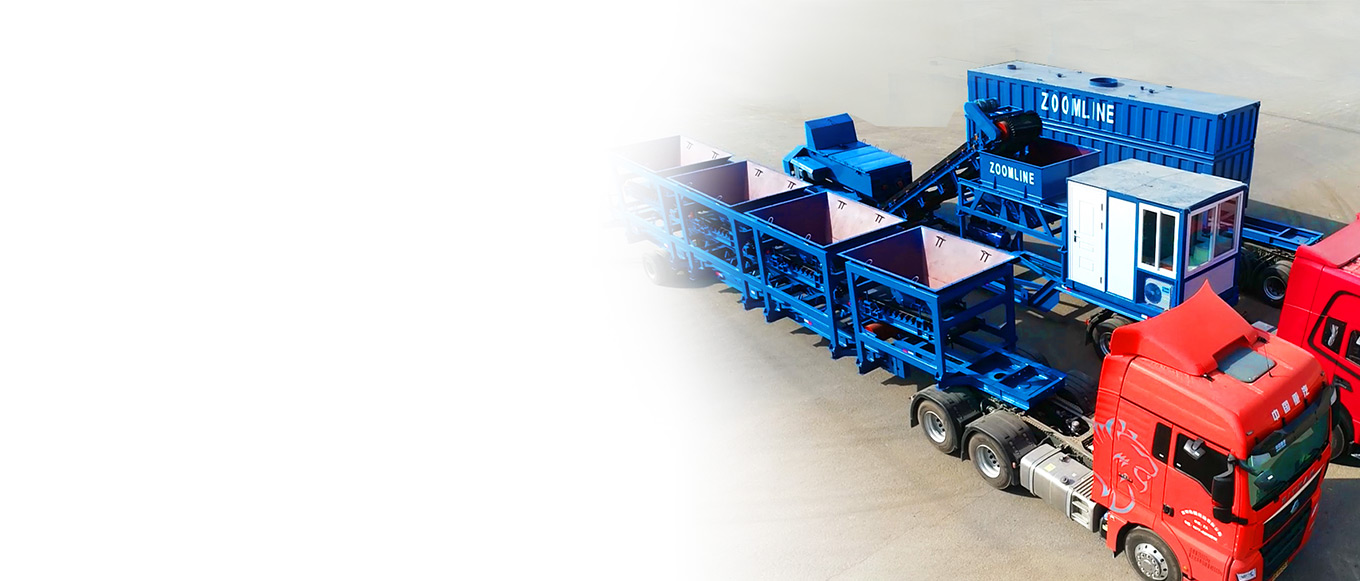
Small-Capacity Asphalt Mixing Plants (20–80 tons/hour)
Core Applications
Small-scale projects such as rural road construction and maintenance, internal residential roadways, sidewalk paving, and minor municipal repairs. Also suitable for small contractors or local municipal departments with limited budgets and unstable production demands.
Key Advantages
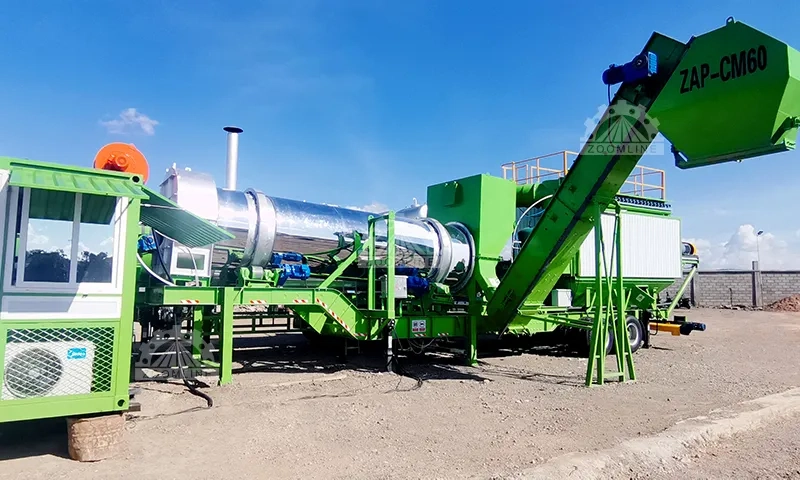
Low procurement costs, compact size, and some models can be configured as mobile units, making transportation and installation convenient. They require minimal site space, are simple to operate and maintain, and have low energy consumption (e.g., a 40-ton-per-hour model consumes only 70–300 kg of fuel per hour). Additionally, the equipment has a low operational threshold and does not require a specialized operations and maintenance team.
Medium-Capacity Asphalt Mixing Plants (80–200 tons/hour)
Core Applications
Medium-scale projects such as urban arterial roads, county-level highways, roads in medium-sized industrial parks, and routine highway maintenance. This is currently the most widely used model on the market, achieving a balance between cost and production capacity.
Core Advantages
Outstanding cost-effectiveness, capable of meeting the schedule requirements of medium-scale projects without incurring excessively high initial investment or operating costs; also offers a degree of flexibility, accommodating various asphalt mix designs and suitable for continuous construction across multiple medium-sized projects.
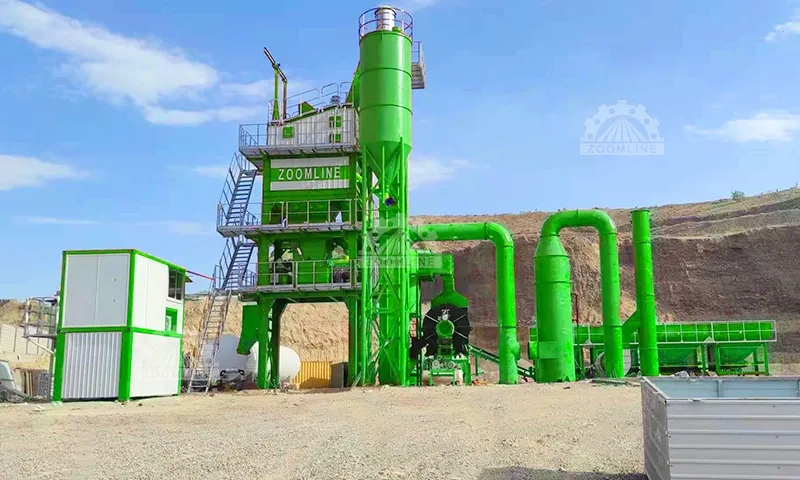
High-Capacity Asphalt Mixing Plants (200–400+ tons/hour)
Core Applications
Large-scale infrastructure projects such as new highway construction, airport runway paving, roads in large logistics parks, and cross-regional arterial roads. These projects require large volumes of asphalt and have tight construction schedules, necessitating equipment capable of sustained high-intensity production.
Key Advantages
Extremely high production efficiency, significantly shortening construction timelines for large-scale projects and reducing fixed costs such as labor and management expenses per unit of output; certain high-end models utilize fluidized-bed mixing technology, which improves mixing efficiency by 20%. An efficient combustion system reduces energy consumption, while intelligent self-diagnostic capabilities minimize operational and maintenance costs.
Key Steps: 4 Steps to Select the Right Production Capacity
When selecting equipment, there’s no need to blindly follow trends. By following the logic of “analyze requirements—avoid pitfalls—align with reality—allow for flexibility,” you can accurately identify the appropriate production capacity in just four steps and avoid common pitfalls:
Step 1: Analyze Project Requirements to Determine the Baseline Capacity
This is the core prerequisite for selection and requires precise calculation across three dimensions:
Calculate the average daily demand: Discard the “peak demand” mindset and focus on calculating asphalt consumption during a typical workday, rather than the maximum consumption during the project’s busiest periods (road projects rarely operate at peak capacity every day; typically, they only reach 60%–80% of planned output);
Consider construction hours: Calculate based on 8–10 actual working hours per day (excluding equipment maintenance and raw material replenishment time). Use “average daily demand ÷ daily construction hours” to determine the required baseline capacity;
Refer to past project data: Review asphalt consumption, construction cycles, and equipment efficiency from similar projects. If “production capacity shortages have caused project delays” in the past, appropriately increase the baseline capacity; if “equipment idling” has occurred, lower the capacity estimate.
Step 2: Allow for a reasonable safety margin to avoid unexpected shortfalls
There is no need to pursue “peak-capacity matching.” Simply add a 10%–20% safety margin to the base capacity. This buffer accommodates unforeseen circumstances, such as reduced drying efficiency due to excessively high moisture content in raw materials, construction delays caused by weather changes, or temporary increases in asphalt consumption. This approach prevents both equipment idling and capacity shortages.
Example: If the baseline capacity requirement is 80 tons per hour, reserving a 15% safety margin means selecting a model with a capacity of 90–95 tons per hour. There is no need to directly opt for a medium-capacity unit of 120 tons per hour, thereby avoiding unnecessary costs.
Step 3: Balance Costs and Requirements Based on Your Specific Conditions
When selecting a model, you must balance “current needs” with “long-term development” while considering three practical factors:
Budget Constraints: The procurement and operating costs (fuel, electricity, maintenance) of high-capacity equipment are significantly higher than those of low-capacity equipment. If your budget is limited and project scale is stable, prioritize models that match your baseline capacity rather than blindly pursuing high capacity;
Site and Supporting Infrastructure: High-capacity equipment places extremely high demands on site area, power supply capacity, and raw material supply capabilities (e.g., a 320 t/h model requires a 6×15 m³ cold aggregate hopper, and the site must accommodate large-scale equipment installation). If space is limited, opt for mobile low-capacity or modular medium-capacity equipment;
Raw Material Conditions: If aggregates are sourced from rivers or rainy regions, their high moisture content will reduce the efficiency of the drying drum, leading to a decrease in actual production capacity. In such cases, production capacity should be appropriately increased by an additional 5%–10% on top of the safety margin to ensure demand is met.
Step 4: Match Equipment Types to Optimize Capacity Utilization
Different types of asphalt mixing plants exhibit varying levels of capacity efficiency and must be selected based on project characteristics:
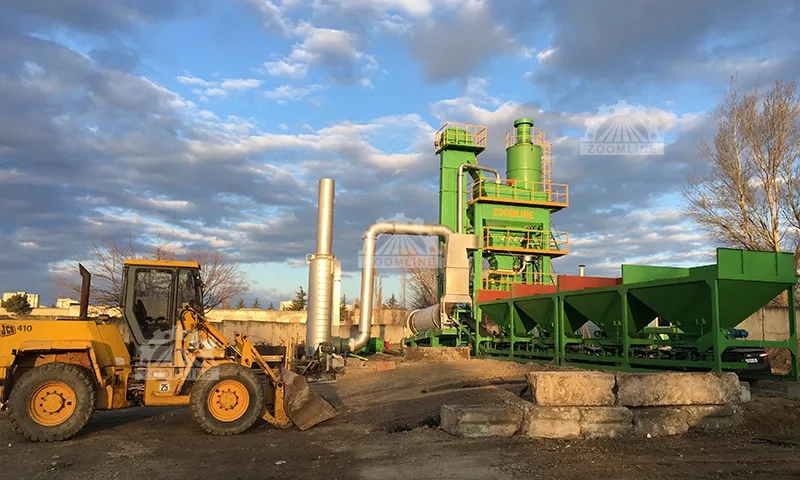
Batch-type asphalt mixing plant: Utilizes batch production with high mixing precision and flexible adjustment of mix designs. Suitable for projects with high asphalt quality requirements and frequent mix design changes (e.g., municipal roads, highway maintenance). Capacity ranges from 40 to 320 tons per hour, suitable for small to medium-sized projects;
Drum-type asphalt mixing plants: These utilize continuous production, with aggregate drying, heating, and mixing all completed within a single drum. They offer higher production potential, reaching 1.5 to 2 times that of batch-type equipment, and are suitable for large-scale projects with extremely high production demands and fixed mix designs (e.g., new highway construction).
Common Misconceptions in the Industry
The most common pitfall when selecting equipment is basing capacity solely on peak demand. Many industry professionals calculate the maximum asphalt demand during the project’s busiest periods and then directly select equipment with the corresponding capacity. While this may seem “safe,” it actually hides significant cost risks:
Long-term equipment idling and severe energy waste
Peak demand occurs only during a few periods of the project, while the equipment operates at low capacity most of the time. During these periods, the burners and drying drums of high-capacity equipment consume more fuel, significantly increasing the production cost per unit of asphalt;
Increased hidden costs
Maintenance costs, electricity consumption, and land occupancy costs for high-capacity equipment are all higher than those for appropriately sized models. Furthermore, prolonged low-load operation accelerates component wear, shortens service life, and increases future replacement costs;
Low return on investment
The high upfront procurement costs cannot be recouped through production capacity utilization. Instead, prolonged idling and high operating costs reduce overall profits, particularly creating cash flow pressure for small and medium-sized contractors.
The Correct Approach
Based on “average demand” and incorporating a reasonable safety margin, while considering project cycles and your budget, selecting a capacity that is “appropriate rather than excessive” is the most economical approach.
Aligning Capacity with Business Strategy: Balancing Present and Future Needs
Equipment selection must not only meet current project demands but also align with long-term business plans to avoid frequent equipment replacements:
If you plan to expand from small-scale local projects to medium-scale cross-regional projects, opt for modular mid-capacity equipment (e.g., 120–160 tons per hour). Such equipment allows for flexible capacity adjustments without requiring a complete replacement, thereby reducing upgrade costs;
If you primarily undertake local small-scale projects or asphalt mix retail operations, choose models with a capacity of 500–700 tons per day (approximately 60–90 tons per hour). This allows for the simultaneous advancement of multiple projects while keeping maintenance and energy costs under control;
If you focus on large-scale infrastructure projects with a stable project pipeline, you can directly opt for high-capacity equipment with a throughput of 200 tons per hour or more. Scaled production reduces unit costs and enhances competitiveness.
Frequently Asked Questions (FAQ)
Q1: How can I quickly calculate the required production capacity for an asphalt mixing plant?
A1: Core formula: Base capacity (tons/hour) = Average daily asphalt demand (tons) ÷ Actual daily construction time (hours). Add a 10%–20% safety margin to this figure, then factor in raw material moisture content and equipment type to determine the final capacity. Alternatively, use the productivity formula Q = (60 × G × Kb) ÷ (1000 × t) for precise calculation.
Q2: Does higher production capacity mean better asphalt quality?
A2: Not necessarily. Asphalt quality depends on mixing precision, raw material ratios, and drying temperature, not on production capacity. Small-scale equipment with an advanced mixing system can still produce high-quality asphalt; conversely, high-capacity equipment operating at low loads for extended periods may suffer from insufficient mixing, compromising asphalt uniformity.
Q3: With a limited budget, how can I balance production capacity and cost?
A3: Prioritize models that offer “sufficient base capacity with a small safety margin” to avoid over-purchasing. Consider modular or mobile equipment to reduce site and installation costs. Additionally, compare equipment parameters across manufacturers (such as fuel consumption and maintenance intervals) to select models with better cost-performance ratios (e.g., the AIMIX series or the Deji series).
Q4: Is there a difference in capacity selection between batch-type and drum-type mixing plants?
A4: Yes, there is a difference. Batch-type plants are suitable for small to medium capacities (40–200 tons/hour) and offer high flexibility; drum-type plants are suitable for large capacities (200 tons/hour and above) and provide high continuous production efficiency. If a project requires 150 tons/hour, prioritize a batch-type plant; if it requires 300 tons/hour, prioritize a drum-type plant.
Q5: Is it necessary to choose a mobile asphalt mixing plant for small-scale projects?
A5: If the project sites are dispersed (such as multiple rural road repairs) and locations are not fixed, small-capacity mobile asphalt plant (20–80 tons/hour) is more suitable. It requires no fixed installation site, is easy to transport, and can save on site rental costs. If the project is concentrated and involves long-term operation, stationary equipment offers greater stability.
Summary
When selecting the capacity of an asphalt mixing plant, the key is “suitability” rather than “size.” There is no need to blindly pursue high capacity, nor should actual demand be underestimated. The key lies in: using average project demand as a baseline, allowing for a reasonable safety margin, and combining budget, site conditions, raw material availability, and long-term business plans to match the appropriate equipment type and capacity.
If you are still unsure which capacity suits your project, consult industry professionals or reputable equipment manufacturers. By providing specific project parameters and referencing past case studies, you can obtain tailored advice to avoid cost wastage caused by incorrect selection. This ensures the equipment serves as a “booster” for project profitability rather than a “burden.”