

Should You Upgrade or Replace Your Existing Asphalt Plant?
Introduction
For companies with long-standing experience in road construction and municipal infrastructure, asphalt mixing plants are core production assets that directly determine project capacity, finished product quality, and long-term profitability. As equipment ages year by year, project standards evolve, and environmental policies continue to tighten, the vast majority of equipment operators face the same core dilemma: Should they continue to retrofit and upgrade their existing asphalt plants, or completely phase out the old equipment and purchase a brand-new production line?
Many operators tend to fall into two major decision-making pitfalls: judging whether to replace equipment solely based on its service life, or blindly opting for upgrades based only on initial investment costs. In fact, neither the age of the equipment nor the size of the one-time investment constitutes a scientific criterion for judgment. A truly sound decision requires a comprehensive evaluation across five core dimensions: future production needs, the current condition of existing equipment, the feasibility of technical upgrades, total lifecycle costs, and compliance risks.
This article will establish a standardized decision-making framework that can be directly implemented to help construction companies and equipment operators objectively compare the pros and cons of upgrading versus replacing the entire machine. By moving beyond experience-based judgments and aligning with their own business strategies, they can select the solution that offers the best value for money, the strongest compatibility, and the most stable long-term returns.
Start with Future Production Requirements, Not Just Plant Age
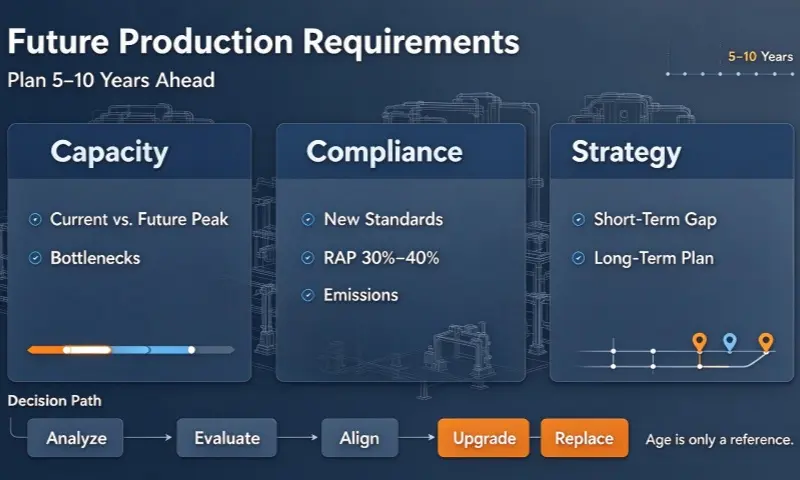
For many companies, decisions regarding equipment retrofits are “reactive measures”: upgrades or replacements are only considered after frequent equipment failures, insufficient production capacity, or environmental non-compliance. True refined operations center on business needs for the next 5–10 years and match equipment configurations accordingly. The service life of equipment is merely a reference; it cannot define the equipment’s actual value or suitability.
Has Your Required Production Capacity Changed?
First, compare the equipment’s current stable production capacity with the peak capacity and average annual capacity requirements of future projects to precisely identify the sources of production bottlenecks. For most aging asphalt plants, capacity shortfalls stem not from outdated overall machine performance but from limitations in individual subsystems—such as insufficient accuracy in the batching system, low combustion and heating efficiency, or inadequate airflow in the dust collection system. In some cases, the overall architecture is outdated, rendering the machine’s capacity incapable of meeting the demands of large-scale projects.
Accurately distinguishing the type of bottleneck is key to decision-making: performance gaps in individual components or subsystems can most likely be resolved through targeted upgrades; however, inherent limitations in the overall machine architecture or design capacity cannot be completely overcome even through repeated retrofits. In such cases, replacing the equipment with new units offers better value for money.
Do Upcoming Projects Require Different Production Capabilities?
Construction standards for road engineering are continuously evolving. For many older machines, the core issue is not insufficient production capacity but rather an inability to meet new production and compliance requirements. Common new requirements include: new asphalt mixture mix design standards, production requirements for high-proportion RAP (recycled asphalt pavement) at 30%–40%, the latest local environmental emission standards, and high-precision finished product quality acceptance specifications.
Companies need to assess in advance: Can these new requirements be met through technical retrofits? If compliance can be achieved simply by upgrading the control system, installing a RAP recycling module, or retrofitting environmental dust removal equipment, there is no need to replace the entire machine; however, if the new requirements involve a complete process overhaul of the machine or the coordinated retrofitting of multiple systems—which presents significant technical challenges, high retrofitting costs, and no guarantee of stability—it is more prudent to replace the equipment outright.
Does the Existing Asphalt Plant Fit Your Long-Term Business Plans?
It is crucial to distinguish between short-term capacity gaps and long-term business misalignment. Capacity shortages arising from temporarily undertaking large-scale projects are short-term issues that can be resolved through temporary retrofits or outsourced production; However, if the company plans to focus long-term on high-standard highways, green recycling projects, and construction spread across multiple regions, outdated equipment—such as fixed stations with low automation and no recycling capabilities—will continue to hinder business expansion.
Decisions should be made based on a comprehensive assessment of future project scale, construction site layout, equipment utilization rates, and business transformation directions to ensure that the equipment solution aligns with long-term operational plans and avoids the need for another equipment upgrade shortly after a short-term retrofit.
When Does Upgrading an Existing Asphalt Plant Make Sense?
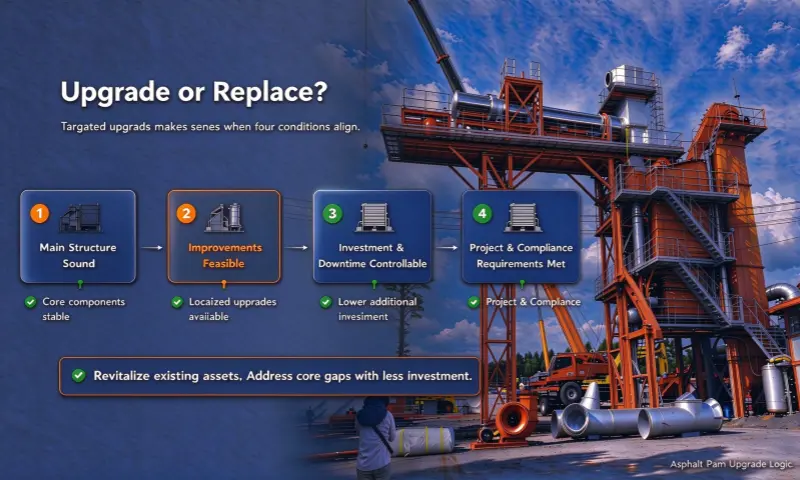
The core value of upgrading an asphalt plant lies in revitalizing existing equipment assets and addressing core performance shortcomings with minimal additional investment. Not all old equipment needs to be replaced; as long as the three key conditions—equipment operating condition, technical feasibility, and economic rationality—are met, the ROI of targeted upgrades far exceeds that of replacing the entire unit.
The Main Structure and Critical Equipment Remain Serviceable
The service life and stability of equipment depend primarily on core components—such as the main frame, mixing unit, and drying drum—rather than on auxiliary parts or years of use. If the asphalt plant’s main structure shows no deformation, severe wear, or structural failures, and the core mechanical systems operate stably, while only auxiliary components—such as the control system, combustion system, and dust collection system—have aged, the plant is fully worthy of an upgrade. The condition of key components also affects this decision. See our guide to extending the service life of asphalt mixing equipment.
There is no need to scrap such equipment due to localized aging; through targeted retrofits, performance can be restored to—or even exceed—that of new machines, thereby maximizing the utilization of existing assets and avoiding the high costs and waste associated with replacing the entire unit. Industry experience shows that 10–15-year-old equipment with an intact main structure can operate stably for another 8–10 years after precise upgrades, offering exceptional value for money.
The Required Improvements Are Technically Feasible
The pain points of the vast majority of older asphalt plants stem from localized performance defects rather than the need for complete scrapping. Common issues that can typically be resolved through upgrades include: significant manual operation errors, insufficient mix ratio accuracy, high fuel consumption, substandard dust removal efficiency, lack of RAP recycling capabilities, and absence of cloud-based intelligent monitoring.
Typical feasible upgrade solutions include upgrading to a PLC-based intelligent control system, retrofitting with high-efficiency burners, upgrading baghouse dust collection systems, installing RAP recycling modules, and optimizing material conveying and weighing systems. These modular upgrades require no modifications to the main unit’s structure; they offer strong compatibility and are easy to implement, precisely addressing performance shortcomings and thoroughly resolving issues such as raw material waste, high energy consumption, inconsistent quality, and compliance risks. For a closer look at potential upgrade options, see our guide to asphalt plant upgrade strategies.
This article does not elaborate on specific upgrade procedures but focuses on the decision-making logic: as long as performance gaps are concentrated in a single or a few subsystems, the retrofit technology is mature, and the new and old systems can be stably integrated, an upgrade is the optimal solution.
The Upgrade Is Economically and Operationally Feasible
A high-quality upgrade plan must meet three key criteria: controllable investment, controllable timeline, and controllable losses. Evaluation factors include: retrofit engineering costs, procurement costs for core components, system integration and commissioning complexity, construction duration, and production losses due to downtime.
Compared to the lengthy timeline required for complete equipment replacement, partial upgrades feature shorter construction periods and simpler commissioning, thereby minimizing hidden losses such as project downtime, schedule delays, and lost orders. For small and medium-sized construction companies operating on limited budgets and facing tight project deadlines, a controllable upgrade plan is far more suitable than replacing the entire machine.
The Upgraded Plant Can Meet Applicable Project and Compliance Requirements
The final upgrade results must align with all future production and compliance standards: the upgraded equipment’s production capacity, mix proportion accuracy, temperature stability, and environmental emission metrics must fully comply with new project construction specifications and local environmental policies, leaving no performance shortcomings or compliance loopholes.
At the same time, it is essential to confirm that all upgraded systems can operate stably and in coordination to avoid issues such as incompatibility between old and new systems, frequent malfunctions, and accuracy drift. This ensures that the retrofitted equipment can reliably undertake various engineering projects over the long term, eliminating risks such as bidding restrictions, work stoppages for rectification, and environmental penalties.
When Is Replacing the Asphalt Plant More Reasonable?
Upgrading is not a one-size-fits-all solution. When equipment exhibits structural, fundamental, or irreversible defects, continued retrofitting will only lead to a vicious cycle of “repeated repairs, ongoing investment, and no improvement in performance.” In such cases, replacing the entire unit offers far superior long-term cost-effectiveness, stability, and compliance compared to upgrading.
Major Systems Have Deteriorated Beyond Economical Repair
If the main unit of an asphalt mixing plant suffers from structural deformation, severe wear on the drying drum, aging and failure of the mixing system, and comprehensive aging of the electrical wiring—and multiple core systems fail simultaneously—it indicates that the equipment has reached the end of its service life. Even if substantial costs are invested to retrofit such equipment in phases, stable performance cannot be restored; frequent downtime, recurring failures, and persistently high maintenance costs will continue.
When comparing the cumulative costs of repeated retrofits, ongoing maintenance, and frequent downtime, the one-time investment in brand-new equipment is actually more cost-effective and completely eliminates the operational risks and hidden wear and tear associated with outdated equipment.
Fundamental Production Limitations Cannot Be Resolved Through Reasonable Modifications
Some older asphalt plants are constrained by their original designs and suffer from inherent shortcomings: excessively low design capacity, outdated production processes, inability to accommodate high-proportion RAP recycling, and inability to produce high-standard specialty asphalt mixtures. Such structural defects cannot be remedied through partial retrofitting.
If a company plans to focus on large-scale, high-standard, and green recycling projects in the future, the process architecture, production capacity limits, and operational logic of existing equipment will be completely incompatible. Even after multiple upgrades to subsystems, these inherent limitations cannot be overcome; in such cases, replacing the entire unit is the only viable long-term solution.
Compliance or Component Compatibility Cannot Be Reliably Addressed
Continuously tightening environmental policies are the norm in the industry. For some aging equipment that has exceeded its service life, systems such as dust removal, exhaust gas treatment, and noise control are completely outdated. Even with retrofitting, they cannot meet the latest environmental emission standards, posing long-term risks such as fines, work stoppages, and restrictions on project bidding.
At the same time, equipment that is 10–15 years old or older commonly faces issues such as discontinued spare parts, poor compatibility with non-standard components, lengthy maintenance cycles, and a lack of technical support. Once a failure occurs, it requires prolonged downtime for repairs, severely impacting project schedules. These compliance and supply chain risks cannot be completely eliminated through partial upgrades; new equipment must be installed. If replacement is the more practical option, our asphalt mixing plant buying guide can help you evaluate key factors before selecting new equipment.
Repeated Upgrades Would Still Leave Major Limitations
To extend the service life of their equipment, some enterprises have repeatedly upgraded control systems, combustion systems, and dust removal systems; however, the equipment still suffers from insufficient production capacity, inconsistent quality, and high energy consumption. The fundamental reason is that partial upgrades cannot overcome the limitations inherent in the original design of the entire unit.
Continuing to invest in upgrades will only drive up cumulative costs, while the equipment remains constrained by its performance ceiling, making further retrofits highly likely in the short term. When comparing the cumulative investment and hidden losses associated with repeated upgrades, replacing the equipment with new units early on can resolve all issues at once, delivering long-term, stable production capacity and lower O&M costs.
Upgrade vs. Replace: A Practical Decision Matrix
To help companies quickly and objectively complete the initial screening process, the following table provides a side-by-side comparison of the two options based on key decision-making criteria. This allows you to quickly identify the most suitable approach without the need for complex calculations:
| Decision Criteria | Upgrade Existing Asphalt Plant | Replace with a New Asphalt Plant |
| Initial Investment | Potentially lower costs for partial retrofits, targeting only aging or underperforming subsystems; no need to replace fully functional equipment | Higher investment, covering the full cost of the complete unit, site modifications, installation, and commissioning
|
| Scope of Technical Retrofit | Retrofit results depend on the existing equipment architecture and cannot overcome inherent design limitations | Flexible customization that can fully meet all requirements, including production capacity, process specifications, environmental compliance, and recycling capabilities
|
| System Compatibility Risks | Risks exist regarding compatibility between old and new systems; strict control over the compatibility of the retrofit plan is required | Integrated design of the entire unit ensures strong system compatibility, reducing some integration risks with legacy systems, though on-site adaptation is still required |
| Impact of Production Downtime | Short retrofit cycle; downtime depends on the scope of the retrofit and construction conditions, resulting in lower hidden losses | Involves dismantling old equipment, site modifications, and installation and commissioning of new equipment, resulting in a longer downtime period
|
| Remaining Service Life | Depending on the operating condition of the existing equipment, the main components—if intact—can operate stably for many years | A brand-new, fully integrated unit typically offers a longer initial service life and reduces long-term operational and maintenance pressure |
| Future Expansion Potential | Limited by the existing equipment, there is limited scope for expansion or functional upgrades | Interfaces for expansion, recycling, and smart upgrades can be reserved to accommodate long-term business evolution |
| Long-Term Operation and Maintenance Costs | Depend on the operating condition of the retained equipment; aging core components may still incur maintenance costs | Equipment failure rates and energy consumption must be assessed based on equipment configuration, energy efficiency data, and warranty terms; with ample spare parts availability, long-term O&M costs remain manageable |
| Technical After-Sales Support | Relies on technical services from the original equipment manufacturer and the retrofit contractor | New equipment comes with a comprehensive warranty, original manufacturer after-sales support, spare parts supply, and technical training |
Important Note: Neither option is inherently superior; there is no definitive conclusion that “upgrading will always save money” or “replacing with new equipment will always be better.” The final decision must be based on a comprehensive assessment of the equipment’s actual operating conditions, future project requirements, the scope of the retrofit, and the manufacturer’s technical capabilities. This matrix can serve as a preliminary tool for rapid screening; precise decisions should be made following a full-lifecycle cost analysis.
How to Compare the Total Cost of Upgrading and Replacing an Asphalt Plant
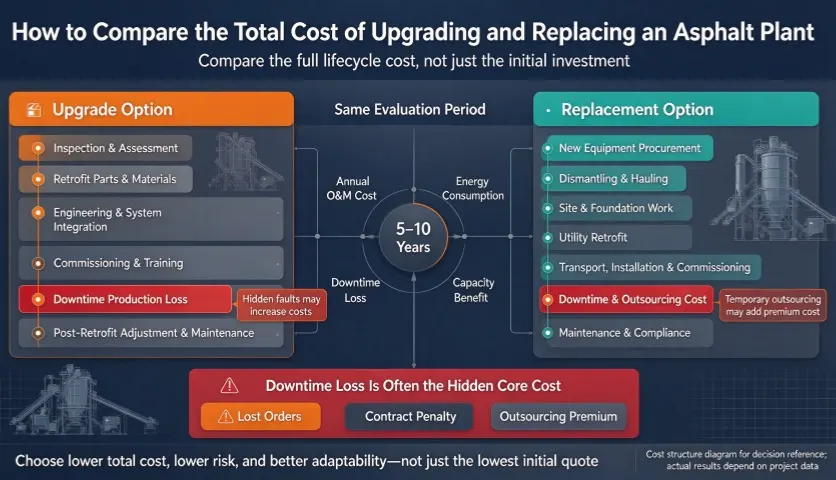
The core reason for most companies’ decision-making errors is that they compare only the initial investment while ignoring hidden costs throughout the entire lifecycle. A scientific cost comparison must cover all expenses—including retrofitting/procurement, installation, downtime, operation and maintenance, energy consumption, and maintenance—and conduct a horizontal comparison within the same evaluation period.
Calculate the Full Cost of an Upgrade
The cost of upgrading an asphalt plant is by no means limited to the cost of replacement parts. The total cost includes: equipment condition inspection and technical assessment fees; costs for retrofit parts and materials; engineering, construction, and system integration fees; installation, commissioning, and staff training costs; production losses due to downtime during the retrofit; and post-retrofit adaptation, adjustments, and ongoing maintenance costs.
It is particularly important to set aside funds for unexpected corrective measures during construction. Hidden faults may be discovered during the retrofitting of some older equipment, requiring simultaneous rectification; these hidden expenses must be included in the calculations to prevent actual costs from far exceeding the budget.
Calculate the Full Cost of Replacement
The total cost of purchasing brand-new equipment includes: the purchase price of the new equipment; costs for dismantling and hauling away old equipment; site preparation; foundation construction; utility (water and electricity) retrofitting; transportation, installation, and commissioning of the new equipment; operator training; production downtime losses during the equipment replacement period; costs for temporary outsourced materials; and subsequent maintenance and compliance-related operational costs for the new equipment.
Estimate the Cost of Production Interruption
Downtime losses are the most easily overlooked core cost factor and directly determine the true cost-effectiveness of a solution. It is essential to accurately calculate the construction cycles for both options and assess losses resulting from project delays, such as lost orders, project contract breaches, and premium costs for outsourced procurement. Do not assume subjectively that “upgrading involves shorter downtime”; in complex multi-system retrofits, downtime losses may far exceed those associated with a simple new equipment installation.
Compare Both Options Over the Same Evaluation Period
Establish a standardized 5–10-year evaluation period to compare the average annual O&M costs, energy consumption costs, downtime losses due to failures, production capacity benefits, and business expansion value of both options. While the upgrade option involves lower short-term investment, it may face long-term challenges such as ongoing maintenance costs and limited performance upgrades; the replacement option requires higher short-term investment but offers greater advantages in long-term stability, production capacity, compliance, and scalability.
Ultimately, select the solution that offers lower overall costs, lower risk, and greater adaptability over the same timeframe, rather than making a decision based solely on the initial quote.
A Five-Step Framework for Making the Final Decision
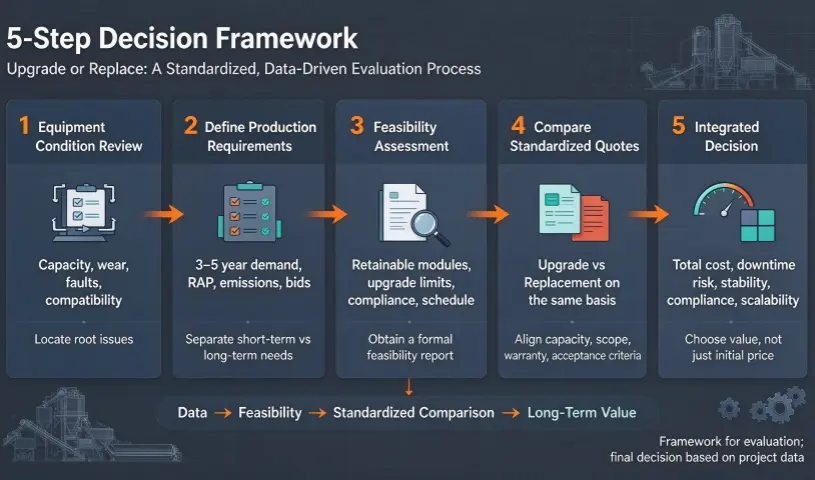
By integrating needs assessment, operational condition monitoring, cost estimation, and risk assessment, we have developed a five-step decision-making process that can be implemented immediately. This process helps companies standardize and data-drive their decision-making, completely moving away from judgment based on experience.
Step 1 — Audit the Existing Asphalt Plant
Thoroughly document the equipment’s current production capacity, wear and tear on core components, historical failure records, spare parts availability, system compatibility, and existing performance shortcomings. Precisely identify all issues—whether they stem from localized subsystem failures or structural aging of the entire machine—to provide data-driven support for subsequent solution evaluations.
Step 2 — Define Future Production and Compliance Requirements
Outline project capacity requirements for the next 3–5 years, mix production specifications, RAP recycling ratio requirements, new local environmental emission regulations, and project bidding qualification requirements. Distinguish between short-term, temporary needs and long-term, fixed operational requirements to avoid excessive investment driven by short-term demands.
Step 3 — Obtain a Technical Upgrade Feasibility Assessment
Collaborate with specialized equipment manufacturers and technical teams to produce a formal upgrade feasibility report. This report should clearly identify: equipment modules that can be retained; subsystems requiring mandatory upgrades; performance shortcomings that cannot be resolved through upgrades; maximum performance levels post-upgrade; compliance status; the upgrade timeline; and a detailed budget.
Step 4 — Request Comparable Upgrade and Replacement Proposals
Assuming both options are technically feasible, request that manufacturers provide standardized, consistent formal proposals and quotes. Ensure that production capacity standards, evaluation cycles, scope of work, after-sales support, and acceptance criteria are fully aligned to prevent distorted comparisons caused by discrepancies in quoting criteria.
Step 5 — Evaluate Cost, Risk, and Future Flexibility
The final evaluation criteria include: total lifecycle costs, downtime risks, technical stability, compliance risks, future expansion potential, and the manufacturer’s after-sales and spare parts support capabilities. Avoid relying on single criteria such as equipment age or initial quotes; instead, base decisions on overall project returns and long-term development.
Case Study: Upgrading an Existing Asphalt Plant with a 60 TPH RAP Recycling System in Thailand
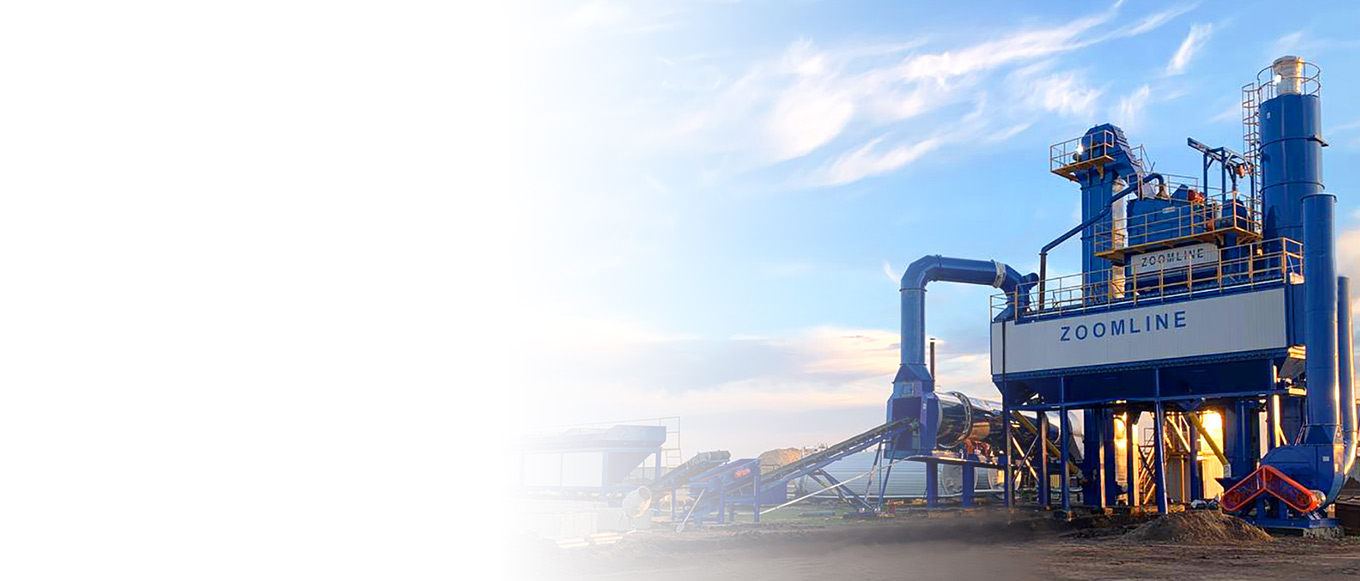
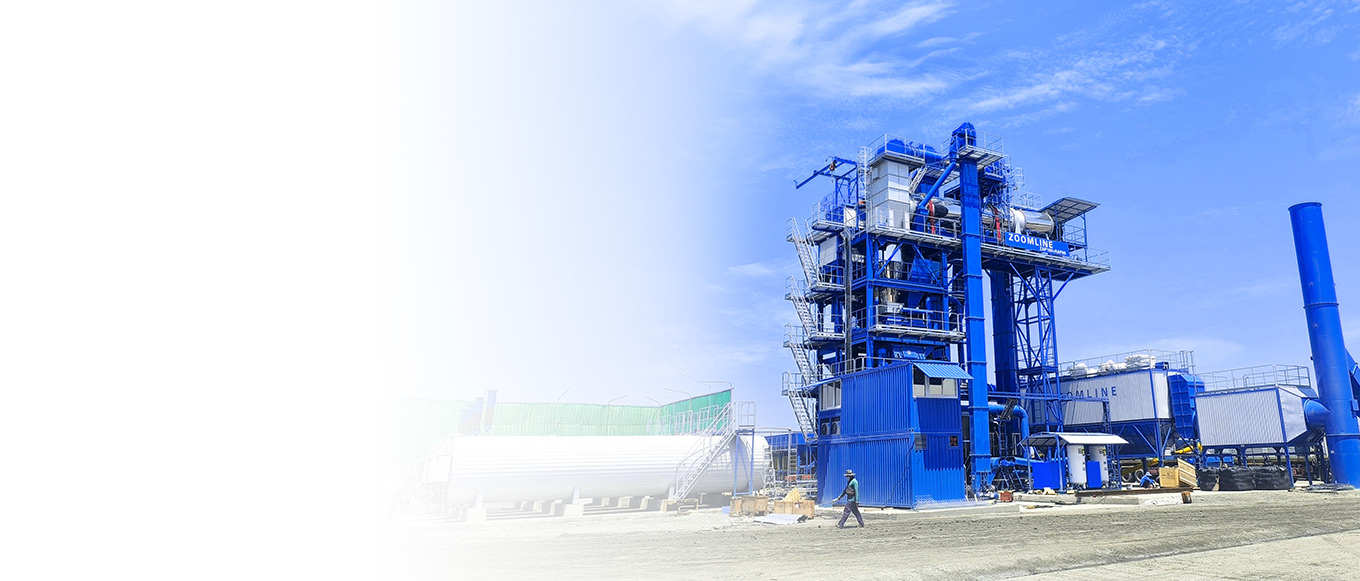
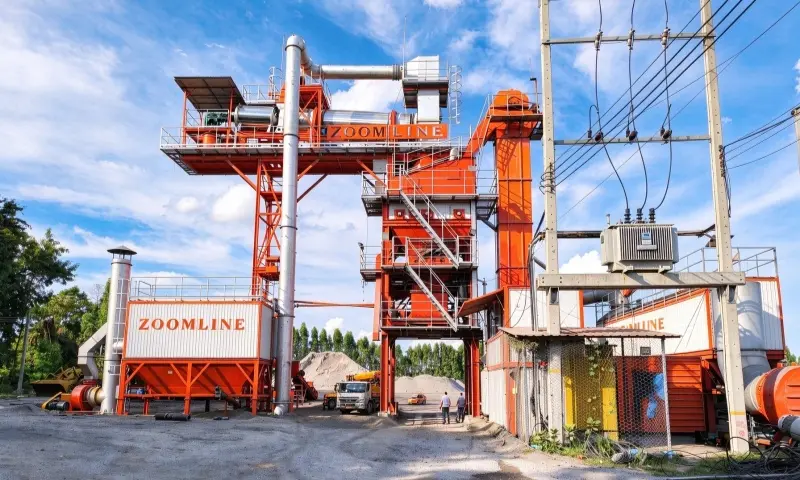
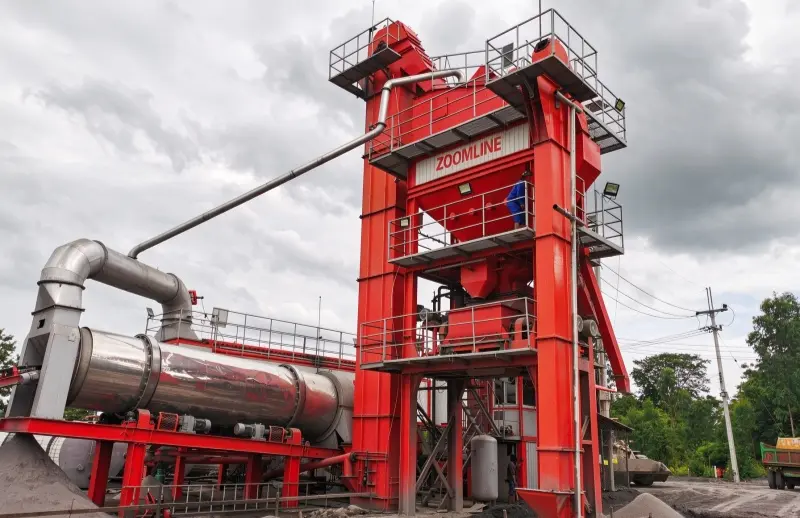
The ZOOMLINE retrofit project for an asphalt mixing plant in Thailand highlights an important approach to equipment decision-making: When an existing asphalt mixing plant can still meet routine production needs but cannot adapt to new production requirements, is it necessary to replace the entire unit, or can key functions be added through targeted retrofits? This project provides a practical reference for evaluating similar equipment upgrade solutions.
Project Background: An Existing Plant Facing New Production Requirements
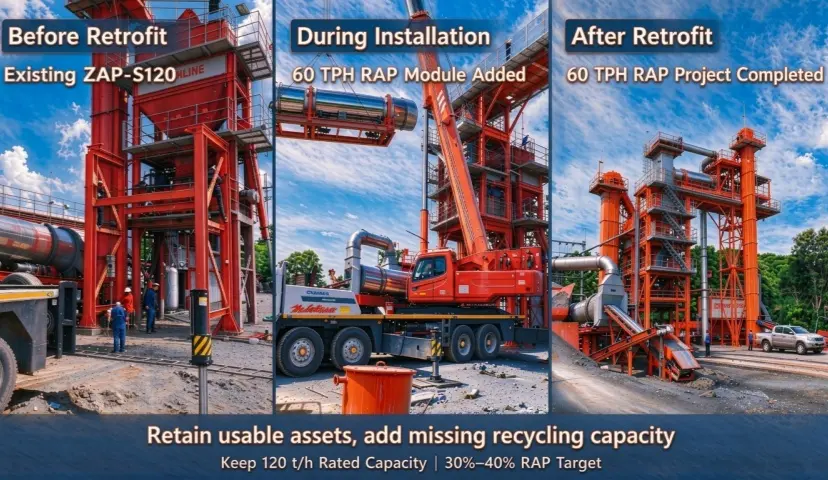
A Thai road construction company originally operated a ZAP-S120 asphalt mixing plant. While the equipment could meet routine asphalt mixture production needs, its original configuration lacked the capability to produce RAP (Recycled Asphalt Pavement).
As demand for recycled asphalt mixtures increased in related projects, the client needed the capability to produce RAP mixtures and faced two options: purchasing a new set of recycled asphalt production equipment, or carrying out a targeted retrofit of the existing asphalt mixing plant based on an assessment of its operating condition and system compatibility.
Therefore, the key to this project was not merely adding recycling capabilities, but rather how to meet new production demands while making rational use of existing equipment assets.
The Retrofit Solution: Integrating a 60 TPH RAP Recycling System
Taking into account the existing equipment configuration and the client’s production requirements, ZOOMLINE adopted an incremental retrofit approach. This involved retaining the main structure of the existing ZAP-S120 asphalt plant and its rated production capacity of 120 t/h, while installing a standalone 60 t/h RAP hot recycling system—rather than directly replacing the entire asphalt production line.
The core concept of this approach is to retain existing equipment that remains serviceable and to supplement the production capabilities lacking in the original configuration through the addition of the new recycling system.
Compared to replacing the entire unit, this approach focuses the retrofit on adding new RAP recycling capacity. For similar projects, whether this approach is suitable still requires a specific evaluation based on the actual condition of the existing equipment, system compatibility, target production capacity, and the scope of the retrofit.
Project Results: Expanding Production Capabilities While Retaining Existing Equipment
Upon completion of the retrofit, the asphalt plant is capable of switching between conventional asphalt mixture production and RAP recycled mixture production modes, and can adjust the RAP blending ratio according to project requirements.
Based on actual data from this project, the newly added 60 t/h RAP hot recycling system supports the production of recycled mixtures at a target ratio of 30%–40%, while retaining the original asphalt plant’s rated production capacity of 120 t/h. The retrofitted system also met the project’s relevant acceptance requirements.
This outcome demonstrates that, provided existing equipment conditions permit and the retrofit plan is technically feasible, the targeted addition of a RAP recycling system can help expand the production capacity of an existing asphalt plant without necessarily requiring the replacement of the entire unit. Read the full Thailand asphalt plant retrofit case for more details about the 60 TPH RAP recycling system and the project results.
What This Case Reveals About the Upgrade-or-Replace Decision
The Thailand project illustrates that when an existing asphalt plant still possesses a usable equipment foundation and the enterprise’s primary needs center on a specific new production function, a targeted retrofit is worth including in a comparison of upgrade versus replacement options.
For asphalt plant operators considering similar retrofits, it is recommended to focus on evaluating the following four questions:
- Is the existing equipment suitable for continued use?Inspect the actual operating conditions of the main structure, core mechanical systems, and key components to confirm whether retaining the original equipment is reasonable.
- Is the new functionality compatible with the existing system? Evaluate the configuration requirements and integration feasibility for RAP heating, conveying, metering, control, and other related systems.
- Will the retrofitted system meet future project requirements?Confirm the target RAP ratio, production capacity, mix quality, and applicable project acceptance standards.
- Is the full-lifecycle cost of the upgrade reasonable?Compare the costs of equipment retrofitting, system integration, installation and commissioning, downtime losses, and subsequent operation and maintenance costs with those of a complete equipment replacement over the same evaluation period.
It should be noted that this case study does not imply that an upgrade is always preferable to a complete equipment replacement. If the existing equipment has severe structural damage, capacity limitations that cannot be reasonably resolved, or difficulty meeting applicable production and environmental requirements, replacing it with new equipment may be the more appropriate choice.
The final decision should be based on a comprehensive assessment of the existing equipment’s operating condition, future production needs, the feasibility of technical upgrades, and the total lifecycle cost—rather than being determined solely by the equipment’s age or initial investment.
Conclusion: Choose the Option That Fits Your Plant and Future Projects
Decisions regarding the upgrade or replacement of an asphalt mixing plant are never determined solely by the equipment’s age or initial investment; rather, the core lies in the comprehensive balance of four key factors: the actual operating conditions of the existing equipment, future long-term production needs, the feasibility of technical upgrades, and the cost-benefit ratio over the entire life cycle.
For equipment with a sound main structure but only localized performance or functional shortcomings, targeted modular upgrades can revitalize assets at low cost, quickly address gaps in production capacity and compliance, and achieve a high ROI. For equipment with aging core systems, inherent process limitations, or that fails to meet standards even after multiple retrofits, decisively replacing it with new equipment can thoroughly mitigate long-term operational risks and support the company’s long-term business development.
If you are struggling to decide on an equipment retrofit plan, contact the ZOOMLINE technical team. Provide your existing equipment model, operating conditions, and production requirements to receive a free, one-on-one operational assessment, customized upgrade or replacement solutions, and an accurate quote.
Frequently Asked Questions (FAQ)
1. Is it better to upgrade an old asphalt plant or buy a new one?
There is no one-size-fits-all answer; it depends entirely on the equipment’s operating condition, future production needs, the feasibility of retrofitting, and the total lifecycle cost. If the main structure is sound, there are only minor shortcomings, and the investment is manageable in the short term, upgrading is the preferred option; if the core systems are aging, there are inherent process limitations, or compliance risks cannot be eliminated, replacement is the preferred option.
2. How do I know whether my asphalt plant is worth upgrading?
Key criteria: The main unit’s structure and core components are in good condition; spare parts are readily available; the retrofit can address core performance and compliance shortcomings; the plant will meet business needs for the next 3–5 years after the retrofit; and the total life-cycle cost of the retrofit is lower than the cost of replacing the plant.
3. Can an existing asphalt plant be upgraded to handle higher RAP percentages?
Yes. As long as the original main unit is stable and structurally compatible, installing a standalone RAP recycling module can enable the production of recycled mix at a high proportion of 30%–40%. This eliminates the need to replace the entire machine and is currently the industry’s most cost-effective green retrofit solution.
4.Is upgrading an asphalt plant control system enough to improve overall performance?
No. Upgrading to a PLC-based intelligent control system can address issues such as human error, inaccurate mix proportions, low automation levels, and a lack of data monitoring; however, it cannot resolve hardware-related problems such as mechanical wear, insufficient combustion efficiency, weak dust removal capacity, or low production capacity limits. These issues require targeted retrofits tailored to specific shortcomings.
5. What costs should be compared when upgrading or replacing an asphalt plant?
A comprehensive calculation is required, including: equipment appraisal and retrofit/purchase costs; engineering, installation, and commissioning expenses; production losses due to downtime; long-term operation, maintenance, and energy consumption costs; spare parts replacement costs; and compliance remediation costs. The final decision should be based on the total lifecycle cost.