




Asphalt Batching Plant Operation & Components: The Complete Technical Guide 2026
For high-quality paving projects on highways, municipal roads, and airport runways, the core equipment is the batch-type asphalt mixing plant. At construction sites, behind the orderly line of dozens of material-hauling trucks waiting to unload, lies a high-precision, closed-loop production process operated by the mixing plant. Thanks to its core advantages—precise mixing ratios, flexible calibration, environmental compliance, and intelligent control—the asphalt batching plant has become the cornerstone of hot-mix asphalt (HMA) production.
What Is The Asphalt Batching Plant? Core Definition and Category Differences
Basic Definition
The asphalt batching plant is a specialized, integrated set of equipment designed for the industrial production of hot-mix asphalt (HMA). By combining raw materials such as cold aggregate, asphalt, mineral powder filler, and admixtures, and undergoing a closed-loop process involving drying, screening, precise metering, and forced mixing, it produces homogeneous, standard-compliant asphalt mix in batches.
As a core piece of industrial equipment in road infrastructure, the quality of its output directly determines the pavement’s smoothness, wear resistance, and crack resistance. It is widely applicable to various asphalt pavement construction projects and serves as the core infrastructure for ensuring the quality of road construction.
Batch-Type vs. Continuous-Type Mixing Plants: Key Differences and Advantages
Currently, the mainstream asphalt mixing equipment in the industry is divided into two categories: batch-type mixing plants and continuous drum-type mixing plants. Their core operating modes differ significantly, and they are suited for different applications:
Batch-type asphalt mixing plants rely on horizontal mixers (pugmill mixers) to perform independent batch-by-batch material dosing, precise weighing, and forced mixing, with the material proportions independently controllable for each batch; In contrast, continuous drum mix asphalt plants perform uninterrupted mixing and production of materials within a rotating drum, without distinct batch divisions.
Compared to continuous equipment, batch asphalt mixing plants offer two irreplaceable core advantages:
Ultra-high batching accuracy: Strictly adhering to construction design formulas, they precisely control the quantities of aggregates, asphalt, and mineral powder, thereby eliminating deviations in the asphalt-to-aggregate ratio and gradation imbalances at the source, ensuring pavement construction quality
High flexibility and adaptability: Formulas can be quickly switched based on project conditions and pavement grade requirements to accommodate various production needs, including HMA (hot-mix asphalt), WMA (warm-mix asphalt), and RAP (recycled asphalt)
Four Core Functions
The core operational logic of all batch-type asphalt mixing plants revolves around four fundamental functions, all of which are indispensable:
Aggregate Pre-treatment: Drying and heating cold aggregates of different particle sizes to thoroughly remove moisture and ensure asphalt bonding strength
Precise Measurement and Batching: Independently weighing aggregates, asphalt, fillers, and admixtures to strictly control mixing ratio accuracy
Homogeneous Forced Mixing: Mixing all raw materials to form a uniform and stable asphalt mixture
Orderly Discharge of Finished Product: Batch-by-batch discharge of hot-mix asphalt that meets specifications, meeting the continuous material supply requirements of construction sites
Main Application Areas
Thanks to their high precision and versatility, batch-type asphalt mixing plants are widely used in various high-grade infrastructure projects. They can produce a variety of finished products, including HMA (hot-mix asphalt), WMA (warm-mix asphalt), and RAP (recycled asphalt), and are suitable for applications such as: expressways, national and provincial highways, urban municipal roads, airport runways, port terminals, industrial park roads, and various infrastructure renovation and upgrading projects.
A Comprehensive Analysis of the Ten Core Components of an Asphalt Batching Plant
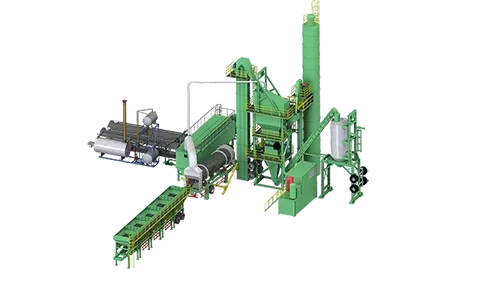
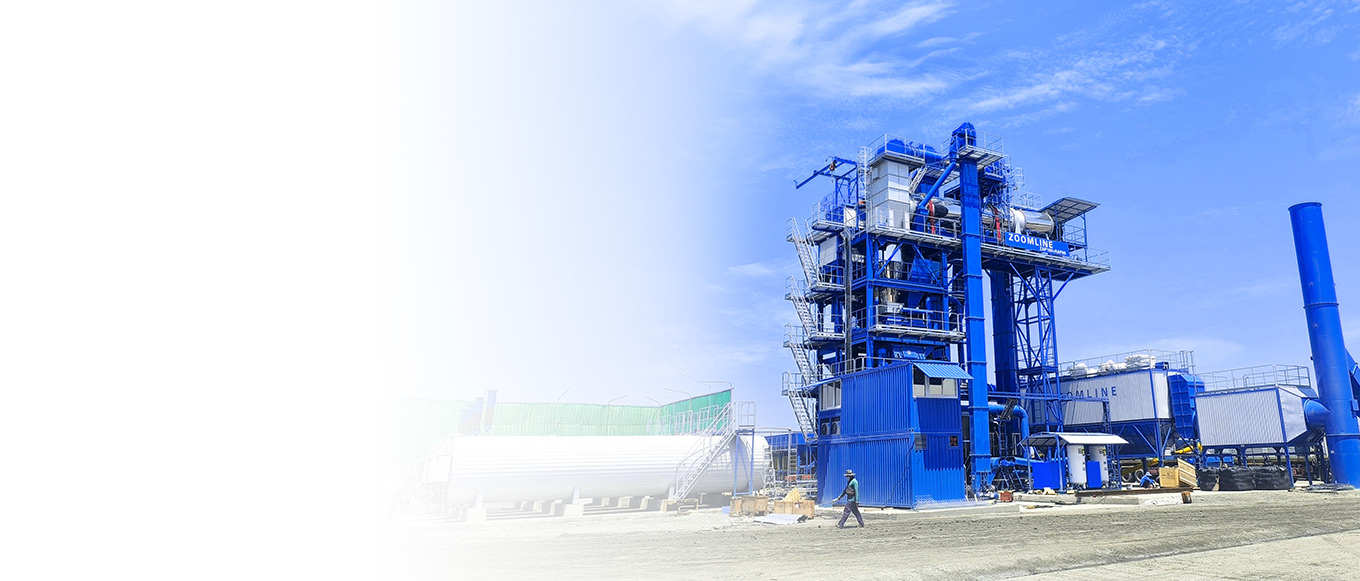
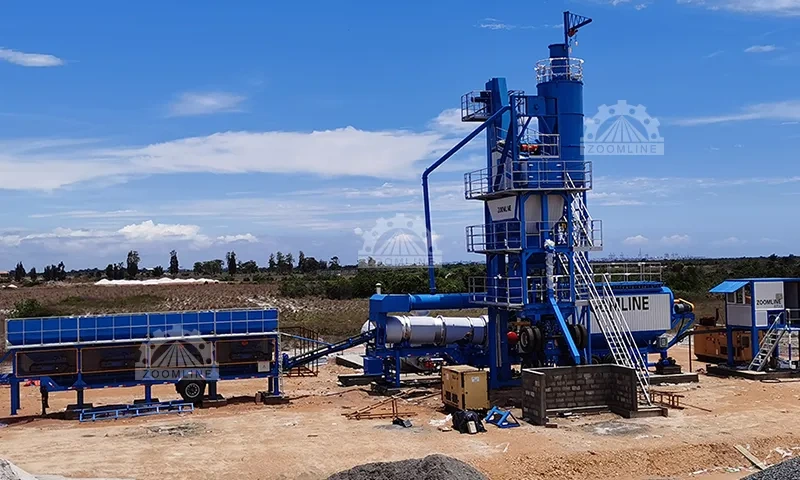
A complete set of equipment for a batch-type asphalt mixing plant consists of ten core systems. These components operate in coordination to form a complete closed-loop production process. The operating conditions, precision, and stability of each component directly determine the quality of the finished mix and the operational efficiency of the equipment. The following outlines the functions, technical parameters, and key operational and maintenance points for each component.
Cold Aggregate Feeder Bins
As the first process in the production line, the cold aggregate bins serve as the core units for aggregate storage and metered feeding, directly determining the accuracy of the initial material mix ratio. The equipment typically features 4–6 independent bins, each storing sand, crushed stone, and coarse aggregates of different particle sizes, such as 10 mm, 20 mm, and 40 mm.
Each bin is equipped with an independent variable-speed drive system that allows for precise control of material flow rate; the discharge volume from the cold aggregate bins serves as the calibration benchmark for all subsequent production processes. During operation, aggregates must be loaded strictly according to particle size to prevent mixing and eliminate gradation deviations at the source.
Conveyor Belt System
This system takes over material conveyance from the cold silo, transporting graded aggregates at a constant speed to the drying drum; it serves as the core hub of material flow. The system’s performance is directly influenced by two key parameters—inclination angle and conveying speed—which can be flexibly adjusted according to production capacity requirements.
Key points for routine maintenance: Regularly inspect the belt for wear and misalignment, and promptly adjust tension to prevent material spillage and conveying jams, thereby ensuring continuous material supply.
Drying Drum & Burner
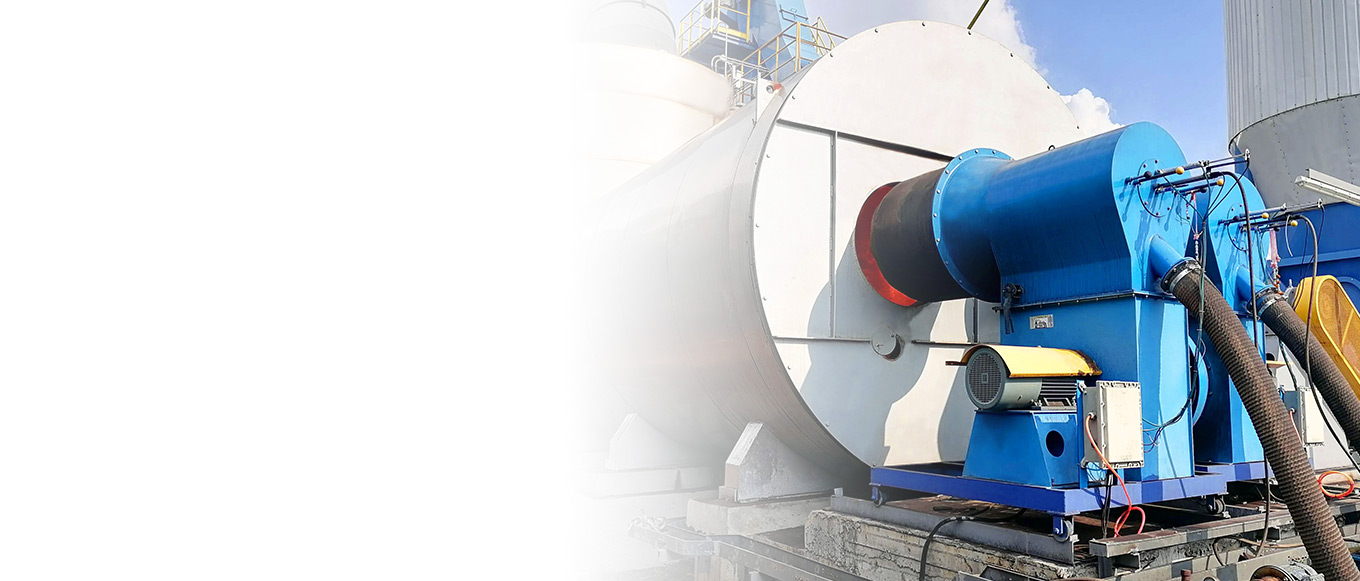
This component is central to aggregate pretreatment, responsible for removing residual moisture from the aggregates and heating the material to the temperature required for construction. It is a critical step in ensuring effective asphalt adhesion. The burner is compatible with various fuels, including diesel, heavy oil, and natural gas, to accommodate different energy conditions at construction sites.
Core Technical Parameters: The drum operating temperature is maintained between 150–200°C, requiring strict control of the air-fuel ratio and air intake. A blower assists with air supply, ensuring the flame spreads evenly to achieve comprehensive and uniform heating of the aggregate and efficient dehumidification; insufficient air intake leads to incomplete fuel combustion, soaring fuel consumption, and failure to meet aggregate drying standards, directly affecting the quality of the finished product.
Hot Aggregate Elevator
This fully enclosed bucket elevator is specifically designed for the vertical conveyance of high-temperature aggregates, smoothly transporting the dried and heated aggregates to the screening system in the mixing tower. The fully enclosed design minimizes heat loss and dust leakage throughout the process.
Key Maintenance Points: Inspect the buckets daily for deformation or looseness; check the elongation of chains and belts weekly; tighten and adjust them promptly to prevent jamming during lifting and material spillage.
Vibrating Screens & Hot Bins
The vibrating screens feature a 3- to 4-layer multi-screen structure arranged according to the “larger at the top, smaller at the bottom” principle: the top layer has the largest mesh openings to screen out oversized foreign particles, while the bottom layer consists of a fine sand screen with the smallest mesh openings. After high-temperature aggregates are graded by the vibrating screens, they are stored by particle size in 4 to 6 separate hot bins, ensuring precise graded storage of the aggregates.
This component is the cornerstone of precise batch-by-batch batching, completely eliminating estimation errors in material proportions. It ensures that the aggregate gradation of every batch of mix fully conforms to design standards, thereby preventing pavement segregation and cracking.
Weighing & Batching System
Weighing accuracy is critical to the durability of asphalt pavements: industry data shows that a deviation of just 0.5% in asphalt content can lead to quality defects such as cracking, loosening, and flaking of the pavement. Modern fully automated mixing plants are equipped with intelligent weighing systems that enable independent, synchronized weighing of aggregates, asphalt, and mineral powder.
The entire system consists of high-precision sensors, smart weighing hoppers, and an electrical control system. With a measurement accuracy of ±0.5%, it operates automatically throughout the entire process based on preset batch parameters, requiring no manual intervention and ensuring highly consistent material proportions for every batch.
Asphalt Mixer (Pugmill Mixer)
As the core component of the mixing plant, the twin-shaft forced-action horizontal mixer is responsible for the final homogenization of the materials. Precisely weighed hot aggregates, asphalt, mineral powder, and admixtures enter the mixing chamber simultaneously, where twin-shaft mixing arms and blades rotate at high speed to force the materials together.
The standard mixing time is 30–60 seconds, with a single-batch capacity of 4–8 metric tons. This process rapidly produces hot-mix asphalt with uniform texture and complete coating, eliminating issues such as asphalt clumping and material segregation. The discharge gate features excellent sealing performance, effectively preventing material leakage and heat loss.
Bitumen Storage & Heating Tanks
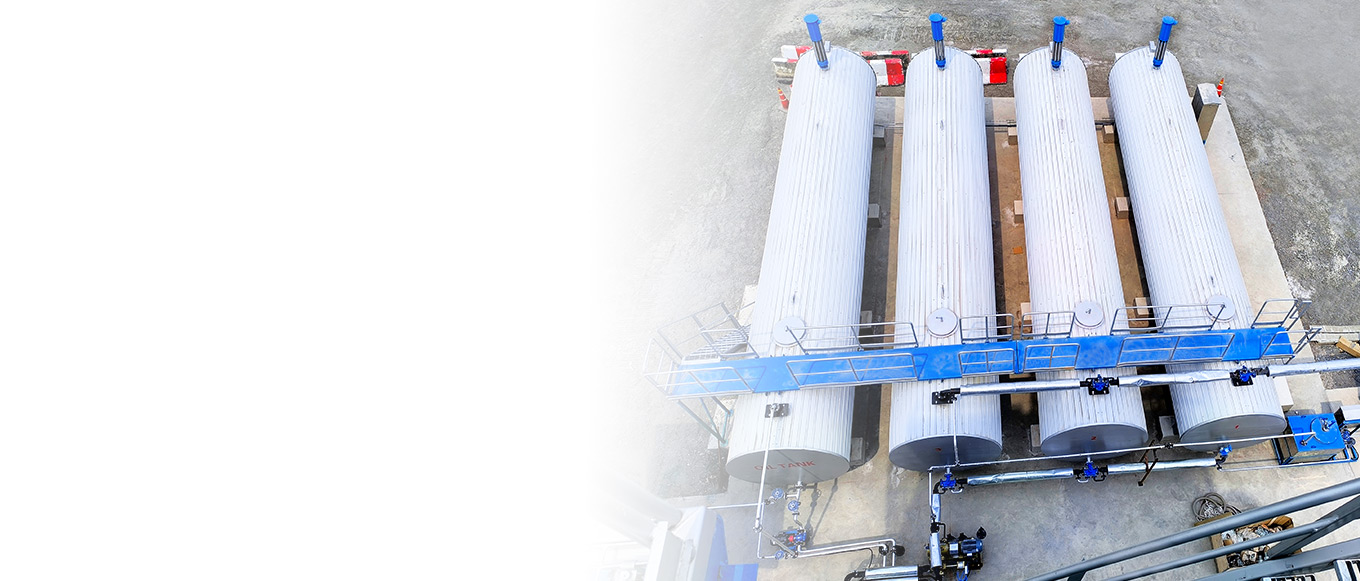
Designed specifically for the temperature-controlled storage and preheating of bitumen, these tanks are equipped with an independent pumping system and thermal insulation. They support two primary heating modes: thermal oil heating and electric heating. The equipment maintains a temperature range of 150–180°C, ensuring that the bitumen remains in a liquid state with stable flow properties and preventing solidification and aging.
Workflow: After being heated to a constant temperature within the tank, the bitumen is transported by the pumping system to the bitumen weighing hopper. Following precise measurement, it is fed into the mixer, ensuring an accurate and controllable bitumen-to-aggregate ratio.
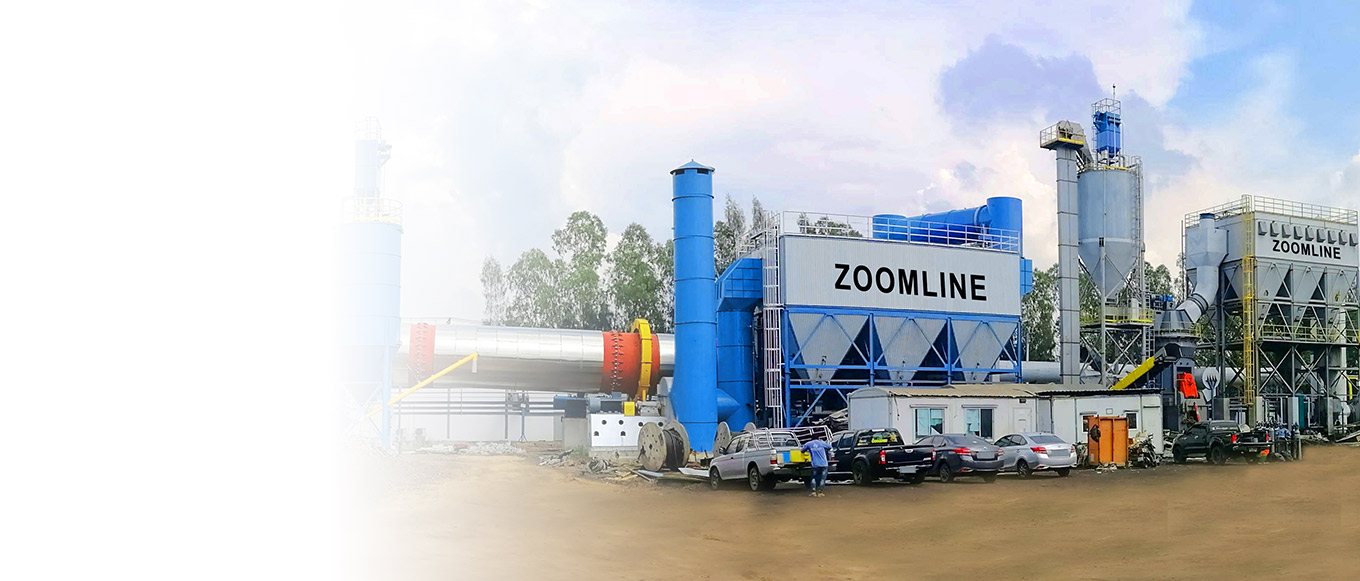
Dust Collection and Pollution Control System
Compliant with the latest 2026 environmental emission standards, this system employs a two-stage treatment structure consisting of “primary gravity settling dust removal + secondary bag filter dust removal.” The primary dust collector settles large dust particles, while the secondary bag filter precisely captures fine dust, effectively controlling dust generated during production.
Once the system is operational, dust emission concentration is ≤20 mg/Nm³. It complies with both China’s GB environmental standards and EU emission limits, fully meeting the environmental construction requirements for municipal and highway projects and enabling green production.
Control Room and PLC Intelligent System
Serving as the “central nervous system” of the entire equipment set, this system enables fully automated and intelligent control throughout the entire process. It offers a full range of functions, including real-time temperature monitoring, automatic adjustment of material ratios, automatic recording of production data, intelligent equipment fault alarms, and remote diagnostics.
The 2026 model fully integrates Industrial Internet of Things (IIoT) technology, supporting cloud-based data storage, remote parameter tuning, and production capacity statistical analysis. This significantly reduces manual labor costs while enhancing equipment operational stability and production efficiency.
Standardized Operating Procedures for Asphalt Batching Plants (Step-by-Step Guide)
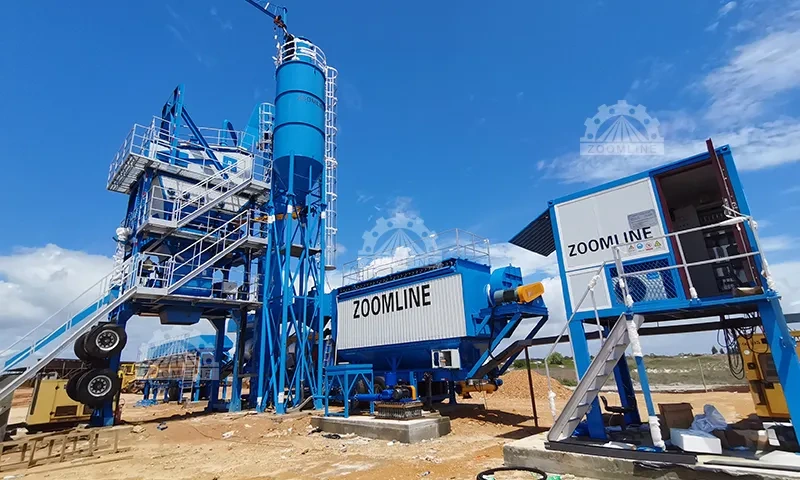
The production of asphalt mixtures follows a standardized closed-loop process: pre-startup inspection → graded feeding → drying and heating → lifting and screening → precise metering → forced mixing → quality inspection and discharge. Adhering to these procedures is essential for ensuring stable production, compliant finished products, and the longevity of the equipment.
Step 0 Pre-Operation Checklist
Complete a systematic self-inspection of all equipment before startup to prevent operation with existing faults. Key inspection items include: topping off the lubrication system, self-checking electrical circuits, verifying the sensitivity of safety devices such as emergency stop buttons and temperature alarms, preheating asphalt pipelines, and zero-point calibration of the metering system to ensure all equipment parameters are reset to zero and operating conditions are normal.
Step 1: Graded Feeding of Cold Aggregates
In accordance with the construction mix design requirements, crushed stone and sand aggregates of different particle sizes are loaded into their respective cold aggregate bins. The discharge flow rate is controlled via bin gates and variable-frequency drives to precisely match the preset mix ratio, ensuring the basic material proportions are controlled from the source.
Step 2: Aggregate Drying and Heating
Cold aggregates are conveyed via a conveyor belt into the drying drum, where burners continuously supply heat. In this high-temperature environment, residual moisture within the aggregates is thoroughly removed, and the material is heated to the standard temperature. By controlling the aggregate moisture content to within 0.5%, the bond strength between the asphalt and aggregates is significantly enhanced, preventing pavement delamination and loosening defects.
Step 3 Hot Aggregate Conveyance and Precise Screening
The high-temperature, dried aggregates are conveyed by a closed-loop hot material elevator to the tower-type vibrating screen, where they undergo graded screening through multiple layers of mesh to remove impurities and oversized particles. Qualified aggregates are stored in corresponding hot material silos according to particle size, enabling graded storage and on-demand retrieval.
Step 4 Simultaneous and Precise Multi-Material Batching
Based on single-batch production parameters, the system independently and precisely measures materials from each hot aggregate silo, asphalt tank, and mineral powder silo, enabling simultaneous batching of aggregates, asphalt, and filler. Full-process automatic calibration strictly controls measurement deviations, ensuring that the asphalt-to-aggregate ratio and gradation fully comply with engineering design standards.
Step 5: Horizontal Forced Homogenization Mixing
All materials that meet weighing standards are simultaneously fed into the horizontal mixer, where they undergo high-speed forced mixing with dual-shaft blades for 30–60 seconds. This thoroughly blends all raw materials, producing high-quality asphalt mixture free of lumps or separation and with uniform coating, ensuring consistent performance of the finished product in every batch.
Step 6 Quality Inspection and Batch Discharge
Upon completion of mixing, random samples are taken to inspect the mixture’s temperature, uniformity, and mix proportion accuracy; the discharge temperature must not be lower than 150°C. Once quality inspection requirements are met, the finished mixture is discharged into an insulated storage silo or loaded directly onto transport trucks for delivery to the construction site, after which the equipment proceeds to the next batch production cycle.
Asphalt Batching Plant Capacity Specifications and Selection Guide
Asphalt batching plants have a capacity range of 40–400 TPH, with a service life of 15–20 years. Equipped with intelligent PLC automation systems, they are suitable for infrastructure projects of various scales and in different scenarios. Selecting the appropriate model is key to ensuring construction efficiency and controlling investment costs.
Application Scenarios by Production Capacity Tier
80-100 TPH: Suitable for small-scale projects such as small municipal roads and rural road renovations; offers moderate production capacity and low operation and maintenance costs
120-140 TPH: Suitable for medium-scale municipal engineering projects and upgrades to standard national highways; balances efficiency and flexibility
160-180 TPH: Suitable for national highways, large-scale urban infrastructure, and medium-sized transportation hub projects; offers stable production capacity and controllable quality
200 TPH and above: Suitable for expressways, airport runways, and large-scale batch production projects; meets the demands of high-intensity continuous construction
Comparison of Stationary vs. Mobile Equipment
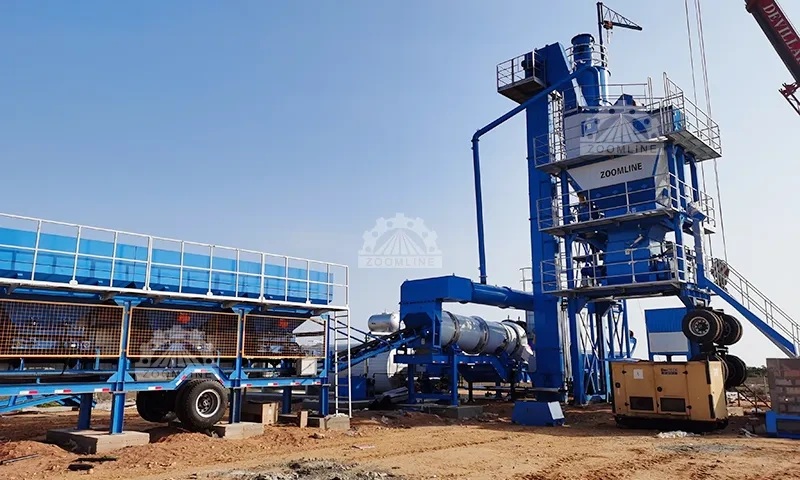
The industry’s mainstream equipment is divided into two categories: stationary and mobile. The core differences lie in deployment flexibility and maximum production capacity: Stationary mixing plants have a production capacity of 40–400+ TPH, focusing on long-term, large-scale, continuous production, and are suitable for long-term construction at fixed job sites; mobile mixing plants have a production capacity of 60–160 TPH, feature a modular design, and are easy to relocate, making them suitable for short-term projects and construction scenarios involving multiple dispersed locations.
Formulas for Calculating Production Capacity and Practical Examples
Core formula for selection: Required equipment production capacity = Project’s average daily total asphalt consumption ÷ Average daily effective working hours. Additionally, a 10%–20% production capacity buffer should be allocated to account for unforeseen circumstances such as tight schedules or weather-related delays.
Practical Example: A municipal project requires an average of 1,200 metric tons of asphalt mixture per day, with an average of 10 effective construction hours per day; the baseline requirement is 120 TPH. Considering tight schedules and the impact of rainy weather, a 160 TPH unit is selected to ensure construction progress remains unaffected.
Capacity Matching Table for Mainstream Models
| Equipment Type | Suitable Scenarios | Typical Capacity Range |
| Stationary Asphalt Mixing Plant | Long-term fixed job sites, large-scale infrastructure projects | 120-320 TPH |
| Mobile Asphalt Mixing Plant | Short-term projects, frequent site relocation | 80-180TPH |
| Containerized Modular Mixing Plant | Remote job sites, export projects, rapid deployment | 100–200 TPH |
| Counter-flow Drum Mixing Plant | Continuous production, energy-efficient and high-efficiency projects | 90-200 TPH |
Systematic Maintenance Guide for Asphalt Batch Mix Plants
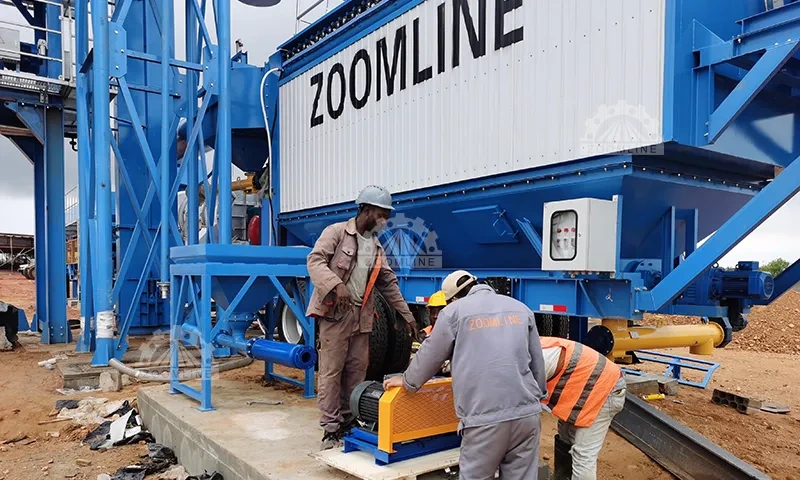
Asphalt batch mix plants are high-intensity, continuous-operation equipment. Systematic preventive maintenance can significantly reduce the rate of breakdowns and downtime, extend the equipment’s service life, ensure consistent production quality, and lower operation and maintenance costs.
Core Value of Equipment Maintenance
While equipment failures cannot be completely avoided, standardized maintenance can prevent sudden shutdowns, batch-wide quality incidents, and excessive component wear, ensuring stable year-round operation and enhancing project construction efficiency and economic benefits.
Daily Inspections and Identification of Warning Signs
A full equipment inspection must be conducted before daily startup, during operation, and after shutdown, with a focus on the core operating conditions of the mixer, burner, conveyor belt, and batching system. Pay particular attention to identifying four major warning signs of potential failures:
- Abnormal vibration or unusual noises: Indicates bearing wear, motor imbalance, or loose mixing blades
- Decreased production efficiency: Material conveyance jams, insufficient burner heat output, parameter calibration deviations
- Intermittent quality instability: Batching sensor malfunctions, material buildup in the weighing hopper, wear on mixing components
- Abnormally high fuel consumption: Imbalanced air-fuel ratio in the burner, insufficient air intake, incomplete combustion
Scheduled Maintenance Cycles and Key Tasks
- Monthly Maintenance: Check the clearance between the mixer blades and liner plates; maintain a standard clearance of 3–5 mm; clear material buildup from the weighing hopper; calibrate the zero point of the metering system; inspect the tension of elevator chains and belts
- Quarterly/Hourly Maintenance: After 800 hours of operation, replace the lubricating oil in the reducer; conduct a comprehensive inspection of electrical wiring and sensor conditions
- Specialized Maintenance (Vibrating Screen): Inspect the screen mesh for wear weekly; immediately shut down and replace the screen if holes larger than 5 mm appear to prevent gradation imbalance
- Seasonal Maintenance: Before prolonged shutdowns or low winter temperatures, drain accumulated water from the cooling system, asphalt pipelines, and air tanks to prevent freeze-cracking damage; thoroughly lubricate all moving parts
Green Technologies in 2026: RAP Recycling and Warm-Mix Asphalt (WMA) Technology
With the upgrading of green and low-carbon policies for infrastructure development, by 2026, asphalt mixing plants will have fully adopted RAP recycling and WMA technology, balancing construction quality, cost control, and environmental protection and emissions reduction, while meeting the requirements of a circular economy.
RAP Recycling Technology
This technology supports the recovery and reuse of waste asphalt pavement materials. Using a specialized preheating system, recycled asphalt pavement (RAP) is blended into new mixtures at a ratio of 10% to 50%. Key advantages include significantly reduced procurement costs for aggregate and asphalt raw materials, decreased solid waste emissions, and lower carbon emissions—fully aligning with green infrastructure policy standards.
WMA (Warm-Mix Asphalt) Technology
Compared to traditional hot-mix processes, warm-mix asphalt allows for production, mixing, and paving at lower temperatures, effectively reducing equipment energy consumption as well as flue gas and carbon emissions. It is suitable for urban construction projects subject to strict environmental regulations and can be implemented with only minor modifications to the mixing plant’s temperature control and material feeding systems.
7.3 Comparison of Environmental Emission Compliance Standards
The 2026 model mixing plant fully complies with China’s GB environmental standards for road construction, U.S. EPA regulations, and EU dust emission limits. Its two-stage dust collection system reliably maintains dust emissions below 20 mg/Nm³, meeting environmental construction acceptance requirements across all regions of China.
Core Guidelines for Selecting Asphalt Mixing Plants and Price References
Eight Core Selection Considerations
- Production Capacity Matching: Precisely match production capacity based on the project’s average daily material consumption and schedule requirements, while allowing for a reasonable margin.
- Equipment Type: Select stationary models for long-term, fixed-site projects; choose mobile models for short-term, multi-site projects
- Fuel Compatibility: Select models compatible with diesel, natural gas, or heavy fuel oil based on the construction site’s energy conditions to control operating costs
- Automation Level: Prioritize intelligent PLC systems featuring IIoT cloud monitoring, automatic calibration, and remote diagnostics
- Environmental Compliance: Ensure compliance with the latest local environmental emission standards; include a high-efficiency dust collection system as standard equipment
- Recycling Capability: For long-term projects, prioritize models that support the blending of recycled asphalt (RAP)
- Brand and After-Sales Service: Prioritize equipment from brands that offer localized spare parts supply and rapid after-sales maintenance and repair services
- Total Cost of Ownership (TCO): Comprehensively evaluate the total cost of ownership (TCO), including purchase price, energy consumption, maintenance, and spare parts replacement
Market Price Reference
In 2026, the market price range for batch-type asphalt mixing plants is between $200,000 and $5 million, covering models with full production capacities ranging from 60 to 400 TPH. Improper model selection can lead to frequent equipment failures, unstable mix quality, high energy consumption, and low return on investment; it is recommended to select the model precisely based on project operating conditions.
Frequently Asked Questions (FAQs)
Q1: What are the core components of a batch-type asphalt mixing plant?
The core consists of ten major systems: cold aggregate supply system, conveyor belt system, drying and combustion system, hot aggregate lifting system, vibrating screen and hot aggregate silo system, weighing and batching system, horizontal mixing system, asphalt temperature-controlled storage system, dust collection and environmental protection system, and PLC intelligent control system.
Q2: What is the complete production process for an asphalt mixing plant?
Complete process: Graded storage and feeding of cold aggregates → Drying, heating, and dehumidification → Elevation, screening, and grading of hot materials → Constant-temperature storage and preheating of asphalt and mineral powder → Precise multi-material metering → Forced homogenization mixing → Quality inspection of finished products and batch-by-batch discharge.
Q3: What is the typical production capacity range for asphalt mixing plants?
Standard production capacity ranges from 40 to 400 TPH; small models range from 40 to 100 TPH; medium models range from 120 to 180 TPH; and large models designed specifically for high-speed roads and airports exceed 200 TPH.
Q4: How long does a single batch of asphalt mixing take?
The standard mixing time is 60 seconds, enabling rapid production of homogeneous, compliant asphalt mixtures and ensuring continuous construction efficiency.
Q5: What are the main causes of unstable asphalt mixture quality?
Key factors include: deviations in the metering system, damaged screens causing gradation imbalances, wear on mixing components, abnormal drying temperatures, and incorrect mix design parameters. These issues can be effectively mitigated through regular calibration, maintenance, and parameter verification.
Q6: How should the standard maintenance schedule for an asphalt mixing plant be planned?
Conduct daily inspections of core components; perform monthly calibration and maintenance on the mixer and weighing system; change the oil in the gearbox every 800 operating hours; and complete a comprehensive overhaul and freeze protection measures before seasonal shutdowns.
Summary
The high precision, stability, and environmental friendliness of batch-type asphalt mixing plants directly determine the quality of road paving and the project’s benefits. Equipment continues to evolve toward greater intelligence, precision, environmental sustainability, and energy efficiency. From component design, standardized operations, and precise equipment selection to systematic maintenance, troubleshooting, and the application of green technologies, standardized management throughout the entire process maximizes equipment performance, ensures pavement construction quality, and reduces overall project costs.