

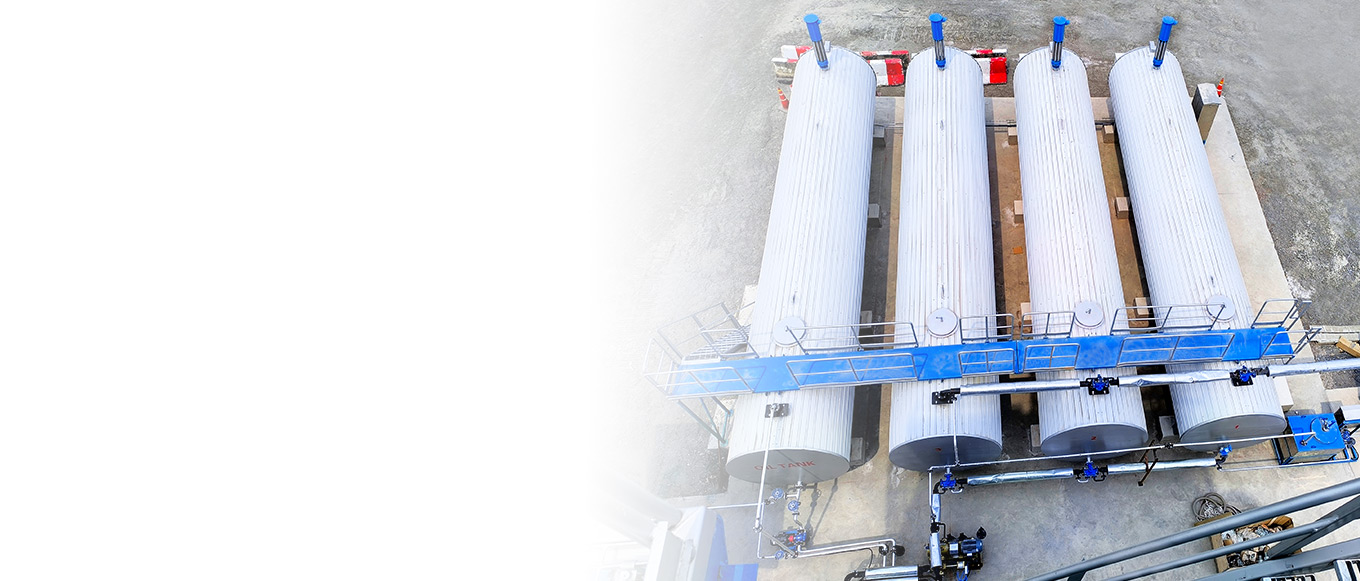


Reliable Asphalt Plant for Georgia Road Construction
As a strategic transportation corridor linking Europe and Asia, Georgia in the Caucasus region is entering a golden age of infrastructure development. Roads, as the core infrastructure for national connectivity, are continuously driving demand for high-quality asphalt mixtures—whether through the upgrading of east-west trunk roads, the renovation of urban roads, or the development of tourism infrastructure. As the “lifeblood” of highway construction, the reliability, production capacity, and adaptability of asphalt mixing plants directly determine the quality, progress, and long-term benefits of road projects. Selecting a reliable asphalt plant tailored to the needs of the Georgian market has become the key for local contractors to seize a competitive edge.
Georgian Asphalt Plant Market: Huge Opportunities Behind the Surge in Demand
As a strategic transportation corridor linking Europe and Asia, Georgia is vigorously advancing its highway infrastructure development. The government is increasing investment in expressways and cross-border logistics corridors, institutions are providing financial support, and the growth of the tourism industry is driving the upgrading of scenic area roads—all of which are collectively fueling robust demand for asphalt mixing plants. Currently, local road construction and repair projects have entered a peak period. Engineering standards are gradually aligning with those of the European Union, and polymer-modified asphalt is being widely adopted. At the same time, contractors are phasing out small-scale equipment, with high-capacity units of 80–160 TPH and above becoming the market mainstream—presenting significant opportunities for asphalt mixing plant suppliers.
Georgia’s Climatic Challenges: Asphalt Mixing Plants Must Be “Rugged”
Georgia’s terrain is predominantly mountainous, and its climate exhibits significant regional variations—with cold, snowy winters in the north and hot, dry summers in the south, coupled with high annual precipitation (reaching 1,200 mm along some project routes). This complex climate poses a considerable challenge to the stability of asphalt production and imposes specific requirements on the core performance of mixing plants.
Diverse Climate + Terrain: Testing Equipment Operational Stability
Georgia is heavily mountainous, with drastic temperature fluctuations across different regions. Low winter temperatures can cause asphalt to solidify and equipment components to freeze and break, while high summer temperatures can affect the stability of mix proportions. Additionally, mountainous projects are often located in remote areas, making equipment transportation, installation, and maintenance difficult. This requires asphalt mixing plants to possess strong environmental adaptability, enabling them to operate continuously and stably under extreme temperatures and minimize downtime due to malfunctions.
Precipitation and Humidity: Strict Requirements for the Drying System
High precipitation levels cause aggregates to absorb moisture easily, and damp aggregates severely impair the bonding between asphalt and aggregates, thereby reducing pavement quality. For example, the E60 Expressway Lot 3 project is located in an area with abundant rainfall, requiring the construction team to optimize equipment parameters to address aggregate drying issues. Therefore, asphalt mixing plants tailored for the Georgian market must be equipped with an efficient drying system capable of rapidly removing moisture from aggregates, as well as a precise temperature control system to prevent mix quality issues caused by incomplete drying or excessive temperatures.
Thermal Stress: Requiring Precise Mixing and Stable Heating
Significant diurnal temperature variations and pronounced seasonal fluctuations can easily lead to pavement defects such as cracking and rutting in asphalt pavements. This necessitates that asphalt mixing plants be equipped with a precise mixing system to ensure uniform mix proportions, as well as a stable heating system capable of flexibly adjusting heating temperatures based on ambient conditions to minimize the impact of thermal stress on the pavement. Furthermore, the application of new materials, such as permeable cold-mix asphalt, places even higher demands on the adaptability of mixing plants.
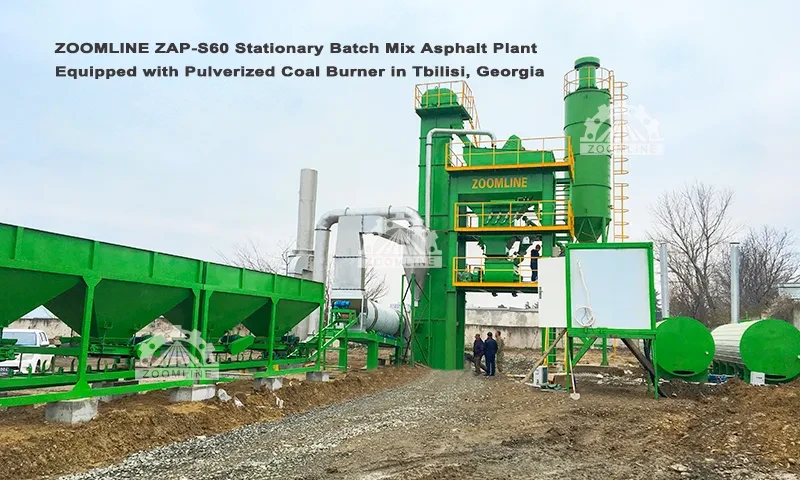
Reliable Asphalt Mixing Plants Suited for Georgia: An Analysis of Core Features
Given Georgia’s market demands and climatic challenges, a reliable asphalt mixing plant must possess five core characteristics—“stability, precision, efficiency, environmental friendliness, and adaptability”—to perfectly meet the practical needs of local road construction and help contractors reduce costs and improve efficiency.
High Stability: Ensuring Continuous Operation and Eliminating Project Delays
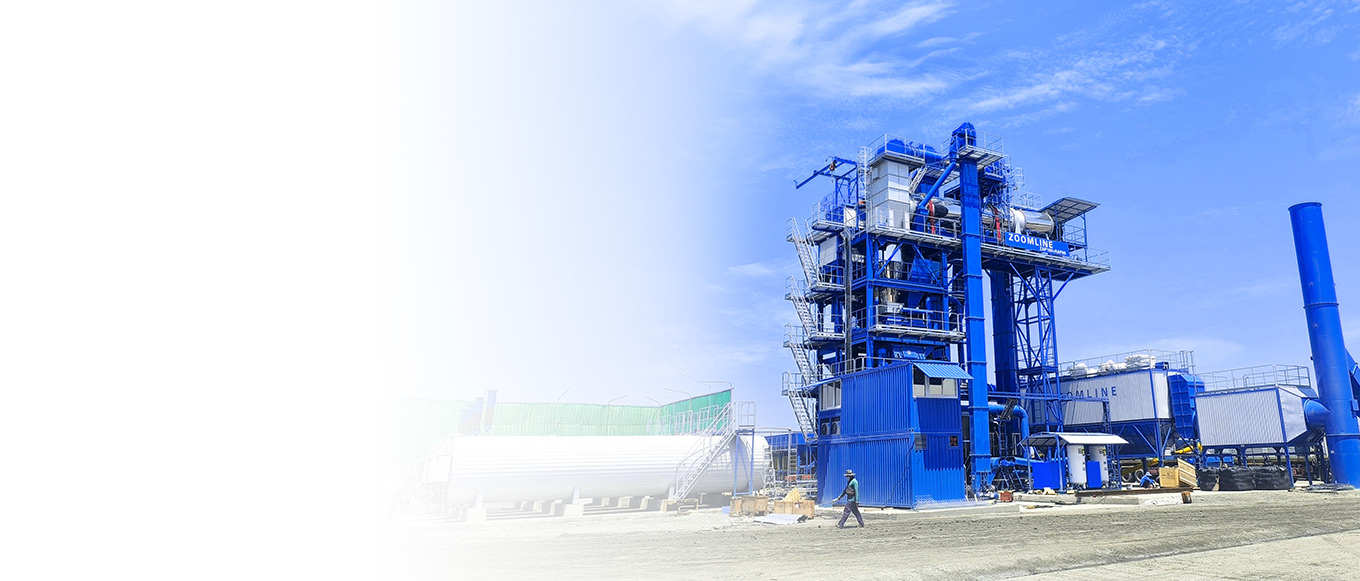
Large-scale road projects in Georgia have tight schedules and place extremely high demands on the continuity of asphalt supply. A reliable asphalt mixing plant must be capable of continuous operation, with core components (such as the drying drum and mixing drum) made of high-strength, wear-resistant materials to reduce failure rates and maintenance frequency. This ensures stable daily output and prevents project delays caused by equipment downtime. For example, ZOOMLINE’s 80TPH equipment has achieved long-term, continuous, and stable output in Georgia projects, earning high recognition from local clients.
Precise Proportioning and Mixing: Compliance with International Engineering Standards
In light of Georgia’s increasingly stringent engineering standards, asphalt mixing plants must be equipped with high-precision weighing and mixing systems to ensure that proportioning errors for aggregates, asphalt, and modifiers are kept within reasonable limits. This produces uniform and stable asphalt mixtures that meet international standards such as the EU’s EN 13108. At the same time, the mixing system must possess strong blending capabilities to ensure thorough integration of modified asphalt and aggregates, thereby enhancing pavement durability and resistance to damage.
Efficient Drying and Heating: Adapted for Humid and Variable-Temperature Environments
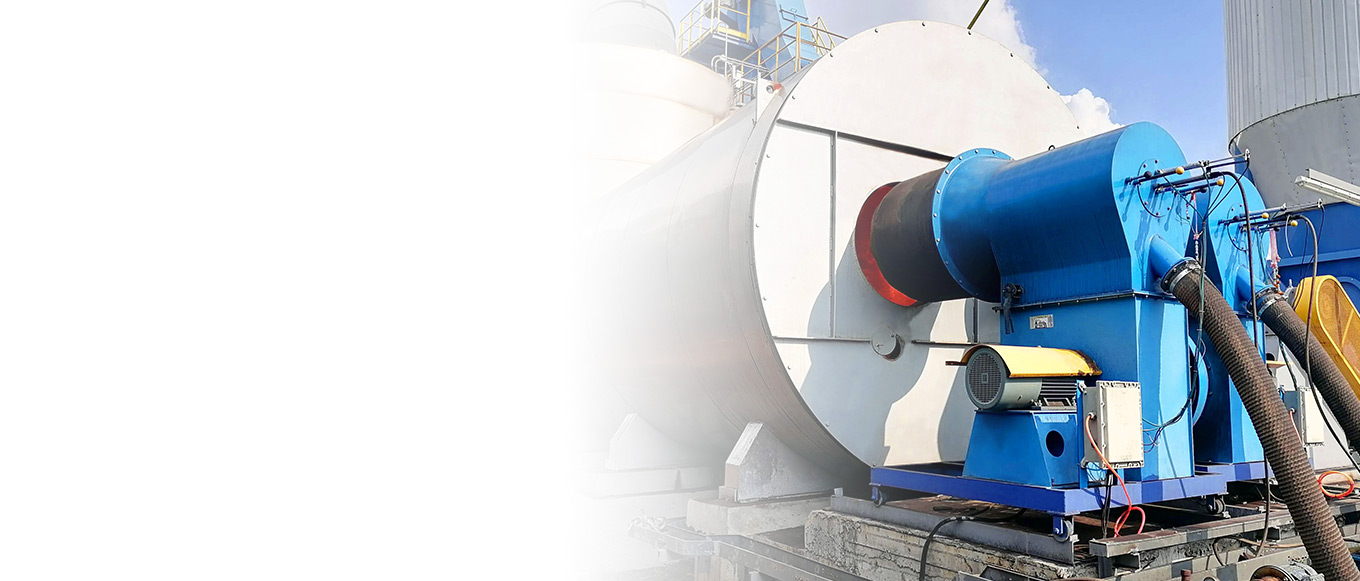
Given Georgia’s high precipitation and humid climate, the mixing plant must be equipped with an efficient drying drum paired with an optimized combustion system. This setup enables rapid drying of damp aggregates while ensuring efficient fuel utilization and reducing operational costs. For example, ZOOMLINE’s asphalt mixing plant features a drying drum wrapped in a 50mm-thick rock wool insulation layer and equipped with a high-efficiency burner, which enhances drying efficiency while minimizing heat loss; the Lintaige CSM2500B model, through optimized structural design, improves the moisture resistance of core components to adapt to harsh aggregate conditions.
Advanced Control Systems: User-Friendly Operation and Remote Control
Given the prevalence of mountainous projects in Georgia, on-site operators may face challenges due to varying levels of expertise. Therefore, asphalt mixing plants must be equipped with fully automated PLC control systems to enable fully automated parameter setting, operational monitoring, and fault alarms, thereby reducing manual intervention and minimizing operational errors. At the same time, remote operation capabilities are crucial, as they allow technicians to remotely monitor equipment status and troubleshoot issues, thereby improving operational and maintenance efficiency. ZOOMLINE asphalt mixing plants are equipped with remote control functionality, and their electrical components utilize internationally renowned brands to ensure control precision and stability.
Environmental Protection and Energy Efficiency: Aligning with Local Policy Trends
As global environmental awareness grows, Georgia’s environmental requirements for asphalt mixing plants are also becoming increasingly stringent. Local authorities have introduced air quality permit regulations requiring mixing plants to be equipped with comprehensive dust collection and exhaust gas treatment systems. A reliable asphalt mixing plant must be equipped with an efficient bag-house dust collector and exhaust gas purification devices to reduce dust and CO₂ emissions and meet local environmental standards. At the same time, energy-efficient designs can reduce fuel consumption and help contractors control operating costs. For example, ZOOMLINE asphalt plants are equipped with a primary gravity dust collector combined with a secondary bag-house dust collection system, offering high filtration efficiency and meeting Georgia’s environmental requirements.
Types of Asphalt Mixing Plants Suitable for Projects in Georgia: Choosing the Most Efficient Option Based on Needs
Road projects in Georgia vary widely, ranging from long-term, large-scale highway projects to small-scale road repair projects in remote mountainous areas. Different projects have varying requirements for the type and production capacity of mixing plants, so the selection must be made precisely based on the actual project conditions.
Stationary Asphalt Mixing Plants: The Top Choice for Long-Term, Large-Scale Projects
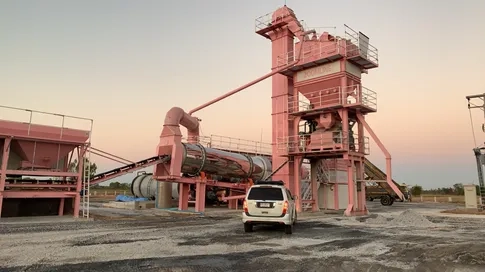
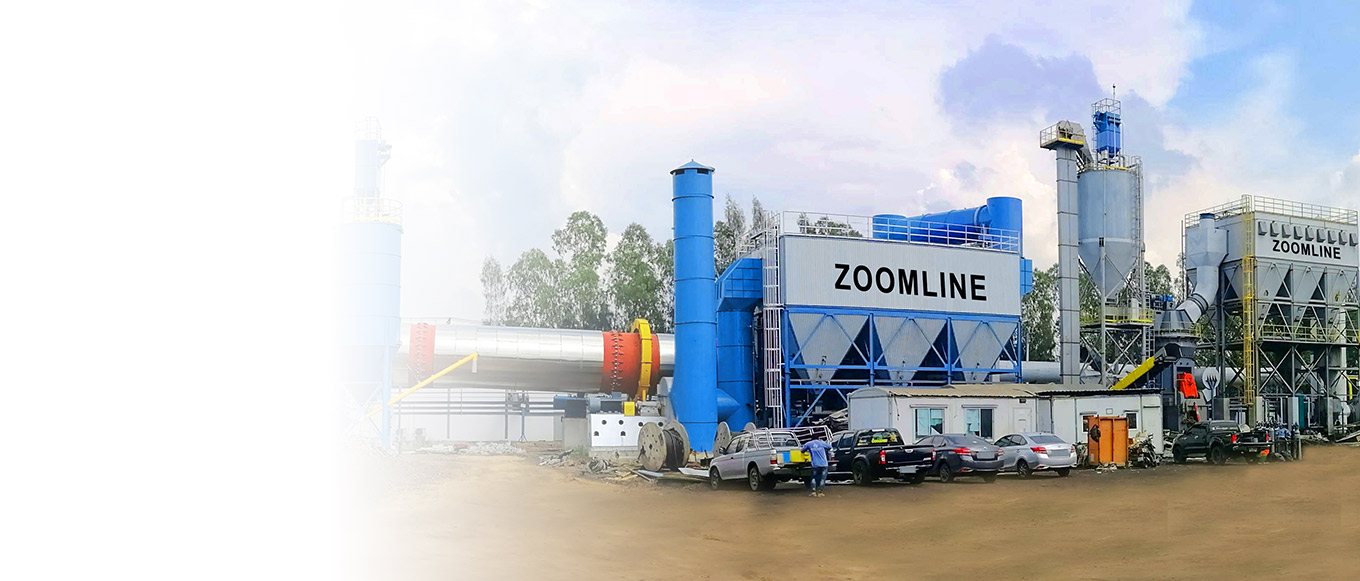
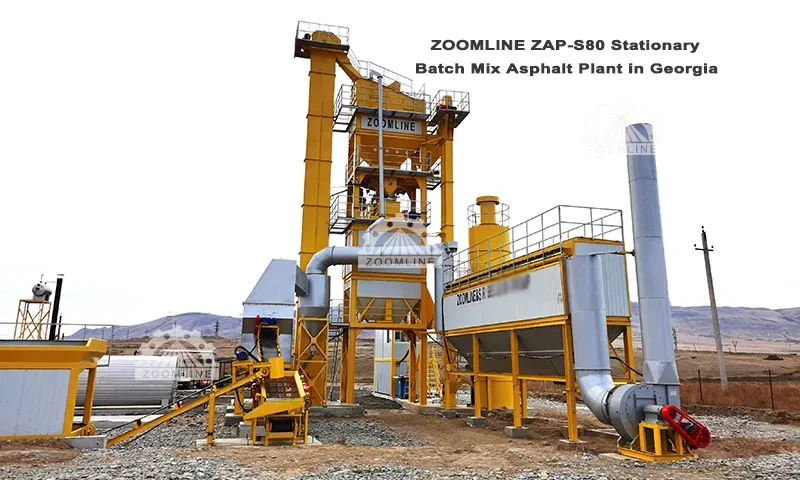
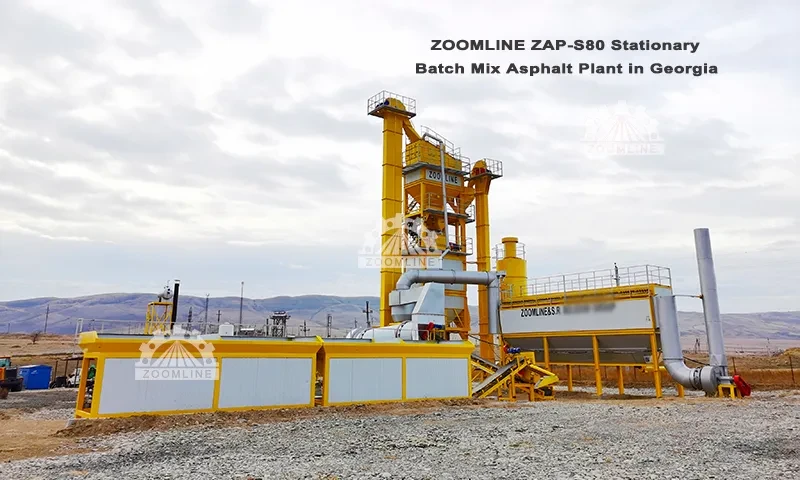
For large-scale infrastructure projects with extended construction periods and stable production capacity requirements (such as the E60 Expressway and the Batumi Ring Road), stationary asphalt mixing plants are the optimal choice. This type of equipment offers high production capacity and stable operation, and can be equipped with comprehensive environmental protection and control systems, making it suitable for large-scale, continuous production. For example, the 80TPH stationary asphalt mixing plant deployed by ZOOMLINE in Rustavi, Georgia, perfectly meets the demands of local long-term large-scale projects, enabling stable and efficient production.
Mobile Asphalt Mixing Plants: Ideal for Remote Mountainous Projects
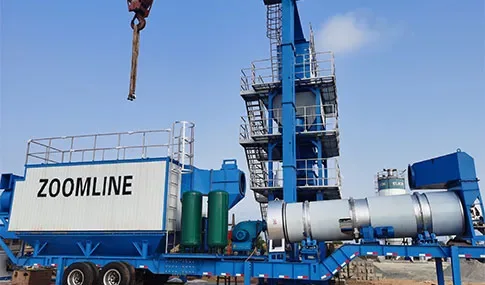
Georgia is a mountainous country, and many road projects are located in remote areas with limited access and restricted space. In such cases, the advantages of mobile asphalt mixing plants become evident. This type of equipment is quick to install and easy to relocate, requiring no complex infrastructure and enabling rapid production. It is suitable for small-to-medium-sized projects or construction needs involving multiple job sites. The plant features a standard containerized design that requires no foundation for installation and can be set up within three days, making it ideal for construction scenarios in Georgia’s remote mountainous regions.
Batch vs. Continuous Mix Plants: Matching Project Requirements
Batch mix plants offer high mixing accuracy and consistent mix quality, making them suitable for high-grade roads (such as expressways and cross-border corridors) with stringent pavement quality requirements. They can meet the production needs for polymer-modified asphalt, aligning with the trend toward upgraded engineering standards in Georgia; Continuous mixing plants (Drum Mix Plants) offer high production efficiency and lower costs, making them suitable for large-scale projects such as ordinary highways and rural roads where precision requirements are relatively less stringent. They can rapidly meet large-scale asphalt supply demands.
The Top Choice for Road Construction in Georgia: Why Choose ZOOMLINE Asphalt Mixing Plants?
In the Georgian asphalt mixing plant market, ZOOMLINE has become the brand of choice for many contractors thanks to its extensive local project experience, customized solutions, and reliable product quality. Its core advantages are reflected in four key areas, perfectly aligning with local market demands.
Extensive Local Project Experience, Proven in the Field
ZOOMLINE machinery has a proven track record of successful projects in Georgia, having successfully deployed an 80 TPH stationary asphalt mixing plant in Rustavi. Since its commissioning, the equipment has demonstrated stable production capacity and reliable quality, earning high praise from local clients. Additionally, ZOOMLINE possesses an in-depth understanding of Georgia’s engineering standards, climatic conditions, and construction practices, enabling it to provide equipment solutions tailored to local realities and avoid issues with “cultural incompatibility.”
Strong R&D and Production Capabilities, Guaranteed Quality
With 17 years of experience in asphalt mixing plant manufacturing, ZOOMLINE operates a 50,000-square-meter production facility and a dedicated R&D center. We have established a rigorous quality control system, and every unit undergoes comprehensive testing and weight verification before shipment to ensure consistent product quality. At the same time, our R&D team continuously optimizes equipment design. Tailored to Georgia’s climate and topography, we have upgraded the drying system, insulation structure, and control system to enhance the equipment’s environmental adaptability and operational stability.
Customized Solutions, Precisely Tailored to Local Needs
ZOOMLINE rejects a “one-size-fits-all” approach to equipment supply. Instead, we tailor exclusive solutions for clients based on the scale, climatic conditions, and engineering standards of different projects in Georgia. For example, in areas with high precipitation, we optimize the drying and dust removal systems; for mountainous projects, we provide designs that facilitate easy installation and remote operation and maintenance; and for large-scale projects, we offer equipment configurations with capacities of 80–160 TPH or higher to flexibly meet the personalized needs of different clients.
Comprehensive After-Sales Service, Providing Full Support Throughout
For remote projects in Georgia, the timeliness of after-sales service is critical. ZOOMLINE offers local clients comprehensive after-sales support, including equipment installation guidance, operator training, routine maintenance, and emergency troubleshooting, ensuring long-term, stable equipment operation. Whether addressing issues during commissioning or meeting operational needs later on, ZOOMLINE responds swiftly to eliminate any concerns for our clients.
Selection Guide: How to Choose the Right Asphalt Mixing Plant for Projects in Georgia?
To select a reliable asphalt mixing plant suitable for Georgia, it is essential to focus on the project’s actual requirements and pay close attention to the following four key points to avoid cost overruns and project delays caused by ill-informed decisions.
Assess project scale and determine production capacity requirements
Based on project scope and construction timeline, select equipment with a suitable capacity of 80–160TPH or higher to avoid delays caused by insufficient capacity or cost wastage resulting from excess capacity;
Consider climate suitability
Prioritize equipment equipped with high-efficiency drying systems, stable heating systems, and the ability to withstand extreme temperatures to adapt to Georgia’s climate characterized by high precipitation and significant temperature fluctuations;
Focus on automation and ease of use
Select equipment with fully automated PLC control and remote operation capabilities to reduce labor costs, improve operational and maintenance efficiency, and meet the operational requirements of mountainous projects;
Evaluate supplier capabilities and local service support
Prioritize suppliers with local project experience and comprehensive after-sales service (such as ZOOMLINE) to ensure timely equipment installation, commissioning, and maintenance, and avoid construction delays caused by delayed after-sales support.
Future Trends in Georgia’s Asphalt Industry: Key Areas to Watch
As Georgia’s infrastructure development continues to advance and environmental regulations become increasingly stringent, the asphalt mixing plant industry will exhibit four major trends. Securing equipment that aligns with these trends in advance will help contractors gain a competitive edge in the market.
Widespread Adoption of Warm-Mix Asphalt (WMA)
To achieve energy conservation and reduced consumption, Georgia is gradually promoting warm-mix asphalt technology. This technology lowers asphalt production temperatures, reduces fuel consumption and exhaust emissions, while simultaneously improving the pavement’s low-temperature crack resistance. The Georgian Ministry of Transport has launched pilot studies on warm mix asphalt and plans to gradually expand its application scope in the future. This requires asphalt mixing plants to be equipped with systems compatible with warm mix technology.
Increased Use of Recycled Asphalt Pavement (RAP)
Driven by dual demands for environmental protection and cost control, the use of recycled asphalt pavement (RAP) will become an industry trend. In the future, Georgia will gradually promote recycled asphalt technology. Asphalt mixing plants must be equipped with the capability to process recycled materials to achieve the recycling of old asphalt pavement materials and reduce project costs.
Continually Tightening Environmental Standards
The Georgian government has issued air quality licensing regulations for asphalt mixing plants, requiring equipment to be equipped with comprehensive dust removal and exhaust gas treatment systems. Environmental standards will be further tightened in the future. Equipment that fails to meet environmental requirements will be phased out, and eco-friendly, energy-efficient asphalt mixing plants will become the market mainstream.
Digital and Intelligent Upgrades of Equipment
With the advancement of digital technology, asphalt mixing plants will undergo intelligent upgrades. Through the Internet of Things (IoT) and big data technologies, real-time monitoring of equipment status, fault early warning, and remote operation and maintenance will be achieved, thereby enhancing operational efficiency and management standards while reducing operational and maintenance costs.
Conclusion
As a strategic transportation hub connecting Europe and Asia, Georgia is experiencing a full-scale surge in highway infrastructure construction, and reliable asphalt mixing plants are the core driving force behind this wave. For engineering contractors, selecting an asphalt mixing plant that is suited to the local climate, meets engineering standards, offers stable production capacity, and is environmentally friendly and energy-efficient not only ensures project quality and schedule adherence but also enhances core competitiveness and secures a competitive edge in the market.
With its extensive local project experience, customized solutions, reliable product quality, and comprehensive after-sales service, ZOOMLINE has become the preferred partner for Georgia’s highway construction. Whether for large-scale highway projects or remote mountain road construction, we provides tailored asphalt mixing plant equipment to help Georgia build a high-quality, durable highway network, while assisting clients in reducing costs, improving efficiency, and achieving mutual growth.
If you are selecting an asphalt mixing plant for a road project in Georgia, contact ZOOMLINE to obtain a customized solution and let our reliable equipment safeguard your project!