









Asphalt Production Temperature Problems and Solutions
Introduction
Asphalt production is the core of the road construction field, the process mainly includes aggregate drying, asphalt heating, material mixing and finished product discharge and other key steps, the temperature control of each link is directly related to the final product quality and production efficiency. For asphalt mixing plant operators, temperature-related problems are the most common troubles encountered in the production process, such as low aggregate temperature, asphalt overheating, mixing process temperature fluctuations, etc., which not only affects the production schedule, but also may lead to the finished product of asphalt performance is not up to standard, increasing the later maintenance costs. This paper focuses on the asphalt production temperature problems and solutions to launch a detailed exposition, to help mixing plant operators to efficiently diagnose and solve all kinds of temperature anomalies, optimize the production process, improve the quality of asphalt and production efficiency, which is also the core value of asphalt production temperature problems and solutions.
Why Temperature Control Is Critical in Asphalt Production
Optimal Temperature Range
Different aspects of asphalt production, the temperature has a clear requirement, reasonable control of the temperature range is to ensure that the production of the basis for smooth progress. In the aggregate heating process, the typical heating range of 150-180 ℃, this temperature range can effectively remove the water in the aggregate, to ensure that the subsequent asphalt and aggregate good combination, while avoiding the temperature is too high or too low on the performance of the aggregate. The optimal temperature range of asphalt heating is 140-170 ℃, which can ensure that the asphalt has a suitable viscosity, improve its mobility and bonding capacity, laying the foundation for the mixing process. In addition, the mixing and discharging temperature should also be strictly controlled to ensure the uniformity of the finished asphalt to meet the requirements of the site paving, asphalt mixing temperature control is the core of the various aspects of the temperature stabilization in a reasonable range.
Impact on Asphalt Quality
Temperature control directly determines the final quality of asphalt, its impact is mainly reflected in three aspects. First, the workability and compaction performance, the appropriate temperature can make the asphalt mixture to maintain good mobility, easy to site paving and compaction, if the temperature is not appropriate, it will lead to difficult compaction of the mixture, there is a gap rate is too large and other issues. Second, the asphalt and aggregate bonding, the temperature is too high or too low will destroy the bonding effect of the two, resulting in aggregate and asphalt separation, segregation phenomenon, affecting the integrity of the asphalt pavement. Third, pavement durability and service life, improper temperature control will accelerate the aging of asphalt, reduce the pavement’s resistance to cracking, resistance to rutting ability, prone to early breakage, shorten the life cycle of the pavement.
Impact on Production Efficiency
Reasonable temperature control can significantly improve the productivity of asphalt mixing plant, reduce operating costs. From the point of view of fuel consumption, too high a temperature will cause fuel waste, too low a temperature needs to be reheated, also increase fuel consumption, only the temperature control in the optimal range, in order to realize the efficient use of fuel. From the point of view of equipment loss, the extreme temperature will aggravate the wear and tear of the drying drum, burner, conveying pipeline and other equipment, shorten the service life of the equipment and increase the maintenance cost. In addition, temperature stabilization can ensure the continuity of production, avoid production interruptions and finished product scrapping caused by temperature abnormalities, improve production consistency, and reduce rework and delays.
Common Asphalt Production Temperature Problems
Low Aggregate Temperature
Low aggregate temperature is one of the most common temperature problems in asphalt production, and its impact on the quality of asphalt mixture is direct and obvious, and the main symptoms are concentrated in the bonding effect of asphalt and aggregate, which is specifically manifested in the asphalt can’t uniformly wrap the surface of the aggregate, and the uneven thickness of the coating and the local asphalt coverage, which will lead to the segregation of aggregate, resulting in the uneven distribution of mixture particles, and ultimately affect the overall strength, denseness and quality of asphalt mixture seriously. The overall strength, compactness and integrity of the asphalt mixture, subsequent paving is prone to pavement loosening, degranulation and other early diseases. The occurrence of this problem has obvious scene correlation, usually appear in the cold weather or raw material humidity is large under the working conditions: in the cold season, the external low temperature environment will accelerate the aggregate in the drying, conveying process of heat dissipation, even if the drying drum is working normally, it is also difficult to raise the temperature of the aggregate to the prescribed range; and when the moisture content of the aggregate is too high, most of the heat of the drying link will be used to evaporate the internal moisture of the aggregate, leading to the use of the aggregate to raise the temperature of the aggregate, which will result in a high temperature of the aggregate, which will be used to raise the temperature of the aggregate. When the moisture content of the aggregate is too high, most of the heat in the drying process will be used to evaporate the internal moisture of the aggregate, resulting in insufficient heat to raise the temperature of the aggregate, ultimately resulting in insufficient heating of the aggregate to reach the standard temperature required for production, which is also one of the most likely to occur in the daily production of asphalt mixing plant, the operator needs to focus on preventing the type of temperature problems.
Overheating of Aggregates
Aggregate overheating and low temperature, will cause serious adverse effects on asphalt production, and its harm is hidden, not easy to be found at the beginning, later will directly affect the service life of the pavement. When the aggregate heating temperature exceeds the specified range of 150-180 ℃, first of all, it will lead to the aggregate in the fine material (such as stone powder, fine sand) is high temperature burned, so that it loses the original mineral properties and activity, not only will destroy the gradation of aggregate with the rationality, but also reduces the strength of the aggregate itself and the abrasion resistance, which affects the overall bearing capacity of the asphalt mixture. At the same time, too hot aggregate into the mix, will continue to asphalt transfer excess heat, accelerate asphalt aging and oxidation process, destroy the molecular structure of asphalt, resulting in asphalt bonding properties, anti-aging properties decreased significantly, and ultimately produce a finished product of asphalt flexibility, brittleness increased. This poor quality asphalt used for road paving, later easy to cracking, loose pavement, potholes and other diseases, significantly shorten the service life of the pavement, increase the cost of road maintenance, to the asphalt production enterprises to bring economic losses and reputation impact.
Bitumen Overheating or Underheating
Bitumen as the core binder component of asphalt mixture, its heating temperature abnormality directly determines the quality of the mixture, mainly divided into overheating and overcooling of two cases, both of which will cause various adverse effects on asphalt production, is the asphalt production need to focus on the control of the temperature problem. When the bitumen heating temperature exceeds the optimal range of 140-170 ℃, its viscosity will be significantly reduced, the bonding properties and subsequently a substantial decline, can not effectively wrap the aggregate and form a strong bonding interface; at the same time, too high a temperature will lead to the degradation of the binder, the production of hazardous substances will not only reduce the quality and service life of the bitumen itself, but also to increase the emission of hazardous gases, does not meet the current policy requirements of environmentally friendly production. It will not only reduce the quality and service life of asphalt, but also increase the emission of harmful gases, which is not in line with the current policy of environmentally friendly production, and also increase the consumption of fuel to enhance the production cost. When the asphalt heating temperature is lower than the optimal range, its mobility will be significantly worse, viscous, can not fully penetrate into the aggregate gap and uniformly wrapped aggregate surface, resulting in uneven aggregate coating, local bonding is not strong, directly affecting the asphalt and aggregate bonding effect, which reduces the compaction performance of the asphalt mixture, and then difficult to reach the required density when paving, the road surface is prone to excessive void rate, seepage and other problems, affecting road durability. Problems, affecting the durability of the road. These two situations are the most common problems in the asphalt heating process, the operator needs real-time monitoring, timely adjustment.
Temperature Fluctuations During Mixing
Mixing link is a key step in asphalt production to ensure the uniformity of the mixture, the temperature fluctuations in this link will directly lead to uneven quality of asphalt mixture, there are large differences in the performance of the batch, to the subsequent paving construction to bring great trouble, and even cause construction rework. Temperature fluctuations in the specific performance of the same batch of mixture internal temperature inconsistency, temperature differences between different batches of mixture beyond the permissible range, which leads to fluctuations in the mobility of the mixture, compaction, adhesion, part of the mixture due to high temperature asphalt aging, part of the temperature is too low due to bonding is not solid. The core reason for this temperature fluctuation is the control system is not stable, such as temperature sensor failure, sensitivity decline, resulting in temperature readings deviation, the operator can not grasp the real mixing temperature, and then make the wrong adjustment; or control parameters are not set reasonably, and the actual production of material properties, environmental conditions do not match, can not realize the precise regulation of temperature. At the same time, the material feeding speed is also an important cause, if the aggregate, asphalt feeding speed fast and slow, will lead to unstable material volume in the mixing equipment, uneven heat distribution, which in turn triggered temperature fluctuations, destroying the stability of the production, affecting the production efficiency and product qualification rate.
Excessive Discharge Temperature
Discharge temperature is too high in the asphalt production both safety hazards and cost loss of temperature problems, its harm throughout the production, transportation, paving the whole process, operators need to pay close attention to. From the safety point of view, the finished asphalt discharge temperature is too high, will lead to the temperature of the mixture far beyond the human body to withstand the range, very easy to cause operator burns, while the high temperature of asphalt is easy to trigger the risk of fire, especially in the summer high temperature environment, the fire hazard is more prominent, a serious threat to the production of safety. From the point of view of operating costs, the high discharge temperature will aggravate the aging speed of asphalt, resulting in a decline in the quality of the finished asphalt, or even the emergence of unqualified products, increasing production costs; at the same time, too high a temperature will result in excessive consumption of fuel, generating a large amount of excess heat, not only a waste of energy, but also an increase in the emission of hazardous gases, not in line with the requirements of environmental protection and energy-saving production concepts. In addition, after the high temperature asphalt mixture is transported to the paving site, it needs to wait for it to cool down to a suitable paving temperature before construction, which prolongs the construction cycle, and at the same time, high temperature will also increase the difficulty of the paving operation, and it is easy to have problems such as wrinkles on the paving surface and pushing, which affects the quality of the construction, and further increases the cost of the construction and the pressure on the construction period.
Root Causes of Temperature Problems
Raw Material Factors
The characteristics of raw materials are one of the important causes of temperature problems. On the one hand, high moisture content of aggregate will increase the heat consumption in drying process, resulting in insufficient heating of aggregate and low temperature; on the other hand, unreasonable grading of aggregate will affect the efficiency of heat transfer, resulting in uneven heating of aggregate, with part of the aggregate having too high temperature and part of it having too low temperature, which affects the overall production quality.
Equipment-Related Issues
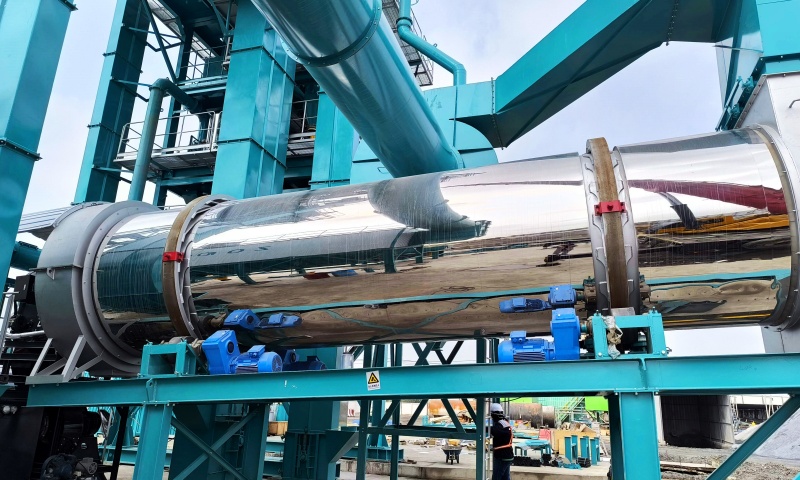
Equipment operating status directly affects the temperature control effect, common equipment-related problems are mainly three types. First, the burner is inefficient or failure, resulting in insufficient or uneven heat output, unable to meet the heating needs of the aggregate and asphalt; Second, the drying drum heat loss, such as drum liner damage, insulation layer falling off, there is air leakage, etc., will lead to heat waste, affecting the heating effect; Third, the pipeline and tank insulation failure, resulting in asphalt in the transmission and storage process heat loss, the situation of temperature drop. The third is the failure of pipeline and tank insulation, resulting in heat loss during the delivery and storage of asphalt, and temperature drop.
Control System Limitations
The lack of precision and stability of the control system can lead to deviations in temperature control. First of all, the inaccuracy of the temperature sensor will cause the temperature reading deviation, so that the operator can not grasp the real temperature situation, and then make the wrong adjustments; secondly, the sensor and the control system are not calibrated properly, resulting in the mismatch between the control parameters and the actual production demand, and can not realize the accurate temperature control; finally, the lack of real-time monitoring function, can not find the temperature fluctuations in a timely manner, resulting in the temperature anomaly problem continues to expand, affecting production quality.
Environmental Conditions
External environmental conditions on the asphalt production temperature will also have a significant impact, low-temperature environment will accelerate the loss of heat from the equipment and materials, increasing the difficulty of heating and fuel consumption; and windy and high humidity weather will further exacerbate the heat loss, while high humidity will lead to the increase in the moisture content of the aggregate, indirectly affecting the heating effect. These changes in environmental factors will lead to increased difficulty in temperature control, easy to appear all kinds of temperature anomalies, which is also the asphalt production temperature problems and solutions need to focus on the external factors.
Solutions to Asphalt Temperature Problems
Improve Aggregate Heating Efficiency
Aggregate heating is the primary link of temperature control in asphalt production, and the efficiency of aggregate heating directly determines the stability of the subsequent production process. In view of the low temperature of aggregate, uneven heating and other related temperature problems, it is necessary to start from the three core dimensions of asphalt mixing plant equipment setup, equipment selection and raw material pretreatment to comprehensively improve the heating efficiency and ensure that the temperature of aggregate reaches the production standard.
Optimize burner settings
Burner as the core equipment for aggregate heating, its operating status directly affects the heat output effect, the operator needs to adjust the mixing ratio of fuel and air according to the moisture content of the aggregate, the amount of feed and other real-time parameters, to ensure that the fuel is fully combusted, to avoid waste of heat due to insufficient combustion of fuel, and at the same time to stabilize the heat output of the burner, to prevent the heat from fluctuating, to provide a stable heat support for the uniform heating of the aggregate. Provide stable heat support.
Adopting high-efficiency drying drum
The traditional drying drum is prone to serious heat loss, uneven heat transfer and other problems, and replacing it with a high-efficiency drying drum can effectively improve this situation. The high-efficiency drying drum can not only reduce the heat loss of the drum itself by optimizing the structure of the drum, increasing the thickness of the heat preservation layer, and optimizing the design of the internal coping plate, but also enhance the contact area and contact time between the heat and the aggregates to accelerate the efficiency of the heat transfer to ensure that the temperature of aggregates entering into mixing is uniform, and avoiding the occurrence of heat loss. Aggregate temperature uniformity, to avoid the emergence of local heating insufficient, local overheating.
Pre-drying treatment for wet aggregates
When the moisture content of the aggregate is too high, most of the heat in the drying process will be used to evaporate the water, resulting in insufficient heating of the aggregate, so it is necessary to carry out pre-drying treatment before the aggregate enters the drying drum, which can be carried out through the installation of pre-heater for preliminary heating and dehydration of the aggregate, or the use of raw material heap covering, ventilation and drying to reduce the moisture content of the aggregate, reduce the consumption of heat in the drying process, and ensure that the drying temperature of the aggregate reaches 150-180 ℃. 150-180 ℃ requirements, to further optimize the aggregate drying temperature control effect, from the source to reduce the occurrence of aggregate temperature-related problems.
Optimize Bitumen Heating and Storage
Bitumen heating and storage links directly affect the viscosity and bonding properties of asphalt, for asphalt overheating, too cold, temperature fluctuations are too large and other issues, the need to optimize the storage temperature control, heating mode upgrade, insulation measures to strengthen the three aspects, to ensure that the bitumen in the process of heating and storage of stable temperatures, to meet the production requirements.
Keep the bitumen storage tank temperature stability
Asphalt storage tank is the core equipment for asphalt storage, its temperature stability directly determines the quality of asphalt, the need to install high-precision thermostat device in the tank, real-time monitoring of asphalt temperature in the tank, when the temperature is below 140 ℃ automatically start the heating function, when the temperature is higher than 170 ℃ when the automatic stop heating, to prevent excessive fluctuations in the temperature of asphalt; at the same time, in the outer wall of the tank with a thicker insulation layer, the selection of high-temperature resistance, insulation effect Good insulation materials, reduce the heat loss of asphalt in the tank, to ensure that asphalt long-term in the best storage temperature range.
The use of thermal oil heating system
Traditional asphalt heating method is prone to uneven heating, local overheating and other issues, while the thermal oil heating system has the advantages of uniform heat transfer, accurate temperature control, low energy consumption, etc., through the circulation of thermal oil flow, the heat will be uniformly transferred to the asphalt, asphalt heating temperature can be effectively controlled to avoid overheating or overcooling, and at the same time reduce the aging of the asphalt and degradation, to ensure that the asphalt of the bonding properties for the subsequent mixing of high-quality asphalt raw materials. link to provide high-quality asphalt raw materials.
Strengthen the pipeline and tank insulation measures
Asphalt in the delivery process, the heat loss of the pipeline will lead to a decline in asphalt temperature, affecting the quality of the subsequent mixing, so the need for asphalt pipeline, tank interface and other key parts of a comprehensive inspection, repair the damage of the thermal insulation layer, do not do thermal insulation treatment of the parts of the insulation layer, sealing the pipeline interfaces at the gap, reduce heat loss, to ensure that asphalt in the delivery and storage process to maintain a stable temperature to avoid the temperature drop caused by poor mobility, avoiding the loss of heat, and to ensure that asphalt in the delivery and storage process, to ensure that asphalt is stable. Avoid problems such as poor fluidity and insufficient adhesion caused by temperature drop.
Upgrade Temperature Control Systems
Temperature control system is the core of accurate temperature control in asphalt production, in view of the lack of precision of the control system, monitoring is not timely, human error, etc., we need to upgrade the system to achieve accurate and efficient control of the temperature, to fundamentally reduce temperature fluctuations.
Installation of high-precision temperature sensors
Temperature sensor is the basis of temperature monitoring, traditional sensors are prone to reading deviation, sensitivity degradation and other problems, replaced with high-precision temperature sensors, can improve the accuracy of temperature readings, the error is controlled within a reasonable range, real-time capture of aggregate, asphalt, mixture temperature changes in all segments of the temperature control for the operator to adjust the temperature control to provide a reliable basis for data, to avoid temperature control due to the sensor errors caused by Avoid temperature control deviation caused by sensor error.
Adopt PLC/SCADA automated control system
The traditional manual temperature control method is prone to operating errors and cannot realize real-time adjustment. PLC/SCADA automation control system can realize automatic adjustment and control of temperature, and through presetting temperature parameters, the system can automatically adjust the operating status of burner and heating system according to real-time monitored temperature data to reduce human error and improve the precision of temperature control; at the same time, the system can realize centralized management of temperature data of each link, which is convenient for the operator to comprehensively manage the temperature data and improve the accuracy of temperature control. At the same time, the system can realize the centralized management of temperature data of each link, which is convenient for operators to fully grasp the temperature situation in the production process and discover potential temperature abnormalities in time.
Build a real-time temperature monitoring platform
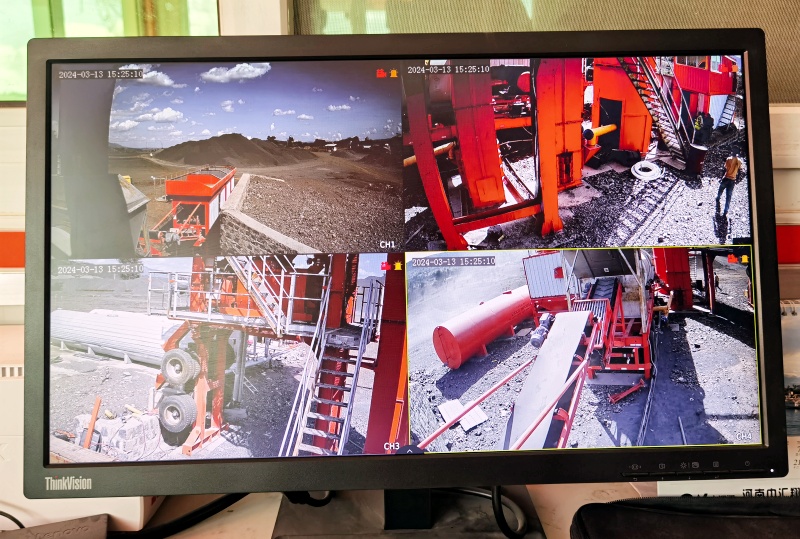
Combined with digital technology, build a cloud-based real-time temperature monitoring platform, connect the temperature sensors of each link with the platform, operators can view the temperature parameters in the production process in real time through cell phones, computers and other terminal equipment, no matter where they are to grasp the temperature dynamics; when the temperature fluctuates out of the permissible range, the platform will automatically send out an early-warning signal, to remind the operator to adjust in time to avoid the temperature anomalies. When the temperature fluctuates beyond the permissible range, the platform will automatically issue an early warning signal to remind the operator to make timely adjustments to avoid the temperature abnormality from expanding, and to ensure that the temperature is always stabilized in the optimal range during the production process.
Strengthen Asphalt Plant Maintenance
Stable operation of equipment is an important guarantee of temperature control, many temperature problems are related to the lack of equipment maintenance, so it is necessary to establish a perfect equipment maintenance system, regular inspection, cleaning and maintenance of relevant equipment to reduce equipment failure caused by temperature abnormalities.
Regularly check the burner
The operating status of the burner directly affects the heat output, the need to develop a regular inspection program, weekly comprehensive inspection of the burner, clean up the nozzle carbon, debris, to prevent nozzle clogging caused by insufficient heat output; check the burner sealing, repair the damaged parts of the seals, to avoid air leakage caused by fuel combustion is not sufficient; at the same time, check the ignition system of the burner, control system, to ensure that its operation Meanwhile, check the ignition system and control system of the burner to ensure its normal operation and avoid insufficient heating of aggregate and temperature fluctuation caused by burner failure.
Regularly check the thermal insulation layer and heat loss points of the equipment
Drying drum, bitumen storage tanks, conveying pipelines and other equipment is easy to fall off the insulation layer, broken and other cases, need to check these parts of the monthly, timely repair of damaged linings and insulation layer, the aging of the insulation material for replacement; check the connection of the equipment, the interface whether there is an air leakage, sealing all the heat loss points, reduce heat waste, to ensure that the equipment’s thermal insulation to avoid the loss of heat resulting in a drop in temperature, reduced heating efficiency and so on. to avoid problems such as temperature drop and reduction of heating efficiency caused by heat loss.
Regular cleaning of drying drum and filter
The coping board inside the drying drum is easy to accumulate material and scale, which will affect the heat transfer efficiency, so it is necessary to clean the drying drum every quarter to remove the internal accumulation of material and scale to ensure the normal work of the coping board; at the same time, regularly clean the raw material filters and asphalt filters to prevent impurities from blocking the filters, which will lead to uneven feeding of materials and poor transfer of heat to ensure the stability of the heating efficiency, and to reduce the temperature abnormality due to the blockage of the equipment.
Optimize Production Process
Reasonable production process can effectively improve the stability of temperature control, reduce temperature fluctuations due to unreasonable processes, uneven heating and other issues, need to optimize the production process from the mixing parameters adjustment, feeding management, operation specifications in three aspects, to ensure that the temperature of each link is stable.
Reasonable adjustment of mixing time
Mixing link is to ensure that the temperature of the mixture is uniform key, mixing time is too short, the material is not fully mixed, uneven heat distribution, will lead to fluctuations in the temperature of the mixture; mixing time is too long, will lead to too high a mixing temperature, accelerate the aging of asphalt, so according to the aggregate temperature, asphalt temperature, mixing ratios and other parameters, reasonable adjustments to mixing time, to ensure that the material in the mixing process of uniform heat distribution, not only ensure the full mixing of the mixture, but also avoid the emergence of Mixed material fully mixed, but also to avoid temperature abnormalities, to ensure that the quality of the mixture is stable.
Balance material feeding rate
Uneven material feeding speed will lead to unstable amount of material in the drying drum and mixing equipment, which will lead to uneven heat distribution, temperature fluctuations and other problems. Therefore, it is necessary to optimize the feeding system, adjust the feeding speed of aggregates and asphalt to ensure even and stable feeding, avoid overloading of the drying drum and mixing equipment or underfeeding, and ensure the stability of heating and mixing process to reduce the temperature problems caused by uneven feeding.
Formulate standardized operation procedure (SOP)
The operating behavior of the operator directly affects the effect of temperature control, and it is necessary to combine the actual production to formulate a perfect standardized operating procedure to clarify the temperature control thresholds, operating steps, precautions, etc.; at the same time, strengthen the professional training for the operators to enhance their ability in temperature control technology, equipment operation and fault troubleshooting, standardize the operating behavior of the operators, avoid temperature control deviation caused by irregular operation, and ensure that the temperature control is stable due to uneven feeding of materials. Temperature control deviation, to ensure the standardization and consistency of temperature control links, from the process to ensure temperature stability.
Advanced Technologies for Asphalt Temperature Control
Intelligent Automation Systems
With the asphalt production industry to intelligent, automated transformation, intelligent automation technology in temperature control is more and more widely used, its core advantage is to break the limitations of the traditional artificial temperature control, to achieve accurate prediction of temperature, dynamic adjustment, significantly improve the accuracy of temperature control and production efficiency, to fundamentally reduce the human error brought about by the operation of the temperature anomaly. Among them, AI-based temperature prediction technology is the core support of intelligent temperature control, the technology relies on big data algorithms, integration of asphalt production process of historical temperature data, raw material characteristics of data, environmental parameter data, etc., through the machine learning to continuously optimize the prediction model, to be able to prejudge the temperature fluctuation trend, accurately identify possible temperature anomalies (such as insufficient heating of the aggregate, asphalt, overheating, etc.), operators can be based on this forward-looking adjustment. Accordingly, the operator can make prospective adjustments, optimize the burner settings and adjust the feed rate in advance to avoid temperature anomalies, transforming temperature control from “passive response” to “active prevention”. At the same time, adaptive control system and AI prediction technology synergistic effect, can capture the real-time characteristics of raw materials (such as aggregate moisture content, grading changes), environmental conditions (such as ambient temperature, humidity, wind speed) dynamic changes, automatically optimize the temperature control parameters, without human intervention to achieve the dynamic adjustment of the temperature, for example, when detecting a sudden increase in the moisture content of aggregates, the system will automatically increase the heat of the burner. For example, when the moisture content of the aggregate is detected to rise suddenly, the system will automatically increase the heat output of the burner and prolong the drying time to ensure that the temperature of the aggregate is stable and meets the standard; when the ambient temperature drops suddenly, the system will automatically strengthen the heat preservation of the equipment and adjust the heating rhythm to avoid rapid loss of heat, and always maintain the temperature of each production link to be stable, which will greatly reduce the work intensity of the operators and enhance the stability and consistency of the temperature control at the same time.
Energy-Saving Technologies
In the asphalt production temperature control process, energy consumption and environmental emissions is the core of the enterprise focus, the application of energy-saving technologies can not only effectively reduce the operating costs of enterprises, but also respond to the green production policy, reduce environmental pressure, to achieve the economic benefits and environmental benefits of the double enhancement. Among them, the waste heat recovery system is the asphalt mixing plant temperature control in the most practical energy-saving technologies, asphalt production process, drying drums, burners and other equipment will discharge a large number of high-temperature exhaust, these exhaust gases contain a large amount of heat if the direct emissions, will cause a serious waste of energy. Waste heat recovery system through a special heat transfer equipment, the heat in the high-temperature exhaust gas recovery, purification and processing, and then reuse the recovered heat in the aggregate preheating or asphalt insulation links, on the one hand, can reduce the aggregate drying link of fuel consumption, reduce heating costs, on the other hand, can assist in maintaining the storage temperature of asphalt to reduce the insulation link of the energy loss, according to the industry practice data show that the rational application of waste heat According to industry practice data show that the rational application of waste heat recovery system can reduce the fuel consumption of asphalt production by 10% -15%, energy saving effect is remarkable. In addition, the popularization and application of low-emission burners is also an important measure of temperature control and energy saving and environmental protection, traditional burners in the heating process, easy to fuel combustion is not sufficient, not only a waste of energy, but also produces a large number of harmful gases (such as carbon monoxide, nitrogen oxides). Low-emission burner by optimizing the combustion structure, the use of efficient combustion technology, can ensure that the fuel is fully combusted, in order to ensure stable heat output, to meet the demand for temperature control at the same time, effectively reduce harmful gas emissions, in line with the current policy requirements of environmental protection and production, and to truly achieve energy saving and environmental protection of the double target, help asphalt production enterprises to green, low-carbon transformation.
Digital Monitoring and Remote Control
The rapid development of digital technology for asphalt production temperature control provides a more convenient and efficient management mode, breaking the spatial limitations of the traditional temperature control, real-time monitoring of temperature data, remote control and data-based decision-making, significantly improving the intelligent level of temperature control. Cloud-based mixing plant management platform is the core carrier of digital monitoring and remote control, the platform through the Internet of Things technology, the asphalt production of each link of temperature sensors, equipment operation sensors and other sensors connected to the cloud server to achieve real-time collection of temperature data, transmission and storage, the operator does not need to be on duty at the site of the production, you can use cell phones, computers and other terminal equipment, anytime, anywhere, to view the aggregate heating temperature, Asphalt temperature, mixing temperature, discharging temperature and other real-time parameters, clearly grasp the dynamics of temperature changes. When the temperature fluctuation exceeds the permissible range, the platform will automatically send out sound and light warning signals, and at the same time push the warning information to the operator’s terminal, reminding the operator to make timely adjustments to avoid continuous expansion of the temperature abnormality problem, and effectively reduce the production risk. In addition, based on the data-driven decision-making mode, relying on the cloud platform to store the historical temperature data, equipment operation data, etc., through the data analysis tools to dig the change rule of temperature, the correlation between the operating state of the equipment and the temperature control, the operator can optimize the temperature control strategy, adjusting the production process to provide a scientific basis, for example, through the analysis of different seasons, different raw material characteristics of the temperature data, can be optimized for the temperature threshold and heating parameters, to improve the production risk. For example, by analyzing the temperature data under different seasons and different raw material characteristics, it can optimize the temperature threshold and heating parameters of each link, and improve the accuracy of temperature control; by analyzing the correlation between the equipment operation data and the temperature fluctuation, it can prejudge the equipment failure in advance, do a good job in the maintenance of the equipment, and reduce the temperature abnormality due to the equipment problem, further improve the production efficiency and product quality, and push the transformation of the asphalt production temperature control to digitalization and refinement.
Best Practices for Stable Asphalt Production Temperature
To realize the long-term stability of asphalt production temperature, avoid the recurrence of various types of temperature anomalies, to ensure the continuity of production and product quality consistency, we need to combine the actual conditions of asphalt production, follow the scientific, systematic best practices, temperature control into the production of the whole process of every detail, from the management of equipment, personnel operation, process specification, seasonal adaptation of the four core dimensions, to build an all-round temperature stability protection system. Protection system.
Regular Calibration of Temperature Sensors
Temperature sensor as the temperature monitoring and control of the “eyes”, the accuracy of its readings directly determine the scientific nature of temperature control decisions, if the sensor deviation, will lead to the entire temperature control system into passive, triggering a series of temperature problems. Therefore, it is recommended that all temperature sensors monthly for a comprehensive calibration, calibration process should be strictly in accordance with industry standards, the use of professional calibration equipment, the sensor reading error control within the allowable range, calibration is completed to make a detailed record, the establishment of the sensor calibration archives, regular retrospective effect of the calibration; at the same time, in the day-to-day production, the operator needs to check the sensor’s operating status on a daily basis, and timely clean up the sensor surface dust, oil and dirt. At the same time, in daily production, the operator should check the operation status of the sensor every day, clean the dust, oil and other debris on the sensor surface in a timely manner to avoid the sensor being blocked or damaged, to ensure that it can capture the temperature changes in real time and accurately in all aspects of the process, to provide a reliable data basis for the adjustment of the temperature control, and to avoid the temperature control deviation due to the error of the sensor from the source.
Strengthen Operator Training
The operator is the direct implementer of temperature control, its professional ability and operation standardization directly affects the temperature control effect, many temperature problems occur with the operator improper operation, the temperature control technology mastery is not skilled. Therefore, the enterprise needs to establish a perfect training system, regular organization of operators to carry out professional training, training content covers the principle of temperature control, each link temperature threshold requirements, equipment operation specifications, temperature anomalies troubleshooting methods, etc., and invite industry experts on-site guidance, combined with the actual production of a typical temperature problem cases, hands-on teaching, so that operators are skilled in the temperature adjustment skills, to quickly identify and properly deal with various types of temperature anomalies; at the same time, the temperature control of the direct executor of the professional ability and operational standards directly affect the temperature control effect. At the same time, establish an assessment mechanism to regularly assess the professional ability and operation standardization of the operators, and they can only take up the post after passing the assessment, so as to ensure that every operator can have qualified temperature control ability, standardize the operation behavior, and avoid temperature fluctuation, uneven heating and other problems caused by operation errors.
Adjust Operation Strategy According to Seasonal Changes
Seasonal changes in external environmental temperature, humidity and other parameters, is an important external factor affecting the stability of asphalt production temperature, if you ignore the seasonal differences, along with a fixed mode of operation, it is very easy to cause all kinds of temperature problems. In the cold, wet season, the external low temperature will accelerate the heat loss of equipment and materials, high humidity will lead to increased moisture content of the aggregate, increasing the difficulty of heating, this time to do a good job in advance to deal with the measures: raw material storage links, cover the aggregate heap heat preservation, to avoid the impact of low temperature and humidity of the aggregate, if necessary, using ventilation and drying, pre-heating, etc. to reduce the moisture content of aggregates; equipment operation links, check and reinforce equipment Equipment operation, check and reinforce the equipment insulation layer, seal the heat loss points, increase the heat output of the burner appropriately, extend the aggregate drying time, to ensure that the aggregate temperature is up to standard; asphalt storage and transportation links, to strengthen the insulation of the storage tanks and pipelines, to avoid a rapid decline in the temperature of asphalt. In the high temperature, dry season, need to appropriately reduce the burner heat output, optimize the feed rate, to avoid overheating of aggregate, asphalt aging, and at the same time do a good job of equipment cooling, to prevent equipment failure due to high temperature operation, to ensure that the temperature control to adapt to the seasonal changes, to maintain stable production.
Formulate Perfect Standardized Operation Procedure (SOP)
Standardized, regulated operation is an important guarantee of long-term stability of the temperature, can effectively circumvent the arbitrariness of human operation, to ensure that the temperature control of each production process are followed. Enterprises need to combine their own production equipment, raw material characteristics, production scale and other actual conditions, the development of a detailed standardized operating procedures, clear temperature control thresholds for each production link, operating steps, precautions, emergency treatment programs, such as clear aggregate drying temperature, asphalt heating temperature, mixing temperature, discharge temperature of the specific control range, the provisions of the burner adjustments, sensor inspection, equipment maintenance of specific Frequency and operation methods, clear temperature abnormalities appear after the emergency disposal process, to ensure that operators have a basis in the production process, there are rules to follow; at the same time, regular review and optimization of the standardized operating procedures, combined with the production process of new problems, new situations, and improve the process content in a timely manner, to ensure that the process of the scientific and applicability of the process, through the standardization of the process management, to achieve the systematic control of the temperature, normalization, fundamentally reduce the occurrence of asphalt production temperature problems, to ensure the long-term stable operation of asphalt production.
Conclusion
Temperature control in the asphalt production process is the core link to ensure product quality, improve production efficiency and reduce operating costs, common temperature problems include low or overheated aggregate temperature, asphalt heating abnormalities, temperature fluctuations in the mixing process, and the discharge temperature is too high, and the root cause of this is mainly related to the four aspects of raw materials, equipment, control systems and environmental conditions. By improving aggregate heating efficiency, optimizing asphalt heating and storage, upgrading the temperature control system, strengthening equipment maintenance and optimizing the production process, all kinds of temperature anomalies can be effectively solved; at the same time, the introduction of intelligent automation, energy-saving and digital monitoring and other advanced technologies, and following the best practices of temperature control, can further enhance the stability and accuracy of temperature control. Accurate temperature control not only improves asphalt product quality and extends the service life of the road surface, but also reduces fuel consumption and equipment loss, and promotes the green and efficient development of the asphalt production industry. Asphalt production temperature problems and solutions to the implementation of the need for enterprises to pay attention to technological upgrading and management optimization, to ensure that the temperature of each production process is in a reasonable range, to achieve production efficiency and product quality of the double enhancement.
FAQ
Q1: What is the ideal temperature of asphalt production?
The ideal temperature of asphalt production varies according to different production processes, and precise control of temperature in each process is the key to guarantee product quality and production efficiency. The ideal temperature range of aggregate heating is 150-180℃, which can effectively remove the water in the aggregate to ensure the good bonding between asphalt and aggregate, and at the same time, avoiding the damage to the performance of aggregate caused by too high or too low temperature. The optimal temperature of asphalt heating is controlled at 140-170℃, which can maintain the appropriate viscosity of asphalt, improve its mobility and bonding capacity, and lay a solid foundation for the mixing process. In addition, the mixing and discharging temperatures need to be synchronized with the above two processes to ensure the uniformity of the finished asphalt mixture and to meet the requirements for on-site paving. Strictly controlling the temperature in the above ideal range can effectively avoid temperature-related quality problems such as segregation, poor bonding and asphalt aging.
Q2: What is the effect of moisture on asphalt temperature control?
Moisture is one of the key factors affecting the temperature control of asphalt production, and its influence is mainly concentrated in the aggregate drying process, which indirectly affects the whole production process. On the one hand, high moisture content of aggregate will significantly increase the heat consumption of the drying process, most of the heat output from the burner will be used to evaporate the internal moisture of the aggregate, resulting in insufficient heat to raise the temperature of the aggregate, which leads to the problem of low temperature of the aggregate, which further causes poor bonding between asphalt and aggregate. On the other hand, the moisture will reduce the heat transfer efficiency between the aggregate and the hot air, resulting in uneven heating of the aggregate, or even localized overheating or localized underheating. In addition, in a high humidity environment, moisture will also accelerate the heat dissipation of equipment and materials, increase the difficulty of temperature control, and indirectly increase fuel consumption. Therefore, reducing the moisture content of aggregate through pre-drying, covering and other measures is an important prerequisite for the stable control of asphalt production temperature.
Q3: Why is asphalt mixture too cold or too hot?
Asphalt mixture is too cold or too hot, mainly is the result of raw materials, equipment, control system and environmental factors, is a common temperature anomaly in production. The main reasons for the asphalt mixture is too cold include: high moisture content of the aggregate caused by inadequate heating; low ambient temperature and equipment heat loss is serious; burner inefficiency, heat output is insufficient; inaccurate readings from temperature sensors, resulting in the operator to make the wrong adjustments. The main reasons for asphalt mixture overheating include: burner heat output is too large or unreasonable parameter settings; drying drum heat loss is serious, resulting in localized overheating of aggregates; temperature control system fails to adjust the heating intensity in a timely manner; feeding speed is not uniform, resulting in excessive heat accumulation in the mixing equipment. To solve the problem, it is necessary to check the relevant links one by one, find the root cause and make targeted adjustments to ensure that the temperature of the asphalt mixture is stabilized in the ideal range.
Q4: How to reduce fuel consumption while maintaining temperature stabilization?
Reducing fuel consumption while maintaining a stable temperature is the core demand of asphalt mixing plant to control the operation cost, which can be achieved through technology upgrading, process optimization and equipment maintenance. First of all, the use of waste heat recovery system and other energy-saving technologies can recover the heat in the high-temperature exhaust gas emitted by the drying drum, burner and other equipment, which can be reused for aggregate preheating or asphalt insulation, reducing the heat demand of the burner and realizing energy saving and reduction of fuel consumption. Secondly, optimize the burner settings, reasonably adjust the mixing ratio of fuel and air to ensure that the fuel is fully combusted, to avoid the waste of heat caused by insufficient combustion, and to reduce fuel consumption under the premise of ensuring stable heat output. Again, strengthen the maintenance of equipment, repair the insulation layer of the drying drum, pipeline and other equipment to reduce heat loss and avoid the waste of heat resulting in increased fuel consumption. In addition, optimizing the production process and balancing the feeding speed to avoid rework due to abnormal temperature, these methods can also indirectly reduce fuel consumption and achieve the dual goals of energy saving and stable temperature control.
Q5: What is the best tool for temperature monitoring in asphalt mixing plant?
The selection of temperature monitoring tools for asphalt mixing plant should focus on accuracy, real-time and convenience to provide reliable data support for temperature control, and the best monitoring tools mainly include three categories. First, high-precision temperature sensors, installed in the aggregate drying, asphalt heating, mixing, discharging and other key process procedures, which can accurately capture temperature changes, small error, high sensitivity, is the basis for temperature monitoring. Secondly, PLC/SCADA automation control system can realize real-time collection and analysis of temperature data, automatically adjust the operating status of heating equipment according to temperature changes, reduce manual monitoring and adjustment errors, and improve temperature control accuracy. Third, cloud-based real-time temperature monitoring platform, through the Internet of Things technology to realize the remote monitoring of temperature data, the operator can be cell phones, computers and other terminal equipment, real-time view of the temperature parameters of each link, when the temperature is abnormal, the platform will automatically send out early warning prompts. The three types of tools work together to form a complete temperature monitoring system, which can effectively guarantee the stability of asphalt production temperature and improve production efficiency.