








Major Challenges and Solutions in Global Urban Asphalt Road Refinement
Contents
- 1 Aging Urban Road Infrastructure
- 2 Increasing Traffic Loads and Overloading Issues Emerge
- 3 Rising Environmental and Sustainability Pressures
- 4 Urban Construction Faces Stringent Environmental Constraints
- 5 Climate Change and Extreme Weather Impact
- 6 Rising Material Costs and Supply Chain Volatility
- 7 Quality Control and Standardization Challenges
- 8
- 9 Smart City Integration and Digital Transformation
- 10 The Core Role of Advanced Asphalt Mixing Equipment in Urban Road Rehabilitation
- 11 Conclusion
Against the backdrop of accelerating global urbanization, the concentration effect of urban populations has become increasingly pronounced, with traffic volumes experiencing explosive growth. As the core infrastructure of urban transportation networks, the service performance and engineering quality of asphalt roads directly impact residents’ travel safety and urban operational efficiency, while profoundly influencing the level of sustainable urban development. Asphalt road rehabilitation projects are not only vital public welfare initiatives for repairing aged and damaged surfaces and enhancing travel experiences, but also crucial enablers for upgrading urban infrastructure and adapting to smart city development needs. As core equipment for road construction and rehabilitation, the technical standards and operational efficiency of asphalt mixing plants directly determine the quality stability of asphalt mixtures, thereby fundamentally impacting road durability, safety, and environmental performance. This article systematically analyzes core challenges faced in global urban asphalt road rehabilitation, proposes diversified solutions, and highlights the pivotal role of advanced asphalt mixing equipment in resolving industry pain points and elevating project quality.
Aging Urban Road Infrastructure
Problem Overview
The core road networks in most global cities were constructed decades ago. These asphalt pavements, subjected to repeated traffic loads over extended periods, commonly exhibit structural fatigue. This manifests as typical defects such as pavement cracking, deep rutting, and dense potholes. Furthermore, the original design service life of some roads is severely mismatched with today’s surging traffic volumes, accelerating pavement deterioration. This not only significantly reduces driving comfort but also poses major traffic safety hazards. According to relevant statistics, approximately 40% of urban arterial roads worldwide have exceeded their design service life and urgently require renovation projects.
Solutions
First, establish a full-lifecycle pavement condition assessment system that spans the entire “construction-operation-maintenance-renovation” cycle. Specifically, professional inspection equipment such as ground-penetrating radar, flatness detectors, and deflectometers should be used to regularly conduct comprehensive inspections and data collection on core indicators like pavement structural strength, damage severity (e.g., crack width, pothole depth), flatness, and skid resistance. By establishing digital pavement health records, the progression of pavement defects can be predicted, avoiding resource waste from unnecessary renovations. Second, high-performance asphalt mixes should be selected. These mixes achieve significant improvements in key properties—such as fatigue resistance, deformation resistance, and high-temperature stability—compared to traditional mixes. This is accomplished through optimized aggregate grading and the incorporation of specialized modifiers (e.g., anti-aging agents, reinforcing agents). Such mixes better withstand the dual erosion of long-term traffic loads and natural environments, extending the pavement’s service life. More crucially, upgrading asphalt mixing equipment is central to ensuring mix quality. By incorporating core technologies like precise material proportioning control systems, intelligent closed-loop temperature management, and high-efficiency mixing devices, dynamic and accurate regulation of aggregates, asphalt, additives, and other raw materials is achieved. This ensures the mix meets stringent standards for proportioning accuracy, temperature stability, and mixing uniformity, safeguarding pavement quality at the source and effectively extending road service life. For instance, asphalt mixing plants equipped with intelligent proportioning systems leverage high-precision weighing sensors and smart control systems to achieve milligram-level accurate measurement and automated dispensing of aggregates, asphalt, and additives. Simultaneously, they monitor and correct parameter deviations in real time during production, significantly enhancing the performance stability and reliability of the mix. This provides core material assurance for high-quality road rehabilitation projects.
Increasing Traffic Loads and Overloading Issues Emerge
Core Challenges
With the rapid development of urban logistics, the frequency of heavy trucks and public transport vehicles continues to rise. Compounded by explosive traffic growth driven by emerging mobility models like ride-hailing and shared transportation, the loads borne by urban asphalt pavements now far exceed their original design thresholds. Critically, frequent passage of overloaded vehicles further accelerates pavement deformation and deterioration, causing premature structural defects like rutting and settlement. Simultaneously, worsening urban traffic congestion drastically reduces construction windows for road rehabilitation projects. Completing high-standard renovations within limited timeframes has become a core industry challenge.
Solutions
On the materials front, prioritize the adoption of high-performance modified asphalt materials such as SBS (styrene-butadiene-styrene block copolymer) modified asphalt and polymer-modified asphalt. These materials achieve enhanced performance by incorporating specific ratios of modifiers into the base asphalt matrix, restructuring the asphalt molecular structure. This results in superior high-temperature stability (with softening points elevated to over 60°C), fatigue resistance (with fatigue life extended by 3-5 times compared to conventional asphalt), and deformation resistance. They maintain pavement structural integrity under repeated heavy vehicle crushing, effectively resisting continuous impact from heavy traffic and reducing the occurrence of rutting and cracking.
On the equipment side, the core lies in asphalt mixing plants equipped with intelligent precision batching systems. These systems leverage high-precision load cells (with measurement accuracy up to ±0.1%) and industrial-grade PLC control systems to establish a fully automated closed-loop control system: From incoming material inspection and aggregate drying/heating temperature regulation, to precise metering of asphalt and additives, and real-time monitoring of mix homogeneity, the system automatically calibrates parameters and corrects deviations throughout the process. This ensures the accuracy and uniformity of each batch’s mix ratio, enhancing pavement load-bearing capacity and structural stability from the source. At the design stage, the synergistic load-bearing structure of the pavement surface and base layers must be optimized based on actual traffic load ratings. Specifically, a “high-strength base layer + wear-resistant, skid-resistant surface layer” combination is employed: The base layer utilizes high-strength materials such as cement-stabilized crushed stone or asphalt-stabilized crushed stone to enhance overall pavement load-bearing capacity; The surface course employs fine-graded modified asphalt mix with specialized aggregate grading to improve wear resistance and skid resistance (BPN ≥ 45), while strengthening bond between layers to prevent interlayer delamination.
Furthermore, the high-efficiency continuous production capacity of intelligent mixing equipment is a key advantage for adapting to urban construction constraints—with hourly output reaching 200–400 tons, it achieves over 40% higher productivity than traditional equipment. This enables sufficient mix supply within the limited 3–6 hour nighttime construction window. Combined with rapid paving and compaction techniques, it facilitates short road closures and swift traffic reopening, minimizing disruption to urban traffic during renovation projects.
Rising Environmental and Sustainability Pressures
Key Challenges
In conventional asphalt production, high-temperature heating processes release significant amounts of harmful gases like carbon dioxide and sulfides, accompanied by substantial dust pollution, severely impacting urban air quality. As global environmental awareness grows, countries are implementing stricter urban air quality control policies, continuously raising environmental entry barriers for asphalt road construction and renovation projects. Simultaneously, green infrastructure development has become a core mainstream trend in global urbanization. The inherent high energy consumption and pollution drawbacks of traditional asphalt production models are increasingly incompatible with the core requirements of sustainable development in the new era.
Solutions
Promoting Warm Mix Asphalt (WMA) technology is one of the key pathways to reduce energy consumption and pollutant emissions in asphalt production. The core advantage of this technology lies in breaking the intermolecular forces within asphalt through the addition of specialized warm mix agents (such as surfactants or organic waxes), thereby reducing asphalt viscosity. This allows the production temperature of asphalt mixtures to be significantly lowered by 30-50°C from the 150-180°C required by traditional hot mix processes, down to the 110-140°C range. This temperature reduction not only cuts energy consumption in production by 20%-30% but also significantly reduces emissions of harmful gases like carbon dioxide, sulfur dioxide, and nitrogen oxides. Specifically, carbon dioxide emissions decrease by 15%-25%, sulfur emissions drop by over 30%, while effectively slowing asphalt aging and enhancing the performance stability of the mixture.
Concurrently, intensifying the recycling of reclaimed asphalt pavement (RAP) is a key measure in implementing circular economy principles. The complete process encompasses core steps including milling and recycling of old pavement, material crushing and screening, impurity separation, reclaiming agent addition, and secondary mixing. Advanced asphalt mixing plants, equipped with specialized recycled material processing modules, enable precise control over recycled material blending ratios (current technology achieves up to 60% recycled content). Intelligent temperature control systems ensure consistent mixing temperatures and uniformity of recycled mixtures, facilitating efficient recycling of asphalt and aggregates from old pavements. This approach not only reduces landfill disposal of old pavement waste by over 80%, effectively alleviating resource waste and environmental pressure, but also lowers procurement costs for raw materials like new asphalt and aggregates. Calculations indicate it can reduce material costs per unit project by 15%-25%.
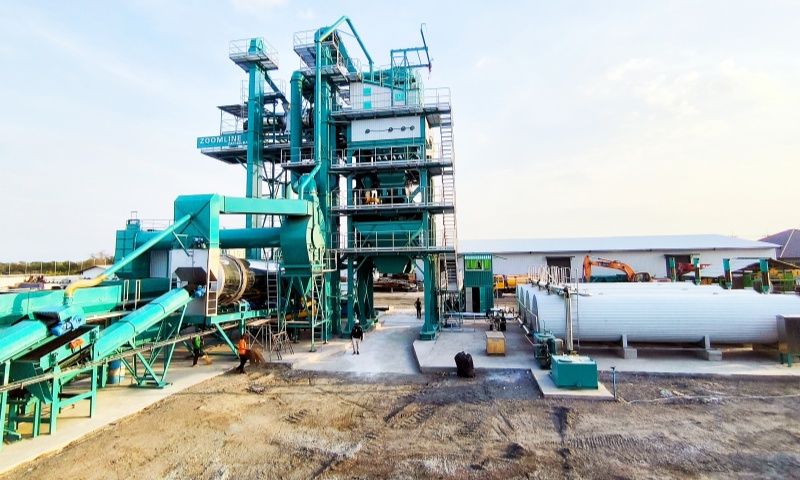
Furthermore, selecting energy-efficient asphalt mixing plants equipped with high-efficiency dust collection systems and exhaust gas purification devices is crucial for achieving environmentally compliant emissions. Typically, such equipment integrates a multi-stage dust removal system: first capturing large particulate matter via cyclone separators (with capture efficiency exceeding 90%), then filtering fine particulates through pulse-jet baghouse dust collectors (achieving filtration precision down to 0.1 microns and removing over 99.9% of fine dust). For exhaust gas treatment, catalytic oxidation units and desulfurization/denitrification modules are installed. These catalyze the decomposition of harmful gases like carbon monoxide and hydrocarbons while efficiently removing sulfides and nitrogen oxides. ultimately achieving dust emission concentrations below 10mg/m³ and ensuring all harmful gas emissions fully comply with national ambient air quality standards and stricter local environmental regulations. This comprehensively meets construction environmental access requirements for sensitive areas such as urban core zones and residential neighborhoods.
Urban Construction Faces Stringent Environmental Constraints
Key Constraints
Scarce land resources in urban core areas severely limit construction sites for asphalt road rehabilitation projects, posing significant challenges for deploying large-scale equipment. To minimize disruption to urban traffic flow and residents’ daily lives, most road rehabilitation projects are restricted to nighttime operations, drastically reducing the available construction window. Simultaneously, urban regulations governing noise and dust pollution during construction are becoming increasingly stringent. The high noise and dust emissions characteristic of traditional construction equipment make it difficult to meet the environmental access requirements for urban construction.
Solutions
At the equipment selection level, compact, modular asphalt mixing plants are prioritized. These units are core equipment specifically designed for confined urban construction scenarios. Their core advantages lie in spatial adaptability and deployment flexibility: Compared to traditional large-scale mixing plants, compact units reduce footprint by 30%-50% and maintain a height of 6-8 meters. This enables flexible access to urban core areas, old neighborhoods, and other construction sites with narrow roads and dense surrounding structures, eliminating the challenges of large equipment access and deployment constraints. Additionally, its modular design breaks down core components—such as the mixing host, drying cylinder, and batching system—into independent modules, each weighing under 20 tons. These modules can be transported in sections via small vehicles and rapidly assembled on-site using bolted connections. The assembly cycle takes only 1-2 days, significantly shorter than the 7-10 days required for traditional equipment. This greatly enhances construction deployment efficiency, meeting the core requirements of “rapid entry and rapid construction” for urban road renovation projects.
Regarding equipment upgrades, asphalt mixing plants require targeted modifications centered on dual core objectives: noise reduction and dust control, fully complying with stringent urban environmental construction standards. For noise reduction, a three-pronged technical approach is implemented: First, low-noise permanent magnet synchronous motors are installed, reducing operational noise by 15-20 decibels compared to traditional asynchronous motors, with motor operation kept below 75 decibels. Second, installing double-layer soundproof enclosures around core noise sources like the mixing host and drying drum. The inner layer uses sound-absorbing cotton (with an absorption coefficient ≥0.85), while the outer layer employs sealed steel plates to further attenuate noise propagation. This reduces noise levels to below 60 decibels at 10 meters from the equipment, meeting noise limits for urban residential and commercial mixed zones. Third, optimize the equipment transmission system by adopting an integrated gearbox-motor design to reduce mechanical transmission clearance and minimize vibration noise. For dust control, an upgraded high-efficiency integrated dust removal system incorporates three modules: pre-treatment, core filtration, and dust recovery. The pre-treatment stage employs an inertial dust collector to intercept particles larger than 10 microns. The core filtration utilizes a pulse-jet baghouse (with a filtration area of 200-500 m²) for precise capture of fine particulates down to 0.1 microns, dust removal efficiency exceeds 99.9%. Recovered dust can be reused in aggregate production, achieving resource recycling. Simultaneously, a sealed pipeline system connects all dust-generating points to prevent dust leakage, ultimately ensuring on-site dust emission concentrations below 10mg/m³, fully meeting environmental requirements for construction in urban sensitive areas.
At the material application level, the focus is on promoting the use of fast-setting asphalt mixtures. Their core advantage lies in “rapid formation and short traffic opening times,” fundamentally addressing the pain points of long closure periods and traffic disruption during urban road construction. By incorporating specialized rapid-setting agents (e.g., cement-based or polymer-based accelerators), this mixture alters the asphalt curing mechanism, significantly reducing strength development time: under ambient construction conditions, the mixture achieves over 70% of design strength within 2-4 hours after paving and compaction, meets light vehicle traffic requirements within 6-8 hours, and fully achieves design traffic strength within 24 hours. Compared to the “24-48 hour traffic opening” standard for traditional hot-mix asphalt, this reduces closure periods by over 60%. For instance, in nighttime construction on urban arterial roads, fast-setting asphalt mix enables an efficient workflow: “Road closure at 10 PM → Paving and compaction completed by 4 AM → Road reopening by 6 AM,” minimizing disruption to morning rush hour traffic. Additionally, fast-setting asphalt mixtures exhibit superior water stability and anti-stripping properties, with Marshall stability exceeding 10 kN and splitting strength ≥1.0 MPa. This enables adaptation to complex urban climatic conditions and traffic loads, ensuring the performance and durability of the pavement immediately after formation.
Climate Change and Extreme Weather Impact
Core Challenges
Against the backdrop of global climate change, extreme weather events are occurring with increasing frequency, imposing more stringent demands on the service performance of urban asphalt pavements. In high-temperature environments, asphalt surfaces are prone to softening and deformation, leading to rutting damage. In cold regions, freeze-thaw cycles continuously erode pavement structures, causing structural damage such as cracking and spalling. Heavy rainfall can compromise pavement stability, potentially triggering safety hazards like landslides and subsidence. Compounded by significant regional climate variations, achieving precise adaptation of asphalt pavements to diverse climatic conditions has become a critical challenge in urban road rehabilitation projects.
Solutions
Implementing customized climate-adaptive asphalt mix design requires establishing a comprehensive technical system encompassing “climate data collection – performance requirement identification – mix design optimization – trial mix validation and application.” The core lies in precisely matching asphalt mix performance indicators to long-term climate characteristics of specific regions, achieving deep adaptation between pavement and climatic conditions. Specifically, the process begins with systematically collecting key climate parameters for the target area, including annual extreme maximum and minimum temperatures, annual precipitation, freeze-thaw cycle frequency, and sunshine duration. Data analysis identifies the primary climate risks the pavement must withstand, thereby determining core performance requirements for the mix, such as thresholds for high-temperature rutting resistance, low-temperature cracking resistance, and water damage resistance. Building on this foundation, the aggregate gradation, asphalt grade, and additive types are specifically adjusted to create a customized mix design.
For high-temperature regions (annual extreme maximum temperature ≥35°C, summer heat duration exceeding 3 months), the core of customized design focuses on enhancing the mixture’s high-temperature stability and rutting resistance. The specific technical approach involves: selecting high-viscosity asphalt with low penetration and high softening point (e.g., No. 70 or higher, softening point ≥55°C), combined with hard aggregates like basalt or diabase (crushing value ≤12%, abrasion value ≤18%). Employing a skeleton-dense gradation design to ensure aggregates form a robust skeletal structure that resists plastic deformation caused by repeated vehicle load compaction. Additionally, incorporate 0.3%-0.5% anti-rut agents (e.g., PE or EVA polymer-based agents). These agents, when melted at high temperatures, fill aggregate voids and enhance mixture cohesion, elevating pavement dynamic stability to over 3000 cycles/mm and significantly reducing the likelihood of high-temperature rutting.
For cold regions with frequent freezing (annual extreme minimum temperature ≤ -20°C, annual freeze-thaw cycles ≥ 50), customized designs prioritize enhancing the mixture’s low-temperature crack resistance and freeze-thaw durability. Technical solutions include: selecting asphalt with high penetration and elongation for superior low-temperature performance (e.g., No. 90 or No. 110 asphalt, with 15°C elongation ≥100 cm), paired with high-toughness aggregates (e.g., limestone with impact value ≤10%), and optimizing gradation to increase mixture void ratio (controlled at 4%-6%) to provide buffer space for asphalt temperature deformation. Additionally, incorporating 2%-3% specialized anti-freeze agents (e.g., organic amine or polycarboxylic acid-based additives) which lowers the freezing point of internal moisture in the mixture. This reduces damage to pavement structures caused by water expansion during freeze-thaw cycles, achieving a low-temperature flexural test failure strain ≥2500 με. This effectively enhances the pavement’s resistance to freeze-thaw cracking and minimizes the formation of transverse and longitudinal cracks in low-temperature environments.
For regions with high rainfall and humidity (annual precipitation ≥1000mm, prolonged rainy seasons), enhancing the mixture’s water damage resistance and waterproofing/seepage prevention capabilities is paramount. In customized designs, beyond optimizing aggregate gradation to improve density, the key lies in incorporating 0.2%-0.4% water damage resistance additives (e.g., anti-stripping agents, silane coupling agents). These additives improve asphalt-aggregate adhesion, elevating the bond strength to Grade 5 or higher, effectively preventing water-induced asphalt stripping and aggregate loosening. Additionally, selecting low-water-absorption aggregates (≤2% water absorption) further reduces moisture intrusion risks, ensuring the mixture maintains structural stability in prolonged humid conditions.
Furthermore, in regions prone to frequent extreme rainfall, the pavement drainage system layout and surface texture should be optimized simultaneously to form a dual-protection system combining “structural drainage + surface drainage.” For drainage system layout, adopt a coordinated design of “central median drainage + shoulder drainage + underground drainage network.” Install longitudinal blind drains in the central median, establish gravel drainage layers on shoulders, and position drainage wells every 30-50 meters within the underground network to ensure rapid removal of rainwater from the pavement structure. For surface texture construction, technologies like ultra-thin wearing courses and micro-surfacing create macro-textures (0.8-1.2mm depth) and micro-textures (0.1-0.3mm depth). This enhances pavement texture depth (≥0.55mm) and skid resistance (BPN ≥50), boosting drainage efficiency by reducing rainwater penetration by over 80%. while effectively improving vehicle traction safety. This comprehensively addresses safety hazards such as surface flooding and vehicle skidding caused by extreme rainfall.
Rising Material Costs and Supply Chain Volatility
Key Challenges
In recent years, prices for core raw materials like asphalt and aggregates have experienced sharp fluctuations due to overlapping factors including international market volatility and geopolitical conflicts, significantly driving up the overall cost of road rehabilitation projects. Concurrently, aggregate resources in urban peripheries are increasingly depleted, necessitating cross-regional transportation from remote areas for certain aggregates. This further exacerbates pressures on raw material transportation and procurement costs. More critically, the instability of the raw material supply chain continues to disrupt project schedule planning, introducing numerous uncertainties and risks to the smooth progress of renewal projects.
Solutions
First, implement a refined strategy for the localized deployment of asphalt mixing equipment. The core of this strategy involves scientifically selecting and rationally laying out mixing plants based on the regional distribution of urban road renewal projects, project scale, and raw material supply radius. Specifically, this involves integrating with urban master plans to designate mixing plant sites within 30 kilometers of administrative districts or core construction zones. Priority should be given to utilizing existing land resources such as idle industrial sites and abandoned factories, avoiding new construction that occupies farmland or ecological conservation areas. Localized deployment reduces transportation distances for core materials like asphalt and aggregates from the conventional 50-100 kilometers to under 30 kilometers. This approach not only cuts diesel consumption in transportation by 30%-40%, mitigating the impact of vehicle emissions on urban air quality, but also significantly lowers transportation costs. Additionally, it shortens material transit times, enhances construction response efficiency, and prevents issues such as temperature loss and performance degradation in mixes caused by long-distance transport.
Second, leveraging the intelligent optimization system of advanced asphalt mixing equipment, a comprehensive material precision control system is established to reduce material waste at the source and enhance resource utilization efficiency. This intelligent system integrates high-precision weighing modules, real-time flow monitoring devices, and big data analysis algorithms to dynamically and accurately regulate the dispensing quantities of various raw materials such as aggregates, asphalt, and additives: By continuously monitoring material loss rates during mixing, it automatically corrects feed quantities, reducing material waste from the 3%-5% typical of conventional equipment to under 1%. For instance, the weighing system of a certain intelligent asphalt mixing plant achieves measurement accuracy of ±0.1%, enabling milligram-level precision dosing. Combined with the system’s built-in material optimization algorithm, it dynamically adjusts material ratios based on specific pavement construction requirements (such as load-bearing capacity and climate adaptability). This maximizes the reduction of expensive asphalt and additive usage while ensuring mix performance, further lowering material costs. Simultaneously, the system automatically records material consumption data for each batch of mix, generating resource utilization analysis reports that provide precise data support for project cost accounting and material management.
Third, continuously deepen the development of recycled asphalt pavement (RAP) recovery and utilization systems. Through technological upgrades and process optimization, further increase the proportion of recycled material incorporated, reducing reliance on new raw materials. This system encompasses core processes including efficient recycling, refined processing, and precise blending of old pavement materials: During the recycling phase, precision milling technology ensures uniform particle size of milled materials with impurity content below 5%. During processing, specialized recycled material modules within asphalt mixing plants perform crushing, screening, heating, and drying to remove soil, impurities, and degraded asphalt from the reclaimed material, thereby improving its quality. During blending, intelligent systems automatically calculate optimal recycled material ratios based on aging levels and gradation characteristics. Current advanced technology enables recycled material content exceeding 60%, with conventional overlay projects maintaining stable ratios between 30% and 50%. By increasing RAP recycling rates, we achieve dual benefits: first, reducing landfill volume for old pavement waste—each 10,000 tons of recycled material saves approximately 8,000 cubic meters of landfill space and lowers disposal costs; second, significantly decreasing procurement of new aggregates and asphalt. New aggregate costs can be reduced by 30%-50%, and new asphalt procurement costs by 20%-30%. Simultaneously, it mitigates ecological damage from aggregate mining and enhances supply chain stability—amidst dwindling new aggregate resources and volatile pricing, the consistent supply of recycled materials effectively hedges against risks of raw material shortages or price surges, safeguarding project timelines from supply chain disruptions.
Fourth, establish long-term strategic partnerships with core raw material suppliers to build a stable, efficient supply chain collaboration system that hedges against cost uncertainties caused by market volatility. Specific cooperation models include: signing long-term supply agreements with fixed price ranges for 1-3 years to lock in core raw material procurement costs, avoiding asphalt price surges triggered by factors like international oil price fluctuations or geopolitical conflicts; Establishing joint reserve mechanisms where suppliers and construction firms jointly fund raw material stockpiles sufficient for 3-6 months of construction demand. Increasing reserves during low-price periods and releasing them rationally during peaks to balance cost pressures from price fluctuations; Promoting technical collaboration by encouraging suppliers to develop customized materials (e.g., specialized modified asphalt, high-performance aggregates) tailored to road rehabilitation performance requirements. Construction firms provide feedback on material usage issues, helping suppliers optimize product quality for mutual benefit. Additionally, forming procurement alliances with multiple construction firms enhances collective bargaining power with suppliers, further reducing procurement costs and strengthening supply chain resilience.
Quality Control and Standardization Challenges
Common Issues
Significant variations in asphalt pavement quality exist across different cities and projects. Core issues like fluctuations in asphalt mixture quality and non-standardized construction techniques have led to substantially reduced actual service life in some projects. Globally, road construction standards and technical specifications remain inconsistent, creating barriers for cross-border engineering contracts and industry technical exchanges. Furthermore, traditional asphalt mixing plant operations heavily rely on manual expertise, making them susceptible to human judgment errors or operational mistakes that directly impact the stability and uniformity of mix quality.
Solutions
First, comprehensively promote the application of next-generation automated asphalt mixing plant control systems. Centered on industrial-grade PLCs (Programmable Logic Controllers), these systems integrate high-precision sensors, intelligent algorithms, and real-time communication modules to establish a fully closed-loop control system. This enables precise management of critical process parameters in asphalt mixture production. Specifically: – During raw material batching, the system employs weighing sensors with ±0.1% accuracy and online gradation detection devices. These identify variations in aggregate composition, asphalt content, and additive ratios in real time. Built-in intelligent optimization algorithms automatically adjust feed ratios, ensuring each batch’s gradation deviation remains within ±5% of specification limits. For heating temperature control, dual monitoring technologies—infrared and microwave temperature measurement—are employed to collect real-time data on aggregate drying temperature, asphalt heating temperature, and mixture discharge temperature. This elevates temperature control precision to ±2°C, preventing asphalt aging from excessive heat or reduced workability from insufficient temperatures. During mixing duration control, torque sensors monitor material resistance changes throughout the mixing process, intelligently assesses mixture homogeneity and automatically adjusts mixing duration (typically controlled between 45-90 seconds). This ensures mixing uniformity meets standards while minimizing issues inherent in manual operations—such as inaccurate ratios, temperature fluctuations, and incomplete mixing caused by experience-based deviations or fatigue. Consequently, asphalt mixture quality achieves enhanced stability and uniformity, reducing the performance variation coefficient within a single batch to below 5%.
Second, establish a real-time monitoring and data traceability system covering the entire “production-transportation-construction-acceptance” process, achieving full-chain visualization and traceability for quality control. During the mixture production phase, an industrial internet platform collects real-time operational parameters of automated mixing equipment, raw material consumption data, and mixture performance test results (e.g., Marshall stability, flow value) to generate an “identity profile” for each batch. During transportation, equipping vehicles with GPS tracking and temperature monitoring devices enables real-time tracking of transport routes, duration, and temperature changes. This ensures mix temperatures remain above design requirements (typically ≥130°C) upon arrival at the construction site, preventing segregation or cooling failure due to delays. During on-site construction, utilize intelligent paving and compaction equipment equipped with real-time monitoring modules for paving speed and compaction density. Dynamically track parameters such as paving thickness, smoothness, compaction passes, and compaction force to ensure construction processes comply with specifications. During acceptance, compare and verify on-site inspection data with production-phase data to establish a complete quality traceability chain. Additionally, the system features quality early warning capabilities. When parameters exceed thresholds at any stage, it automatically triggers audible and visual alarms while pushing alerts to management terminals, enabling early detection and resolution of quality issues to eliminate potential hazards at their inception.
Third, rigorously benchmarking against international advanced road construction standards while integrating actual road conditions and climatic characteristics, we promote the standardization and normalization of quality control processes. On one hand, for critical stages such as mix design, incoming material inspection, equipment calibration and maintenance, and construction process control, we establish enterprise or local standards aligned with international benchmarks, clearly defining technical requirements, operational specifications, and acceptance criteria for each phase. Second, establish standardized quality control procedures. From re-inspection of incoming raw materials and trial mixing verification to on-site construction supervision and post-completion quality sampling, each step must strictly follow standardized processes to prevent quality issues caused by non-compliance. Simultaneously, actively participate in international standard development and exchange, absorbing global best practices in quality control to comprehensively elevate engineering quality and align China’s urban road construction standards with international benchmarks.
Fourth, intensify specialized training for construction personnel and equipment operators by establishing a three-pronged training system integrating theory, practical application, and assessment to build a robust talent foundation for quality assurance. Training content focuses on three key modules: First, training in intelligent equipment operation skills, covering operational procedures, parameter settings, troubleshooting, and routine maintenance for automated asphalt mixing plants and intelligent paving and compaction equipment. Hands-on drills enable operators to master these skills proficiently, enhancing their precise control capabilities over intelligent machinery. Second, quality control theory and standards training systematically covers international and domestic road construction standards, core quality control principles, and methods for identifying and addressing common quality issues, thereby strengthening operators’ quality control awareness and problem-judgment skills. Third, digital platform application training guides operators in mastering the full-process monitoring and data traceability platform to achieve accurate data collection, analysis, and reporting. Upon completion, operators undergo certification through combined theoretical examinations and practical assessments, with only qualified personnel permitted to commence field operations. Concurrently, a routine training and skill-updating mechanism is established to track advancements in new technologies, equipment, and standards. Regular refresher courses and skill competitions are organized to continuously elevate operators’ professional competence and technical proficiency, providing robust talent support for high-quality road rehabilitation projects.
Smart City Integration and Digital Transformation
Core Challenges
Traditional road construction and renovation projects generally lack digital technology empowerment. Core data such as project progress, quality control, and cost accounting are difficult to share in real time and manage efficiently through collaboration. This directly leads to low collaboration efficiency between road management departments and construction units. At the same time, pavement performance monitoring still relies primarily on manual inspection. This approach is not only inefficient but also limited in detection accuracy. It fails to provide precise and comprehensive data support for road operation, maintenance, and renovation planning, making it difficult to meet the development needs of smart city construction.
Solutions
First, develop intelligent asphalt mixing equipment deeply integrated with IoT and AI technologies, establishing a full-chain intelligent management system encompassing “perception-transmission-analysis-decision-making.” At the equipment perception layer, install various IoT sensing devices—including vibration sensors, temperature sensors, and pressure sensors (with sensor response time ≤10ms and measurement accuracy of ±0.5%)—on core components such as the mixing host, drying drum, and batching system. real-time collection of equipment operational parameters (e.g., motor speed, bearing temperature, vibration frequency) and critical mix production data (e.g., aggregate gradation, asphalt dosage, mixing temperature, discharge timing). The transmission layer employs dual-mode 5G+ industrial Ethernet communication technology to achieve low-latency (≤20ms) and high-bandwidth data transfer, ensuring massive production data is uploaded to the cloud platform in real time. The analysis and decision-making layer leverages AI-powered algorithmic models to perform deep mining and intelligent analysis of collected data: – Equipment failure prediction algorithms utilize historical operational data and real-time monitoring to proactively identify potential equipment risks (e.g., bearing wear, motor overload) with over 95% accuracy, automatically pushing maintenance recommendations to enable predictive maintenance. Through mix quality prediction algorithms, it analyzes the correlation between production parameters and mix performance in real time, dynamically optimizing production parameters to ensure consistent mix quality compliance. Furthermore, intelligent equipment enables smart scheduling of production tasks. Based on the type, volume, and transportation distance of mix requirements at construction sites, it automatically adjusts production priorities and pacing, enhancing coordination efficiency between production and construction.
Second, a comprehensive digital pavement performance monitoring system is established. Leveraging integrated “air-space-ground” monitoring capabilities, it enables round-the-clock, high-precision dynamic monitoring of pavement conditions. At the aerial level, industrial-grade drones equipped with high-definition cameras and LiDAR (flight accuracy ±0.1m, endurance ≥2 hours) conduct large-scale inspections. Image recognition AI algorithms automatically identify pavement defects such as cracks, potholes, and ruts with over 98% accuracy, enabling rapid defect surveys across extensive road networks—5 to 10 times more efficient than traditional manual inspections. At ground level, distributed fiber-optic sensors and strain gauges are embedded within the pavement structure to monitor stress-strain changes, temperature distribution, and moisture penetration in real time under traffic loads. Intelligent sensing loops are deployed on the pavement surface to collect traffic data such as vehicle volume, speed, and axle load. Additionally, mobile inspection vehicles equipped with profilometers, friction coefficient testers, and other instruments conduct detailed pavement performance assessments. All monitoring data undergoes preprocessing through edge computing nodes before being uploaded to a cloud-based monitoring platform. Leveraging big data analytics, the platform generates precise and detailed assessment reports detailing pavement defect locations, types, severity, development trends, and structural health status. This provides scientific, accurate data support for road maintenance departments to formulate targeted maintenance plans and for contractors to optimize renovation project designs, thereby avoiding blind maintenance and excessive renovations.
Finally, a multi-party collaborative digital management platform is established. Leveraging cloud computing and big data technologies, it breaks down data silos among road management departments, construction contractors, equipment suppliers, and raw material providers, enabling real-time data sharing and efficient coordination throughout the entire project lifecycle. The platform encompasses core functional modules including project progress management, quality control, cost accounting, safety supervision, and supply chain management: – Progress Management Module: Utilizes Gantt charts to display real-time completion status of construction milestones, compares planned versus actual progress, automatically alerts for delay risks, and enables remote resource allocation by managers. The quality control module integrates comprehensive quality monitoring data throughout the entire process, enabling one-click traceability and visual display of quality metrics across aggregate production, transportation, construction, and acceptance phases. The cost accounting module automatically aggregates cost data for raw material procurement, equipment leasing, labor expenses, and more, generating real-time cost analysis reports to empower managers with precise project cost control. The supply chain management module synchronizes real-time raw material inventory and supply schedule data, enabling dynamic resource allocation and supply-demand balancing. Additionally, the platform supports multi-device access (desktop, mobile app, tablet), facilitating online collaboration, information exchange, and instruction dissemination among multiple stakeholders. For instance, management departments can issue construction requirements and quality standards through the platform, construction units can provide real-time updates on progress and encountered issues, while equipment suppliers remotely monitor operational status and offer technical support. This comprehensively eliminates information silos inherent in traditional collaboration models, boosting overall project management efficiency by over 30% and providing core support for the efficient operation and management of smart city infrastructure.
The Core Role of Advanced Asphalt Mixing Equipment in Urban Road Rehabilitation
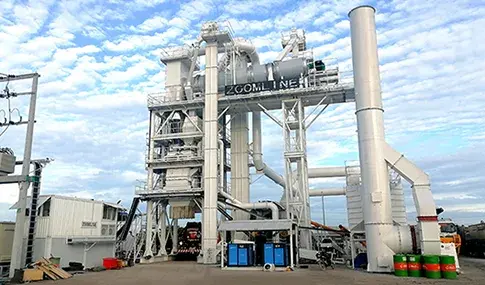
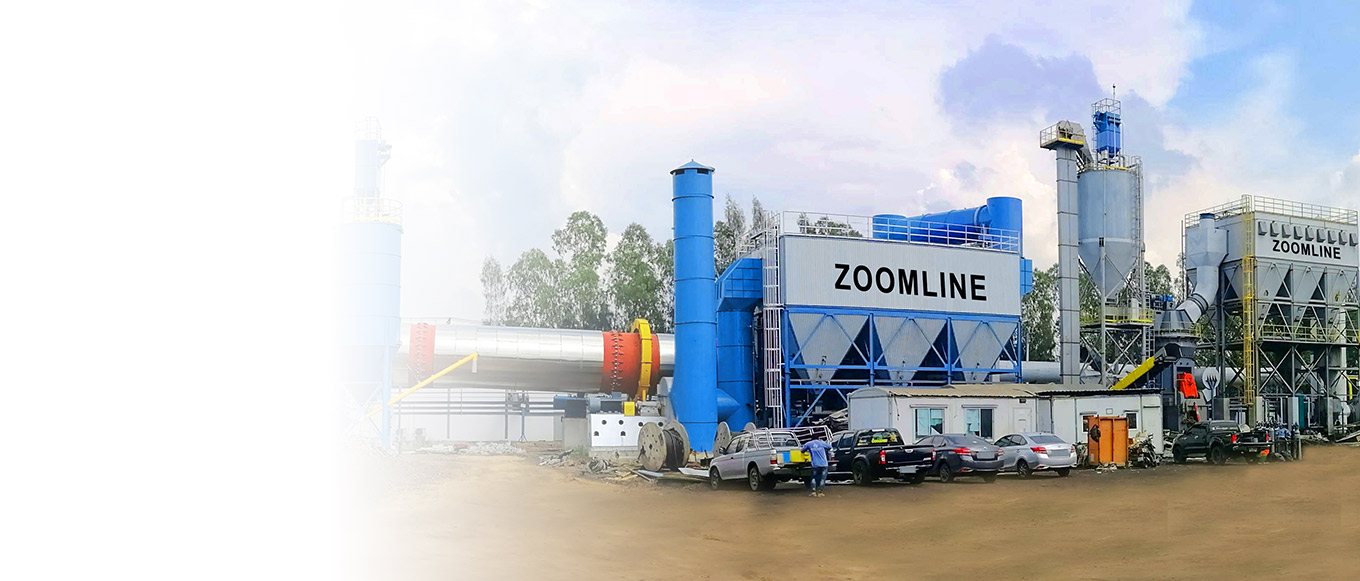
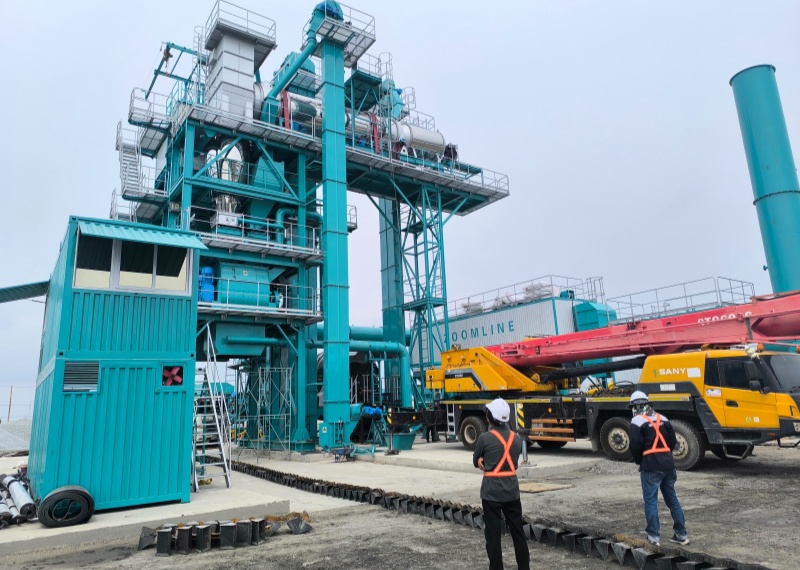
Modern asphalt mixing equipment serves as the core support for urban road rehabilitation projects. Its technical capabilities directly determine project quality stability, construction efficiency, and environmental compliance. During equipment selection, batch mixers and continuous mixers each offer distinct advantages: Batch mixers are better suited for urban road rehabilitation scenarios demanding high-quality mixes and diverse material types, enabling flexible production of multiple mix specifications. Continuous mixers, characterized by high production efficiency and low energy loss, are ideal for large-scale, contiguous road rehabilitation projects. To address the diverse demands of urban road rehabilitation, asphalt mixing plants can undergo customized design upgrades. Examples include adopting compact structures for confined construction sites in urban cores, implementing low-emission technologies to meet city environmental regulations, and integrating smart control systems to support digital management needs. These enhancements comprehensively and precisely fulfill the personalized, high-standard requirements of urban infrastructure projects.
Conclusion
Global urban asphalt road rehabilitation faces multiple compound challenges: aging infrastructure, surging traffic loads, heightened environmental requirements, and constrained construction environments. The innovative application of advanced technologies and core equipment is the key to overcoming these difficulties. From the widespread adoption of high-performance modified materials to the iterative upgrades of intelligent asphalt mixing equipment, and from establishing digital collaborative management systems to deeply implementing sustainable development principles, a series of systematic solutions are driving the high-quality transformation and upgrading of the urban asphalt road rehabilitation industry. Among these, asphalt mixing equipment—as the core hub machinery in road construction—directly guides industry development through technological breakthroughs and intelligent upgrades. Looking ahead, with continuous breakthroughs in cutting-edge technologies like carbon neutrality and end-to-end intelligent processes, urban asphalt roads will evolve toward greater durability, enhanced safety, and improved environmental sustainability. This advancement will solidify the transportation foundation for the sustainable progress of global urbanization.