





What Factors Affect Asphalt Plant Capacity?
Contents
- 1 Introduction
- 2 What Does Capacity Mean in Asphalt Plants?
- 3 Why Asphalt Plant Capacity Planning Matters For Highway Projects?
- 4 Key Factors That Affect Asphalt Plant Capacity
- 5 The Most Common Mistake When Selecting Asphalt Plant Capacity
- 6 How to Choose the Right Asphalt Mixing Plant Capacity?
- 7 How the Right Capacity Improves Asphalt Plant Project Performance?
- 8 How Capacity Influences Asphalt Plant Price?
- 9 Capacity and Its Impact on Construction Schedules
- 10 The Method of Optimising the Production Capacity of Asphalt Mixing Plant
- 11 Conclusion
Introduction
For road construction contractors, the choice of asphalt batch mixing plant capacity is a key part of the success or failure of the project – selecting the right capacity can ensure that the project is completed on time, control costs, and improve profitability; on the contrary, insufficient capacity will lead to delays in the work schedule, penalties for breach of contract, and overcapacity will result in idle equipment, waste of funds, and direct erosion of the project’s profitability. The excess capacity will result in idle equipment and waste of funds, which will directly erode the project’s profit. So, what are the factors affecting the capacity of an asphalt mixing plant? How to accurately select the capacity to meet the project needs?
This article will combine the industry’s practical experience, comprehensively dismantle the core factors affecting the avoidance of selection misunderstandings, to provide practitioners with a reference to the landing, to help optimize the production efficiency of asphalt mixing plant and project profitability, in-depth analysis of asphalt mixing plant capacity, asphalt mixing plant production capacity and hot mix asphalt mixing plant capacity of the core correlation and the impact of the logic.
What Does Capacity Mean in Asphalt Plants?
Asphalt mixing plant capacity, the core refers to the number of tons of qualified asphalt mixture per hour can be produced by the equipment, the unit of measurement is tons per hour (tph), is a measure of the core indicators of the production capacity of the plant, directly determines the output efficiency of the equipment per unit of time, but also a key reference for the project planning stage.
According to the capacity scale, the asphalt mixing plant is mainly divided into three categories, with different capacities corresponding to different project scenarios, adapted to different construction needs:
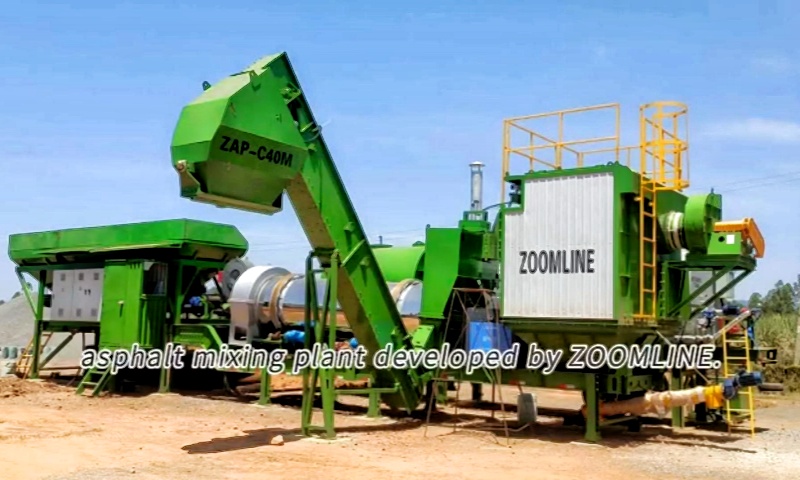
Small capacity asphalt mixing plant (40-80 tons/hour), focusing on flexibility and convenience, is suitable for municipal engineering, small regional projects and residential street paving, without high investment, to meet the output needs of small-scale construction.
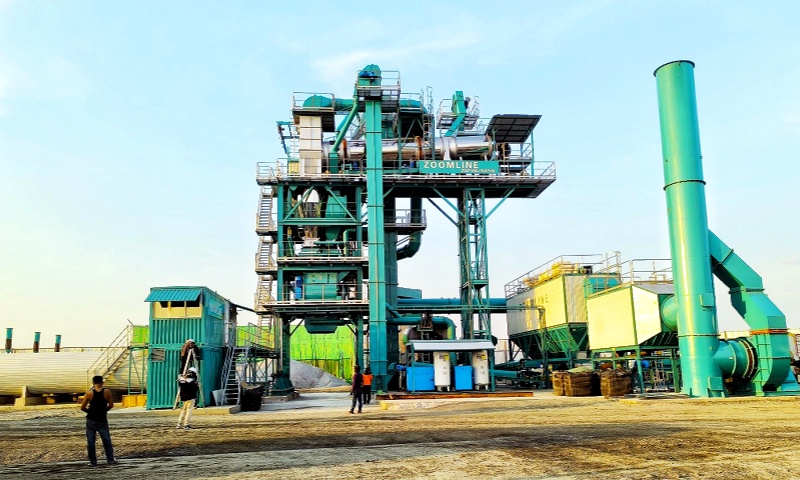
Medium capacity asphalt mixing plant (100-160 tons/hour), the most widely used type in the industry at present, is suitable for medium-sized highway and urban road construction projects, realising the balanced adaptation of capacity and cost.
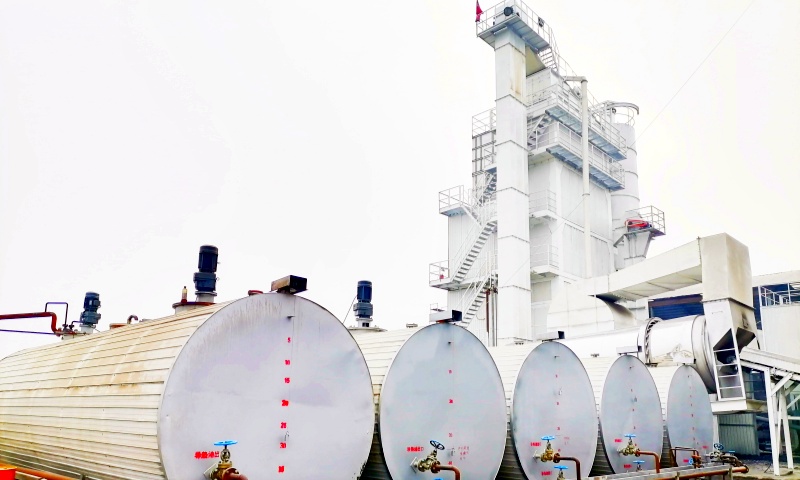
Large-capacity asphalt mixing plant (200-320+ tons/hour), designed for large infrastructure projects, can meet large-scale, high-demand construction scenarios such as highways, airport runways, and large-scale industrial infrastructures, ensuring that the project advances on schedule.
It is worth noting that choosing the right capacity is not simply about pursuing “high capacity”, but rather about realizing an accurate match between capacity and project demand – the right capacity not only ensures that the project is completed on time and avoids delays due to insufficient capacity or waste of resources due to excess capacity, but also balances the need for equipment and equipment to meet the needs of the project and to ensure that the project is completed on time, and that the project is completed on time. Waste of resources, while balancing equipment investment and operational efficiency, to maximise the input-output ratio.
Why Asphalt Plant Capacity Planning Matters For Highway Projects?
Highway construction is a chain of interlocking processes, asphalt mixing plant as the core of the mixture production, its production capacity directly determines the efficiency of the entire construction chain: asphalt mixing plant production of mixed materials, transportation vehicles will be transferred to the construction site of the mixture, paver paving operations, the three links are interdependent, indispensable, any one of these links have a bottleneck, will result in the entire construction process stagnation.
For highway construction projects, the asphalt mixing plant is often the core of the entire project production, its capacity must be paved with the plan, construction progress and local weather conditions to match precisely – if the capacity and paving speed out of step, either will lead to paver waiting for the mixture, resulting in labor, equipment idleness; or will lead to the accumulation of mixed material, temperature If the capacity is out of line with the paving speed, it will either lead to the paver waiting for the mixture, resulting in idle labor; or it will lead to the accumulation of the mixture and a drop in the temperature, which will affect the paving quality.
In addition, asphalt mixing plants are high-investment equipment with huge up-front capital investment, and contractors must find a balance between production capacity and operational efficiency. Scientific capacity planning can not only protect the construction progress, to avoid delays brought about by the risk of breach of contract, but also effectively control the depreciation of equipment, energy consumption, labour, and other operating costs, to ensure that the project’s profitability, and to achieve long-term sustainable operation.
Key Factors That Affect Asphalt Plant Capacity
Asphalt mixing plant capacity is not a fixed value, but is affected by a variety of factors; therefore, an accurate grasp of these core factors in order to achieve scientific planning and efficient optimisation of production capacity. The following combination of industry practice scenarios, the five core factors for detailed disassembly and analysis:
1. Project Size and Scope
The project scale and scope are the core premise for determining the capacity demand of the asphalt mixing plant, which directly determines the high and low range of the required capacity.
For highways, airport runways and other large-scale projects, its asphalt mixture demand, construction cycle is tight, you must use high-capacity asphalt batch mixing plant, in order to meet the high-intensity, continuous production needs, to ensure that the paving task is completed on schedule; and residential streets, small municipal repair and other small-scale projects, the demand for mixture is limited, without the need to invest in high-capacity equipment, the use of small or medium capacity asphalt batch mixing plant can be realized. Efficient operation can be realised by choosing small or medium capacity asphalt mixing plants, effectively avoiding idle and wasteful resources.
In practice, the contractor can be clear through a simple calculation of the required capacity: by calculating the total tons of asphalt mix required for the project, divided by the project’s expected effective working hours, you can derive the approximate capacity requirements for the selection of equipment to provide a scientific basis for the source to avoid blind selection of all kinds of problems brought about by the source.
2. Production Schedule
The construction progress of the project and the duration of the requirements directly determine the direction of asphalt mixing plant capacity selection. For the tight schedule, strict deadlines for urgent projects, need to prioritize the use of high-capacity asphalt mixing plant, to ensure that within a limited period of time to complete the production of a sufficient amount of mixture, not only to avoid delays due to lack of production capacity, but also to eliminate in order to catch up with the progress of the sacrifice of the quality of asphalt mixture; for the longer period of time, the schedule of the project requirements of the relaxation of the choice of medium-sized or small-capacity asphalt batch mixing plant, will be a reasonable distribution of the task of the entire construction cycle, both to ensure production efficiency, but also to ensure that the production capacity and efficiency. For projects with a long construction period and loose schedule requirements, a medium-sized or small capacity asphalt mixing plant can be used, and the production tasks can be reasonably distributed throughout the construction cycle.
The core principle is to achieve a precise balance between the schedule and capacity: not only to avoid high capacity resulting in long-term low-load operation of the equipment, but also to prevent insufficient capacity resulting in lagging construction progress, to ensure that the pace of asphalt mixing plant production and project construction progress with the same frequency and synchronization, taking into account the production efficiency and quality of the project.
3. Mixture Types and Bitumen Grades
Different road projects require different types of asphalt mixture, bitumen standard requirements vary, and the type of mixture directly affects the production efficiency of the asphalt batch mixing plant, which in turn determines the actual output capacity of the equipment.
If the project needs to produce a variety of bitumen standards or special mixtures (such as modified asphalt mixture), asphalt batch mixing plant is more suitable, which has a strong production flexibility, can quickly switch between mix formulations to accurately meet the diversified production needs, only the production efficiency will be slightly impacted; if the project to a single type of mixture production, and focus on the scale of production and efficiency, the drum mixing asphalt plant is more suitable, its continuous production mode asphalt mixing plant can significantly increase the production efficiency of the plant. Its continuous production mode can greatly improve production efficiency and release the full potential of equipment capacity.
It can be seen that the type of mixture demand not only determines the equipment selection of the asphalt mixing plant, but also directly affects the effective production capacity of the asphalt mix plant equipment, which should be combined with the demand of the project mixture, taking into account the flexibility and efficiency of production.
4. Geographical Considerations
The geographic environment of the project site is also an important factor affecting the selection of asphalt mixing plant capacity. The goal is to achieve the optimal balance of transportation costs and production efficiency.
If the project is located in remote areas, inconvenient transportation and transport distance is far, the choice of high capacity asphalt mixing plant is more reasonable – high capacity can effectively reduce the number of times the mixture is transported to reduce transportation costs and time costs, to avoid the construction of the construction of the stagnation due to the lack of timely transportation; if the project is located in the city and suburban areas, the surrounding raw material supply points are close to the transportation, convenient, without the need for high-frequency transportation, the project is located in the urban and suburban areas. If the project is located in urban and suburban areas, the surrounding raw material supply points are close, and the transportation is convenient, no need for high-frequency transportation, and the medium-sized capacity asphalt mixing plant can meet the production demand, which can reasonably control the investment of equipment and avoid the waste of resources caused by overcapacity.
5. Local Infrastructure and Logistics
The efficient production of an asphalt mixing plant can not be separated from the perfect local infrastructure and smooth logistics, which is also a key hidden factor affecting the production capacity, and it is easy to be ignored.
If the local raw material suppliers are close and stable, and the road access conditions are good and the transportation cost is low, the high-capacity asphalt batch mixing plant can give full play to its advantages and realize efficient continuous production; on the contrary, if the supply of raw materials is insufficient and the transportation link is blocked, even if the high-capacity asphalt mixing plant is selected, the equipment will be idle due to the shortage of raw materials, and the designed capacity will not be given full play to, resulting in a waste of production capacity.
In practice, we need to focus on assessing the local raw material supply capacity, road conditions, transportation costs and other core elements to ensure that the asphalt mixing plant capacity and local logistics capacity accurately match, to avoid the capacity waste caused by logistics bottlenecks.
The Most Common Mistake When Selecting Asphalt Plant Capacity
In the process of selecting the capacity of an asphalt mixing plant, many contractors are prone to fall into a misunderstanding – selecting the capacity purely based on the daily peak demand, which seems to be a safe practice, but in fact, it will lead to the waste of equipment and rising costs, and it is the most common selection error in the industry.
At the heart of this misunderstanding is the fact that peak demand is not the actual state of daily production. The construction of highway projects is affected by weather changes, traffic control, site coordination and other factors, and can rarely reach 100% peak capacity; the actual production efficiency is usually only 60% -80% of the planned capacity. Selecting high-capacity equipment purely according to peak demand will result in asphalt mixing plant equipment running at low load for a long time, which will not only increase fuel consumption per unit of tonnage but also accelerate equipment wear and tear, increase maintenance costs, and, in the long run, significantly increase operating costs and erode project profits.
In addition, too large a capacity of the asphalt mixing plant equipment is not only higher upfront investment, will also produce a series of hidden costs: large burners consume more fuel, large drying cylinders require more frequent maintenance, higher power requirements will increase the cost of electricity, while the asphal t plant equipment has never been able to achieve the design efficiency, and ultimately lead to an imbalance between investment and return.
So why is this misconception so common?
There are three core reasons:
First, the contractor’s fear of production bottlenecks, the fear of insufficient capacity to cause delays, and then chose “the bigger the safer” strategy, but ignored the importance of stability and rational planning.
Secondly, ignoring the actual effective working time, many selection calculations default to 8-10 hours of effective working time per day, but in actual construction, equipment commissioning, vehicle waiting, on-site coordination, etc., will shorten the effective production time, resulting in selection calculations out of touch with reality.
Third, over-reliance on a simple online formula, only through the total number of tons divided by the number of days of the project to arrive at the capacity requirements, ignoring the weather, logistics, mix type and other actual variables, resulting in selection bias.
How to Choose the Right Asphalt Mixing Plant Capacity?
The selection of the asphalt mixing plant capacity, the core is to achieve “demand and capacity” of accurate matching, taking into account the current demand and future development. The following are five practical steps that can be landed to help practitioners avoid misunderstandings, scientific selection:
1. Evaluate Your Project Pipeline
Sort out the types of projects to be undertaken, the average size and frequency of projects, and clear long-term capacity needs, to avoid selecting only for a single project selection, resulting in equipment that can not be adapted to future projects, resulting in a waste of resources.
2. Analyse Past Project Data
Access to past production data of similar projects, including the actual production efficiency, mix demand type, capacity-related issues, etc., through the historical data to summarise the actual capacity needs, to provide practical reference for the selection, to avoid the theory of actual disconnect.
3. Consider Future Expansion
If it is expected to undertake larger projects in the future, or plan to expand the scale of operations, selection can be appropriate to choose a slightly higher capacity than the current demand, to reserve space for future expansion, to avoid frequent replacement of equipment, and to bring additional investment.
4. Consult with Experts
You can seek the guidance of a professional practitioner, combined with industry trends and technical experience, according to the specific needs of the project, to develop a personalized capacity selection program to enhance the scientific nature of the selection.
5. Opt for Scalable Solutions
Priority is given to the modular design of the asphalt batch mixing plant. This type of equipment can be flexibly adjusted according to the capacity needs, with the changes in project demand to upgrade capacity, to ensure that the equipment is suitable for long-term production needs, and improve equipment utilisation.
How the Right Capacity Improves Asphalt Plant Project Performance?
When the capacity of the asphalt mixing plant and the actual demand of the project is accurately matched, it not only ensures the smooth progress of the project, but also brings multiple performance enhancement, realizing the double optimization of efficiency and profit.
Realise a Stable Production Rhythm.
Appropriate production capacity can avoid frequent starting and stopping of equipment, reduce the incidence of asphalt mixing plant equipment failure, extend the service life of the equipment, and at the same time ensure the continuity of the mix production, improve the quality of the mix to avoid quality fluctuations due to interruption of production.
Reduce the Cost Per Ton.
When the asphalt plant equipment is running at a reasonable load, the fuel consumption and maintenance costs can be optimized, and the energy consumption and maintenance costs per unit of tonnage can be significantly reduced, while reducing labour waste, which can significantly reduce the operating costs in the long run, and enhance the profitability of the project.
Improve the Construction Synergy Efficiency.
When the output speed of the asphalt mixing plant and the paving speed of the paver are precisely matched, the transportation vehicles can realise the orderly flow and reduce the waiting time, and the working rhythm of the construction team is smoother, which is convenient for the progress control and overall improvement of the project construction efficiency.
How Capacity Influences Asphalt Plant Price?
Asphalt mixing plant capacity is directly related to the price; the higher the capacity, the higher the initial investment in equipment and long-term operating costs. The core impact is reflected in three aspects:
Initial Investment
The higher the capacity of the asphalt mixing plant, the greater the need for stronger structural components and a more advanced automation control system. While the transportation and installation of the equipment is more difficult, the total investment in the preliminary procurement, transportation, and installation is significantly higher than that of the low-capacity equipment. The structural design of high-capacity equipment is more complex, requiring more steel, higher-power motors and other core components, further pushing up the initial investment.
Operating Costs and Hidden Expenses
In addition to the initial investment, the capacity of asphalt batching mixing plant will also affect the long-term operating costs: high-capacity equipment, fuel consumption, electricity demand is higher, although the unit cost per ton may be lower, but the overall energy expenditure is higher; at the same time, high-capacity equipment, parts and components wear and tear faster, the maintenance frequency is higher, and the cost of spare parts purchasing and maintenance has increased; in addition, the relocation cost of large-scale stationary asphalt mixing plant is much higher than that of the mobile asphalt mixing plant, and if the location of the project In addition, the relocation cost of a large stationary type asphalt mixing plant is much higher than that of a mobile asphalt mixing plant, and if the location of the project changes, additional transportation and installation costs will be incurred.
Cost-Benefit Balance.
Although the initial investment of high-capacity asphalt mixing plant is high, it is suitable for large-scale and continuous production projects, and long-term operation can dilute the unit cost and realize profitability on a large scale; low-capacity asphalt mixing plant has low initial investment and high flexibility, which is suitable for small-scale projects or decentralized construction; however, if it is used for large-scale projects, it is necessary to increase the production time or the number of equipments, and the cost of the unit tonnage will rise significantly, which needs to be weighed against the needs of the project.
Capacity and Its Impact on Construction Schedules
Asphalt mixing plant capacity directly determines the construction progress of the promotion of efficiency, capacity and demand imbalance will bring a series of risks, only to achieve a balance in order to ensure that the project is completed on schedule.
The risk of insufficient capacity is particularly prominent: if the hourly capacity of the asphalt mixing plant is unable to meet the paving demand, it will lead to paver and other materials, construction team idling, which will directly delay the construction progress; for the government tendering project, the delay may also lead to default fines, which will further increase the cost of the project, and even affect the credibility of the enterprise.
Excess capacity will also bring challenges: too much capacity will lead to idle asphalt mixing plant equipment, and the capital invested in the early stage cannot be recovered quickly, while increasing fixed operating costs and reducing the profitability of the project; in addition, the maintenance cost and depreciation cost of idle equipment will still need to be spent continuously, which will further erode the profit.
Therefore, the core of capacity planning is to find the balance point – let the asphalt mixing plant capacity and the actual demand of the project, construction progress accurately match to ensure a stable supply of mix, to achieve the optimal use of labour, equipment, and ultimately to ensure that the project is completed on time and efficiently.
The Method of Optimising the Production Capacity of Asphalt Mixing Plant
After selecting the appropriate capacity, through scientific operation and maintenance, you can further optimise the actual production capacity of the asphalt mixing plant, improve production efficiency, and reduce waste of resources. The core can start from three aspects:
Strengthen Asphalt Plant Equipment Maintenance.
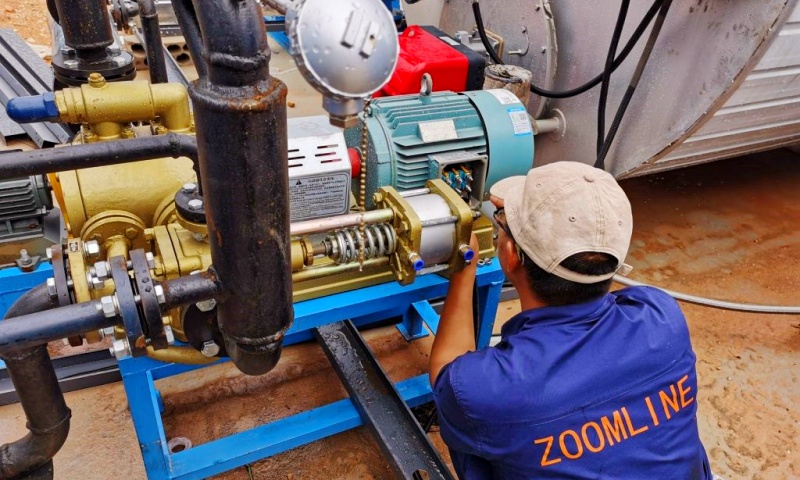
Regular inspection, maintenance and repair of the core components of the asphalt mixing plant, timely replacement of worn parts, to avoid production interruptions due to equipment failure, to ensure that the asphalt batch mixing plant equipment is always in the best operating condition, and to maximise the performance of the designed capacity.
Optimise Supply Chain Management.
Establish a stable relationship with raw material suppliers to ensure that raw materials are supplied on time and in sufficient quantity to avoid production stoppages due to raw material shortages; at the same time, optimise transportation scheduling to ensure smooth transportation of raw materials and reduce waiting time.
Improve Efficiency With the Help of Technology.
Adopt an advanced automation control system, a real-time monitoring system and an efficient material handling system to optimise the production process, reduce manual errors, improve production continuity and efficiency, and further release the capacity potential of the asphalt batch mixing plant.
Conclusion
The selection and optimisation of asphalt mixing plant capacity is the core guarantee for the efficient advancement of highway construction and municipal engineering projects, which is affected by multiple factors such as project scale, construction progress, mixture type, geographic environment and logistics conditions. Avoiding the common misunderstanding of “selecting according to the peak demand”, we can realise the accurate matching of capacity and demand by evaluating the project demand, analysing the historical data, considering the future expansion, consulting the experts and selecting the scalable equipment.
The right capacity not only protects construction progress, improves productivity, reduces operating costs, but also improves project profitability and maximises return on asphalt mixing plant equipment investment. For contractors, scientific planning of asphalt mixing plant capacity is not only the basis for the smooth progress of the project, but also the key to long-term development of the enterprise. It is recommended that practitioners combine their own project needs, take into account all kinds of influencing factors, choose the right capacity and asphalt mixing plant equipment, and, at the same time, through scientific operation and technological upgrading, further optimise the production capacity and help the project to advance efficiently and cost-effectively.