






The Impact of Mixing System on Asphalt Mixture Quality
Contents
- 1 Introduction
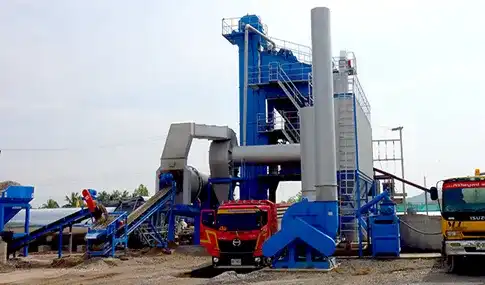
- 2 What Is an Asphalt Mixing System?
- 3 Key Quality Indicators of Asphalt Mixtures
- 4 How Mixing System Design Affects Asphalt Quality
- 5 The Role of Mixing Time in Mixture Quality
- 6 Temperature Control Within the Mixing System
- 7 Automation and Control System Influence
- 8 Common Mixing System Problems and Their Impact
- 9 Best Practices to Optimize Mixing System Performance
- 10 Choosing the Right Mixing System for Your Asphalt Plant
- 11 Future Trends in Asphalt Mixing Systems
- 12 Conclusion
Introduction
The quality of asphalt mixture is the core link of quality control of highway engineering, and its advantages and disadvantages directly determine the bearing strength of the road, pavement smoothness and long-term service life, but also to protect the safety of road traffic and the use of the experience of the key prerequisites. Asphalt mixing plant as the core place of asphalt mixture production, its overall operational stability, parameter control precision, directly related to the uniformity of the finished mixture, durability and comprehensive road performance. In the whole set of asphalt mixing plant equipment, the mixing system is called the core unit and the “heart”, all the aggregates, powders, asphalt and other raw materials, such as uniform fusion, the full reaction are relying on its efficient operation to complete.
What Is an Asphalt Mixing System?
Definition and Core Function
Asphalt mixing system is an asphalt mixing plant specializing in the realization of aggregate, mineral powder, asphalt and other raw materials evenly mixed, fully integrated core institutions, is the key hub connecting the raw materials and qualified finished materials, and its operation directly determines the efficiency and quality of the mixture production.
In the asphalt mixture production process, raw materials need to be accurately measured, dried and heated into the mixing system, the core objective of the mixing system is to force mixing or continuous mixing, so that the surface of each aggregate is asphalt uniformly and completely wrapped up, completely avoiding the emergence of white material, segregation of materials or asphalt wrapped up uneven quality problems, to ensure that the distribution of the various components of the mixture is uniform, bonded tightly.
At the same time, the mixing system also needs to take into account the temperature stability of the mixture, for the subsequent pavement paving, compaction construction process to provide stable performance, meet the specification requirements of the qualified mixture, lay a solid foundation for the quality of road engineering, to protect the strength and durability of the pavement structure.
Main Components of the Mixing System
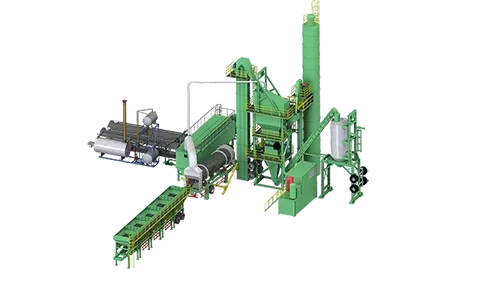
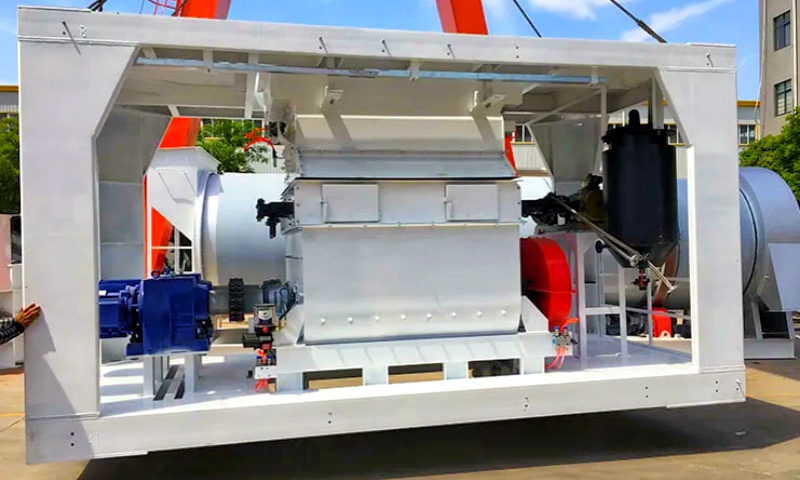
The mixing system is a complete system that consists of multiple components cooperating and operating efficiently, not a single device, which mainly consists of double horizontal shaft mixer/forced mixing host, mixing blades and mixing arms, mixing cylinder, power transmission system, and automation control system and sensing and detection devices, and each component plays its own role and links closely to complete the mixing of the mixture together.
Among them, the mixing host is the core implementation components, directly undertake the core task of material mixing, its performance directly determines the mixing efficiency and mixing quality; mixing blades and mixing arms directly act on the material, is to realize the material tumbling, mixing and asphalt coating key components; mixing cylinder for the mixing of materials to provide a closed, stable space, to avoid the material spillage and heat dissipation; power transmission system for the mixing operation to provide adequate power to ensure that the mixing process is stable and powerful. The power transmission system provides sufficient power for mixing to ensure stable and powerful mixing process; the automation control system and sensing device realize accurate monitoring and control of the mixing process, provide real-time feedback on the key parameters such as mixing time, temperature, rotation speed, etc., and adjust the operation status in time, and the components work together to complete the mandatory mixing and uniform mixing of the quantitative materials to ensure the quality of each batch of mixture meets the standard.
Types of Mixing Systems
At present, the mainstream mixing system in the industry is mainly divided into two categories: batch mixing system and continuous(drum) mixing system, which have different structural designs and working principles, and have their own focuses in practical application. There are significant differences between the two in the form of structure, workflow, material mixing mode, applicable scenarios and quality control logic, directly affecting the stability of the production of mixed materials and quality consistency.
Batch Mixing System
Among them, batch mixing system adopts the mode of “batch feeding, batch mixing and batch discharging”, in which the measured raw materials are fed into the mixing cylinder in batches, and then discharged in batches after completion of mixing, which facilitates the precise control of the mixing time, temperature and proportion of each batch, and is suitable for the production scenarios with higher quality requirements;
Continuous(Drum) Mixing System
Continuous drum mixing system realizes “continuous feeding, continuous mixing and continuous discharging”, where the raw materials continuously enter into the drum and finish mixing and discharging in the process of drum rotation, which is more efficient and suitable for large-scale continuous production.
The two modes have their own advantages and disadvantages, suitable for different construction needs and quality standards, need to be combined with the actual situation of the project to choose reasonably.
Key Quality Indicators of Asphalt Mixtures
Evaluation of the quality of asphalt mixture, mainly around the following core indicators to start, these indicators are interrelated, mutual influence, and jointly determine the comprehensive performance of the mixture and road value, but also the acceptance of the project in the process of the core assessment content. Specifically include:
Mix uniformity: to ensure that the material mix without segregation, no local unevenness, to avoid coarse and fine material layering, asphalt agglomeration and other issues;
Bitumen coating rate: to ensure that the aggregate surface is fully wrapped by bitumen, no bare phenomenon, to ensure that the aggregate and bitumen between the bond is sufficient;
Material temperature consistency: to ensure that the temperature of the mixture is stabilized in a reasonable range to meet the paving and compaction requirements, to avoid temperature deviations affecting the compaction effect;
Grading stability: ensure that the aggregate grading meets the design standard, and avoid the grading deviation affecting the pavement strength and damage resistance;
Construction and compaction performance, to ensure that the mixture is easy to pave, easy to compact, to form a dense pavement structure, reduce the pavement void rate; and long-term use of performance, including anti-rutting, anti-cracking, anti-water damage and other durability, to protect the long-term stability of the road service, reduce the later maintenance costs.
The advantages and disadvantages of these indicators, the source of the mixing system from the mixing effect, mixing system operation directly determines the quality indicators of the standard situation, any mixing problems will lead to the mixture quality does not meet the standard.
How Mixing System Design Affects Asphalt Quality
Mixer Type and Structure
Double horizontal shaft forced mixer and continuous drum mixer in the structural design of significant differences, this difference directly affects the mixing strength, mixing uniformity and quality control accuracy, which in turn determines the final quality of the mixture.
Double horizontal shaft forced mixer
Double Horizontal Shaft Forced Mixer adopts the forced mixing method, through the two reverse rotation of the mixing shaft drives the blades on the material forcibly shear, tumbling and mixing, mixing strength, mixing effect is uniform, can effectively ensure that the asphalt and aggregate of the full coating, more suitable for the high quality requirements of the mixture, the need for multi-formula switching production scenarios, such as modified asphalt, SMA mixes and other high-precision production, can be flexibly adapted to different types of mixture mixing It can flexibly adapt to the mixing needs of different types of mixtures;
Drum mixer
Drum mixing adopts continuous mixing mode, the raw materials in the drum with the rotation of the drum to complete the mixing and coating, mixing intensity is relatively weak, focusing on continuous and efficient production, suitable for large-scale, single-formula mixture production, and can significantly improve production efficiency.
The structural design of the two types of hosts delimits the upper limit of the quality of the mixture from the root, which directly determines the homogeneity and stability of the mixture, and needs to be combined with the quality requirements and production efficiency when selecting the model.
Mixing Chamber Geometry
As the core space of material mixing, the internal shape, volume size and structural layout of the mixing cylinder directly affect the flow trajectory of the material in the cylinder and mixing adequacy.
If the design is not reasonable, it is very easy to form a mixing dead corner, resulting in local materials can not be fully mixed, which in turn affects the quality of the mixture. Reasonable structural design of the cylinder can effectively eliminate the mixing dead ends, through the optimization of the internal curvature of the cylinder, set up the deflector plate, etc., to guide the material in the cylinder to form an orderly tumbling, crossing and collision, so that the aggregate, mineral powder and asphalt full contact, uniform fusion, to ensure that each aggregate can be asphalt evenly coated.
At the same time, the cylinder volume needs to be matched with the mixing host capacity, the volume is too large easily lead to insufficient mixing of materials, the volume is too small will affect the production efficiency, only the cylinder structure and volume design is reasonable in order to protect the overall mixing uniformity, to avoid the local material due to the inability to contact with the mixing of the mixing is not enough to wrap the problem of uneven.
Blade Design and Arrangement
Mixing blade is a key component directly acting on the material, and its design and layout rationality directly affects the mixing effect, and its angle, quantity, installation spacing and wear state directly affects the mixing efficiency, material disturbance strength and bitumen wrapping effect.
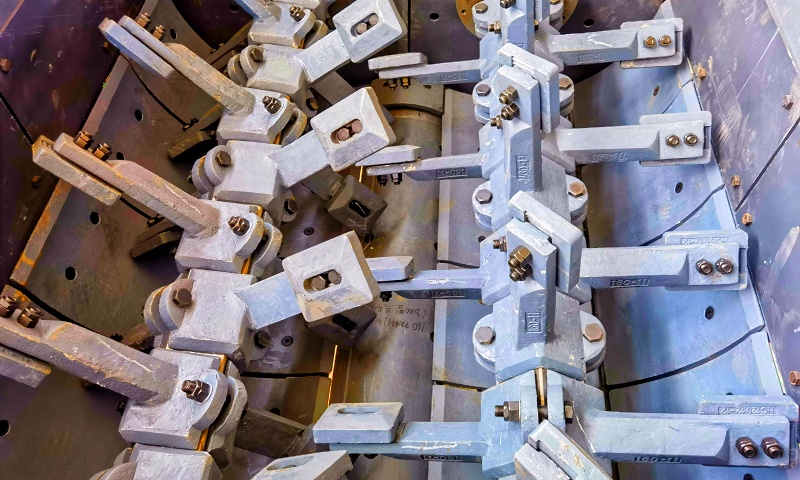
Unreasonable angle of the blade will lead to insufficient mixing strength or poor flow of materials, the angle is too large, easy to cause material splashing, uneven mixing, the angle is too small can not provide sufficient shear force;
Serious wear and tear of the blades will reduce the mixing capacity, resulting in inadequate mixing of materials;
Improperly arranged blades will appear in the mixing blind zone, forming a local non-stirring area.
These problems will lead to inadequate mixing of materials, bitumen coating uneven, resulting in fluctuations in the quality of the mixture, segregation, white material, etc., affecting the quality of subsequent pavement construction, shortening the service life of the road. Therefore, the design and layout of the blade should be combined with the mixing cylinder structure, mixing speed and other parameters to optimize, and at the same time need to regularly check the blade wear.
Mixing Speed and Power
The mixing speed directly determines the shear force and material disturbance strength in the mixing process, which is the key parameter affecting the mixing effect, while the power configuration is the basis for ensuring the stability of the speed.
Too low speed
Too low speed will lead to insufficient mixing strength, inadequate mixing, unable to realize the asphalt uniform coating, uneven coating, white material and other quality problems;
Too high speed
Too high speed will produce excessive shear force, which may cause aggregate crushing, asphalt oxidation and aging, destroying the gradation of the mixture and asphalt properties, leading to a decline in the strength of the mixture, durability reduction.
Unstable speed
At the same time, the lack of power configuration will lead to unstable mixing speed, the speed of the situation of fast and slow, will also affect the mixing effect, resulting in fluctuations in the quality of the mixture.
Only reasonable speed and power matching, in order to ensure production efficiency, taking into account the quality of the mixture, to achieve a balance between efficiency and quality, to ensure that each batch of mixed materials can achieve the best mixing effect.
The Role of Mixing Time in Mixture Quality
Optimal Mixing Time
The optimal mixing time is the key parameter to balance production efficiency and mix quality, not the longer the better, not the shorter the more efficient, but according to the type of mixture, proportion, temperature and other factors to determine.
Too short mixing time
Too short mixing time will lead to insufficient mixing of materials, affecting the uniformity and coating effect, segregation, white material and other problems;
Too long mixing time
Too long will reduce production capacity, increase production costs, but also damage the material quality, affecting the performance of the mixture, resulting in asphalt aging, aggregate crushing and other problems.
In the asphalt batch mixing plant, according to the type of mixture, proportion and performance requirements, set a reasonable mixing time interval, to ensure that each batch of mixture can achieve the best mixing effect, not only to ensure that the material is fully mixed, asphalt uniform coating, but also to avoid excessive mixing caused by the material damage, to ensure the stability and continuity of production.
Effects of Insufficient Mixing
Insufficient mixing time is a common quality hazard in production, mostly caused by the operators to pursue production efficiency, arbitrarily shorten the mixing time, the quality of its impact is more direct and serious.
Insufficient mixing time will directly lead to incomplete bitumen coating, obvious white material, part of the aggregate surface can not be wrapped by the bitumen, and will also lead to aggregate segregation, uneven distribution of coarse and fine materials and other problems, resulting in the mixture of the components of the bond is not tight.
This kind of unqualified mixture used in pavement construction, will lead to insufficient road strength, wear resistance is poor, very easy to loose, cracking, potholes and other damage phenomena, significantly shorten the service life of the road, but also increase the later maintenance costs and rework risk, not only affect the construction progress, but also cause economic losses.
Effects of Excessive Mixing
Excessive mixing will also cause serious harm to the quality of the mixture, compared with the mixing time is not enough, the harm is more hidden, and will gradually appear later.
Prolonged forced mixing will accelerate the oxidative aging process of bitumen, destroy the molecular structure of bitumen, reduce bitumen adhesion and durability, resulting in late cracking of the mixture is easy to crack, loose and other problems; at the same time, the mixing process will produce heat loss, resulting in excessive loss of temperature of the mixture, affecting the subsequent paving and compaction of the construction effect, resulting in insufficient compaction of the pavement, the void rate is too large, reducing the pavement resistance to water damage. The result is insufficient compaction of the pavement, excessive void ratio, and reduced pavement water damage resistance;
In addition, excessive mixing may also lead to aggregate crushing, destroying the preset aggregate gradation, so that the stability and bearing capacity of the pavement structure decreases, unable to meet the long-term service requirements of the road.
Temperature Control Within the Mixing System
Viscosity of Bitumen
Stable mixing temperature is the key condition to realize the uniformity of bitumen coating, but also one of the core parameters to ensure the quality of the mixture, the temperature directly affects the viscosity of bitumen, and the viscosity of bitumen to the appropriate degree determines the effect of its coating aggregates. The viscosity of bitumen will change with the temperature changes, the temperature is too high, the viscosity is reduced, easy to appear bitumen flow, aggregate coated uneven problems; temperature is too low, the viscosity rises, mobility deterioration, can not be fully wrapped aggregates.
Bitumen Quality Problems
Temperature deviation will bring obvious quality problems: too high a temperature will lead to accelerated aging of bitumen, performance degradation, reduce the adhesion and durability of the mixture, so that the pavement is prone to cracking, flooding and other problems; too low a temperature will make the asphalt mobility deterioration, can not be adequately wrapped with aggregates, resulting in poor wrapping effect, difficult to compact after paving the mixture, the formation of loose pavement structure, which will affect the strength of the pavement.
Therefore, the mixing system needs to be closely linked with the burner, drying system, through precise control of fuel supply, hot air temperature and other parameters, to achieve stable control of mixing temperature, to ensure that the quality of the asphalt mixture meets the standard.
Automation and Control System Influence
Precision in Material Proportioning
The high degree of linkage between the mixing system and the weighing system is the core premise of guaranteeing the proportioning accuracy of the asphalt mixture, while the automation control system is a key means of realizing accurate proportioning and an important guarantee for improving the stability of the quality of the asphalt mixture.
The proportioning accuracy of asphalt mixture is directly related to the stability of the oil/stone ratio, which is the core foundation of asphalt mixture quality and directly affects the strength, durability and road performance of the asphalt mixture. Through automation control technology, the aggregate, mineral powder, bitumen and other raw materials can be accurately measured and proportioned, effectively avoiding human errors in measurement, operational errors brought about by the proportion of deviation, to ensure that each batch of asphalt mixture of oil and stone ratio are stable, to avoid instability of asphalt mixture quality due to fluctuations in the proportion of asphalt mixture quality to lay a solid foundation for the quality of the mixture.
Real-Time Monitoring and Adjustment
Intelligent automatic control system collects real-time temperature, mixing time, speed and other key data in the mixing process through temperature sensors, time monitoring devices, speed sensors and other types of testing equipment, and analyzes and automatically adjusts the parameters in real time by relying on PLC and SCADA monitoring system to realize closed-loop control of the mixing process.
When the parameters deviate, the system can respond quickly and correct the mixing time, speed, temperature and other indicators in time, for example, when the temperature is too high, it will automatically adjust the hot air supply; when the mixing time is insufficient, it will automatically extend the mixing time, so as to keep the mixing process stable and controllable, to ensure the consistency of the quality of the asphalt mixture in each batch, and to avoid quality problems caused by fluctuations in parameters.
Reducing Human Error
In traditional mixing production, human error is one of the main reasons for fluctuations in the quality of the asphalt mixture, and the operator’s degree of operational standardization, responsibility, etc. will affect the mixing effect.
Intelligent automation control system can significantly reduce the quality fluctuations caused by manual operation, through the preset parameters, automatic regulation and control, to avoid the unstable quality of the asphalt mixture due to human errors in settings, irregular operation, lack of responsibility and other factors.
Through automated control, realize the standardization of the mixing process, standardized operation, reduce human intervention, ensure that each batch of mixing process strictly follow the design standards, effectively improve the consistency of continuous batch production, ensure that each batch of mix can meet the design quality standards, reduce the quality of hidden problems.
Common Mixing System Problems and Their Impact
Worn Mixing Blades
Mixing blades are in a high-intensity, high-wear working environment for a long time, and they need to keep contacting and rubbing with aggregate, bitumen and other materials, so they are prone to wear and tear, deformation, detachment and other problems, which is one of the most common failures of mixing system.
After the blade wear, its mixing ability will be significantly reduced, mixing strength is insufficient to provide sufficient shear force and disturbing force for the material, it is very easy to form a mixing blind zone in the mixing cylinder, resulting in reduced material mixing efficiency, bitumen coating unevenly, and the direct output of unqualified mixes, white material, segregation and other problems. This kind of unqualified asphalt mixture is used in pavement construction, which will affect the quality of pavement construction, and even lead to rework of the project, and at the same time, it will also aggravate the wear and tear of the mixing cylinder and shorten the service life of the equipment.
Inadequate Mixing Time Settings
In the actual production process, some operators for the pursuit of production capacity, shorten the production cycle, or lack of professional operating experience, arbitrarily adjust the mixing time, resulting in unreasonable mixing time settings or parameter fluctuations, which is an important factor affecting the stability of the quality of the asphalt mixture.
Mixing time is too short will lead to insufficient mixing, too long will cause material quality damage, and parameter fluctuations will cause obvious differences in the quality of the asphalt mixture between different batches, performance fluctuations, and it is difficult to meet the specification requirements of pavement construction. This situation not only affects the construction progress, resulting in subsequent paving, compaction can not be successfully promoted, but also may leave the pavement quality hidden danger, increase the later maintenance costs.
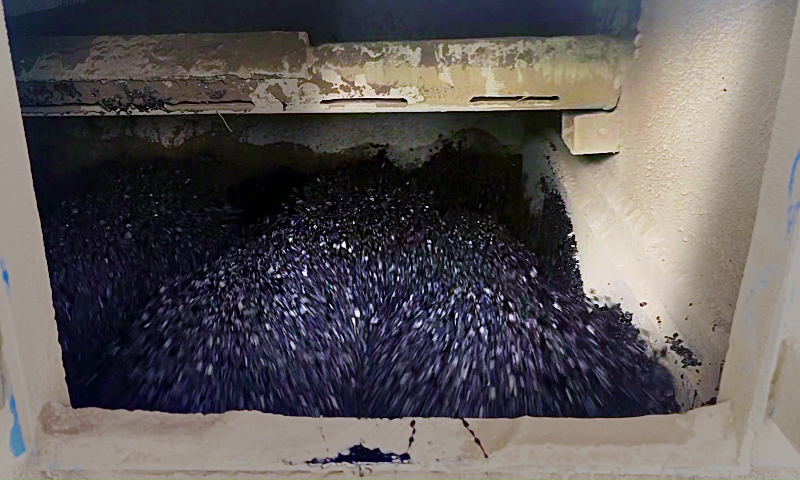
Poor Maintenance
Regular maintenance of the mixing system is the key to ensure its stable operation, prolong the service life and ensure the quality of the asphalt mixture. If the maintenance is not in place, it will lead to a series of equipment failures, which will indirectly affect the quality of the asphalt mixture.
Long-term non-maintenance will lead to residual residual material in the mixing cylinder caking, adherence, these accumulations will affect the cylinder heat transfer and material flow, resulting in uneven mixing of local materials, increasing the risk of segregation of materials; at the same time, the accumulation of material will also aggravate the wear and tear of the mixing blades and mixing arms, resulting in deformation of the blades, mixing strength decline, further affecting the mixing effect; in addition, the maintenance is not in place will also lead to the power transmission system, control system failure, affecting the stability of the mixing process, ultimately leading to fluctuations in the quality of the asphalt mixture.
Segregation Issues
Material segregation is a common quality problem in the production of asphalt mixtures, which is closely related to the operating status of the mixing system, and is also an important hidden danger that affects the quality of pavement.
Structural defects of the mixing system, blade failure, abnormal speed, etc., may lead to the separation of aggregate and bitumen, uneven distribution of coarse and fine materials, forming segregation phenomenon. For example, segregation can be triggered by insufficient mixing due to severe blade wear, splashing of aggregate due to too fast rotation speed, and dead angle of mixing cylinder.
This kind of asphalt mixture used in pavement construction, will directly lead to localized loose pavement, lack of strength, easy to crack, potholes and other damage, seriously affecting the overall strength and durability of the road, shorten the service life of the road, and increase the cost of later maintenance.
Best Practices to Optimize Mixing System Performance
In order to improve the performance of the mixing system, ensure stable quality of the asphalt mixture, reduce the incidence of failures, and extend the service life of the equipment, the following best practices should be followed to achieve standardized operation and maintenance of the mixing system and optimization.
Firstly, regularly check the wear and tear of mixing blades and mixing arms, establish a perfect equipment inspection account, and timely replace aged, deformed and severely worn parts to ensure sufficient mixing strength and avoid the appearance of mixing blind zones;
Secondly, according to the type, proportion and performance requirements of the asphalt mixture, regularly calibrate the mixing time and host speed to ensure that the parameters are set reasonably and realize the balance between efficiency and quality;
Again, the mixing temperature is strictly controlled, and the temperature is kept stable through the linkage control system to avoid the quality problems caused by temperature deviation;
In addition, the intelligent automation control system can be upgraded to improve the accuracy and stability of parameter control and reduce human error;
Finally, regularly clean up the mixing cylinder internal accumulation of material and lumps, the implementation of regular preventive maintenance, check the power transmission system, the operating status of the control system, and timely elimination of hidden equipment failures, to ensure that the mixing system is stable and efficient operation for a long time.
Choosing the Right Mixing System for Your Asphalt Plant
Factors to Consider
Select the appropriate mixing system for asphalt mixing plant, need to be combined with the actual needs of the project comprehensive consideration, to avoid blind selection of quality hazards and waste of resources, the core considerations include the following points.
First, the size of the project, the actual capacity needs, according to the project volume, construction period, to determine the mixing system capacity, to ensure that the mixing system capacity and project progress to match, to avoid the impact of insufficient capacity on the construction progress, or overcapacity resulting in waste of resources;
Secondly, the type of asphalt mixture produced, including SMA, modified asphalt, recycled materials and other different categories, different asphalt mixtures of different mixing system precision, mixing requirements, such as high-precision mixtures need to choose the mandatory mixing system; Thirdly, the environmental protection requirements and local policies and regulations, with the environmental protection policy continues to be stringent, we need to choose to comply with the environmental protection standards, to adapt to the local policy of the mixing system, to reduce noise, dust and pollution, to ensure production compliance. Thirdly, environmental protection requirements and local policies and regulations.
Batch Mixing System vs Drum Mixing System: Which Is Better?
Batch mixing systems and continuous drum mixing systems have their own advantages and are applicable to different scenarios, so it is necessary to make a comprehensive choice according to the quality requirements of the project and construction scenarios to balance quality and efficiency.
Among them, batch mixing system has high mixing precision, is suitable for the production of multiple types of mixes, can flexibly switch formulas, and accurately control the mixing parameters of each batch, which is suitable for projects with strict requirements on the quality of mixes and the need to produce a variety of mixes, such as highways, municipal roads and other projects with high requirements on the quality of the road surface;
Continuous drum mixing system with high capacity and simple production process can realize continuous and efficient production and reduce the quality fluctuation between batches, which is suitable for large-scale and single formula mix production scenarios, such as large-scale highway expansion, rural road construction and other projects with high capacity requirements.
Selection of the core project needs to be clear, the priority is to ensure that the quality of the standard, and then take into account the production efficiency, choose the most suitable mixing system.
Future Trends in Asphalt Mixing Systems
With the continuous improvement of highway engineering quality requirements and intelligent technology, the rapid development of environmental technology, the future of asphalt mixing system will be upgraded towards multi-dimensional development, focusing on precision, intelligence, energy-saving, green direction, to better meet the project quality and environmental protection needs.
First, a high degree of intelligence, automation, through a more advanced control system to achieve the mixing process of precision control and unmanned operation, reduce human intervention, improve quality stability and production efficiency;
Secondly, the structural design is more energy-saving and low-consumption, optimizing the mixing structure and power system, adopting energy-efficient motors, optimizing the mixing process, reducing energy consumption and pollutant emissions, in line with the needs of environmental protection development;
Third, the adaptability of recycled asphalt mixture is further improved, optimizing the mixing structure and process, improving the mixing effect of recycled materials, helping the construction of green highway, and realizing the recycling of resources;
Fourth, equipped with digital monitoring and predictive maintenance system, through real-time monitoring of the operating status of asphalt mixing plant equipment, early warning of potential failures, reduce equipment downtime, to ensure long-term stability of the mixing system and high-quality production, reduce maintenance costs.
N4022
Conclusion
Mixing system as the core component of the asphalt mixing plant, is to determine the quality of asphalt mixture of the key links, its operation is directly related to the overall quality of highway projects, but also the core of long-term stability of highway projects to ensure service.
The structural design of the mixing system, mixing time, mixing temperature, control accuracy and other parameters, together determine the uniformity of the finished asphalt mixture, bitumen coating effect and long-term road performance, any one of the links appear negligence, will lead to substandard quality of the asphalt mixture, which will affect the quality of the road project.
High-quality road projects, starting with high-quality asphalt mixing, and high-quality mixing depends on stable performance, reasonable design of the mixing system, only mixing system operation is stable, accurate parameters, in order to produce high-quality asphalt mixtures in line with the specification requirements.
For industry practitioners, we should pay attention to the selection and operation and maintenance of the mixing system, abandon the misunderstanding of “heavy equipment, light foundation, light operation and maintenance”, choose the reliable performance, suitable for the project needs of the mixing host equipment, and actively invest in advanced mixing control technology to enhance the mixing system’s intelligence and precision level. At the same time, adhere to standardized operation and regular maintenance, establish a perfect equipment operation and maintenance system, timely troubleshooting of hidden problems, and constantly optimize the performance of the mixing system, in order to continue to produce high-quality asphalt mixtures, and effectively protect the quality of road projects and long-term service life, and to promote the high-quality development of the highway construction industry.