


How To Calculate Asphalt Quantity For Road
In road construction, accurately calculating asphalt requirements is a critical step in controlling project costs and ensuring construction quality. Underestimating the amount can lead to material shortages during construction and delays in the project schedule; overestimating it, on the other hand, results in waste of asphalt materials and significantly increases the project budget. Whether for municipal roads, highways, residential neighborhood roads, or parking lot paving, mastering scientific methods for calculating asphalt requirements is an essential skill for engineering technicians and contractors. Starting with the basic concepts, this article will provide a step-by-step explanation of how to calculate asphalt consumption for straight sections, curved sections, and irregular areas, while also analyzing key influencing factors, enabling you to easily achieve precise asphalt consumption estimates.
Asphalt and Asphalt Mixture
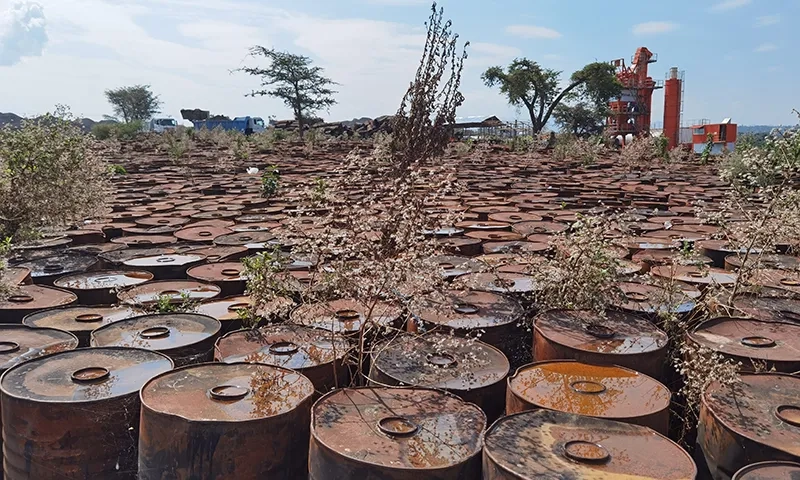
Many people confuse asphalt with asphalt mixture; this is a concept that must be clarified before beginning any calculations. Pure bitumen is a black, viscous liquid binder, whereas what is actually used in road construction is asphalt mixture. This is a composite material produced by mixing bitumen—acting as the binder—with aggregates such as crushed stone, gravel, and sand. The asphalt consumption we calculate refers specifically to the consumption of this asphalt mixture.
The density of the asphalt mixture is a key parameter for quantity calculations. It is influenced by the type of aggregates and the mix design. The commonly used reference density in the industry is 2,330 kg/m³. In some projects, a range of 2,200–2,700 kg/m³ may be adopted depending on the specific type of mixture. In regions such as Europe, a calculation standard of 2.4 tons/m³ is commonly used. For precise density values, please consult your local asphalt mixing plant.
Basic Logic Behind Asphalt Consumption Calculations
Regardless of the type of road section, the core of asphalt consumption calculations revolves around two steps: volume calculation and weight conversion. First, the required volume of asphalt mixture is calculated based on the road section dimensions, and then this volume is converted into weight (tons) using the mixture’s density. The basic formulas are as follows:
Volume of Asphalt Mix (m³) = Length (m) × Width (m) × Paving Thickness (m)
Weight of Asphalt Mix (kg) = Volume (m³) × Mix Density (kg/m³)
Asphalt Mix Weight (tons) = Weight (kg) ÷ 1000
Key Points for Unit Conversion: Before calculation, ensure all units are consistent. Width and length are typically measured in meters (m), while paving thickness is usually in centimeters (cm) and must be converted to meters (m) (1 cm = 0.01 m). If density is in tons/m³, the tonnage can be directly calculated as volume × density, simplifying the process.
Step-by-Step Calculation: Methods for Estimating Asphalt Consumption in Different Road Sections
Straight Sections: The Most Basic Standard Calculation
Straight sections are the most common type in road construction, and the calculation method is the simplest. You only need to accurately measure the section’s length, width, and designed paving thickness, then substitute these values into the core formula.
Example Calculation
Assume the construction parameters for a straight section are: length 5 km (5,000 m), width 6 m, asphalt paving thickness 15 cm (0.15 m), using the industry-standard density of 2,330 kg/m³.
Volume calculation: 5000 × 6 × 0.15 = 4500 m³
Weight conversion: 4500 × 2330 = 10,485,000 kg = 10,485 tons
Therefore, this straight section requires 10,485 tons of asphalt mixture to be paved.
Curved Sections: First Calculate the Actual Curved Length, Then Apply the Formula
For curved sections such as road bends and roundabouts, calculations cannot be based directly on straight-line lengths. Instead, the actual arc length must first be calculated using the curve’s radius and central angle, and then combined with the width and thickness to calculate the volume.
Formula for Calculating Curved Length
Actual curved length (m) = (π × curve radius R × central angle θ) ÷ 180 (π = 3.14, R in m, θ in °)
Example Calculation
Assume the parameters of a road curve are: radius 10 m, central angle 100°, road width 6 m, paving thickness 15 cm (0.15 m), and density 2330 kg/m³.
Calculate the curved length: (3.14 × 10 × 100) ÷ 180 ≈ 17.44 m
Calculate volume: 17.44 × 6 × 0.15 ≈ 15.696 m³
Convert to weight: 15.696 × 2330 ≈ 36,558 kg = 36.55 tons
Thus, approximately 36.55 tons of asphalt mixture are required for this curved section.
Irregular Areas: Calculate by Sections, Sum and Consolidate
When encountering areas such as intersections, irregularly shaped parking lots, or irregular road junctions during construction, the **“divide and conquer”** method can be used. Divide the irregular area into multiple regular geometric shapes—such as rectangles, squares, or circles—calculate the asphalt requirement for each shape separately, and finally add the weights of each section to obtain the total requirement.
Note: When dividing the area, minimize errors as much as possible. There is no need to double-count the junctions between adjacent sections; ensure that the sum of the areas of all sections matches the actual area of the irregular region.
Factors That Ensure More Accurate Calculations
Account for Construction Losses and Allow for a Margin
During actual construction, asphalt mixtures incur some loss during transportation, paving, and compaction. Additionally, trimming the edges of the pavement consumes some material. Therefore, after calculating the theoretical quantity, an additional margin of **5%–10%** should be set aside to prevent material shortages.
Example: If the theoretical calculation indicates a requirement of 100 tons, and a 10% allowance for loss is applied, 110 tons must be procured.
Accurate Selection of Mix Density
The density of asphalt mixtures is significantly influenced by aggregate type (crushed stone, gravel, sand), aggregate particle size, and the asphalt-to-aggregate ratio. Using a density value that does not match the actual mixture will result in calculation errors.
Recommendation: Do not simply apply generic density values. Before construction, request a report on the actual measured density of the supplied mix from the asphalt mixing plant, or determine the precise density through laboratory testing. This is key to improving calculation accuracy.
Segmented Calculation for Layered Paving
High-grade highways and heavy-duty roads often employ layered paving techniques, such as laying the base course, intermediate course, and surface course with different thicknesses and types of asphalt mixture. In such cases, the volume and weight must be calculated separately for each layer, and the quantities of each layer must be added together to obtain the total asphalt mixture requirement. Never calculate the total by simply adding the thicknesses of each layer together.

Practical Tip: Quickly Calculating Asphalt Costs
After determining the total tonnage of asphalt mixture, you can directly calculate the total cost of asphalt materials by applying the local unit price for asphalt mixture. The formula is:
Total Cost of Asphalt Materials = Total Tonnage of Asphalt Mixture × Unit Price per Ton of Mixture
Example: If a road section is estimated to require 10,485 tons of asphalt mixture at a unit price of 6,000 yuan per ton, the total cost of asphalt materials is 10,485 × 6,000 = 62,910,000 yuan.
If you need to compare quotes from different asphalt mixing plants, you can convert the unit price per ton to a unit price per cubic meter (unit price per cubic meter = unit price per ton ÷ mix density) for a more intuitive comparison of costs.
Summary
The key to calculating asphalt consumption for road construction lies in “precise measurement of dimensions + selection of appropriate density parameters + factoring in allowances based on actual construction conditions.” For straight sections, apply the core formula directly; for curved sections, calculate the arc length first; for irregular areas, calculate in sections; and for layered paving, perform calculations layer by layer. Mastering these methods not only prevents material waste and controls project costs but also ensures the continuity and smooth progress of construction.
In actual construction, in addition to theoretical calculations, adjustments must be made flexibly based on on-site conditions, paving equipment, transportation distances, and other factors. If there are doubts about the calculation results, collaborate with asphalt mixing plant technicians and engineering designers to verify them, ensuring the accuracy of the asphalt quantity.
Frequently Asked Questions (FAQ)
The following are frequently asked questions regarding the calculation of road asphalt consumption. They address core concerns of both contractors and purchasers, are tailored to real-world project scenarios, and are provided for reference:
Q: When calculating asphalt usage for road construction, should the paving thickness include the compacted thickness?
A: Yes. After paving, the asphalt mixture undergoes compaction. The paving thickness used in calculations must be based on the design compacted thickness (design drawings typically specify the post-compaction thickness) to avoid insufficient quantities due to unaccounted-for compaction shrinkage. If calculations are based on loose-laid thickness, an additional compaction factor (generally 1.2–1.3) must be factored in. Specific values can be referenced from the compaction parameters provided by the asphalt mixing plant.
Q: Is the density of asphalt mixture consistent across different road types (e.g., municipal roads, highways)?
A: No, it is not. Asphalt mixtures used for highways and heavy-duty roads (such as AC-13 and SMA) typically have higher densities (approximately 2350–2400 kg/m³) due to their more compact aggregate gradation and more precise asphalt content. Municipal roads and residential area roads can use standard asphalt mixtures, with densities generally ranging from 2200 to 2330 kg/m³. It is recommended to consult the asphalt mixing plant based on the road classification to obtain the actual measured density of the corresponding mix.
Q: When calculating asphalt usage for curved sections, does a smaller curve radius result in greater errors? How can this be avoided?
A: Yes, the smaller the curve radius, the more easily calculation errors in arc length are magnified. Additionally, the paving thickness on the inner and outer sides of the curve must be consistent (design specifications typically require uniform thickness). Mitigation method: Accurately measure the curve radius and central angle. If the radius is too small (<10 m), divide the curve into multiple short arc segments, calculate the arc length for each segment separately, aggregate the results, and then substitute into the volume formula to reduce the error in a single calculation.
Q: What scenarios are covered by the 5%–10% allowance for asphalt consumption? Is it necessary to add more?
A: The allowance primarily covers three scenarios: spillage during transportation, edge trimming during paving, and spot patching after compaction. A 5%–10% allowance is sufficient for standard road construction; however, if the transportation distance is long (>50 km) or the construction site is complex (e.g., multiple curves, irregular areas), the allowance may be appropriately increased to 10%–12% to prevent material shortages caused by higher-than-expected losses.
Q: When paving in layers, the density of the asphalt mixture varies between layers. How should the total quantity be calculated?
A: Follow the principle of “calculate by layer, then sum the totals.” Calculate the volume and weight of each layer separately: First, determine the paving thickness and the corresponding mix density for each layer, then use the core formula to calculate the volume required for a single layer. Next, add the volumes for the base course, intermediate course, and surface course to obtain the total asphalt mix volume. Do not confuse the densities of different layers or calculate by stacking thicknesses.
Q: When purchasing asphalt mix, how can I quickly convert and compare the per-ton price and per-cubic-meter price provided by the mixing plant?
A: The core conversion formula is: Unit price per cubic meter = Unit price per ton ÷ Mix density (tons/m³). Example: A mixing plant quotes 6,000 yuan/ton, with a mix density of 2.33 tons/m³. After conversion, the unit price per cubic meter = 6,000 ÷ 2.33 ≈ 2,575 yuan/m³. When compared to another mixing plant’s quote of 2,600 yuan/m³, you can quickly determine that the former offers a better cost advantage.