








How Hot Is Asphalt When Paving
Contents
- 1 What Is Asphalt?
- 2 Why Must Asphalt Be Heated During Paving?
- 3 Standard Asphalt Paving Temperatures
- 4 Hot-Mix Asphalt (HMA): Advantages and Disadvantages of the Mainstream Material
- 5 Consequences of Temperature Control Failures: Both Excessive Heat and Cold Can Ruin the Pavement
- 6 Mixing Plant + Construction Site: How to Precisely Maintain Asphalt Temperature?
- 7 Safety Reminders: Key Protective Measures for Hot Asphalt
- 8 Conclusion
- 9 Frequently Asked Questions
- 9.1 Q1: Does the ambient temperature at the job site affect the paving temperature during asphalt paving?
- 9.2 Q2: What should be done if the asphalt temperature drops below the standard due to long transport distances?
- 9.3 Q3: How long does it take for the asphalt to cool to a trafficable temperature after paving?
- 9.4 Q4: There is a significant difference in paving temperatures between warm-mix and hot-mix asphalt. How should one choose?
- 9.5 Q5: If the asphalt temperature is too high, are there other methods besides spraying water to cool it down?
- 9.6 Q6: How can one determine if the asphalt paving temperature meets standards? What on-site testing methods are available?
In the construction of roads, parking lots, and courtyard pavements, asphalt is the key material, and the paving temperature directly determines the pavement’s smoothness, density, and service life. Just how hot does asphalt get during paving? What problems can arise if the temperature isn’t controlled properly? Drawing on practical experience from mixing plants, this article breaks down asphalt paving temperature standards, temperature control logic, and curing essentials to help you create durable and smooth asphalt pavements.
What Is Asphalt?
Asphalt (also known as bitumen or hot-mix asphalt) consists of aggregates such as crushed stone, sand, and gravel, combined with an asphalt binder. The asphalt binder is a black, viscous petroleum derivative that serves to bind the aggregates together.
Only when heated to high temperatures does the asphalt binder liquefy, allowing it to uniformly coat the aggregates. This enables smooth paving and compaction, resulting in a strong and durable pavement—this is the core reason why asphalt must be applied at high temperatures.
Why Must Asphalt Be Heated During Paving?
Many people believe that “heating asphalt is just to make it easier to lay,” but in reality, temperature control is the fundamental principle behind pavement quality:
Ensuring Workability
High temperatures increase the flowability of the asphalt mixture, allowing the paver to spread it evenly without clumping or segregation, which facilitates subsequent compaction.
Enhancing Bonding Strength
High temperatures ensure the asphalt binder fully coats the aggregate, creating a tight bond with the subgrade and preventing delamination, peeling, and loosening.
Enhancing Pavement Strength
Compaction at the correct temperature expels air from within the mixture, creating a high-density pavement that significantly improves resistance to rutting, cracking, and potholes.
If the temperature is too low, the asphalt hardens quickly, resulting in poor compaction and making the pavement prone to cracks and potholes; if the temperature is too high, the binder ages and fails, drastically shortening the pavement’s lifespan.
Standard Asphalt Paving Temperatures
Asphalt is classified into hot-mix asphalt (HMA), warm-mix asphalt (WMA), and cold-mix asphalt (CMA). Temperature control standards vary significantly among these types and serve as the core basis for both mixing plant production and on-site construction.
| Asphalt Type | Exit Temperature | Paving Temperature | Primary Applications |
| Hot-Mixed Asphalt (HMA) | 135°C–163°C (275°F–325°F) | 135°C–177°C (275°F–350°F) | High-traffic pavements such as main roads, highways, and parking lots |
| Warm-Mix Asphalt (WMA) | 93°C–135°C (200°F–275°F) | 93°C–135°C (200°F–275°F) | Low-temperature construction, eco-friendly projects, urban roads |
| Cold-Mix Asphalt (CMA) | No heating required | Room temperature | Pothole repair, temporary emergency repairs |
Critical Temperature Thresholds
Hot-mix asphalt must arrive on-site at a temperature of no less than 127°C (260°F); otherwise, it will lose workability.
The temperature at the end of compaction must be no less than 79°C (175°F); below this temperature, effective compaction cannot be achieved.
Temperatures exceeding 177°C (350°F) are strictly prohibited. High temperatures will damage the binder, release harmful fumes, and create potential quality issues.
Hot-Mix Asphalt (HMA): Advantages and Disadvantages of the Mainstream Material
Currently, over 90% of road construction projects use hot-mix asphalt, and its temperature control and properties directly impact construction results:
Advantages
High density, excellent resistance to heavy loads and deformation, and strong weather resistance;
Good workability during high-temperature construction, resulting in high pavement smoothness;
Fast setting, shortening the time to open to traffic.
Disadvantages
High energy consumption during production; higher costs compared to warm-mix asphalt;
High-temperature operations pose risks of burns and smoke inhalation, requiring strict protective measures;
Rapid cooling in low-temperature environments results in a short construction window.
Consequences of Temperature Control Failures: Both Excessive Heat and Cold Can Ruin the Pavement
Asphalt paving is a temperature-sensitive process; deviations of just 10°C–20°C can lead to quality issues:
Excessively high temperature (above 177°C/350°F)
Binder aging and oil loss cause the pavement to become brittle and prone to cracking;
The mixture becomes too sticky, leading to displacement during compaction and poor smoothness;
Heavy fumes pollute the environment and endanger workers’ health;
Rapid cooling results in failure of the bond with the base course.
Excessively low temperature (below 135°C/275°F)
The mixture becomes stiff, resulting in uneven paving, segregation, and honeycombing;
Compaction is inadequate, leaving large internal voids that cause freeze-thaw damage after rainwater infiltration;
Insufficient bonding strength leads to frequent delamination, sanding, and potholes;
High rework rates double both the construction schedule and costs.

Mixing Plant + Construction Site: How to Precisely Maintain Asphalt Temperature?
As professionals in the asphalt mixing plant industry, temperature control must be integrated throughout the entire process—from production to transportation, paving, and compaction:
Precise Temperature Control at the Mixing Plant
Implement zone-specific temperature control for the drying drum and mixing drum; strictly set the heating temperatures for aggregates and binder according to the mix design; conduct real-time temperature measurements of the output material; and strictly prohibit the shipment of non-compliant material.
Insulated Transportation
Use insulated transport vehicles; for long-distance transport, cover the load with insulated tarps to minimize temperature drop during transit and ensure the material meets temperature standards upon arrival.
Rapid On-Site Construction
Pave immediately upon arrival to minimize waiting time; on cold days, preheat the paver’s screed to slow the rate of temperature drop.
Emergency Temperature Control Measures
If temperature is too high: Spray water to cool it down to the standard range before continuing construction;
If temperature is too low: Use thermal covers and localized heating; any material that fails to meet standards must be discarded.
Safety Reminders: Key Protective Measures for Hot Asphalt
Freshly laid asphalt exceeds 140°C; skin contact for just a few seconds can cause severe burns, and it can also damage pet paw pads and bicycle tires.
Construction personnel must wear heat-resistant gloves, long-sleeved work clothes, and protective footwear to avoid direct contact;
Pedestrians and property owners must stay away from the construction area and wait 24–48 hours for the surface to fully cool and cure before walking on it;
On hot summer days, black asphalt surfaces can reach temperatures of 60°C–71°C after absorbing heat; combined with the high temperature of the fresh material, heatstroke and fire prevention measures must be strictly enforced.
Conclusion
Asphalt paving is not simply a matter of “spreading the material”; temperature is the lifeline of quality. Hot-mix asphalt paving must be consistently maintained between 135°C and 177°C, while warm-mix asphalt should be kept between 93°C and 135°C. Strict temperature control throughout production, transportation, and on-site application is essential to produce a smooth, dense, and durable asphalt pavement.
Whether it involves production at the mixing plant, operations by the construction crew, or supervision by the project owner, strictly adhering to temperature standards can eliminate 90% of potential pavement quality issues and extend the service life of the asphalt pavement by 5 to 10 years.
Frequently Asked Questions
Q1: Does the ambient temperature at the job site affect the paving temperature during asphalt paving?
Yes, ambient temperature is a key factor. High summer temperatures (above 35°C) slow down the rate at which the asphalt cools, so the paving temperature can be appropriately reduced by 5–10°C; Low winter temperatures (below 5°C) accelerate cooling, so the on-site temperature should be increased by 5–10°C. Additionally, preheat the base course and the paver’s screed to prevent the asphalt from hardening too quickly.
Q2: What should be done if the asphalt temperature drops below the standard due to long transport distances?
Prioritize the use of specialized transport tankers with good thermal insulation. For long-distance transport (over 50 kilometers), cover the load with double-layered insulated tarpaulins; Before departure, increase the asphalt’s factory temperature by 5–10°C to offset temperature loss during transport; upon arrival, measure the temperature immediately. If it is below 127°C (for hot-mix asphalt), paving is strictly prohibited. Use localized heating equipment to raise the temperature to the standard range, or discard the material entirely.
Q3: How long does it take for the asphalt to cool to a trafficable temperature after paving?
This depends on ambient temperature and pavement thickness: Under standard thickness (5–8 cm) and ambient temperatures (20–25°C), the pavement will fully cool and cure within 24–48 hours, allowing pedestrian traffic; heavy-duty vehicles must wait at least 72 hours to ensure the pavement meets strength requirements and to prevent deformation from rolling. Cooling times may be shorter in summer and require an additional 12–24 hours in winter.
Q4: There is a significant difference in paving temperatures between warm-mix and hot-mix asphalt. How should one choose?
Prioritize selection based on construction conditions and pavement load: For heavy-duty pavements such as highways and arterial roads, choose hot-mix asphalt (paving temperature 135–177°C), which offers superior strength and durability; for urban roads, low-temperature construction (winter), or projects with high environmental requirements, choose warm-mix asphalt (paving temperature 93–135°C), which features lower energy consumption, reduced fumes, and a longer construction window.
Q5: If the asphalt temperature is too high, are there other methods besides spraying water to cool it down?
In addition to spraying water (which must be done evenly to avoid rapid localized cooling that could cause cracking), two other methods can be used: First, slow down the paving speed to extend the heat dissipation time; Second, adjust the paver screed temperature by appropriately lowering the heating temperature to assist in cooling the asphalt while ensuring paving smoothness. If the temperature exceeds 180°C, it is recommended to discard the material immediately to prevent binder aging from affecting pavement quality.
Q6: How can one determine if the asphalt paving temperature meets standards? What on-site testing methods are available?
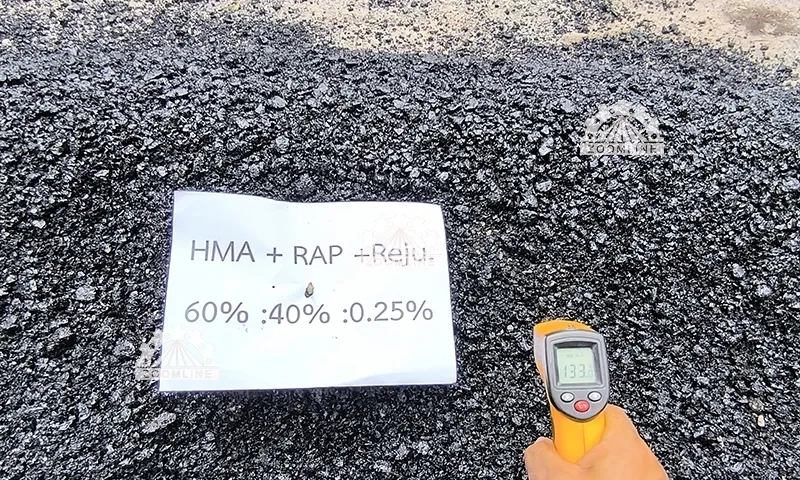
Two common on-site testing methods are used: first, using an infrared thermometer to directly measure the surface temperature of the freshly paved asphalt, which is quick and convenient; second, using an insertion thermometer to measure the core temperature by inserting it into the asphalt layer (at a depth of 5–10 cm), which provides greater accuracy. Temperature measurements are taken simultaneously when the material leaves the mixing plant, and a temperature record is issued. The contractor must verify the on-site temperature to ensure it meets the standards.