



Construction Technology Of Modified Emulsified Asphalt
Contents
- 1 Engineering Value and Construction Significance of Modified Emulsified Asphalt
- 2 Prerequisites for Modified Emulsified Asphalt Construction
- 3 Pre-construction Preparation: Laying a Solid Foundation for Construction Quality
- 4 Construction Safety and Environmental Protection Measures
- 5 Summary of Key Points in Modified Emulsified Asphalt Construction
Engineering Value and Construction Significance of Modified Emulsified Asphalt
Core Characteristics and Application Areas of Modified Emulsified Asphalt
Modified emulsified asphalt is a binder material whose road performance is significantly improved by adding high-molecular polymers (such as SBS and SBR) to ordinary emulsified asphalt. Its core characteristics include excellent bond strength, low-temperature crack resistance, high-temperature stability, anti-aging properties, and resistance to water damage. Main application areas include:
Road paving: As a binder for tack coats, prime coats, slurry seals, and micro-surfacing.
Road maintenance: Used for preventative maintenance such as crack sealing, pothole repair, and fog sealing.
Bridge deck waterproofing: As a high-performance waterproof bonding layer, protecting bridge decks and extending bridge life.
Special projects: Such as airport runways, tunnel paving, and colored pavements.

The Key Influence of Construction Technology on the Performance of Modified Emulsified Asphalt
High-quality modified emulsified asphalt is only the foundation; the ultimate realization of its superior performance highly depends on scientific and meticulous construction techniques. Improper construction can lead to problems such as material segregation, uneven demulsification, and bonding failure, negating the advantages of modification and even causing premature damage. Therefore, construction technology is the “last mile” connecting material performance and engineering effectiveness, and is crucial to the success or failure of a project.
Comprehensive Construction Guide from Basics to Practical Application This article systematically provides a complete and operational technical guide for the construction of modified emulsified asphalt, covering material understanding, construction preparation, process operation, quality control, and safety and environmental protection. It aims to provide engineering technicians with a clear path from theory to practice.
Prerequisites for Modified Emulsified Asphalt Construction
Definition and Core Advantages of Modified Emulsified Asphalt
Performance Differences from Ordinary Emulsified Asphalt
Adhesion: Better polymer film-forming properties, increasing adhesion to aggregates and existing pavements by over 30%.
Durability: Strong elastic recovery, excellent fatigue resistance, and significantly extended service life.
Temperature Sensitivity: Does not soften or flow at high temperatures, and is less prone to cracking at low temperatures, with a wider applicable temperature range.
Aging Resistance: The network structure formed by the modifier effectively blocks light and oxygen erosion, delaying aging.
Core Value for Adapting to Engineering Scenarios
Reduced Construction Difficulty: Can be constructed at normal or lower temperatures, saving energy and protecting the environment, improving the working conditions.
Extended Project Lifespan: Significantly improves the pavement’s resistance to rutting, cracking, and water damage, reducing total life-cycle costs.
Faster Traffic Opening: Fast demulsification and molding, shortening maintenance time and reducing traffic impact.
Proportioning Logic of Modified Emulsified Asphalt
Selection Criteria and Quality Requirements for Base Asphalt
Appropriate grade (e.g., No. 70, No. 90) of high-quality road petroleum asphalt should be selected based on the climate, traffic load, and functional requirements of the project site. Its penetration, ductility, softening point, and other indicators must meet the specifications.
Compatibility Principles and Dosage Control of Emulsifiers and Stabilizers
Emulsifiers: The ionic type (cationic, anionic, nonionic) should be scientifically selected based on the chemical properties of the base asphalt and the required demulsification rate (fast cracking, medium cracking, slow cracking) for the project.
Modifiers: SBS is suitable for improving high and low temperature performance, while SBR focuses on improving low-temperature crack resistance and adhesion. The dosage is usually 2%-5% of the asphalt mass, and the optimal proportion needs to be determined through testing.
Stabilizers: Adjust the pH of the system, enhance storage stability, and prevent demulsification.
Applicable Working Conditions of Modified Emulsified Asphalt
Selection Recommendations for Different Engineering Scenarios
New Road Tack Coat/Pack Coat: Select medium- or slow-setting asphalt to ensure sufficient penetration and adhesion.
Maintenance and Repair (Micro-surfacing, Slurry Seal): Select fast- or medium-setting asphalt, combined with specific graded aggregates, to achieve rapid traffic reopening.
Bridge Deck Waterproofing Tack Coat: Select a high-performance SBS modified special type with extremely strong adhesion.
Special Climate Zones (High Altitude, Rainy Areas): Select corresponding modifiers (such as high-content SBR) to enhance low-temperature or water resistance properties.
Pre-construction Preparation: Laying a Solid Foundation for Construction Quality
Material Preparation and Quality Control
Material Storage Requirements
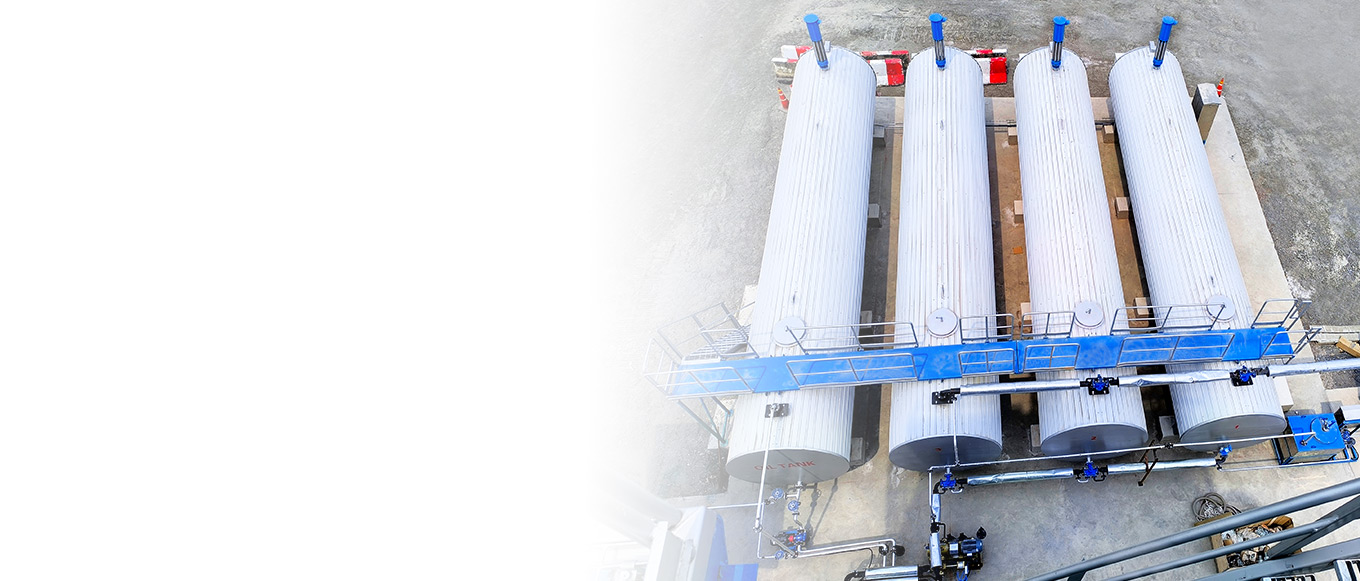
Temperature Control: The storage tank temperature should be maintained between 50-70℃ to avoid prolonged exposure to high temperatures (>80℃) leading to aging, or to low temperatures leading to excessive viscosity.
Sealing: Materials must be sealed during storage and transportation to prevent moisture evaporation or entry that could cause demulsification.
Stacking Standards: Different batches and models of materials should be stored in separate areas with clear labeling.
Shelf Life Management: Follow the “first-in, first-out” principle. The storage period for ordinary products should not exceed 3 months, and they must be re-inspected before use.
Auxiliary Material Preparation
Aggregates must be clean, dry, and have a gradation that meets design requirements; sealants, geotextiles, etc., should have good compatibility with modified emulsified asphalt.
Construction Equipment Selection, Commissioning, and Maintenance
Core Equipment: Asphalt Sprayer
High-performance sprayers with computer control, precise metering, and automatic temperature control functions should be selected. The spraying accuracy error should not exceed ±0.1 L/m², and the spray pattern should be uniform and stable.
Equipment Debugging Key Points
Spraying Volume Calibration: Before formal construction, conduct a test spray on a level surface, measure the actual spraying volume, and adjust the pump speed and vehicle speed until they meet the design values.
Nozzle Angle Adjustment: Ensure uniform overlap of the spray pattern; the overlap width is typically 10-15 cm.
Stirring Speed Setting: Maintain low-speed stirring in the storage tank to prevent the modifier from settling.
Comprehensive Equipment Inspection Before Construction
Check the heating system, pumping system, spraying system, control system, and pipeline valves for proper functioning. Remove impurities from the filter screen and ensure the equipment is in optimal condition.
Construction Substrate Pretreatment Standards
Substrate Cleaning Requirements
Use a sweeper, high-pressure water gun, or blower to thoroughly remove floating dust, mud, debris, and oil stains. Areas with standing water must be dried or oven-dried to achieve a “clean and dry” state.
Control of Substrate Flatness and Dryness
Flatness is checked using a 3m straightedge; the maximum gap should not exceed 8mm. Dryness can be checked using a simple method: cover the substrate with a 1m² plastic film, press it firmly around the edges, and if no moisture remains inside the film after 2-4 hours, it is considered合格 (qualified).
Repair of Substrate Defects
Cracks are filled with sealant. Potholes and loose areas are removed according to the “round hole, square patch” principle and filled and compacted with hot-mix asphalt or cold-mix patch material to ensure the overall integrity of the substrate.
Construction Environment and Personnel Preparation
Construction Environment Requirements
Temperature: Both ambient temperature and substrate temperature should be above 10℃ and continuously rising.
Humidity: Relative humidity should not exceed 80%. Avoid construction immediately after rain.
Wind: Avoid operation in strong winds (>4 level) to prevent uneven spraying and pollution.
Rain and Snow: Check the weather forecast before construction to ensure there is no rain or snow within 24 hours after construction.
Construction Personnel Allocation
Clearly define the responsibilities of the project manager, technical supervisor, equipment operators, quality inspectors, and safety officers to form a highly efficient collaborative team.
Core Content of Pre-Job Training
Focus on technical briefings (clarifying process parameters and quality standards), safety regulations training (especially prevention of high-temperature burns and mechanical injuries), and equipment operation drills.
Complete Operational Specifications for Modified Emulsified Asphalt Construction Process
Formal Construction Operation Procedure
Heating and Mixing Specifications for Modified Emulsified Asphalt
Before construction, slowly heat the material to a suitable spraying temperature (usually 60-85℃, according to the product instructions). During heating, maintain low-speed circulation and stirring; the time should not be too long to prevent performance degradation.
Key Points for Uniform Spraying
Spraying sequence: Start from one side of the curb, drive at a constant speed longitudinally, and complete the entire width sequentially. Overlap longitudinal joints by 10-15cm.
Vehicle speed control: Calculate and maintain a constant vehicle speed based on the designed spraying volume and pump flow rate; generally, 3-6 km/h is recommended.
Nozzle height adjustment: Usually 25-40cm above the ground to ensure the formation of a uniform, continuous asphalt film without white streaks.
Localized Construction Treatment Near Edges and Structures
For areas inaccessible to the spreader, such as curb edges, manhole covers, and guardrail foundations, meticulous manual treatment using handheld spray guns or brushes is necessary to ensure complete coverage.
Compaction Specifications
Compaction Timing: Compaction should begin immediately after the emulsified asphalt begins to break down (the color changes from brown to black and begins to lose its fluidity).
Compaction Sequence and Number of Passes: Follow the principle of “light to heavy, edges to center, low to high.” Use a steel-drum roller for 1-2 static passes, followed by 2-3 intermediate passes, and a final pass to eliminate wheel tracks.
Roller Type Selection: An 8-10 ton double-drum roller is recommended for initial compaction. For intermediate compaction, a pneumatic tire roller or a heavy-duty steel-drum roller can be selected depending on the layer thickness.
Post-Construction Curing and Connection with Subsequent Procedures
Curing Time Requirements and Traffic Control
After application, a closed curing period is required until complete demulsification and water evaporation (usually 2-6 hours, depending on weather). During the curing period, entry by any vehicles or pedestrians is strictly prohibited, and clear warning signs must be posted.
Environmental Protection During Curing
In case of sudden rainfall, immediately cover with tarpaulins. Take precautions against dust pollution during windy weather. Assign dedicated personnel to patrol and prevent external damage.
Precautions for Connecting Construction
Before paving the upper asphalt mixture, the tack coat surface must be inspected again to ensure it is clean, dry, and free of contamination. During upper layer paving, the mixture temperature should not be too high to avoid excessive aging of the tack coat due to baking.
Construction Quality Control and Acceptance Standards: Avoiding Potential Quality Hazards
Key Points for Quality Monitoring During Construction
Real-time Monitoring Indicators
Spraying Quantity: Dual control is implemented by comparing the computer readings on the spray truck with the actual collection volume per unit area.
Construction Temperature: Real-time monitoring of the temperature of the storage tank, spray nozzles, and base surface.
Compaction Effect: Observing for displacement and cracking, and testing the compaction degree.
Monitoring Frequency and Testing Methods
Per Truckload Inspection: Temperature, spraying quantity.
Per Work Section Inspection: Appearance uniformity, joint treatment.
Testing Methods: Thickness is measured using the sand spreading method, bond strength is measured on-site using a pull-out tester, and compaction degree is measured using a nuclear density meter or sand filling method.
Immediate Handling of Process Quality Problems
If inaccurate spraying quantity, missed spraying, or accumulation is found, immediately stop the equipment and adjust it. Local defects should be repaired manually immediately.
Core Acceptance Indicators and Testing Standards
Appearance Quality Acceptance
The surface should be uniform and consistent, without leakage, streak-like accumulation, flow, or cracks; edges and corners should be completely covered.
Thickness and Uniformity Acceptance
The average thickness should meet the design requirements, with an allowable deviation of ±10% of the design value. At least 3 points should be tested per 1000㎡.
Bond Strength Testing
A pull-out test should be used; the bond strength to the substrate should not be less than 0.4MPa (specific requirements depend on the design). At least one set of tests (3 points) should be performed per 5000㎡.
Compaction Test
For layers requiring compaction (such as micro-surfacing), the compaction degree should reach at least 93% of the maximum theoretical density.
Common Quality Problems and Solutions
Leakage, Accumulation, and Flow
Causes: Nozzle blockage, unstable vehicle speed, excessively high temperature.
Rectification: Clean the nozzles and calibrate the equipment; manually touch up any missed areas; scrape off excess material from accumulated or dripping areas.
Insufficient Adhesion
Causes: Unclean or damp substrate; material demulsification too quickly or too slowly; improper compaction timing.
Reinforcement: Thoroughly clean the affected area and reapply; in severe cases, milling and redoing are required.
Cracks and Looseness
Prevention: Ensure a firm substrate, qualified material quality, and timely and sufficient compaction.
Repair: Mill loose sections, clean, and redo according to repair procedures.
Inadequate Compaction
Rework Process: Analyze the cause (material, temperature, number of compaction passes, or equipment); add compaction within the allowable time; if compaction has already occurred, mill the affected section and redo the work.
Construction Safety and Environmental Protection Measures
Construction Safety Management
Construction Site Safety Protection Must Be Adequate:
Standardized warning signs must be set up in the construction area, including construction notice boards, speed limit signs, warning lights, and guardrails. Guardrails must be placed at least 1.5 meters from the edge of the construction site to ensure the safety of passing vehicles and pedestrians. Sufficient lighting equipment must be provided for nighttime construction to avoid blind spots.
Construction Personnel Safety Equipment Must Be Complete:
Operators must wear safety helmets, non-slip shoes, heat-resistant clothing, protective gloves, and goggles to avoid burns from asphalt splashes or mechanical injuries. For high-altitude operations (such as bridge construction), safety belts must be worn, and a safety platform must be erected.
Equipment Operation Safety Standards Must Be Strictly Followed:
Before starting the equipment, all performance indicators must be checked, and it can only be started after confirming that everything is normal. When operating asphalt distributors, avoid pointing the nozzles directly at personnel; personnel are prohibited from approaching the nozzle area during spraying. When operating road rollers, speed must be controlled to avoid sudden braking and sharp turns; personnel are prohibited from staying near the roller wheels during compaction. All equipment must be operated by qualified personnel; unlicensed operation is strictly prohibited.
Emergency response plans need to be comprehensive, clearly defining procedures.
In case of burns, immediately rinse the affected area with cold water, apply burn ointment, and seek medical attention promptly if the burn is severe. In case of fire, immediately stop construction, shut off equipment power and fuel valves, use fire extinguishers or fire sand to extinguish the fire, and call the fire department. In case of equipment malfunction, immediately stop the machine for inspection, disconnect the power supply, and have it repaired by qualified personnel; unauthorized disassembly of equipment is prohibited.
Environmental Protection Requirements
The collection and treatment of asphalt waste and wastewater must comply with regulations. Waste asphalt and loose debris generated during construction must be collected and transported to designated waste disposal sites; indiscriminate disposal is strictly prohibited. Construction wastewater must be treated by sedimentation before discharge to avoid polluting soil and water bodies. Asphalt-containing wastewater generated from equipment cleaning must be collected separately and treated by a professional organization; direct discharge is prohibited.
Dust and odor control measures must be in place during construction. Dust is easily generated during surface cleaning and material storage; regular water spraying is necessary to suppress it, and closed-loop operations should be adopted when necessary. Odors generated during asphalt heating must be dispersed through proper heating area layout and ventilation equipment to avoid affecting the surrounding environment and personnel health. The construction area must be fenced off to reduce the spread of dust and odors.
Thorough site cleanup and environmental restoration are essential after construction. After construction, equipment, materials, and debris must be removed from the construction site to ensure cleanliness. Damaged green belts, curbs, and other facilities must be repaired. The soil and water bodies around the construction area must be inspected; if pollution is found, remedial measures must be taken promptly to restore the surrounding environment to its original state.
Summary of Key Points in Modified Emulsified Asphalt Construction
Core Logic of Full-Process Construction Quality Control
The success of modified emulsified asphalt construction relies on a tightly linked and continuously controlled system engineering approach. Its core logic is: using qualified materials as a prerequisite, sophisticated equipment as a tool, a standard base surface as a foundation, precise processes as the core, strict monitoring as a guarantee, and safe operation as the bottom line. Negligence in any link can lead to a decline in final performance.
The Significance of Standardized
Construction for Improving Project Durability and Economy
Adhering to standardized and meticulous construction, although requiring higher initial management and technical investment, brings long-term and significant benefits:
Technical Benefits: Ensures the superior performance of modified emulsified asphalt is fully utilized, significantly improving pavement resistance to damage and extending service life by more than double.
Economic Benefits: Reduces frequent repairs due to early damage, significantly lowers the total life-cycle maintenance cost of roads, and results in a high return on investment.
Social Benefits: Improves driving comfort and safety, reduces traffic disruption during construction, and practices green construction principles.
Therefore, a deep understanding and mastery of modified emulsified asphalt construction technology is the only way for modern road construction and maintenance professionals to improve their professional skills and create high-quality projects.