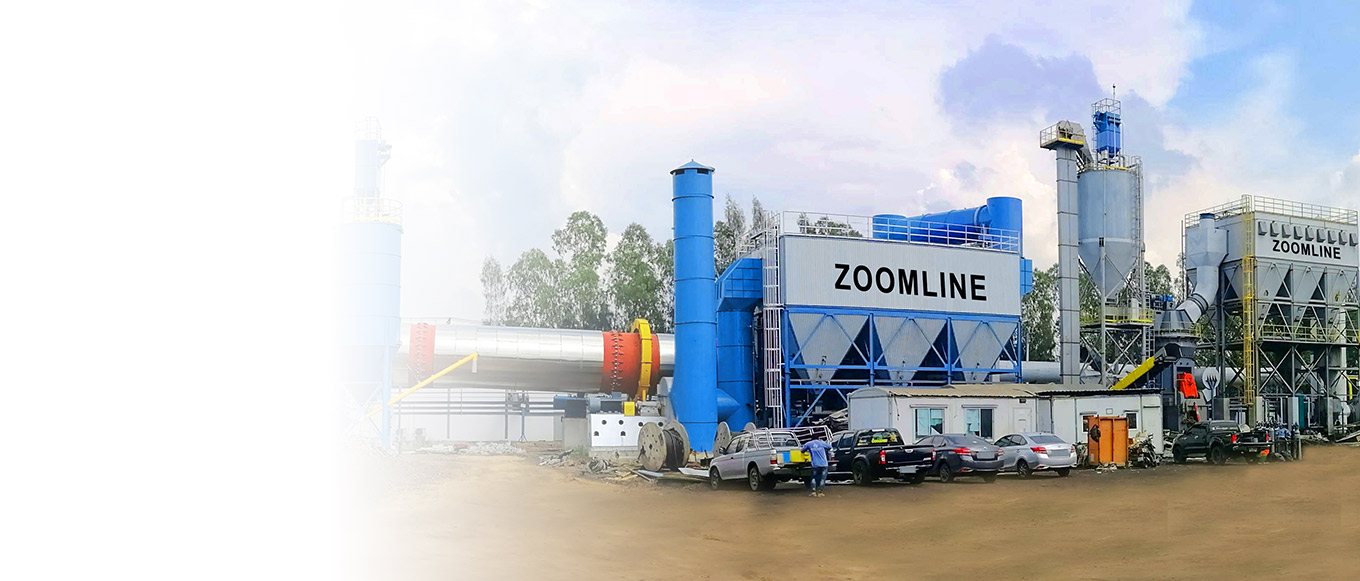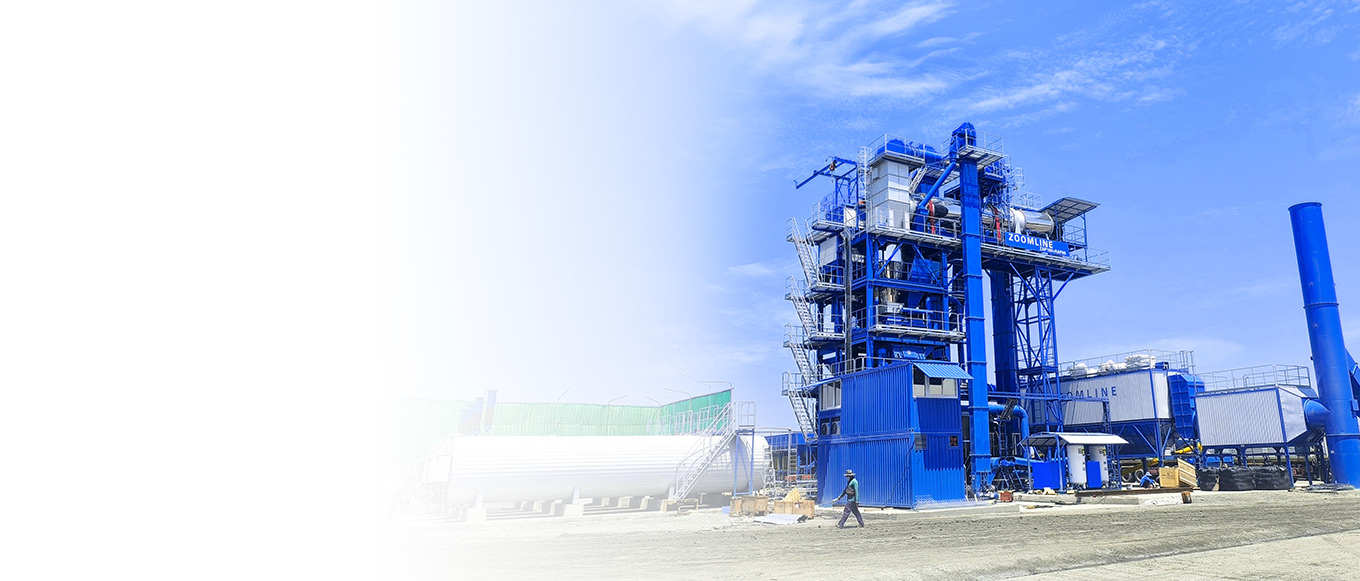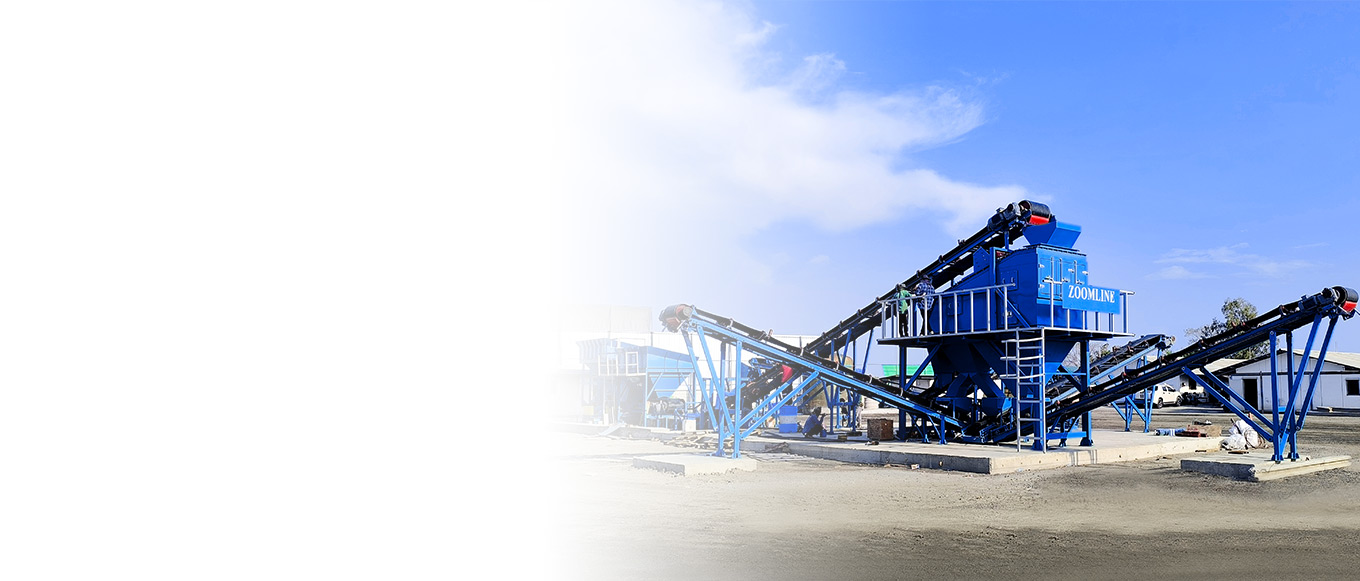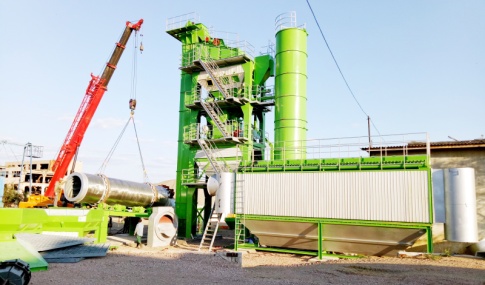


The production capacity of an asphalt mixing plant, in layman’s terms, refers to the quantity of qualified asphalt mixture it can produce within a unit of time. It serves as the core metric for evaluating equipment productivity. For contractors involved in road construction and municipal projects, mixing plant owners, and project managers, production capacity is far more than a simple number—it is a critical decision-making factor that permeates project planning, cost control, and return on investment (ROI).
During project preparation, capacity directly determines the construction timeline—insufficient capacity risks delays and escalating labor/equipment costs, while excess capacity leads to idle equipment, capital tie-ups, and significantly reduced ROI. However, widespread misconceptions about “capacity” persist within the industry. Many equate the manufacturer’s rated capacity with actual output, overlooking the impact of construction environments, raw material quality, and operator proficiency. This ultimately leads to mismatches between equipment and project requirements.
This article dissects the core issues surrounding asphalt mixing plant capacity—from definitions and scope to influencing factors and selection techniques—helping users overcome misconceptions and make equipment choices that better align with actual project needs.
When discussing asphalt mixing plant capacity, two core concepts must be clarified: rated capacity and actual production capacity. The difference between them directly impacts the accuracy of project planning.
Rated capacity is the theoretical production capability provided by manufacturers under ideal testing conditions (standard raw materials, full equipment load, skilled operation). Actual production capacity, however, represents the plant’s real-world output during actual construction scenarios, typically falling below the rated capacity.
Production capacity is measured in two primary units: 1. “Tons per hour (TPH)”—suitable for short-term projects or scenarios requiring precise construction schedule control. This serves as the core metric for assessing a plant’s immediate production capability. 2. “Tons per year (annual capacity)”—primarily used for long-term operation planning, assisting users in forecasting annual production schedules and revenue projections.
The manufacturer-defined rated capacity (also known as nominal capacity) represents an ideal value based on standard operating conditions—such as using aggregates with stable moisture content, continuous uninterrupted feeding, and equipment operating at peak efficiency. However, in actual construction, factors like fluctuations in raw material moisture content, feeding interruptions, equipment maintenance, and weather changes can all lead to reduced actual output. This is why real-world capacity often differs from rated capacity.
Small-capacity plants typically range from 40–80 tons per hour (TPH). These compact, highly mobile units (some available in mobile configurations) require minimal site space, making them ideal for small-to-medium-sized projects.
Typical applications include: rural road construction and maintenance, small-scale municipal projects (e.g., residential road paving, sidewalk installation), and township-level road upgrades. Their core advantages lie in low investment costs, simplified operation and maintenance, and reduced energy consumption, making them suitable for small contractors or local municipal departments with limited budgets and fluctuating production demands.
Limitations are also evident: lower production efficiency cannot meet large-scale, high-intensity construction demands; deployment on major projects may cause significant schedule delays, ultimately increasing overall costs.
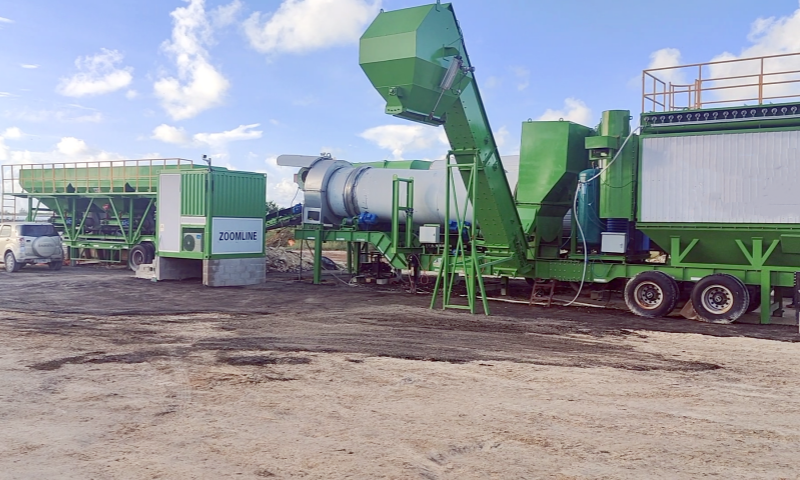
Medium-capacity asphalt mixing plants operate at 100–160 tons per hour (TPH), representing the most widely adopted models on the market today. They strike a balance between cost and production capacity.
Ideal applications include: routine maintenance of expressways, construction of county-level main roads, road development in medium-sized industrial parks, and renovation of municipal thoroughfares. This equipment meets the schedule requirements of medium-scale projects without incurring the excessive initial investment and operational costs associated with large-capacity plants. It also offers flexibility to accommodate various asphalt mix designs.
Its core advantage lies in “balanced cost-effectiveness”—maintaining production efficiency while keeping maintenance costs and energy consumption within reasonable ranges, making it suitable for long-term operations or consecutive construction across multiple medium-sized projects.
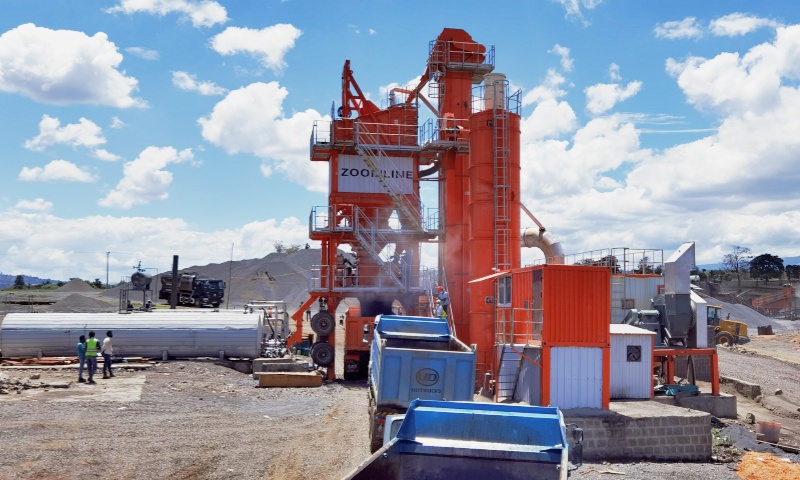
High-capacity asphalt mixing plants operate at 200–320+ tons per hour (TPH), representing high-investment, high-output large-scale equipment primarily serving major infrastructure projects.
Common applications include: new expressway construction, airport runway paving, access roads for large commercial complexes (e.g., logistics parks, high-speed rail station peripheries), and cross-regional arterial road development. These projects demand substantial asphalt mix volumes with tight construction schedules, requiring equipment capable of sustained high-intensity production.
The advantage of high-capacity equipment lies in its exceptional production efficiency, which significantly shortens construction cycles for large-scale projects and reduces fixed costs per unit output, such as labor and management expenses. However, its limitations are also pronounced: substantial initial investment, stringent requirements for site area, power supply capacity, and raw material availability, coupled with high energy consumption and maintenance costs during operation. It is therefore only suitable for large-scale, long-term, and stable production demands.
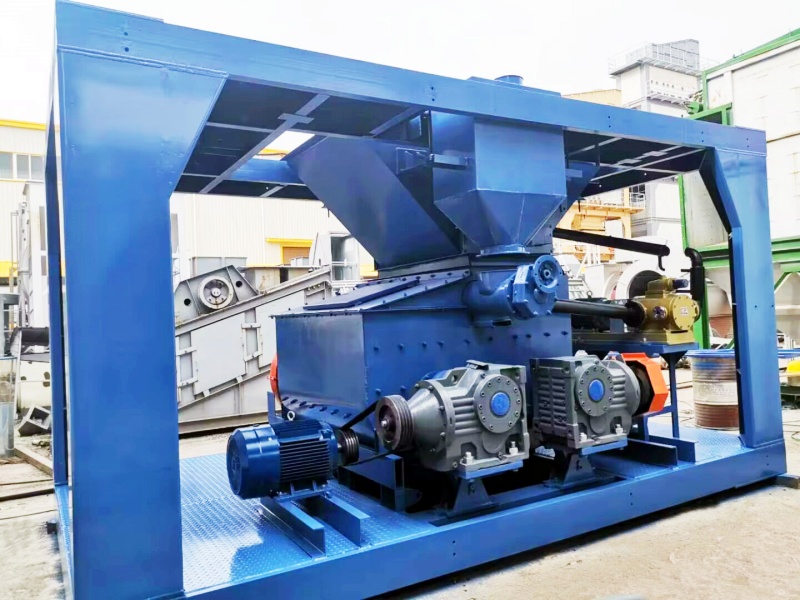
Asphalt mixing plants operate on an intermittent production cycle, where the production cycle of each batch of mix (feeding, mixing, discharging) directly impacts hourly output capacity. Batch size (the weight of mix produced per batch) is positively correlated with hourly output capacity—provided mixing quality meets standards, larger batches yield higher output per unit time.
Conversely, mixing cycle duration negatively impacts capacity: excessively long mixing times reduce batch output per unit time, directly lowering production; conversely, overly short mixing times compromise mixture uniformity, leading to substandard product quality. Thus, equipment must balance mixing quality and speed—a core technological advantage of premium mixing plants.
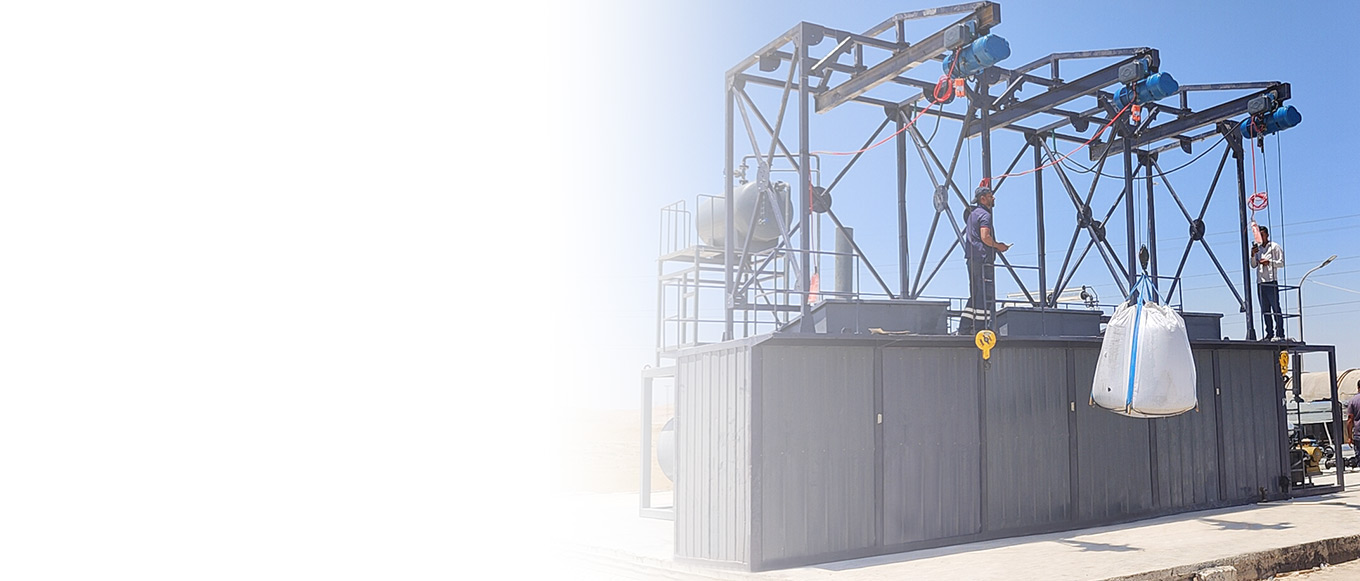
Cold aggregate supply constitutes the “first process step” of production, and its stability directly determines the continuity of subsequent operations. Firstly, the number of aggregate bins impacts material adaptability—a multi-bin design enables simultaneous storage of various aggregate specifications, avoiding production interruptions caused by frequent material switching. Second, feeding precision and conveyor efficiency are critical: unstable feeding speeds or insufficient accuracy cause aggregate ratio deviations, necessitating shutdowns for adjustments and indirectly reducing output. If conveyor capacity falls below the mixing system’s demand, raw material shortages occur, leading to idle mixing equipment.
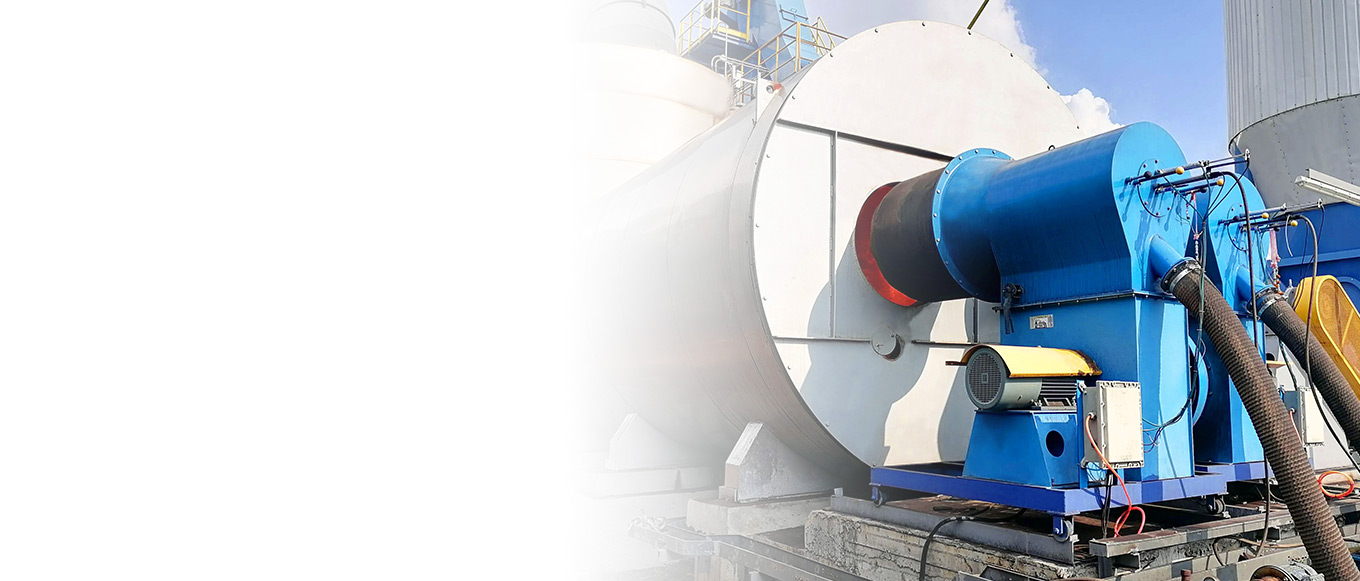
The core function of the drying drum is to remove moisture from aggregates, with its performance directly impacting production efficiency and energy consumption. First, aggregate moisture content is critical—excessively high moisture requires more thermal energy and time for drying, prolonging production cycles and reducing output. Second, burner power and fuel type determine drying efficiency: underpowered burners cannot rapidly elevate drum temperature, resulting in incomplete drying or excessive drying time. High-quality fuels (e.g., diesel, natural gas) offer superior combustion efficiency, ensuring stable dryer operation. Additionally, drum diameter and length affect drying effectiveness—larger diameters and longer lengths increase aggregate residence time for more thorough drying, though excessively long drums increase equipment footprint and energy consumption, necessitating optimal design.
The mixer serves as the “core heart” of an asphalt mixing plant, with its type and efficiency directly determining mixing quality and production capacity. Currently, mainstream mixers on the market are categorized into twin-shaft mixers and pugmill mixers (horizontal shaft mixers). Twin-shaft mixers offer higher mixing efficiency and superior uniformity, completing mixing in shorter timeframes, making them suitable for medium to high production demands; Pugmill mixers are better suited for smaller equipment with lower mixing intensity requirements, though their efficiency is relatively lower.
Additionally, the mixer’s wear resistance and sealing performance impact production capacity—excessive wear on mixing blades reduces mixing efficiency, while poor sealing may cause material leakage and dust issues, necessitating frequent shutdowns for maintenance and indirectly lowering production efficiency.
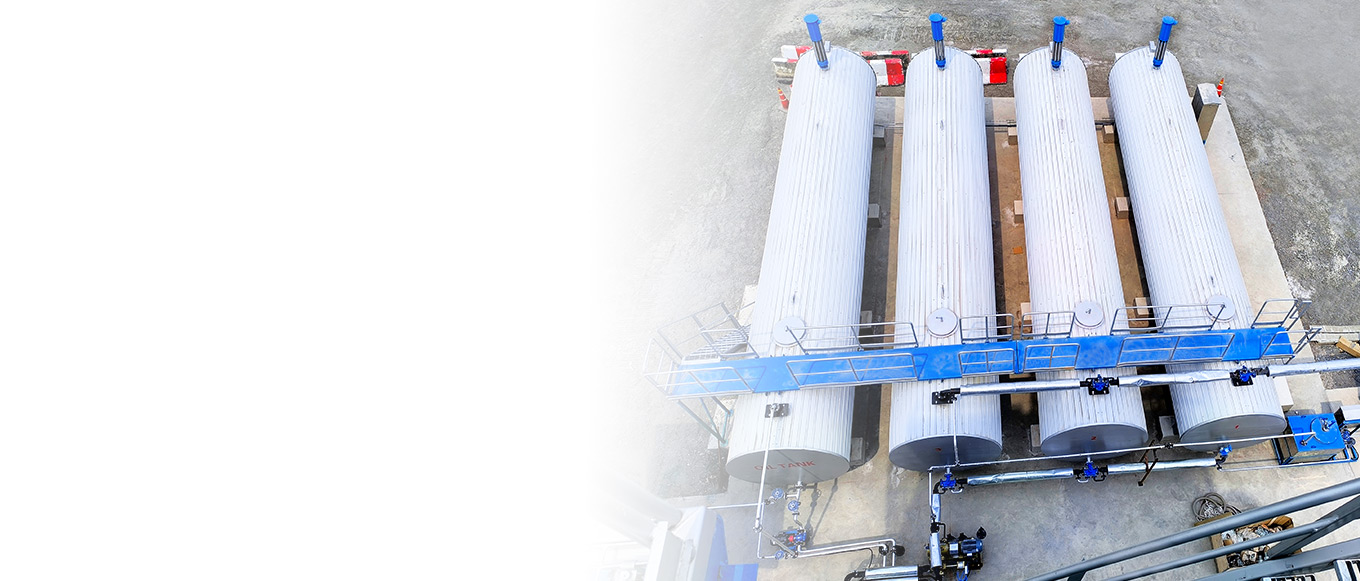
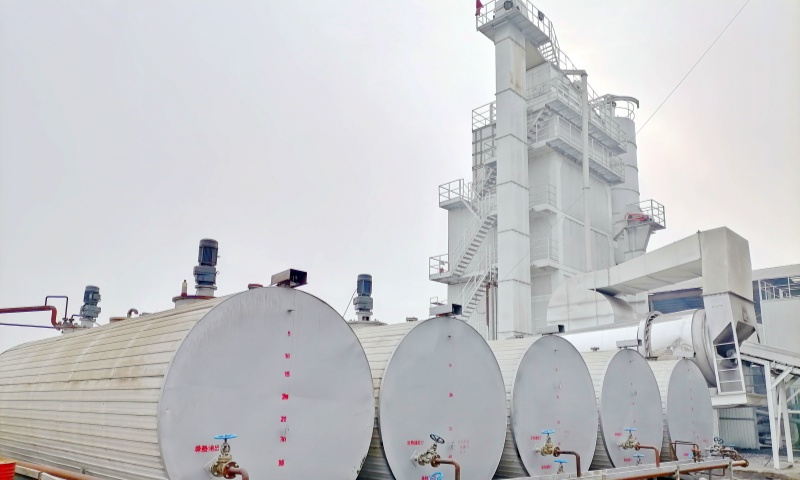
Bottlenecks in asphalt storage and finished product discharge can cause “smooth front-end production but blocked rear-end discharge,” ultimately reducing overall capacity. First, hot mix storage silo capacity is critical—insufficient capacity prevents timely storage of finished product, forcing the mixing system to idle while waiting for discharge. Second, truck loading efficiency and logistics planning impact discharge speed: inefficient loading equipment (e.g., screw conveyors, discharge gates) or poorly scheduled transport trucks cause finished product buildup, forcing the plant to reduce production speed or even halt operations.
Batch asphalt mixing plants operate on a “batch production” model, where production of one batch is completed before feeding and mixing the next batch, resulting in an intermittent production process. Key production characteristics include: high production precision, flexible adjustment of mix designs, and suitability for projects demanding high mix quality and frequent mix changes (e.g., municipal roads, highway maintenance). However, capacity is inherently limited—the mixing cycle restricts the number of batches per unit time. Even high-capacity models struggle to achieve the ultra-high output of continuous production.
The production process of continuous drum mixing asphalt plant is continuous: aggregate drying, heating, and asphalt mixing are completed within the same drum without batch intervals. Their production capacity features include: higher output potential, with hourly capacity reaching 1.5–2 times that of batch plants, making them suitable for large-scale projects with extremely high capacity demands and relatively fixed mix designs (e.g., large-scale new highway construction); However, flexibility is limited—formula changes require shutdowns for drum cleaning and raw material ratio adjustments, consuming significant time, and mix uniformity is slightly lower than batch plants.
The core principle is “matching requirements,” assessed through three dimensions: First, project scale and schedule—large-scale, short-duration projects should prioritize continuous plants or high-capacity batch plants; For small-to-medium projects or those with flexible timelines, medium-to-small capacity batch plants offer greater cost efficiency. Second, mix design requirements—If frequent mix changes are needed or high quality precision is required (e.g., airport runways, major highway corridors), batch plants are preferable. If mixes are fixed and extremely high capacity is demanded, continuous plants may be selected. Third, local regulations and quality standards—some regions impose explicit requirements on mix quality for road construction. Equipment must be selected to meet both capacity and quality standards accordingly.
The actual production capacity of an asphalt mixing plant typically reaches only 70%–90% of its rated (theoretical) capacity, rarely achieving the full 100% theoretical value. This discrepancy stems from the combined influence of multiple external factors:
First is operator experience—skilled operators can precisely control equipment operating parameters, minimizing downtime and adjustment periods caused by operational errors, thereby boosting actual output. Novice operators, however, may cause significant output drops due to improper parameter settings or delayed responses to malfunctions. Second is equipment maintenance status—regularly serviced equipment maintains optimal performance, minimizing downtime from failures. Neglected maintenance leads to component wear and system failures, not only reducing output but potentially compromising product quality.
Additionally, climatic conditions and raw material quality impact actual output: Low temperatures and high humidity increase aggregate drying difficulty, prolonging drying times. Unstable raw material quality (e.g., significant fluctuations in aggregate moisture content or abnormal asphalt viscosity) necessitates frequent parameter adjustments during production, indirectly reducing output.
So how should actual capacity be estimated? We recommend using the “theoretical capacity × correction factor” method: First, obtain the manufacturer’s rated capacity. Then determine the correction factor based on project conditions—for skilled operators, regular maintenance, and stable raw materials, use a factor of 0.8–0.9; For conditions involving inexperienced operators, significant raw material fluctuations, or adverse weather, use a correction factor of 0.7–0.8. Capacity estimated through this method better aligns with actual production requirements.
The core principle for capacity selection is “avoid blindly pursuing size; match only actual needs.” Before procurement, clarify the following key questions before making a decision:
– Small projects (rural roads, residential area roads): Select low-capacity equipment (40–80TPH).
– Medium projects (county-level main roads, highway maintenance): Select medium-capacity equipment (100–160TPH).
– Large projects (new highway construction, airport runways): Select high-capacity equipment (200TPH+).
Capacity, cost, and return on investment are closely intertwined. When selecting capacity, comprehensively evaluate initial investment, operational costs, and long-term returns:
First, the relationship between initial equipment cost and capacity: Higher capacity requires greater initial investment—core components of large-capacity equipment (e.g., mixing systems, drying drums, conveyors) feature larger specifications, higher technical requirements, and increased manufacturing costs. However, the investment cost per unit of capacity decreases as capacity increases (e.g., the investment per unit of capacity for a 200TPH unit is less than double that of a 100TPH unit).
Second, operating costs: Unit operating costs (energy consumption, labor, maintenance) decrease as capacity increases—fixed costs (labor, site rental) for large-capacity equipment are spread over fewer tons of product. However, total energy consumption is higher for large-capacity equipment. If production capacity is underutilized (e.g., running a 200TPH plant at 100TPH), unit operating costs rise significantly.
From a long-term return on investment (ROI) perspective, when a project’s annual demand stabilizes at a high level (e.g., over 100,000 tons per year), larger capacity equipment yields higher long-term returns. Conversely, for lower annual demand (e.g., under 30,000 tons per year), smaller capacity equipment offers superior ROI. Therefore, the core criterion for determining “when high-capacity equipment is more economical” is whether the project’s long-term, stable production demand can sustain full-load operation of the larger capacity equipment.
During the procurement and operation of asphalt mixing plants, many owners fall into misconceptions due to insufficient understanding of capacity, ultimately leading to increased costs and subpar output. Below are four key misconceptions to avoid:
In summary, asphalt mixing plant capacity is not a simple figure but a comprehensive metric encompassing “rated vs. actual,” “equipment vs. auxiliary,” and “capacity vs. cost.” The core principle is ensuring “equipment capacity precisely matches project requirements”—neither selecting underpowered equipment for cost savings nor blindly opting for oversized capacity that wastes resources.
Therefore, prior to procurement, thoroughly assess core project details including engineering volume, schedule, raw material supply, and logistics conditions to precisely calculate daily and monthly production requirements. Simultaneously, select equipment manufacturers with reliable quality and comprehensive after-sales service—premium suppliers not only provide capacity-compliant equipment but also offer customized capacity planning solutions tailored to project specifics, helping mitigate risks and enhance investment returns.
Remember, selecting the capacity for an asphalt mixing plant fundamentally means choosing an operational model that aligns with project requirements and long-term development. Only by understanding the logic behind capacity can you make the decision that best suits your needs.