

As core equipment in road construction, municipal engineering, and other fields, asphalt mixing plants not only require substantial investment and boast a long service life, but their quality and performance directly determine project quality, operational costs, and environmental compliance. Choosing the wrong manufacturer may trigger frequent equipment failures, soaring maintenance costs, environmental non-compliance, and other issues—potentially jeopardizing project timelines and corporate reputation. Therefore, mastering scientific selection methods to identify reliable asphalt mixing plant manufacturers is a critical decision for project owners and investors. This article breaks down the entire process of selecting premium manufacturers across 12 core dimensions.
Before selecting a manufacturer, the primary prerequisite is to clearly outline your project requirements to avoid “blind selection.” Different project scenarios impose significantly varying demands on mixing plants. Focus on the following five key points:
Highways and airport runways demand extremely high precision in asphalt mixture gradation and production stability. Prioritize manufacturers specializing in high-end engineering equipment. Municipal roads and rural highways can opt for more cost-effective models based on budget and schedule.
Define the required output per hour (tph) to prevent resource wastage from overcapacity or project delays due to insufficient capacity. Common capacities range from 50 tph to over 400 tph, necessitating precise selection based on project scale.
Batch mix plants offer precise mix ratios and consistent quality, suitable for high-end projects. Drum mix plants provide continuous production with high efficiency and lower costs, ideal for small to medium-sized projects. Additionally, decide between mobile (easy relocation, suitable for multiple projects), stationary (high capacity, strong stability, suitable for long-term sites), or modular (easy installation, flexible expansion) equipment.
In cold regions, prioritize equipment with low-temperature start-up capability. In hot, humid areas, emphasize corrosion-resistant and moisture-proof designs. Additionally, local environmental emission standards and site constraints will influence equipment configuration choices.
The manufacturing of asphalt mixing plants involves multiple fields such as mechanical design, process optimization, and system integration. Industry experience directly determines product quality and service capabilities. When evaluating a manufacturer’s experience and reputation, consider the following four dimensions:
Prioritize companies with over 10 years of experience specializing in asphalt mixing equipment manufacturing. Such manufacturers typically possess mature production processes and technical expertise, unlike “all-rounder” factories that produce multiple types of equipment.
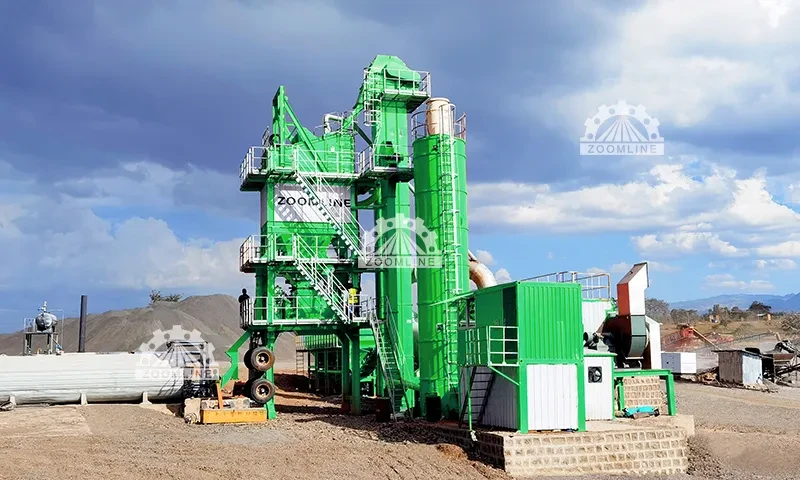
Review the manufacturer’s global project cases, particularly those similar to your project type. Manufacturers with export experience to regions like Europe, America, and Southeast Asia often possess more robust quality control systems and international adaptability, ensuring greater assurance in equipment suitability and compliance.
Gain insights into manufacturer feedback through industry communities, partner referrals, and online reviews. Prioritize long-term collaborations with major engineering firms and municipal entities, as stable partnerships often validate product and service reliability.
Key Insight: Manufacturers with genuine overseas project experience typically possess more mature service systems and problem-solving capabilities, enabling them to better address diverse regional construction environments and compliance requirements.
Equipment quality forms the foundation for stable long-term operation. Conduct comprehensive verification of core components and manufacturing standards:
The drying drum, mixer, burner, and control system form the “heart” of an asphalt mixing plant. Confirm these components utilize premium materials and proven designs. Prioritize manufacturers employing renowned brand key components (e.g., Siemens motors, Schneider PLCs, imported burners, high-precision sensors), as core component reliability directly determines equipment lifespan and failure rates.
Verify whether the manufacturer has established a comprehensive quality control system. Ensure strict inspection standards are applied at every stage—from raw material procurement and production processing to finished product testing. Standardized manufacturing processes effectively prevent hidden quality issues in the equipment.
Inquire about the equipment’s designed service life and replacement cycles for wear parts. Review case studies to understand its operational stability under long-term, high-intensity workloads. This helps avoid construction delays caused by frequent equipment failures.
As personalized requirements for different projects become increasingly prominent, a manufacturer’s R&D and customization capabilities directly determine whether equipment can precisely adapt to project scenarios:
Premium manufacturers can tailor exclusive equipment configuration solutions based on project-specific needs—such as production capacity adjustments, site constraints, and process optimization—rather than merely offering standardized models.
With increasingly stringent environmental policies, focus on manufacturers’ technological innovations in energy conservation and emissions reduction, such as low-energy consumption designs and waste heat recovery systems.
RAP (Recycled Asphalt Pavement) technology effectively reduces raw material costs and environmental pressure. Manufacturers with mature RAP technology support can provide more cost-effective and eco-friendly solutions for projects.
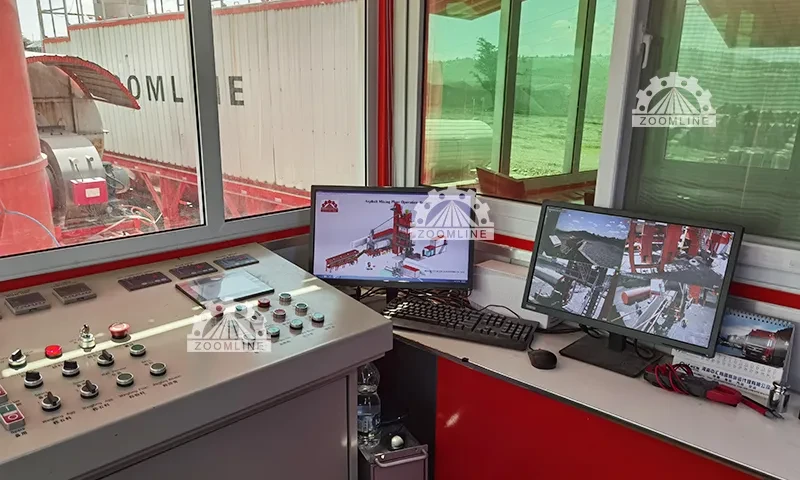
Smart control systems and automated modules enhance production efficiency and reduce labor costs. Verify whether equipment features intelligent functions like remote monitoring, data visualization, and automatic fault alerts.
Environmental compliance is the “red line” for asphalt mixing plant operations. A manufacturer’s environmental technologies and solutions directly determine whether equipment can pass local environmental inspections:
Premium equipment typically incorporates multi-stage dust removal systems like baghouse filters, cyclone separators, and wet scrubbers to effectively manage particulate emissions. Verify dust removal efficiency meets local environmental standards.
Utilize soundproof enclosures and vibration damping devices to mitigate operational noise. Employ sealed structures and odor-neutralizing technologies to minimize odor dispersion and prevent environmental impact.
Verify that the manufacturer’s equipment meets local and international environmental standards, such as regional certifications like EU CE or Russian EAC, to avoid shutdowns due to non-compliance.
Asphalt mixing plants are large-scale machinery requiring ongoing professional support from manufacturers for installation and maintenance. Robust after-sales service is crucial for stable operation:
Reputable manufacturers provide on-site installation and commissioning to ensure rapid operational readiness and prevent failures caused by improper setup.
Deliver professional training for operators and maintenance personnel covering equipment operation, daily maintenance, and troubleshooting, alongside ongoing operational guidance services.
Verify the manufacturer’s spare parts supply system is robust, inventory levels are adequate, and fault response times are prompt (ideally within 24 hours domestically and 48 hours internationally).
For overseas projects, prioritize manufacturers with dedicated international service teams or authorized partners to significantly enhance after-sales efficiency. For domestic projects, focus on the distribution of regional service centers.
Price is a key factor in selecting manufacturers, but it is by no means the sole criterion. Blindly pursuing low-cost equipment often leads to higher long-term cost risks:
Low-cost equipment may compromise on core components or manufacturing processes, leading to frequent failures. This not only increases maintenance costs but may also disrupt project schedules, causing greater losses.
Holistically evaluate factors including initial purchase price, energy consumption costs, maintenance expenses, spare part replacement costs, and service life. Select manufacturers offering the “best value for money” rather than the “lowest price.”
Compare equipment configurations, service offerings, warranty periods, and other factors across different manufacturers. Assess the comprehensive value of equipment based on your project budget and long-term planning to avoid sacrificing long-term benefits for short-term cost savings.
Reputable asphalt mixing plant manufacturers possess comprehensive certification systems, serving as critical proof of product quality and compliance:
Prioritize manufacturers certified under ISO 9001 Quality Management System, which validates standardized production processes and quality control.
Verify that equipment holds necessary regional certifications based on project location—e.g., CE certification for European exports, EAC certification for Russian markets—to prevent entry or operational issues due to missing certifications.
Confirm equipment meets local construction, safety, and environmental standards to ensure smooth project acceptance and regulatory compliance.

When feasible, visiting the manufacturer’s factory or reference projects offers the most direct and reliable evaluation method:
Tour production workshops to assess manufacturing equipment, processes, quality control procedures, and component inventory, enabling direct evaluation of production capabilities. Engage with technical teams and production managers to gain insights into equipment design and technological advantages.
If on-site visits are unfeasible, request manufacturers to provide factory livestreams, high-definition videos, and detailed production process documentation. Simultaneously verify their corporate credentials and industry reputation through trade associations and third-party institutions.
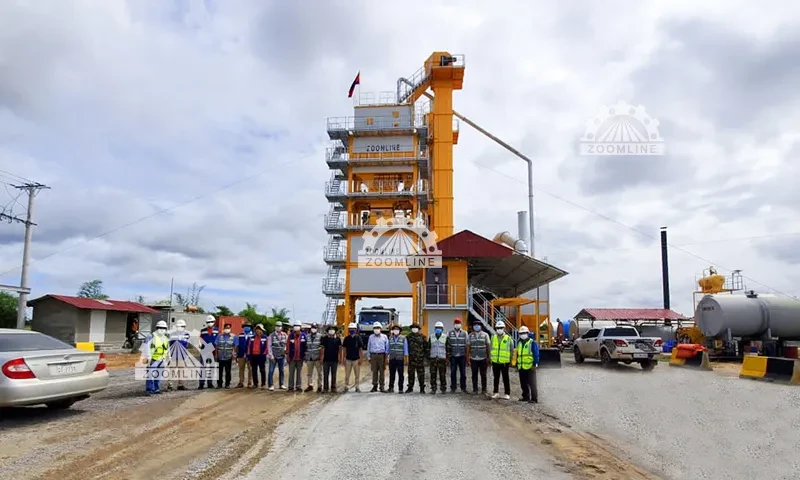
Visit the manufacturer’s reference project sites to observe equipment operational status, production efficiency, and environmental performance. Discuss equipment usage experiences and after-sales service with project managers to obtain authentic feedback.
When communicating with manufacturers, pose the following targeted core questions to quickly eliminate unqualified suppliers and pinpoint reliable partners:
Do you have successful case studies similar to my project type and production capacity requirements? Can you provide case details and client contact information?
What are the delivery timeline and installation/commissioning timeline for the equipment? Can they align with my project schedule?
What is your response process when equipment malfunctions? How quickly can you dispatch maintenance personnel? How do you ensure after-sales service for overseas projects?
What is the warranty period for the equipment? What does the warranty cover? What are the repair charges outside the warranty period?
Can you provide the equipment’s energy consumption parameters, a list of wear-and-tear parts, and their replacement costs? Will you offer technical upgrade services in the future?
Selecting a quality asphalt mixing plant manufacturer is essentially choosing a long-term partner, requiring consideration of both “product hard power” and “service soft power.” Key considerations include: First, clearly define your requirements. Then conduct a comprehensive evaluation based on experience and reputation, product quality, R&D capabilities, environmental compliance, after-sales service, cost-effectiveness, and certification systems. When necessary, confirm through on-site inspections or case verification.
Avoid blindly pursuing low prices at the expense of equipment quality and after-sales support. Do not base decisions solely on brand promotion; instead, make judgments by combining real-world case studies and customer feedback. A quality manufacturer not only provides high-performance equipment tailored to your project but also delivers professional after-sales service and technical support. This helps reduce operational costs, boost construction efficiency, and achieve long-term mutual success.
We hope this guide offers clear selection criteria to help you identify reliable asphalt mixing plant manufacturers, ensuring robust equipment support for your project’s smooth progress!