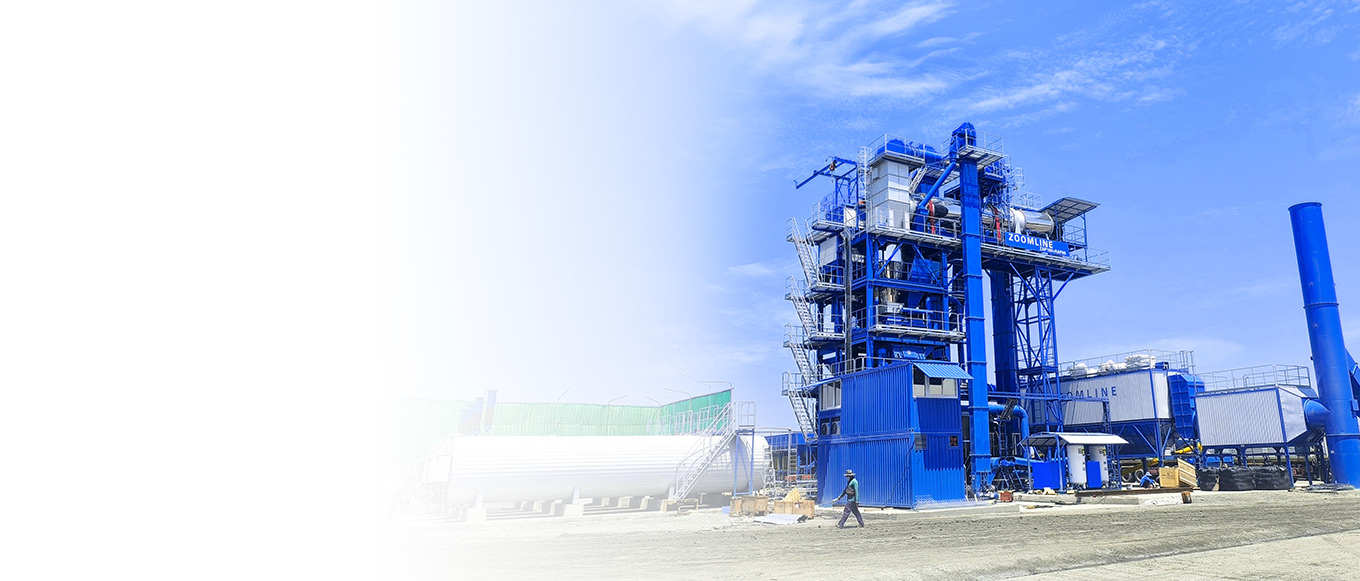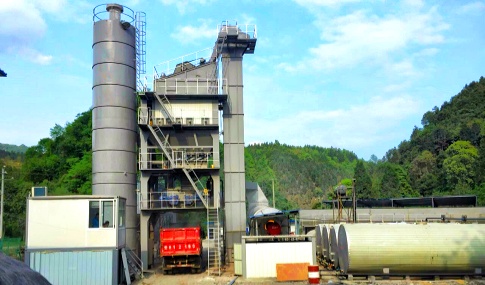

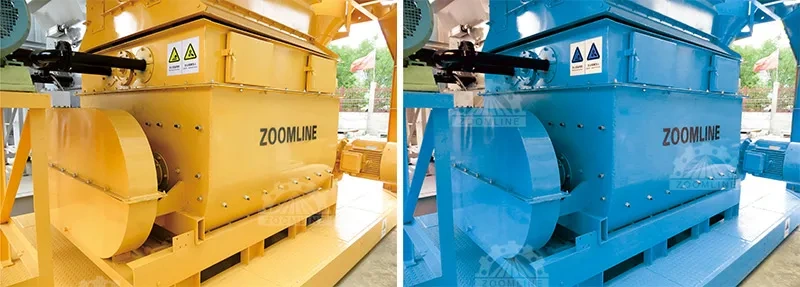
Asphalt mixing plants are the core equipment in asphalt mixture production. Their workflow typically includes cold aggregate batching and conveying, drying and heating, hot aggregate lifting and screening, metering, mixing, and finished product storage. Among these, the mixing stage is crucial for fully integrating heated aggregates, quantitative fillers, and molten asphalt to form a homogeneous asphalt mixture. The mixing time directly determines the effectiveness of this stage.
Mixing time is not an isolated parameter; it directly and profoundly affects the quality of the final product, the efficiency of the entire production system, and the overall project cost. Too short a mixing time may lead to uneven mixtures, incomplete asphalt coating, and severely impact pavement durability. Too long a mixing time reduces production capacity, increases energy consumption, and may cause asphalt overheating and aging. Therefore, a scientific understanding and precise control of mixing time is key to achieving high-quality, efficient, and low-carbon asphalt production, and is also an important benchmark for measuring the operation and management level of a mixing plant.
Definition of Mixing Time
In asphalt mixture production, mixing time generally refers to the total time elapsed from the moment all raw materials (including hot aggregates, mineral powder, asphalt, etc.) are added to the mixing tank until they are uniformly mixed and unloading begins. Several easily confused concepts need to be clearly distinguished:
Mixing Time: Emphasizes the total process time required to achieve the desired level of uniformity.
Agitation Time: Sometimes specifically refers to the duration of mechanical agitation of the materials by the mixing paddle, excluding the settling or transition time after material addition; it is the main component of mixing time.
Cycle Time: For intermittent equipment, it refers to the total time to complete a full production cycle (including metering, agitation, unloading, etc.). Mixing time is the core component of cycle time.
A complete mixing process can be subdivided into three key stages:
Dry Mixing Stage: Hot aggregates and mineral powder (filler) are added first for initial mixing. This stage aims to uniformly disperse the mineral powder and allow it to adhere to the aggregate surface, creating favorable conditions for asphalt coating.
Wet Mixing Stage: This stage begins after the asphalt is sprayed and added. This is the most crucial and essential period in the mixing process. The goal is to use vigorous mixing to ensure the asphalt film evenly and completely coats each aggregate, achieving final homogenization of the mixture.
Discharge Stage: The mixing tank door is opened, and the finished mixture is unloaded into transport trucks or storage silos. This stage should be rapid and thorough to avoid any residue or segregation within the tank.
Main Factors Affecting Asphalt Mixing Time
Equipment-Related Factors
Mixer Type: Intermittent mixing plants have independent mixing drums, allowing for precise setting and control of mixing time, typically 45-60 seconds per batch. Continuous mixing plants involve continuous flow within the drums; mixing time is determined by drum length and inclination angle, resulting in different control logic.
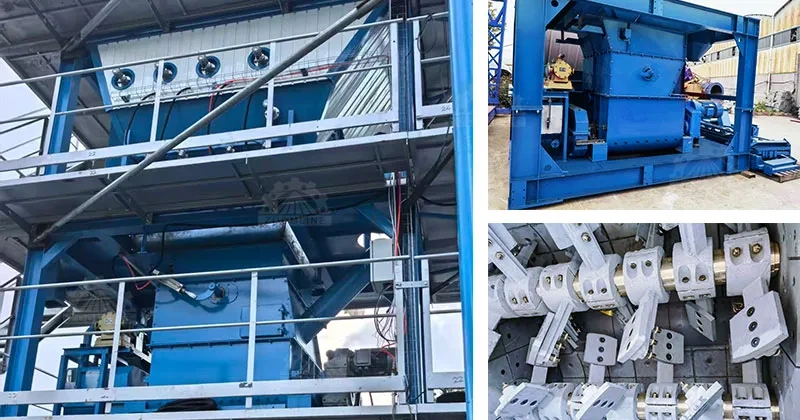
Impeller Design, Speed, and Capacity: The linear velocity, angle, and arrangement of the impeller blades directly affect mixing efficiency and uniformity. Too low a speed leads to uneven mixing, while too high a speed may cause aggregate breakage and asphalt leakage. The rated capacity and actual load of the mixing drum also affect the mixing dynamics.
Equipment Wear and Maintenance Level: Worn impeller blades and liners reduce mixing efficiency, potentially requiring longer mixing times to achieve the same uniformity. Good lubrication and fastening are fundamental for stable operation.
Aggregate Characteristics: The particle size distribution, shape (e.g., flaky/needle content), surface texture, moisture content, and temperature fluctuations of aggregates all affect their adhesion speed to asphalt and the difficulty of mixing.
Asphalt Properties: The viscosity of asphalt changes significantly with temperature. High-viscosity asphalt (such as some modified asphalts) requires longer mixing times to achieve adequate coating.
Mixture Formulation Complexity: Adding admixtures such as fibers, mineral powder, reclaimed aggregate (RAP), and warm mix additives, or using a high proportion of plant-mixed hot reclaimed aggregate (RAP), significantly increases mixing complexity, typically requiring extended dry-mixing or total mixing times to ensure uniform dispersion.
Mixture Type: Different design mix proportions require different mixing times. For example, SMA (asphalt mastic aggregate), rich in mineral powder and fibers, requires longer dry-mixing and wet-mixing times; OGFC (open-graded wearing course) requires careful attention to avoid over-mixing that could lead to asphalt segregation.
Quality Standards: Higher requirements for asphalt coating rate and mixture uniformity (such as asphalt content and segregation control of gradation) generally require longer guarantee mixing times.
Production Temperature: Strict temperature control is a prerequisite. If the temperature is too low, the asphalt will have poor fluidity and be difficult to mix; if the temperature is too high, it is necessary to prevent the asphalt from aging, which may limit the maximum mixing time.
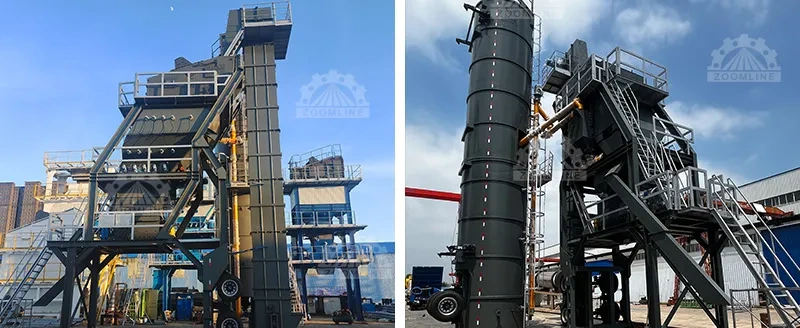
This is the most widely used type, and its mixing time control is the most typical.
Typical Range: The total mixing time for each batch is usually between 45 and 60 seconds, of which the wet mixing time should be no less than 30-35 seconds. For modified asphalt or special mixtures, this may be extended to 60-90 seconds.
Best Practice for Time Allocation: It is recommended to first perform approximately 5-10 seconds of dry mixing (aggregate + mineral powder), then add asphalt and perform 35-50 seconds of wet mixing. Specific times need to be verified through trial mixing.
Capacity Balance Case: A 4000-type batch mixing plant, with a cycle time of 60 seconds (including 45 seconds of mixing time), can theoretically achieve an hourly output of 240 tons. Blindly shortening the mixing time to 35 seconds to increase output may lead to quality risks and is counterproductive.
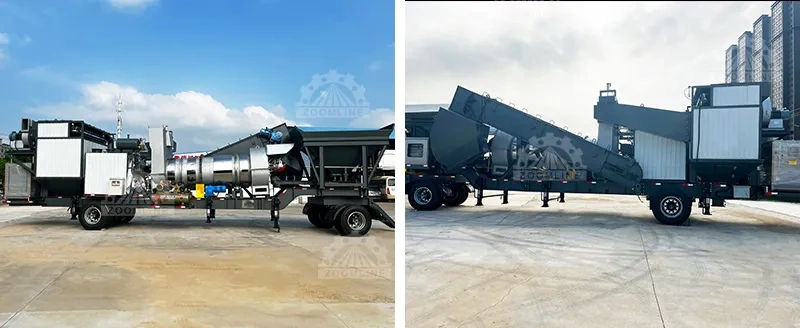
Mixing in this type occurs synchronously within the drying mixing drum. The mixing time is determined by the time it takes for the material to pass through a specific area of the drum.
Calculation Method: Mixing Time = Effective Mixing Zone Length of the Drum / Axial Moving Speed of Material. The mixing time can be indirectly affected by adjusting the drum inclination angle, rotation speed, or internal lifting blade structure.
Key Control Points: The core is to ensure accurate positioning and stable temperature of the asphalt spraying zone, as well as the uniformity of the material’s trajectory within the drum, thereby achieving “full” mixing in a “continuous” state.
Recycled asphalt mixing plant and warm mix asphalt plant
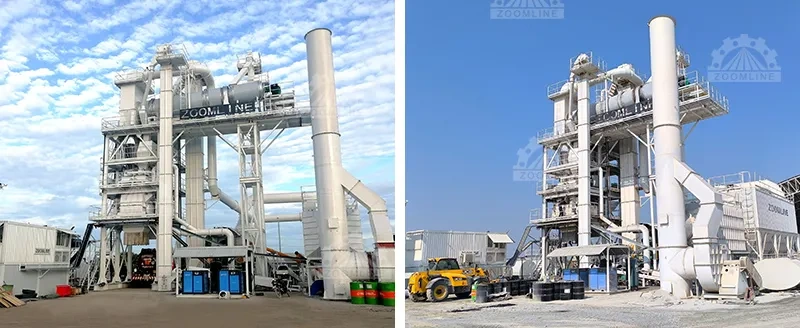
Recycling (RAP): When adding RAP, it is usually necessary to extend the dry mixing time (e.g., first mix the hot aggregate with the RAP for 10-15 seconds) before adding new asphalt to ensure that the RAP aggregate is broken up, heated evenly, and to prevent uneven mixing of new and old asphalt due to large temperature differences. The total mixing time may be 20%-50% longer than that of pure virgin asphalt production.
Warm-mix asphalt plant: By reducing asphalt viscosity, warm-mix technology can sometimes shorten mixing time while maintaining the same level of mixing uniformity, or achieve better coating effects while maintaining the same mixing time. It also creates conditions for reducing emissions and energy consumption. Adjustments need to be made based on the specific warm-mix process.
Practical Strategies and Methods for Optimizing Mixing Time
Fine Adjustment of Process Parameters
Trial Mixing Determination Method: This is the most fundamental method. Fix other parameters and systematically change the mixing time (e.g., from 40 seconds to 70 seconds, in 5-second increments). Take samples from each batch of finished material and conduct tests such as extraction sieving, asphalt coating observation (e.g., the “boiling method” or image analysis) to find the shortest time that meets quality requirements; this is the optimal economic mixing time.
Optimization Techniques for Mixing Sequence and Timing: Adopt a mixing sequence of “dry mixing first, then wet mixing; coarse aggregate first, then fine aggregate; main materials first, then auxiliary materials.” Specifically: first add coarse aggregate and dry mix for 3-5 seconds, then add fine aggregate and filler and dry mix for 2-5 seconds, and finally add asphalt for wet mixing. For auxiliary materials such as fibers, add them 10-15 seconds after adding asphalt to avoid premature fiber agglomeration. Simultaneously, the asphalt spraying sequence can be adjusted, and a segmented spraying method can be used to improve coating uniformity and shorten the wet mixing time.
Regular Inspection and Replacement: Establish a wear inspection system for key components (mixing blades, liners, bearings). Replacement should be considered when a decrease in mixing efficiency or a need to passively extend mixing time is observed.
Adopt Advanced Control Technology: Introduce control systems based on torque measurement, infrared temperature monitoring, or near-infrared spectroscopy (NIR) online analysis. These technologies provide real-time feedback on the mixing status, enabling dynamic adaptive control of mixing time, rather than a fixed time setting.
Reverse Analysis of Finished Products: Regularly sample from the transport trucks to observe the uniformity of the mixture appearance and the presence of any white spots. Conduct extraction tests to analyze fluctuations in asphalt content and gradation. If the coefficient of variation increases, insufficient mixing time or poor equipment condition should be suspected first.
Establish a Database: Record the mixture type, material characteristics, ambient temperature, set mixing time, and corresponding finished product test results for each production run. Long-term accumulated data will become a valuable asset for optimizing mixing time and making intelligent decisions.
Visual Problems: Uneven asphalt coating, resulting in “white patches”; uneven mixture color; uneven temperature.
Perormance Risks: Insufficient bond strength between aggregate and asphalt, leading to poor anti-stripping properties of the mixture; difficulty in compaction; uneven porosity; premature pavement damage, such as spalling, loosening, potholes, and decreased fatigue and rutting resistance.
Efficiency and Cost: Directly reduces equipment capacity, increases energy consumption per unit output (fuel, electricity), and raises production costs.
Material Deterioration: Prolonged exposure to high temperatures causes light components to volatilize, potentially leading to asphalt hardening, aging, reduced ductility, and brittleness.
Construction Problems: Excessive temperature loss in the mixture affects the quality of on-site paving and compaction.
Appearance Judgment: Observe at the unloading port or in the transport vehicle; the mixture should be jet black and shiny, with uniform color and mild smoke. Significant variations in color depth, exposed dry aggregate (whited aggregate), or asphalt seeping into an oil film all indicate potentially improper mixing time.
Simple Experiments:
“Spreading and Observation Method”: Spread a shovelful of mixture onto a clean iron plate. Roughly observe the color uniformity, then closely examine whether the asphalt coating on the coarse aggregate surface is complete.
“Rapid Extraction Comparison”: Simultaneously conduct extraction tests on suspected problematic batches and normal batches, comparing differences in asphalt content and aggregate gradation. Abnormal fluctuations may stem from uneven mixing.
Mixing time, this seemingly simple number, is actually the nerve center connecting the hardware performance, materials science, and process control of asphalt mixing equipment. It is not static but a core process parameter that needs dynamic optimization based on equipment status, material changes, and product requirements.
Action Recommendations for Operation Managers:
Establish Benchmarks: For each commonly used mix proportion, determine the minimum required mixing time through standard trial mixing procedures and document it.
Continuous Monitoring: Make mixing time a mandatory item in daily production logs and link it to visual quality observations of the current batch.
Preventative Maintenance: Include wear checks on internal components of the mixing tank in the regular maintenance plan to prevent problems before they occur.
Embrace Data: Accumulate production data and try to understand the correlation between mixing time and factors such as material temperature and ambient humidity.
Quality First: When facing tight deadlines, prioritize ensuring mixing time and avoid sacrificing quality for a false increase in output.
In modern asphalt production, the concept of controlling mixing time has shifted from a static “set value” to a dynamic “optimal value pursuit,” and from relying on experience to relying on data. Only by adhering to continuous monitoring, scientific analysis, and adaptive adjustments can we achieve the comprehensive goals of stable asphalt mixture quality, high production efficiency, and controllable costs.