






Réduction des émissions des centrales d'enrobage à chaud
As China’s ecological and environmental regulatory framework continues to improve and the infrastructure sector accelerates its transition toward greener practices, the control of exhaust gases and dust at hot-mix asphalt plants has shifted from an “optional optimization” to an “essential requirement.” Currently, emission reduction efforts at asphalt plants are primarily driven by three core factors: First, mandatory environmental permit requirements—as emission standards across regions continue to tighten, issues such as fugitive emissions, flue gas exceedances, and odor nuisances directly impact companies’ compliance with production regulations and annual license renewals; second, market and client access requirements—in the bidding process for municipal engineering and highway infrastructure projects, green production and compliance with emission reduction standards at mixing plants have become key scoring criteria; third, the need for production cost control—high-efficiency emission reduction retrofits and optimized operations and maintenance can effectively reduce fuel consumption and minimize costs associated with equipment failures and downtime, thereby achieving dual improvements in both environmental protection and economic benefits.
This article will comprehensively outline the multidimensional emission sources of hot-mix asphalt mixing plants, the specialized control equipment corresponding to various pollutants, strategies for optimizing daily production and operations, implementation pathways for equipment retrofits, and methods for verifying emission reduction effects, thereby providing actionable green production solutions for large, medium, and small asphalt mixing plants. It should also be noted that environmental regulations, equipment models, fuel types, and production conditions vary by region. Final emission limits and emission reduction results must be determined based on actual on-site conditions and cannot be directly derived from general standards.
What are the primary emission sources at a hot-mix asphalt plant?
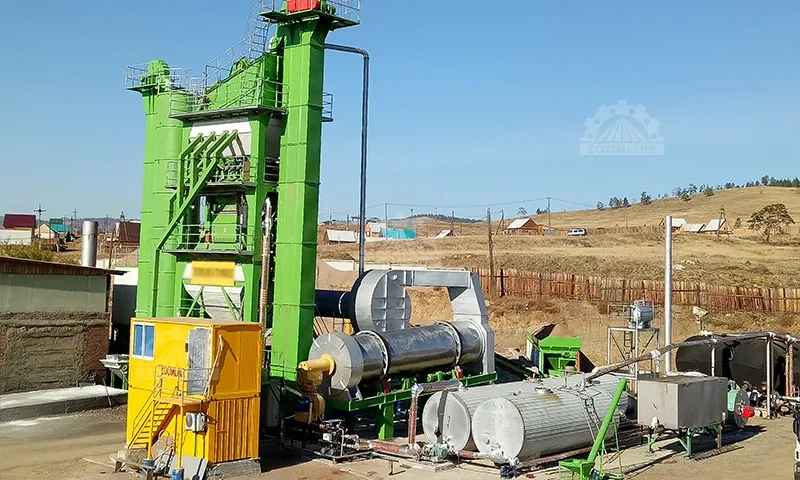
The production process for hot-mix asphalt includes feeding in cold materials, belt conveying, aggregate drying, screening and mixing, asphalt blending, finished product storage, and loading for transport; each stage generates different types of pollutants.
Comparison Table: Emission Sources—Key Pollutants—Conventional Control Methods
| Sources d'émission | Polluants primaires | Conventional Control Methods |
| Cold material silos, material storage yards, conveying and transfer points | Fugitive dust, particulate matter (PM10/PM2.5)) | Enclosed material yards, spray dust suppression, belt sealing, local exhaust hoods |
| Drying drums, burners | Particulate matter, NOx, CO, SO₂, CO₂ | Cyclone pre-treatment, baghouse dust collection, low-nitrogen burners, optimized combustion ratios |
| Mixer, asphalt storage tanks, loading areas | VOCs, asphalt fumes, odors, blue smoke | Negative-pressure exhaust collection, exhaust gas condensation, adsorption purification, thermal oxidation combustion |
| Finished product silos, discharge ports | Dust, small amounts of asphalt fumes | Sealing retrofits, local dust collection, controlled uniform discharge |
Particulate Matter and Fugitive Dust Emissions
Particulate matter and dust are the most common pollutants at asphalt plants and the ones most likely to exceed emission limits. They are primarily divided into two categories: organized stack dust and fugitive dust generated on-site. Organized dust is mainly generated during the high-temperature drying process in the drying drum; fine aggregate dust enters the dust collection system along with the flue gas and is the primary focus of end-of-pipe treatment; Fugitive dust sources are more dispersed, covering the entire process—from aggregate stockpiling upon arrival, screening and vibration, belt conveyor transfer drops, to the loading and unloading of finished products. It is characterized by a wide dispersion range, difficulty in control, and a high likelihood of being captured by environmental inspection cameras. Excessively high aggregate moisture content, fluctuations in production load, and damaged equipment seals can all further exacerbate dust emissions.
Combustion Exhaust: Nitrogen Oxides, Carbon Monoxide, Carbon Dioxide, Sulfur Dioxide
The fuel combustion process in the drying drum burner is the primary source of gaseous pollutants. Common fuels such as natural gas, diesel, and heavy oil produce NOx, CO, SO₂, and the greenhouse gas CO₂ upon combustion. Among these, nitrogen oxides are the core control indicator for air pollution management at asphalt plants; CO generated by incomplete combustion is a toxic and harmful gas; and SO₂ emissions depend directly on the sulfur content of the fuel.
The emission concentrations of these exhaust gases are not fixed values but are influenced by multiple operating conditions: fuel purity and type, combustion air-fuel ratio, aggregate moisture content, equipment production load, and drum temperature stability—all of which directly alter the composition and concentration of the exhaust gases. For example, when the moisture content of aggregates is too high, the burner must continuously increase its heat output to dry the material. This extends the combustion duration and increases the likelihood of incomplete combustion, leading directly to a significant rise in NOx and CO emissions.
VOCs, Odors, and Blue Smoke Issues
Unlike dust and conventional combustion exhaust, VOCs, pungent odors, and blue smoke are key issues in public complaints against asphalt plants and during specialized environmental inspections. These pollutants are primarily generated throughout the entire process—from asphalt heating and temperature-controlled storage to high-temperature mixing and the unloading and loading of finished products—as the light components of asphalt volatilize under high-temperature conditions, forming volatile organic compounds.
The “asphalt blue smoke” commonly observed in the industry is not a single pollutant but rather a mixture of aerosols and exhaust gases formed when organic emissions from asphalt volatilization condense at low temperatures, accompanied by a strong, pungent odor. The presence of blue smoke typically indicates incomplete exhaust collection, excessively high production temperatures, or excessive asphalt volatilization. This issue cannot be resolved by conventional dust removal equipment alone and requires a targeted exhaust gas purification system for effective control.
How to Assess the Existing Emissions Baseline of an Asphalt Plant?
Before undertaking emissions reduction retrofits and operational optimization, it is essential to establish an accurate emissions baseline to avoid blind retrofits and ineffective investments. A key reason many companies fail to achieve satisfactory emissions reduction results is that they apply generic retrofit solutions without first diagnosing issues based on the actual operating conditions of their equipment.
Comprehensive Survey and Categorization of Emission Sources Across the Entire Production Process
Companies must conduct a grid-based survey of emission sources throughout the entire plant, clearly distinguishing between organized and unorganized emission points. Organized emission points include fixed exhaust points such as drying drum chimneys, dust collector exhaust outlets, and asphalt storage tank vent ports; unorganized emission points primarily cover open areas such as material yards, cold material silos, belt transfer stations, main mixer discharge points, and finished product loading areas.
Using the production process flowchart as a reference, label each emission point with its exhaust airflow volume, pollutant types, collection equipment, monitoring points, and routine maintenance schedules to create a customized plant-specific emission ledger, which will serve as the basis for subsequent targeted remediation efforts.
Verification of Compliance Documentation and Review of Operational Data
First, verify the facility’s environmental permits and current local emission standards to clarify emission limits for various pollutants, periodic monitoring requirements, and compliance assessment criteria, thereby preventing production that exceeds standards or scope. Second, retrieve recent stack inspection reports, equipment operation logs, fuel consumption records, production capacity data, and on-site environmental inspection records to conduct a multidimensional review of current emission levels, equipment operational defects, and frequent instances of non-compliance.
Precision Control Plan for Dust and Particulate Matter at Asphalt Mixing Plants
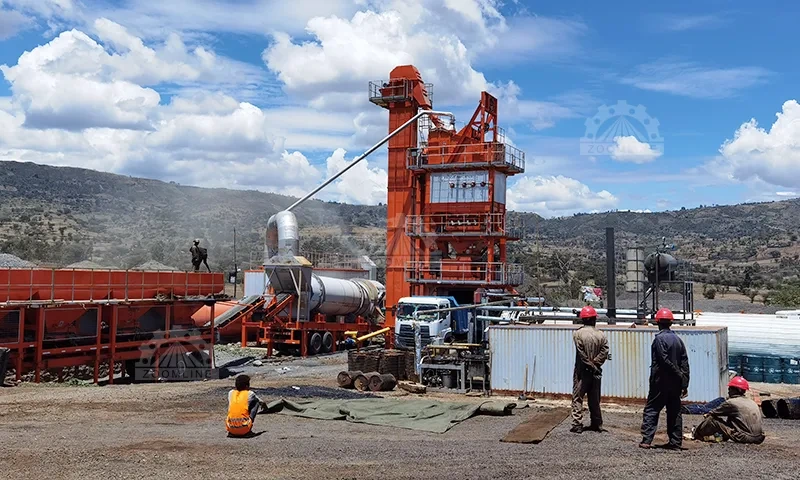
Dust and particulate matter control is the foundation of emissions reduction at asphalt mixing plants. By adhering to the core principles of “source suppression, pre-treatment to reduce load, efficient end-of-pipe treatment, and consolidation through daily operations and maintenance,” we comprehensively reduce both organized and fugitive dust emissions.
Source Dust Control: Sealing Key Points and Optimizing Air Collection
The core of fugitive dust control lies in reducing emissions at the source, with a focus on optimizing five high-dust areas: Installing enclosed baffles and variable-frequency discharge devices in cold aggregate silos to prevent dust from being kicked up by material surges; installing fully enclosed dust hoods at all belt transfer points to eliminate dust generated by material drops; fully enclosing screening equipment and equipping it with localized air collection systems; finished product silos are properly sealed and insulated to prevent dust from unloading; loading areas are equipped with barriers and dust collection hoods to standardize loading and unloading procedures. At the same time, material yard management is optimized through the use of enclosed silos, water spraying for dust suppression, and ground hardening to reduce dust generation at the source.
Cyclone Dust Collector: Upstream Pretreatment to Reduce Load
Cyclone dust collectors serve as the front-end pretreatment equipment in asphalt plant dust collection systems. Their core function is to separate large-particle aggregate dust from flue gas, significantly reducing the processing load on downstream bag-house dust collectors. They operate on the principle of centrifugal force to separate solids from gas, offering advantages such as simple structure, no consumables, low operating costs, and high-temperature resistance, and can effectively capture more than 80% of large-particle dust.
It is important to note that cyclone dust collectors are only capable of coarse dust removal; they cannot capture fine PM2.5 particles and cannot replace high-efficiency end-of-line dust collection equipment such as bag-house dust collectors. They must be used as part of a pre-treatment system to ensure the stable operation of the entire dust collection system.
Optimization and Upgrading of the Baghouse Dust Collector System
The baghouse dust collector is the core equipment for end-of-line dust collection at asphalt plants and determines whether organized dust emissions meet regulatory standards. Their operational efficiency is determined by four key factors: filter bag material, filtration air velocity, the cleaning system, and flue gas temperature control. Filter bags specifically designed for asphalt plants must be made of materials that are heat-resistant, corrosion-resistant, and resistant to water condensation to withstand the high-temperature flue gas conditions in the drum; filtration air velocity must be set appropriately to avoid filter bag clogging or dust penetration caused by excessively high velocities, or wasted energy consumption caused by excessively low velocities.
During routine operation and maintenance, special attention must be paid to monitoring the equipment’s operating pressure differential. An abnormally high pressure differential indicates severe filter bag clogging or dust accumulation, while a sudden drop in pressure differential likely indicates filter bag damage or housing leaks. At the same time, the operational status of the pulse valves and blow pipes in the cleaning system must be inspected regularly to prevent malfunctions such as flue gas condensation causing filter bag clogging, filter bag wear and aging, and bypass duct leaks.
Combustion System Optimization: Reducing Exhaust Emissions and Fuel Consumption
Burners and drying drums are the primary sources of energy consumption and exhaust emissions. By optimizing combustion conditions, upgrading equipment, and selecting appropriate fuels, it is possible to simultaneously achieve the dual goals of cost reduction and emissions reduction, significantly lowering emissions of key pollutants such as NOx and CO.
Burner Commissioning and Precise Air-to-Fuel Ratio Adjustment
The primary cause of excessive exhaust emissions and fuel waste at most asphalt plants is an imbalanced air-to-fuel ratio. During routine operation and maintenance, it is essential to periodically inspect the burner’s atomization, flame stability, and the air supply system’s airtightness to precisely adjust the air-to-fuel ratio. Excessive air supply lowers furnace temperature, increases heat loss, and raises CO₂ emissions; insufficient air supply leads to incomplete fuel combustion, producing large amounts of CO, soot, and nitrogen oxides.
We recommend integrating online oxygen content monitoring and closed-loop control systems to automatically adjust air and fuel supply in real time based on flue gas oxygen content and furnace temperature, thereby maintaining optimal combustion conditions at all times and balancing combustion efficiency with emission reduction.
Application of Low-NOx Burner Technology Upgrades
Low-NOx burners are currently the mainstream, mature technology for reducing nitrogen emissions at asphalt plants. They are based on principles such as staged combustion, flue gas recirculation, and low-oxygen combustion. By dispersing flame temperatures and reducing peak temperatures in the high-temperature zone of the furnace, they suppress the formation of thermal nitrogen oxides, thereby achieving significant reductions in NOx emissions.
It is important to note that low-NOx burners are not one-size-fits-all devices. Before upgrading, a site-specific compatibility assessment must be conducted to ensure the burner is fully compatible with the drying drum specifications, blower airflow, control system, and fuel type. This prevents issues such as unstable combustion, increased energy consumption, and equipment compatibility failures after the upgrade.
Fuel Selection and Drying Efficiency Optimization
Common fuels used in asphalt plants include natural gas, diesel, heavy fuel oil, and biomass fuels. When selecting a fuel, four key factors must be comprehensively considered: fuel cost, supply stability, equipment compatibility, and local emission limits. Among these, natural gas—with its high purity and extremely low sulfur content—can significantly reduce SO₂ and particulate matter emissions, making it the preferred fuel for green production today.
In addition to fuel optimization, improving drying efficiency can also reduce emissions and lower costs. By reducing the moisture content of stockpiled aggregates, optimizing the thermal insulation structure of the drum, minimizing heat loss from equipment, and rationally planning production schedules, it is possible to effectively lower fuel consumption per unit of finished mix, thereby reducing total combustion exhaust emissions at the source.
Specialized Control Technologies for Blue Smoke, VOCs, and Odors
Compared to dust and conventional combustion exhaust, the technical barriers for controlling VOCs, blue smoke, and odors are higher. These are also the key challenges in environmental remediation at asphalt plants, requiring a dedicated “precise collection + targeted treatment” approach.
Exhaust Collection and Control at Core Locations
The primary sources of VOCs and asphalt fumes are concentrated in the mixing main unit, asphalt storage tanks, discharge ports, finished product silos, and loading areas. The first step in remediation involves completing sealing retrofits at all points and installing a negative-pressure exhaust collection system. By ensuring equipment is fully enclosed, optimizing piping, and maintaining a slight negative-pressure operating condition, fugitive emissions are eliminated, ensuring all exhaust gases are collected and directed into the treatment system, thereby resolving issues such as odor nuisance and visible blue smoke.
Selection of a Suitable Exhaust Gas Treatment System
Asphalt fumes are characterized by significant temperature fluctuations, dust content, high viscosity, and a tendency to condense. The appropriate treatment process must be selected based on the actual exhaust gas flow rate, temperature, pollutant concentration, and operational stability. Mainstream technologies include condensation purification, multi-stage filtration, activated carbon adsorption, and thermal oxidation combustion.
Among these, condensation technology is suitable for medium- and low-temperature asphalt fumes, effectively recovering light oil components and eliminating blue smoke; adsorption technology is suitable for purifying low-concentration VOCs and odors, but requires proper upstream dust removal as well as temperature and humidity control to prevent activated carbon clogging and degradation, while strictly adhering to fire safety regulations; thermal oxidation and combustion technology can thoroughly decompose organic pollutants, achieving comprehensive emission reductions; however, the equipment’s design capacity must align with environmental permit requirements to prevent operation beyond specified conditions. Companies must avoid the pitfall of blindly selecting equipment and instead customize treatment solutions based on on-site operating conditions.
How Does Warm-Mix Asphalt Technology Help Asphalt Plants Reduce Carbon Emissions?
Warm-mix asphalt technology is a streamlined emissions-reduction solution that does not require large-scale equipment upgrades. Leveraging its core advantage of lowering production temperatures, it is widely used in both new and existing asphalt mixing plants and can effectively reduce energy consumption and flue gas emissions.
Core Principles of Warm-Mix Asphalt Technology
Currently, mainstream warm-mix technologies fall into two categories: first, asphalt foaming technology, which uses trace amounts of water or foaming equipment to create a micro-bubble structure in the asphalt, thereby reducing its high-temperature viscosity; second, chemical additive warm-mix technology, which improves the rheological properties of asphalt through the use of specialized warm-mix additives. Both technologies can lower the production temperature of asphalt mixtures by 30–60°C while ensuring that the construction quality and road performance of the mixture remain unchanged, thereby significantly reducing the energy consumption associated with high-temperature heating.
Application Advantages and Implementation Considerations
The core emission-reduction benefits of warm-mix asphalt are reflected in three dimensions: First, it reduces fuel consumption, thereby lowering combustion exhaust and CO₂ emissions; second, it reduces asphalt volatilization, significantly minimizing blue smoke, VOCs, and odor generation; third, it lowers production temperatures, reducing equipment wear caused by high temperatures while expanding the low-temperature construction window.
It is important to note that the emission reduction effects of warm-mix asphalt are not fixed values. They are influenced by multiple factors—including mix design, actual production temperature, on-site climatic conditions, equipment status, and construction methods—and therefore cannot be directly applied using fixed reduction ratios. Before implementation, companies must conduct mix design validation and small-batch production trials to confirm suitability and emission reduction effectiveness before scaling up the application.
Emissions Control Plan for Recycled Asphalt Material (RAP)
The recycling and reuse of RAP is a core initiative of the circular economy in the asphalt industry. However, the heating process for recycled material tends to generate fumes, odors, and dust; if not properly controlled, this can lead to emissions exceeding standards, necessitating targeted optimization of production processes.
Core Challenges in RAP Heating
Recycled asphalt material generally exhibits unstable moisture content and a tendency for the old asphalt on its surface to age rapidly at high temperatures. During the heating process, excessively high moisture content increases energy consumption for drying and exacerbates fuel exhaust emissions; conversely, excessively high temperatures or uneven heating can cause the old asphalt to overheat and crack, generating large amounts of asphalt fumes, VOCs, and harmful gases, while also compromising the quality of the finished mix. Striking a balance between heating efficiency, finished product quality, and emissions control is the core challenge in RAP production.
Selection of Appropriate Heating and Feeding Systems
To mitigate high emissions in RAP production, specialized recycling systems—such as parallel drum heating and indirect heating—should be prioritized. These systems prevent direct contact between recycled material and high-temperature flames, enabling uniform, low-temperature, and controlled heating. During production, heating temperature and feed rate must be strictly controlled, with production parameters dynamically adjusted based on the RAP blending ratio, raw material quality, equipment capacity, and finished product quality standards. At the same time, dedicated exhaust gas collection and dust removal systems must be installed to ensure that all dust and fumes generated during the recycling process are effectively treated, thereby balancing material recycling with compliance with emission standards.
Low Cost, High Returns: Practical Measures for Emissions Reduction Through Daily Operations and Maintenance
Most asphalt plants do not require major equipment upgrades; simply by optimizing daily production management and implementing basic operations and maintenance measures, they can achieve significant reductions in emissions and costs. This represents the most cost-effective method for routine emissions reduction.
Controlling Aggregate Moisture Content
Aggregate moisture content is a key hidden factor affecting energy consumption and emissions. By optimizing the drainage system in the aggregate yard, constructing enclosed storage sheds, stacking aggregates in designated zones, and implementing effective rain and moisture protection measures, aggregate moisture content can be effectively stabilized and reduced. For every 1% reduction in aggregate moisture content, fuel consumption for drying decreases significantly, simultaneously reducing emissions of combustion exhaust and drying fumes. The specific extent of energy savings and emission reductions must be calculated based on actual measurements of the aggregate characteristics and production conditions at the plant.
Equipment Inspection and Maintenance to Eliminate Hidden Leaks and Emissions
Hidden issues such as damaged air ducts, aged equipment seals, torn filter bags, malfunctions in the ash-cleaning system, and poor atomization in burners are the primary causes of long-term emission exceedances. Companies must establish routine inspection logs to conduct periodic, comprehensive checks of the dust collection system, ductwork, combustion equipment, and conveying systems—focusing on their seals and operational status. They should regularly replace aged filter bags and sealing components, calibrate burner operating conditions, and promptly repair leak points to eliminate fugitive emissions and energy waste.
Optimize Production Schedules and Operating Parameters
Prolonged idling, frequent start-stops, and excessive heating of equipment are major causes of energy waste and excessive emissions. By rationally planning production orders and centralizing production schedules, companies can reduce unnecessary equipment start-stops and idle time. Based on the process requirements of different mixtures, production temperatures and equipment capacity should be precisely set to eliminate blind high-temperature production and overloading. This approach minimizes energy consumption and emissions per unit of output while ensuring product quality.
Conclusion: Building a Clean, Efficient, and Smart Green Asphalt Mixing Plant
Green emissions reduction at asphalt mixing plants is not simply a matter of adding individual pieces of equipment; rather, it is a systematic endeavor that encompasses comprehensive dust control, combustion system optimization, flue gas and odor treatment, the application of warm-mix technology, standardized production of recycled materials, and meticulous daily operation and maintenance. Against the backdrop of increasingly stringent environmental regulations in the industry and the widespread adoption of green infrastructure, compliant emissions reduction, energy conservation, and cost reduction have become core competitive advantages for asphalt mixing plants.
High-quality emissions reduction solutions must be tailored based on on-site condition assessments, local regulations and standards, and specific production needs—moving away from generic, one-size-fits-all retrofit approaches—to achieve multiple benefits, including compliance with environmental standards, reduced energy consumption, and improved operational efficiency.
If you require a precise on-site emissions assessment, customized emission reduction retrofit plans for aging equipment, comparisons for new equipment selection, or guidance on production and operations optimization, please feel free to contact our professional equipment engineering team at any time to obtain a one-on-one, tailored green production solution.
Questions fréquentes
Can a baghouse dust collector solve all emissions issues at an asphalt plant?
No. Baghouse dust collectors are highly effective only for particulate matter and dust; they serve as the core equipment for end-of-pipe dust removal but cannot treat gaseous pollutants such as NOx, CO, VOCs, odors, or blue smoke. Comprehensive emissions reduction at an asphalt mixing plant requires a combination of multiple technologies, including combustion optimization, flue gas purification, fugitive dust control, and odor treatment. A single dust collection device cannot meet all compliance requirements on its own.
How can the blue smoke problem at an asphalt mixing plant be resolved?
Blue smoke control must follow a dual approach of “collection + purification”: First, seal the mixing main unit, discharge chute, asphalt tank, and loading area, and implement negative-pressure gas collection to prevent flue gas from escaping; second, specialized purification equipment—such as condensation, adsorption, and thermal oxidation systems—must be selected based on flue gas temperature and concentration; simultaneously, production temperatures should be optimized to prevent excessive asphalt volatilization at high temperatures, thereby reducing blue smoke generation at the source. A multi-faceted approach is essential to achieve thorough remediation.
Can older asphalt mixing plants be retrofitted with emission reduction equipment?
The vast majority of older asphalt mixing plants can undergo emission reduction retrofits. To address issues such as dust leakage, low combustion efficiency, and the absence of flue gas treatment systems in older equipment, step-by-step upgrades can be implemented through localized sealing modifications, the installation of low-nitrogen burners, the integration of baghouse dust collection systems, the addition of VOCs flue gas purification equipment, and the optimization of control systems. Compliance with standards can be achieved without replacing the entire system, resulting in low retrofit costs and high feasibility.
Are the emission reduction benefits of warm-mix asphalt fixed?
No. The emission reduction and energy-saving benefits of warm-mix asphalt are influenced by multiple factors, including regional climate, aggregate material, asphalt formulation, production temperature, equipment condition, and construction methods. There is no uniform, fixed emission reduction ratio. Companies must conduct on-site trials and mix ratio adjustments to determine the optimal parameters for their specific production lines and accurately calculate the actual emission reduction benefits.
How can the actual effectiveness of emission-reduction retrofits and upgrades be verified?
Verification can be conducted across three dimensions: First, online monitoring data, which allows for real-time comparison of flue gas, dust, and VOC emission concentrations before and after the retrofit; second, offline third-party testing, where professional agencies conduct chimney inspections and on-site fugitive emissions testing to confirm compliance; and third, production data comparison, which calculates changes in fuel consumption per unit of output, equipment failure rates, and O&M costs before and after the retrofit to comprehensively verify both the environmental and economic benefits of the retrofit.